Snacks, pita chips, salted
Whole food · Snacks

Photo: Wikipedia
Pita chips are a crunchy, baked or fried snack made from sliced pita bread, offering a satisfying, savory crunch with a subtle, toasty wheat flavor. Nutritionally, they provide a notable amount of carbohydrates for energy and a moderate protein boost compared to many snacks. Their texture is the star—crisp and sturdy enough for dipping.
💚 Why it's loved
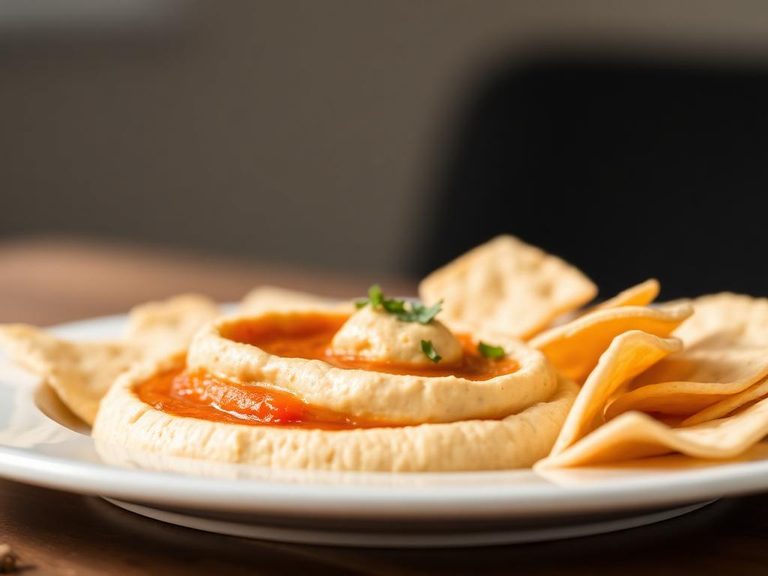
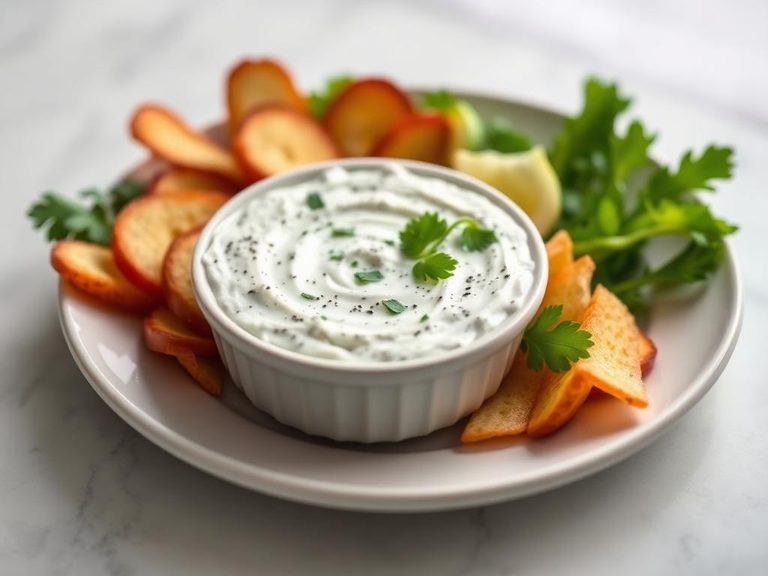
People love pita chips for their robust crunch and versatile, savory base that pairs perfectly with hummus, tzatziki, or just a sprinkle of salt. They're a staple in Mediterranean-inspired snacking and party platters, bridging the gap between a simple cracker and a hearty bread chip.
⚠️ Watch-outs & how to enjoy it better
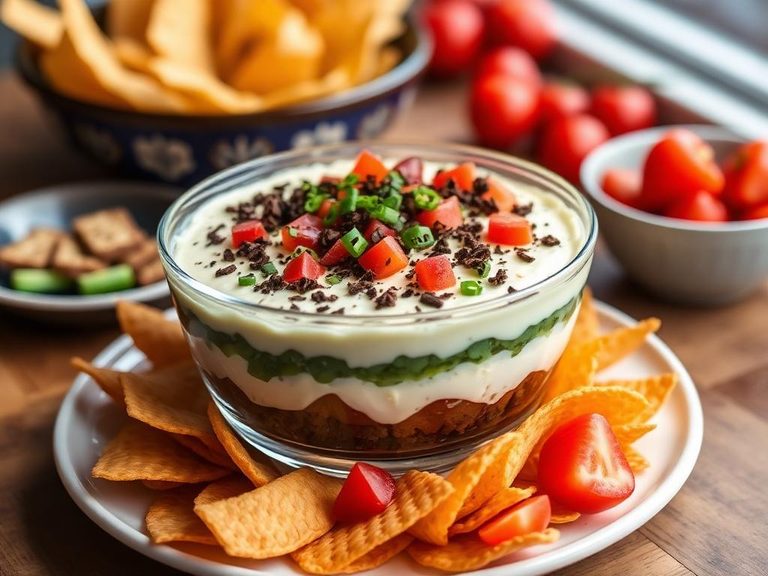
The high sodium content in salted varieties can contribute to water retention, and the refined carbs may cause a blood-sugar spike, especially without pairing. To counteract this, enjoy them with a protein-rich dip like hummus or a fat source like guacamole to slow digestion, and practice portion control by measuring a single serving.
Key benefits
- Good source of quick energy from complex carbs
- Provides moderate plant-based protein
- Contains some dietary fiber
- Often lower in fat than many fried snacks
- Sturdy texture makes it ideal for dips
🍽️ Popular dishes
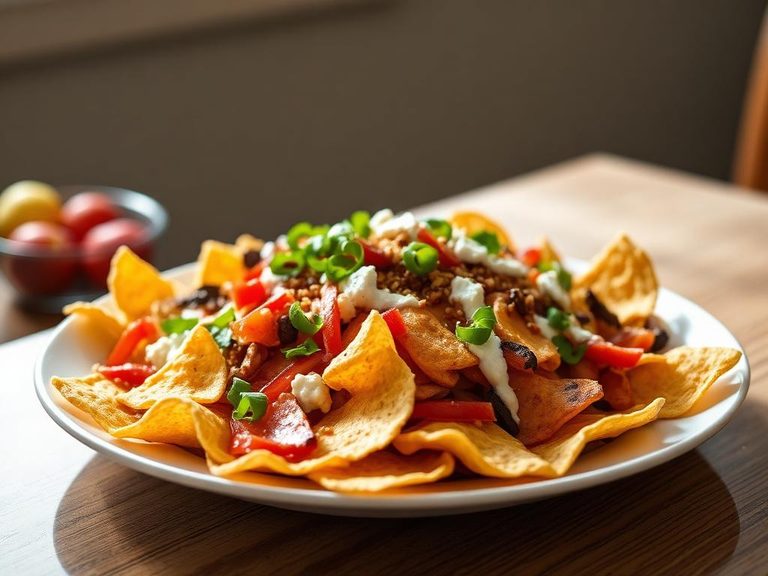
🌍 Where it's eaten
💡 Did you know?
The modern pita chip was popularized in the U.S. by the brand Stacy's, which started as a food cart selling sandwiches near San Francisco's Fisherman's Wharf in 1997.
Full nutrition (scales with serving)
| Water | 2.0 g |
| Energy | 457 kcal |
| Energy | 1912 kj |
| Protein | 11.8 g |
| Total lipid (fat) | 15.2 g |
| Ash | 2.8 g |
| Carbohydrate, by difference | 68.3 g |
| Fiber, total dietary | 3.8 g |
| Total Sugars | 4.8 g |
| Sucrose | 0.00 g |
| Glucose | 0.82 g |
| Fructose | 1.4 g |
| Lactose | 0.00 g |
| Maltose | 2.6 g |
| Galactose | 0.00 g |
| Starch | 59.5 g |
| Calcium, Ca | 17.0 mg |
| Iron, Fe | 4.6 mg |
| Magnesium, Mg | 37.0 mg |
| Phosphorus, P | 124 mg |
| Potassium, K | 129 mg |
| Sodium, Na | 854 mg |
| Zinc, Zn | 0.96 mg |
| Copper, Cu | 0.14 mg |
| Manganese, Mn | 0.66 mg |
| Selenium, Se | 33.1 ug |
| Fluoride, F | 0.10 ug |
| Vitamin C, total ascorbic acid | 0.00 mg |
| Thiamin | 0.56 mg |
| Riboflavin | 0.31 mg |
| Niacin | 7.0 mg |
| Pantothenic acid | 0.50 mg |
| Vitamin B-6 | 0.11 mg |
| Folate, total | 135 ug |
| Folic acid | 114 ug |
| Folate, food | 22.0 ug |
| Folate, DFE | 215 ug |
| Choline, total | 9.1 mg |
| Betaine | 60.9 mg |
| Vitamin B-12 | 0.00 ug |
| Vitamin B-12, added | 0.00 ug |
| Vitamin A, RAE | 0.00 ug |
| Retinol | 0.00 ug |
| Carotene, beta | 0.00 ug |
| Carotene, alpha | 0.00 ug |
| Cryptoxanthin, beta | 0.00 ug |
| Vitamin A, IU | 0.00 iu |
| Lycopene | 0.00 ug |
| Lutein + zeaxanthin | 15.0 ug |
| Vitamin E (alpha-tocopherol) | 6.9 mg |
| Vitamin E, added | 0.00 mg |
| Tocopherol, beta | 0.06 mg |
| Tocopherol, gamma | 0.33 mg |
| Tocopherol, delta | 0.02 mg |
| Tocotrienol, alpha | 0.02 mg |
| Tocotrienol, beta | 0.07 mg |
| Tocotrienol, gamma | 0.00 mg |
| Tocotrienol, delta | 0.00 mg |
| Vitamin D (D2 + D3), International Units | 0.00 iu |
| Vitamin D (D2 + D3) | 0.00 ug |
| Vitamin K (phylloquinone) | 1.2 ug |
| Alcohol, ethyl | 0.00 g |
| Caffeine | 0.00 mg |
| Theobromine | 0.00 mg |
Fat & fatty acid profile (per 100g)
| Fatty acids, total saturated | 1.3 g |
| SFA 4:0 | 0.00 g |
| SFA 6:0 | 0.00 g |
| SFA 8:0 | 0.00 g |
| SFA 10:0 | 0.00 g |
| SFA 12:0 | 0.00 g |
| SFA 14:0 | 0.01 g |
| SFA 15:0 | 0.00 g |
| SFA 16:0 | 0.68 g |
| SFA 17:0 | 0.01 g |
| SFA 18:0 | 0.45 g |
| SFA 20:0 | 0.04 g |
| SFA 22:0 | 0.11 g |
| SFA 24:0 | 0.04 g |
| Fatty acids, total monounsaturated | 10.8 g |
| MUFA 14:1 | 0.00 g |
| MUFA 15:1 | 0.00 g |
| MUFA 16:1 | 0.02 g |
| MUFA 16:1 c | 0.02 g |
| MUFA 17:1 | 0.00 g |
| MUFA 18:1 | 10.8 g |
| MUFA 18:1 c | 10.7 g |
| MUFA 20:1 | 0.05 g |
| MUFA 22:1 | 0.00 g |
| MUFA 22:1 c | 0.00 g |
| MUFA 24:1 c | 0.00 g |
| Fatty acids, total polyunsaturated | 2.1 g |
| PUFA 18:2 | 2.0 g |
| PUFA 18:2 n-6 c,c | 2.0 g |
| PUFA 18:2 CLAs | 0.01 g |
| PUFA 18:3 | 0.10 g |
| PUFA 18:3 n-3 c,c,c (ALA) | 0.10 g |
| PUFA 18:3 n-6 c,c,c | 0.00 g |
| PUFA 18:4 | 0.00 g |
| PUFA 20:2 n-6 c,c | 0.00 g |
| PUFA 20:3 | 0.00 g |
| PUFA 20:3 n-3 | 0.00 g |
| PUFA 20:3 n-6 | 0.00 g |
| PUFA 20:4 | 0.00 g |
| PUFA 20:5 n-3 (EPA) | 0.00 g |
| PUFA 22:4 | 0.00 g |
| PUFA 22:5 n-3 (DPA) | 0.00 g |
| PUFA 22:6 n-3 (DHA) | 0.00 g |
| Fatty acids, total trans | 0.04 g |
| Fatty acids, total trans-monoenoic | 0.02 g |
| TFA 16:1 t | 0.00 g |
| TFA 18:1 t | 0.02 g |
| TFA 22:1 t | 0.00 g |
| TFA 18:2 t not further defined | 0.02 g |
| Fatty acids, total trans-polyenoic | 0.02 g |
| Cholesterol | 0.00 mg |
| Phytosterols | 17.0 mg |
Amino acid profile (per 100g)
| Tryptophan | 0.14 g |
| Threonine | 0.35 g |
| Isoleucine | 0.48 g |
| Leucine | 0.87 g |
| Lysine | 0.18 g |
| Methionine | 0.17 g |
| Cystine | 0.29 g |
| Phenylalanine | 0.64 g |
| Tyrosine | 0.33 g |
| Valine | 0.54 g |
| Arginine | 0.46 g |
| Histidine | 0.26 g |
| Alanine | 0.39 g |
| Aspartic acid | 0.52 g |
| Glutamic acid | 4.6 g |
| Glycine | 0.48 g |
| Proline | 1.6 g |
| Serine | 0.56 g |
FAQ
Are pita chips healthier than potato chips?
Generally, yes. Baked pita chips typically have less fat and slightly more protein and fiber than standard fried potato chips, but they can still be high in sodium and calories, so portion control is key.
Can I make pita chips at home?
Absolutely. Cut pita bread into wedges, brush lightly with olive oil, season, and bake at 375°F (190°C) for 8-10 minutes until golden and crisp. This allows you to control the oil and salt.
What makes pita chips different from regular chips?
Pita chips are made from bread (pita), giving them a thicker, more substantial crunch and a slightly chewy interior, whereas regular chips are sliced from whole vegetables or formed from starch.