Pork sausage, link/patty, fully cooked, microwaved
Whole food · Sausages and Luncheon Meats

Photo: Wikipedia
Microwaved pork sausage links or patties are a quick, savory staple, delivering a juicy, fatty bite with a snappy casing or a tender, crumbly patty. Their high fat content (over 41g per 100g) makes them a potent energy source, but they are essentially devoid of carbohydrates and fiber.
💚 Why it's loved
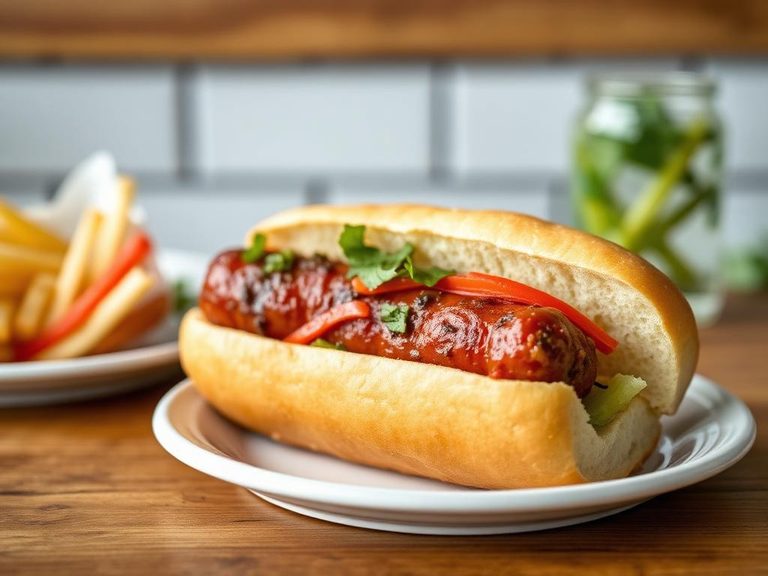
People love the rich, savory, umami-packed flavor and the satisfying, juicy texture that comes from the high fat content. It's a versatile, comforting protein that fits into countless quick meals, from breakfast plates to hearty sandwiches.
⚠️ Watch-outs & how to enjoy it better
The very high fat and calorie density, along with potential sodium in processed links, can be a concern for heart health and weight management. To mitigate, pair with high-fiber, low-calorie vegetables (like steamed broccoli or a side salad) to add volume and nutrients, and practice strict portion control by measuring a single link or patty.
Key benefits
- Excellent source of high-quality protein
- Provides quick, dense energy from fats
- Extremely low in carbohydrates and sugars
- Convenient, fast-cooking meal component
- Source of B vitamins, especially B12
🍽️ Popular dishes
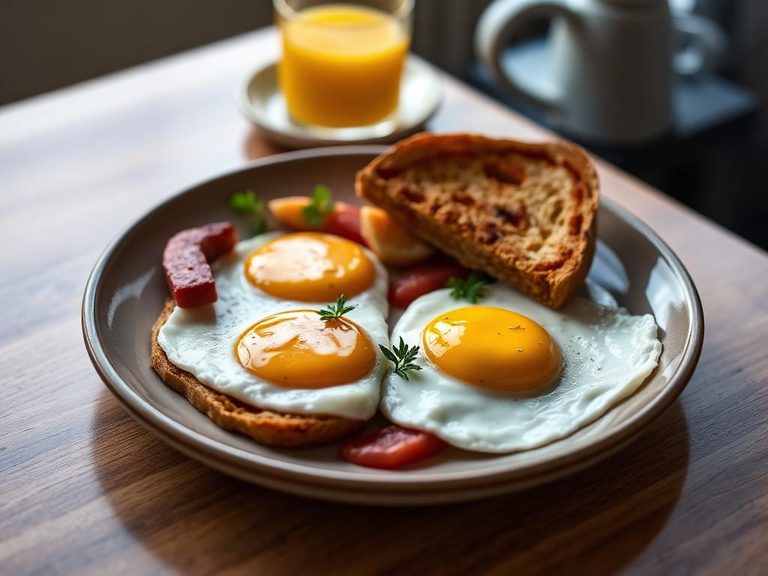
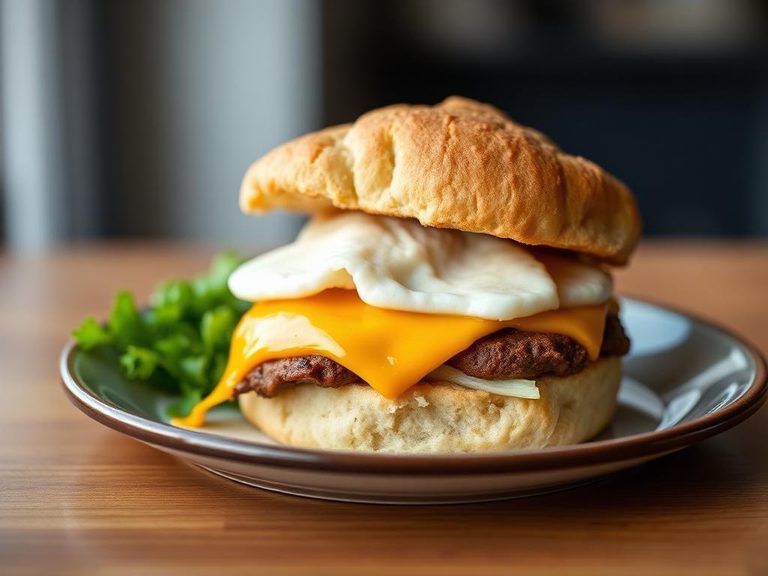
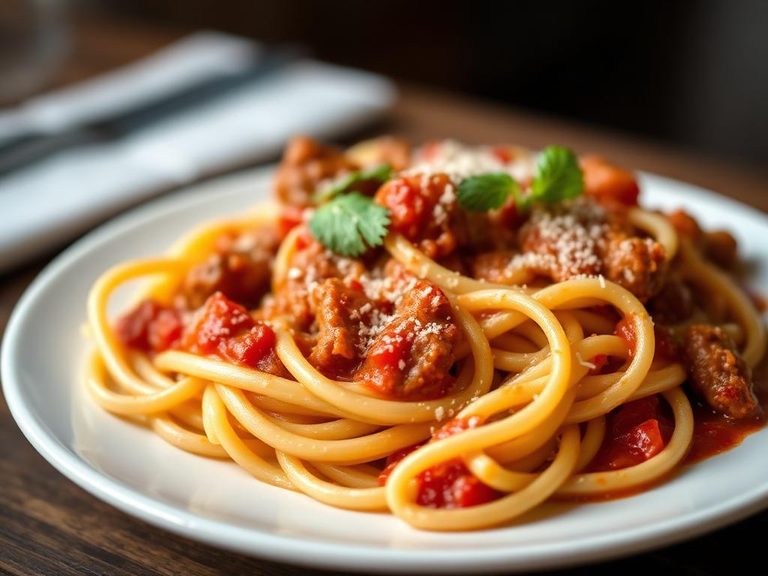
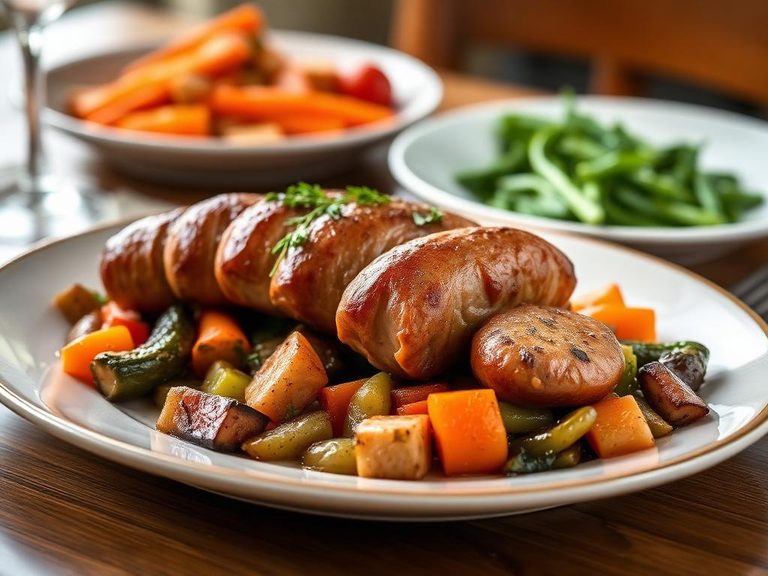
🌍 Where it's eaten
💡 Did you know?
The 'snapping' sound of a good sausage casing is caused by the natural gut (or collagen) casing contracting and bursting from the internal steam pressure when heated.
Full nutrition (scales with serving)
| Water | 39.6 g |
| Energy | 438 kcal |
| Energy | 1832 kj |
| Protein | 15.1 g |
| Total lipid (fat) | 41.7 g |
| Ash | 3.1 g |
| Carbohydrate, by difference | 0.62 g |
| Fiber, total dietary | 0.00 g |
| Total Sugars | 0.62 g |
| Sucrose | 0.36 g |
| Glucose | 0.26 g |
| Fructose | 0.00 g |
| Lactose | 0.00 g |
| Maltose | 0.00 g |
| Galactose | 0.00 g |
| Calcium, Ca | 17.0 mg |
| Iron, Fe | 0.95 mg |
| Magnesium, Mg | 15.0 mg |
| Phosphorus, P | 193 mg |
| Potassium, K | 225 mg |
| Sodium, Na | 990 mg |
| Zinc, Zn | 1.6 mg |
| Copper, Cu | 0.09 mg |
| Manganese, Mn | 0.07 mg |
| Selenium, Se | 22.5 ug |
| Vitamin C, total ascorbic acid | 0.00 mg |
| Thiamin | 0.24 mg |
| Riboflavin | 0.18 mg |
| Niacin | 4.3 mg |
| Pantothenic acid | 0.64 mg |
| Vitamin B-6 | 0.14 mg |
| Folate, total | 1.0 ug |
| Folic acid | 0.00 ug |
| Folate, food | 1.0 ug |
| Folate, DFE | 1.0 ug |
| Choline, total | 52.0 mg |
| Betaine | 2.8 mg |
| Vitamin B-12 | 0.76 ug |
| Vitamin B-12, added | 0.00 ug |
| Vitamin A, RAE | 22.0 ug |
| Retinol | 22.0 ug |
| Carotene, beta | 0.00 ug |
| Carotene, alpha | 0.00 ug |
| Cryptoxanthin, beta | 0.00 ug |
| Vitamin A, IU | 75.0 iu |
| Lycopene | 0.00 ug |
| Lutein + zeaxanthin | 0.00 ug |
| Vitamin E (alpha-tocopherol) | 0.88 mg |
| Vitamin E, added | 0.00 mg |
| Tocopherol, beta | 0.00 mg |
| Tocopherol, gamma | 0.17 mg |
| Tocopherol, delta | 0.00 mg |
| Tocotrienol, alpha | 0.04 mg |
| Tocotrienol, beta | 0.02 mg |
| Tocotrienol, gamma | 0.31 mg |
| Tocotrienol, delta | 0.00 mg |
| Vitamin D (D2 + D3), International Units | 41.0 iu |
| Vitamin D (D2 + D3) | 1.0 ug |
| Vitamin D3 (cholecalciferol) | 1.0 ug |
| Vitamin K (phylloquinone) | 2.9 ug |
| Vitamin K (Dihydrophylloquinone) | 0.00 ug |
| Vitamin K (Menaquinone-4) | 22.5 ug |
| Alcohol, ethyl | 0.00 g |
| Caffeine | 0.00 mg |
| Theobromine | 0.00 mg |
Fat & fatty acid profile (per 100g)
| Fatty acids, total saturated | 13.6 g |
| SFA 4:0 | 0.00 g |
| SFA 6:0 | 0.00 g |
| SFA 8:0 | 0.00 g |
| SFA 10:0 | 0.04 g |
| SFA 12:0 | 0.03 g |
| SFA 14:0 | 0.51 g |
| SFA 15:0 | 0.03 g |
| SFA 16:0 | 8.5 g |
| SFA 17:0 | 0.14 g |
| SFA 18:0 | 4.2 g |
| SFA 20:0 | 0.08 g |
| SFA 22:0 | 0.01 g |
| SFA 24:0 | 0.00 g |
| Fatty acids, total monounsaturated | 16.4 g |
| MUFA 14:1 | 0.01 g |
| MUFA 15:1 | 0.00 g |
| MUFA 16:1 | 0.79 g |
| MUFA 16:1 c | 0.78 g |
| MUFA 17:1 | 0.11 g |
| MUFA 18:1 | 15.2 g |
| MUFA 18:1 c | 15.1 g |
| MUFA 20:1 | 0.34 g |
| MUFA 22:1 | 0.01 g |
| MUFA 22:1 c | 0.01 g |
| MUFA 24:1 c | 0.00 g |
| Fatty acids, total polyunsaturated | 8.0 g |
| PUFA 18:2 | 7.1 g |
| PUFA 18:2 n-6 c,c | 7.0 g |
| PUFA 18:2 CLAs | 0.06 g |
| PUFA 18:3 | 0.30 g |
| PUFA 18:3 n-3 c,c,c (ALA) | 0.29 g |
| PUFA 18:3 n-6 c,c,c | 0.01 g |
| PUFA 18:3i | 0.00 g |
| PUFA 18:4 | 0.00 g |
| PUFA 20:2 n-6 c,c | 0.30 g |
| PUFA 20:3 | 0.09 g |
| PUFA 20:3 n-3 | 0.04 g |
| PUFA 20:3 n-6 | 0.05 g |
| PUFA 20:4 | 0.14 g |
| PUFA 20:5 n-3 (EPA) | 0.00 g |
| PUFA 22:4 | 0.05 g |
| PUFA 22:5 n-3 (DPA) | 0.03 g |
| PUFA 22:6 n-3 (DHA) | 0.01 g |
| Fatty acids, total trans | 0.21 g |
| Fatty acids, total trans-monoenoic | 0.16 g |
| TFA 16:1 t | 0.01 g |
| TFA 18:1 t | 0.14 g |
| TFA 22:1 t | 0.00 g |
| TFA 18:2 t not further defined | 0.05 g |
| Fatty acids, total trans-polyenoic | 0.05 g |
| Cholesterol | 79.0 mg |
Amino acid profile (per 100g)
| Tryptophan | 0.15 g |
| Threonine | 0.50 g |
| Isoleucine | 0.60 g |
| Leucine | 1.1 g |
| Lysine | 1.0 g |
| Methionine | 0.35 g |
| Cystine | 0.19 g |
| Phenylalanine | 0.54 g |
| Tyrosine | 0.42 g |
| Valine | 0.71 g |
| Arginine | 0.94 g |
| Histidine | 0.44 g |
| Alanine | 0.94 g |
| Aspartic acid | 1.3 g |
| Glutamic acid | 2.3 g |
| Glycine | 1.0 g |
| Proline | 1.0 g |
| Serine | 0.62 g |
| Hydroxyproline | 0.36 g |
FAQ
Is microwaving pork sausage safe and does it affect quality?
Yes, it's safe if heated to an internal temperature of 160°F (71°C). Microwaving can sometimes make the casing slightly chewier than pan-frying, but it's faster and renders less added fat.
Why does the nutrition show 0g carbs but 0.62g sugar?
This is due to rounding rules in nutrition labeling. The sugar content is so minimal (likely from a trace of added sugar or natural sugars in spices) that it rounds down to 0g for carbohydrates, but is still listed for accuracy.
How can I reduce the fat content when cooking?
After microwaving, you can blot the sausage with a paper towel. For a longer-term solution, choose leaner varieties labeled '90% lean' or opt for turkey or chicken sausage, which have significantly less fat.