

Yogurt, Greek, vanilla, lowfat
Whole food · Dairy and Egg Products

Photo: Wikipedia
A thick, strained yogurt with a creamy, velvety texture and a sweet, tangy vanilla flavor. It delivers a robust protein punch (8.64g per 100g) with a moderate calorie count, making it a satisfying, nutrient-dense snack or base.
Calorie split: 36% protein · 40% carbs · 24% fat
↓ Full nutrition💚 Why it's loved
People adore its rich, indulgent texture and the perfect balance of sweet vanilla and tangy yogurt. It's a beloved protein-packed snack that feels like a treat, fitting seamlessly into breakfasts, smoothies, and desserts.
⚠️ Watch-outs & how to enjoy it better
The added sugars (9.54g per 100g) can cause blood-sugar spikes, and it contains dairy, a common allergen. To mitigate, pair it with fiber-rich berries or nuts, or choose an unsweetened version. Those with lactose intolerance should start with small portions or use lactase supplements.
Key benefits
- High in protein for muscle maintenance and satiety
- Good source of calcium for bone health
- Contains probiotics for gut health
- Lower in fat than regular yogurt
- Versatile base for both sweet and savory dishes
🍽️ Popular dishes

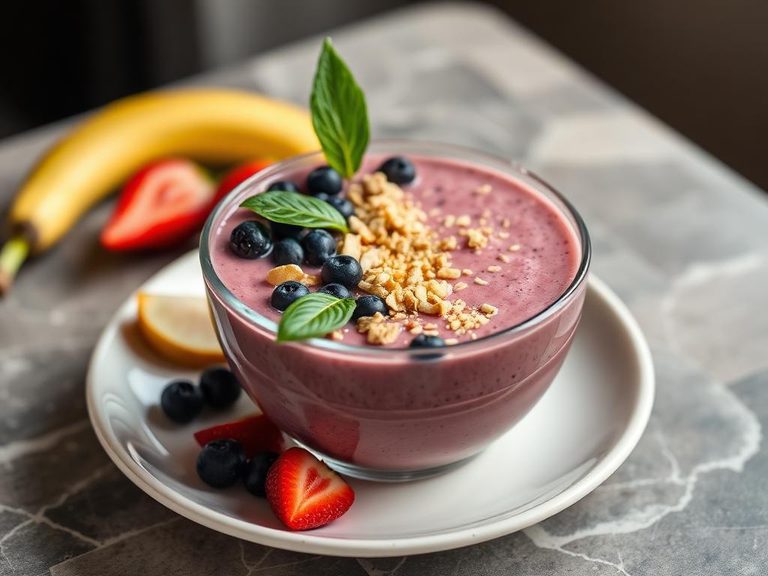
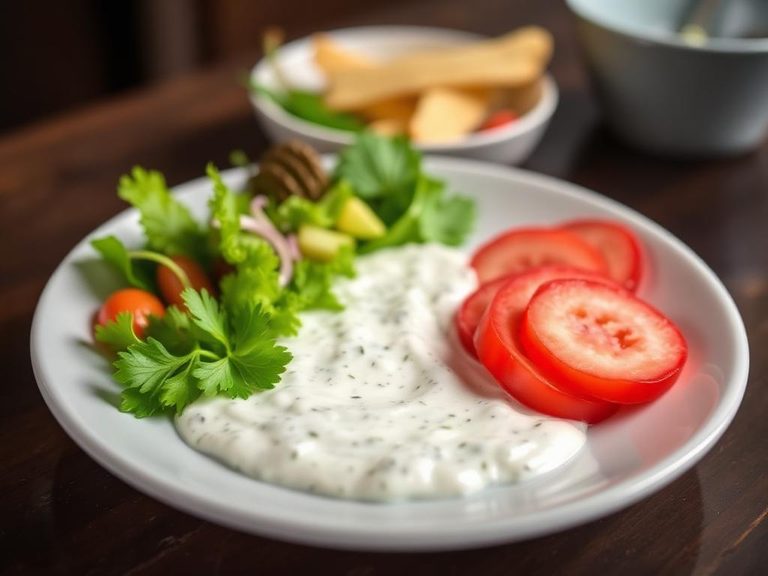

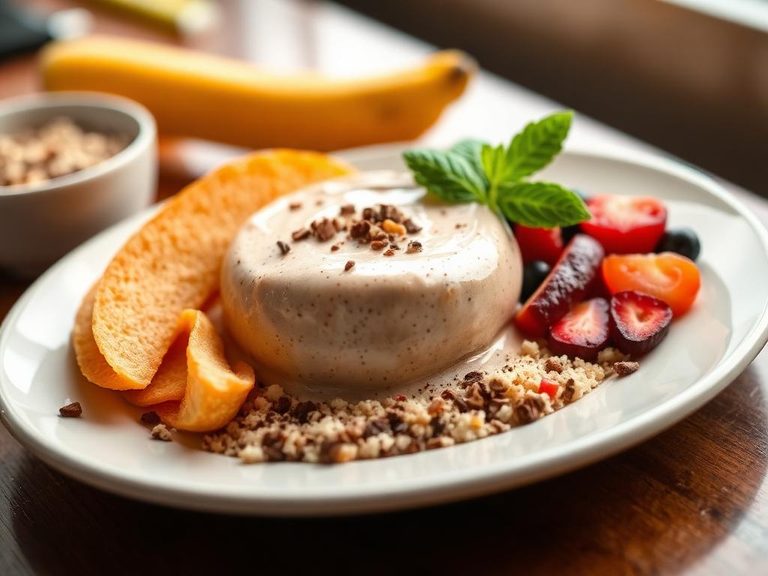

🌍 Where it's eaten
💡 Did you know?
Greek yogurt is made by straining regular yogurt through a cloth or filter to remove the whey, a process that originated in the Middle East and was popularized in Greece, giving it its characteristic thickness.
Full nutrition (USDA data · scales with serving)
| Water | 78.8 g |
| Energy | 95.0 kcal |
| Energy | 398 kj |
| Protein | 8.6 g |
| Total lipid (fat) | 2.5 g |
| Ash | 0.55 g |
| Carbohydrate, by difference | 9.5 g |
| Fiber, total dietary | 0.00 g |
| Total Sugars | 9.5 g |
| Sucrose | 4.1 g |
| Glucose | 0.32 g |
| Fructose | 1.9 g |
| Lactose | 2.6 g |
| Maltose | 0.00 g |
| Galactose | 0.60 g |
| Calcium, Ca | 100 mg |
| Iron, Fe | 0.04 mg |
| Magnesium, Mg | 10.0 mg |
| Phosphorus, P | 119 mg |
| Potassium, K | 123 mg |
| Sodium, Na | 40.0 mg |
| Zinc, Zn | 0.46 mg |
| Copper, Cu | 0.02 mg |
| Manganese, Mn | 0.01 mg |
| Selenium, Se | 9.7 ug |
| Vitamin C, total ascorbic acid | 0.00 mg |
| Thiamin | 0.04 mg |
| Riboflavin | 0.24 mg |
| Niacin | 0.20 mg |
| Pantothenic acid | 0.39 mg |
| Vitamin B-6 | 0.05 mg |
| Folate, total | 9.0 ug |
| Folic acid | 0.00 ug |
| Folate, food | 9.0 ug |
| Folate, DFE | 9.0 ug |
| Choline, total | 33.4 mg |
| Vitamin B-12 | 0.64 ug |
| Vitamin B-12, added | 0.00 ug |
| Vitamin A, RAE | 110 ug |
| Retinol | 110 ug |
| Carotene, beta | 3.0 ug |
| Carotene, alpha | 0.00 ug |
| Cryptoxanthin, beta | 0.00 ug |
| Vitamin A, IU | 371 iu |
| Lycopene | 0.00 ug |
| Lutein + zeaxanthin | 0.00 ug |
| Vitamin E (alpha-tocopherol) | 0.02 mg |
| Vitamin E, added | 0.00 mg |
| Vitamin D (D2 + D3), International Units | 35.0 iu |
| Vitamin D (D2 + D3) | 0.90 ug |
| Vitamin D2 (ergocalciferol) | 0.00 ug |
| Vitamin D3 (cholecalciferol) | 0.90 ug |
| Vitamin K (phylloquinone) | 0.20 ug |
| Alcohol, ethyl | 0.00 g |
| Caffeine | 0.00 mg |
| Theobromine | 0.00 mg |
Fat & fatty acid profile (per 100g)
| Fatty acids, total saturated | 1.5 g |
| SFA 4:0 | 0.08 g |
| SFA 6:0 | 0.02 g |
| SFA 8:0 | 0.04 g |
| SFA 10:0 | 0.22 g |
| SFA 12:0 | 0.10 g |
| SFA 14:0 | 0.18 g |
| SFA 15:0 | 0.03 g |
| SFA 16:0 | 0.57 g |
| SFA 17:0 | 0.01 g |
| SFA 18:0 | 0.21 g |
| SFA 20:0 | 0.00 g |
| SFA 22:0 | 0.00 g |
| SFA 24:0 | 0.00 g |
| Fatty acids, total monounsaturated | 0.85 g |
| MUFA 14:1 | 0.01 g |
| MUFA 15:1 | 0.00 g |
| MUFA 16:1 | 0.02 g |
| MUFA 16:1 c | 0.02 g |
| MUFA 17:1 | 0.00 g |
| MUFA 18:1 | 0.40 g |
| MUFA 18:1 c | 0.36 g |
| MUFA 20:1 | 0.01 g |
| MUFA 22:1 | 0.00 g |
| MUFA 22:1 c | 0.00 g |
| MUFA 24:1 c | 0.00 g |
| Fatty acids, total polyunsaturated | 0.20 g |
| PUFA 18:2 | 0.09 g |
| PUFA 18:2 n-6 c,c | 0.09 g |
| PUFA 18:2 CLAs | 0.00 g |
| PUFA 18:3 | 0.01 g |
| PUFA 18:3 n-3 c,c,c (ALA) | 0.01 g |
| PUFA 18:3 n-6 c,c,c | 0.00 g |
| PUFA 18:3i | 0.00 g |
| PUFA 18:4 | 0.00 g |
| PUFA 20:2 n-6 c,c | 0.00 g |
| PUFA 20:3 | 0.00 g |
| PUFA 20:3 n-3 | 0.00 g |
| PUFA 20:3 n-6 | 0.00 g |
| PUFA 20:4 | 0.00 g |
| PUFA 20:5 n-3 (EPA) | 0.00 g |
| PUFA 22:4 | 0.00 g |
| PUFA 22:5 n-3 (DPA) | 0.00 g |
| PUFA 22:6 n-3 (DHA) | 0.00 g |
| Fatty acids, total trans | 0.00 g |
| Fatty acids, total trans-monoenoic | 0.04 g |
| TFA 16:1 t | 0.00 g |
| TFA 18:1 t | 0.04 g |
| TFA 22:1 t | 0.00 g |
| TFA 18:2 t not further defined | 0.00 g |
| Fatty acids, total trans-polyenoic | 0.00 g |
| Cholesterol | 5.0 mg |
Amino acid profile (per 100g)
Estimated from Yogurt, fruit variety, nonfat — USDA does not publish this profile for Yogurt.
| Tryptophan | 0.03 g |
| Threonine | 0.20 g |
| Isoleucine | 0.27 g |
| Leucine | 0.50 g |
| Lysine | 0.44 g |
| Methionine | 0.14 g |
| Cystine | 0.04 g |
| Phenylalanine | 0.27 g |
| Tyrosine | 0.25 g |
| Valine | 0.41 g |
| Arginine | 0.15 g |
| Histidine | 0.12 g |
| Alanine | 0.21 g |
| Aspartic acid | 0.39 g |
| Glutamic acid | 0.97 g |
| Glycine | 0.12 g |
| Proline | 0.58 g |
| Serine | 0.30 g |
FAQ
Is Greek yogurt healthier than regular yogurt?
Greek yogurt is higher in protein and often lower in carbohydrates due to the straining process, but it can be higher in fat. The healthiest choice depends on whether you choose full-fat, low-fat, or non-fat and whether it's sweetened.
Can I use Greek yogurt in cooking?
Yes! It's excellent as a creamy base for sauces like tzatziki, a tangy addition to marinades, a substitute for sour cream or mayonnaise in dips, and a protein boost in baked goods.
Why is my Greek yogurt watery?
Separation of liquid (whey) is natural. You can simply stir it back in, or strain it further through a cheesecloth for an even thicker consistency.
Nutrient density (calculated · NRF9.3)
Nutrient Rich Foods index: beneficial nutrients (protein, fiber, vitamins, minerals) minus saturated fat, added sugar & sodium, per 100 kcal.
NRF9.3 index — Fulgoni, Keast & Drewnowski, 2009. Computed from USDA nutrients.
Weight-loss friendliness (composite index)
Energy density 0.95 kcal/g · 36% calories from protein · 0.0 g fiber · 9.5 g sugar per 100 g.
Composite of energy density (Rolls et al., 1999), protein & fiber satiety, minus sugar. A calculated heuristic — ranks satiety-per-calorie, not a clinical measure.
Dietary load (calculated from USDA values)
Potential renal acid load. Positive = acid-forming, negative = alkaline-forming.
Sodium-to-potassium ratio: 0.33 (lower is better — aim for ≤ 1)
Sodium:potassium per WHO potassium guidance. Computed from USDA nutrients.