

Pork, cured, ham with natural juices, rump, bone-in, separable lean only, heated, roasted
Whole food · Pork Products

Photo: Wikipedia
This is a lean, bone-in cut of roasted, cured ham rump, prized for its dense, meaty texture and savory, salty-sweet flavor profile. It delivers an exceptionally high protein punch with minimal fat and virtually no carbohydrates, making it a powerhouse for muscle maintenance and low-carb diets. The roasting process concentrates its natural juices, enhancing its rich, umami depth.
Calorie split: 71% protein · 1% carbs · 28% fat
↓ Full nutrition💚 Why it's loved
People love it for its deep, savory flavor that balances saltiness with a subtle sweetness, and its firm, satisfying texture that holds up well in both hot and cold preparations. It's a cultural staple in holiday feasts and everyday meals alike, symbolizing comfort and tradition.
⚠️ Watch-outs & how to enjoy it better
The primary concern is its high sodium content from the curing process, which can contribute to water retention and elevated blood pressure in sensitive individuals. To counteract this, pair it with potassium-rich foods like leafy greens or roasted vegetables, and ensure you drink plenty of water. As a processed meat, moderation is key for those monitoring their intake.
Key benefits
- Excellent source of complete protein (24g per 100g)
- Very low in carbohydrates and sugar
- Good source of B vitamins, especially thiamine and niacin
- Provides minerals like zinc and selenium
- Versatile for meal prep and portion control
🍽️ Popular dishes


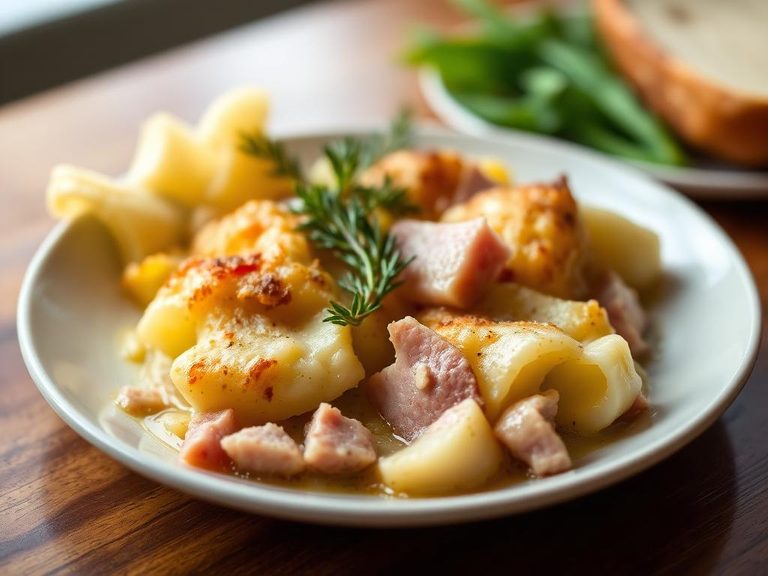

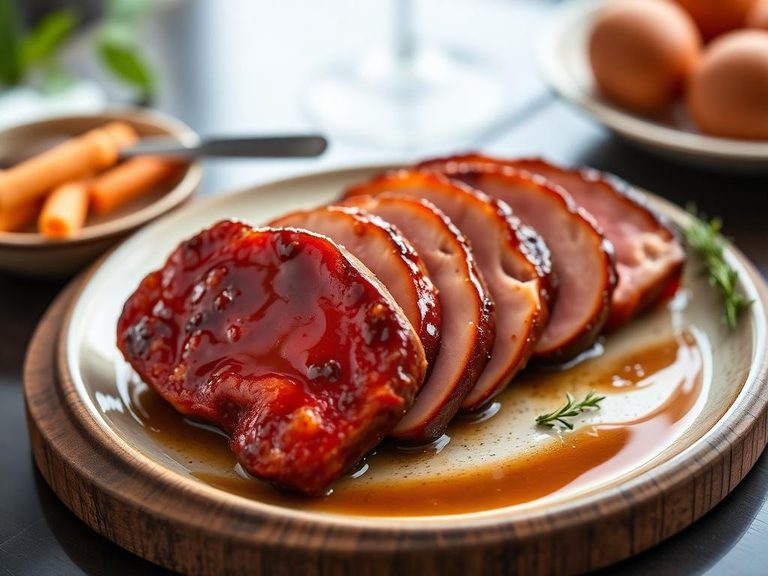
🌍 Where it's eaten
💡 Did you know?
The 'rump' cut comes from the upper leg of the pig, a muscle group that gets significant exercise, which is why it remains lean and develops a firm, dense texture perfect for roasting and slicing.
Full nutrition (USDA data · scales with serving)
| Water | 67.9 g |
| Energy | 137 kcal |
| Energy | 571 kj |
| Protein | 24.1 g |
| Total lipid (fat) | 4.3 g |
| Ash | 3.3 g |
| Carbohydrate, by difference | 0.48 g |
| Fiber, total dietary | 0.00 g |
| Total Sugars | 0.48 g |
| Sucrose | 0.07 g |
| Glucose | 0.24 g |
| Fructose | 0.17 g |
| Lactose | 0.00 g |
| Maltose | 0.00 g |
| Galactose | 0.00 g |
| Calcium, Ca | 10.0 mg |
| Iron, Fe | 1.0 mg |
| Magnesium, Mg | 22.0 mg |
| Phosphorus, P | 271 mg |
| Potassium, K | 511 mg |
| Sodium, Na | 861 mg |
| Zinc, Zn | 2.5 mg |
| Copper, Cu | 0.09 mg |
| Manganese, Mn | 0.02 mg |
| Selenium, Se | 49.9 ug |
| Vitamin C, total ascorbic acid | 0.00 mg |
| Thiamin | 0.33 mg |
| Riboflavin | 0.24 mg |
| Niacin | 7.6 mg |
| Pantothenic acid | 0.49 mg |
| Vitamin B-6 | 0.38 mg |
| Folate, total | 1.0 ug |
| Folic acid | 0.00 ug |
| Folate, food | 1.0 ug |
| Folate, DFE | 1.0 ug |
| Choline, total | 111 mg |
| Betaine | 3.0 mg |
| Vitamin B-12 | 0.61 ug |
| Vitamin B-12, added | 0.00 ug |
| Vitamin A, RAE | 11.0 ug |
| Retinol | 11.0 ug |
| Carotene, beta | 0.00 ug |
| Carotene, alpha | 0.00 ug |
| Cryptoxanthin, beta | 0.00 ug |
| Vitamin A, IU | 37.0 iu |
| Lycopene | 0.00 ug |
| Lutein + zeaxanthin | 0.00 ug |
| Vitamin E (alpha-tocopherol) | 0.27 mg |
| Vitamin E, added | 0.00 mg |
| Tocopherol, beta | 0.00 mg |
| Tocopherol, gamma | 0.04 mg |
| Tocopherol, delta | 0.00 mg |
| Tocotrienol, alpha | 0.00 mg |
| Tocotrienol, beta | 0.00 mg |
| Tocotrienol, gamma | 0.04 mg |
| Tocotrienol, delta | 0.00 mg |
| Vitamin K (phylloquinone) | 0.00 ug |
| Vitamin K (Dihydrophylloquinone) | 0.00 ug |
| Vitamin K (Menaquinone-4) | 9.6 ug |
| Alcohol, ethyl | 0.00 g |
| Caffeine | 0.00 mg |
| Theobromine | 0.00 mg |
Fat & fatty acid profile (per 100g)
| Fatty acids, total saturated | 1.4 g |
| SFA 4:0 | 0.00 g |
| SFA 6:0 | 0.00 g |
| SFA 8:0 | 0.00 g |
| SFA 10:0 | 0.00 g |
| SFA 12:0 | 0.00 g |
| SFA 14:0 | 0.05 g |
| SFA 15:0 | 0.00 g |
| SFA 16:0 | 0.92 g |
| SFA 17:0 | 0.01 g |
| SFA 18:0 | 0.42 g |
| SFA 20:0 | 0.01 g |
| SFA 22:0 | 0.01 g |
| Fatty acids, total monounsaturated | 2.0 g |
| MUFA 14:1 | 0.00 g |
| MUFA 15:1 | 0.00 g |
| MUFA 16:1 | 0.12 g |
| MUFA 17:1 | 0.00 g |
| MUFA 18:1 | 1.8 g |
| MUFA 18:1 c | 1.8 g |
| MUFA 20:1 | 0.03 g |
| MUFA 22:1 | 0.00 g |
| Fatty acids, total polyunsaturated | 0.71 g |
| PUFA 18:2 | 0.59 g |
| PUFA 18:2 n-6 c,c | 0.56 g |
| PUFA 18:2 CLAs | 0.02 g |
| PUFA 18:3 | 0.02 g |
| PUFA 18:3 n-3 c,c,c (ALA) | 0.02 g |
| PUFA 18:3 n-6 c,c,c | 0.00 g |
| PUFA 18:4 | 0.00 g |
| PUFA 20:2 n-6 c,c | 0.02 g |
| PUFA 20:3 | 0.00 g |
| PUFA 20:4 | 0.08 g |
| PUFA 20:5 n-3 (EPA) | 0.00 g |
| PUFA 22:5 n-3 (DPA) | 0.00 g |
| PUFA 22:6 n-3 (DHA) | 0.00 g |
| Fatty acids, total trans | 0.04 g |
| Fatty acids, total trans-monoenoic | 0.02 g |
| TFA 18:1 t | 0.02 g |
| TFA 18:2 t,t | 0.01 g |
| Fatty acids, total trans-polyenoic | 0.01 g |
| Cholesterol | 72.0 mg |
Amino acid profile (per 100g)
| Tryptophan | 0.23 g |
| Threonine | 1.1 g |
| Isoleucine | 1.1 g |
| Leucine | 1.9 g |
| Lysine | 2.0 g |
| Methionine | 0.58 g |
| Cystine | 0.27 g |
| Phenylalanine | 0.97 g |
| Tyrosine | 0.78 g |
| Valine | 1.2 g |
| Arginine | 1.5 g |
| Histidine | 1.1 g |
| Alanine | 1.4 g |
| Aspartic acid | 2.1 g |
| Glutamic acid | 3.5 g |
| Glycine | 1.3 g |
| Proline | 1.0 g |
| Serine | 0.94 g |
| Hydroxyproline | 0.16 g |
FAQ
Is this a good cut for low-carb or keto diets?
Absolutely. With less than 1g of carbs per 100g and high protein, it's an ideal protein source for low-carb and ketogenic eating plans.
How does the 'natural juices' label affect cooking?
It means the ham wasn't injected with a water-based solution, so it has a more concentrated ham flavor and will produce less liquid during cooking. It's great for roasting where you want a caramelized exterior.
Can I eat the bone?
The bone itself isn't eaten, but it's invaluable for adding flavor. Simmer the bone with vegetables to make a rich, homemade stock for soups and stews.
Nutrient density (calculated · NRF9.3)
Nutrient Rich Foods index: beneficial nutrients (protein, fiber, vitamins, minerals) minus saturated fat, added sugar & sodium, per 100 kcal.
NRF9.3 index — Fulgoni, Keast & Drewnowski, 2009. Computed from USDA nutrients.
Weight-loss friendliness (composite index)
Energy density 1.37 kcal/g · 70% calories from protein · 0.0 g fiber · 0.5 g sugar per 100 g.
Composite of energy density (Rolls et al., 1999), protein & fiber satiety, minus sugar. A calculated heuristic — ranks satiety-per-calorie, not a clinical measure.
Dietary load (calculated from USDA values)
Potential renal acid load. Positive = acid-forming, negative = alkaline-forming.
Sodium-to-potassium ratio: 1.68 (lower is better — aim for ≤ 1)
Sodium:potassium per WHO potassium guidance. Computed from USDA nutrients.