

Pork, cured, ham -- water added, shank, bone-in, separable lean only, heated, roasted
Whole food · Pork Products

Photo: Wikipedia
This is a lean, roasted cut from the lower leg of a cured ham, with water added during processing for moisture and tenderness. Its texture is firm yet yielding, with a savory, salty, and subtly smoky flavor profile. Nutritionally, it's a powerhouse of protein with minimal fat and carbohydrates.
Calorie split: 65% protein · 4% carbs · 31% fat
↓ Full nutrition💚 Why it's loved
People cherish it for its deep, satisfying umami flavor and its incredible versatility in the kitchen, from simple sandwiches to elegant salads. It holds a special place in many culinary traditions as a reliable, flavorful protein that can be served hot or cold.
⚠️ Watch-outs & how to enjoy it better
The primary concern is its high sodium content from the curing process, which can be an issue for those monitoring salt intake. To counteract this, pair it with potassium-rich foods like leafy greens or unsalted legumes, and rinse slices lightly under water before using. Also, be mindful of portion sizes.
Key benefits
- Excellent source of high-quality protein for muscle maintenance.
- Very low in carbohydrates and sugar, suitable for low-carb diets.
- Provides essential minerals like phosphorus and zinc.
- A leaner option compared to many other cured pork cuts.
- Offers a concentrated, savory flavor base for dishes.
🍽️ Popular dishes
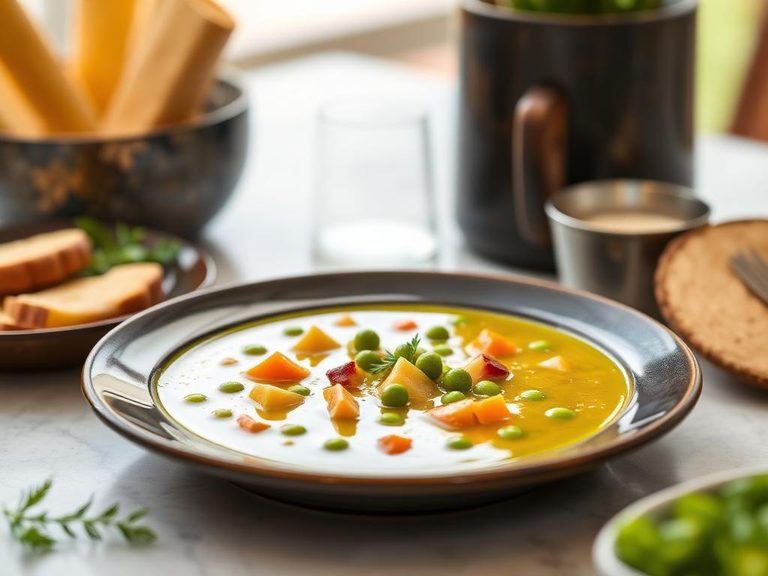
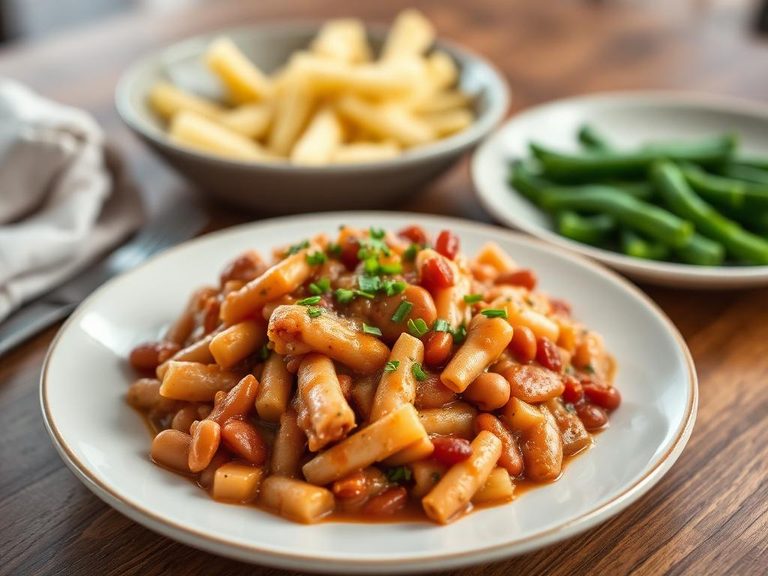
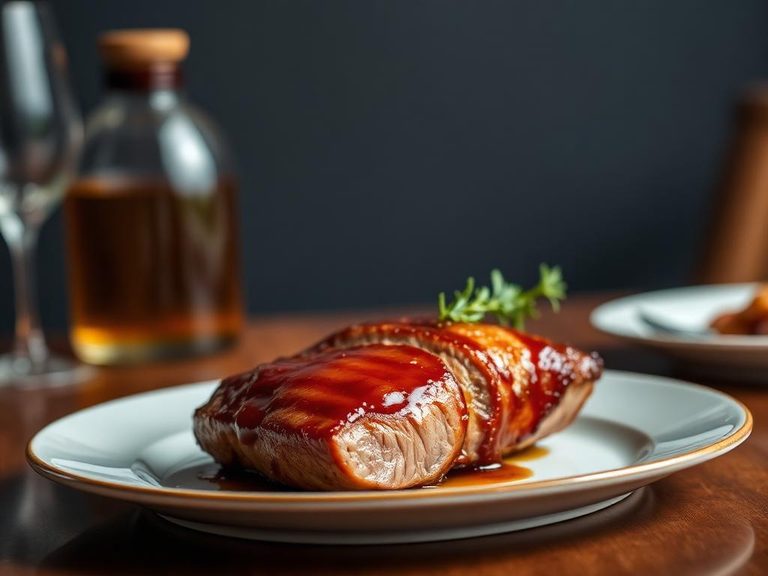
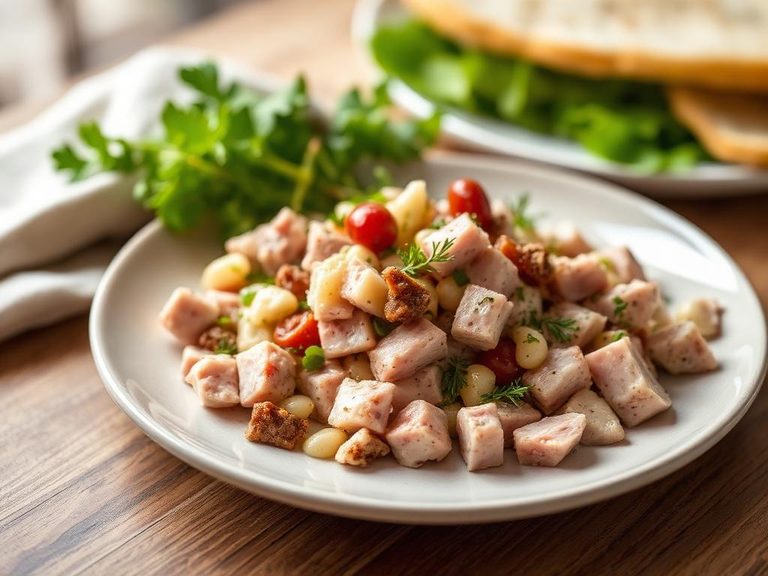
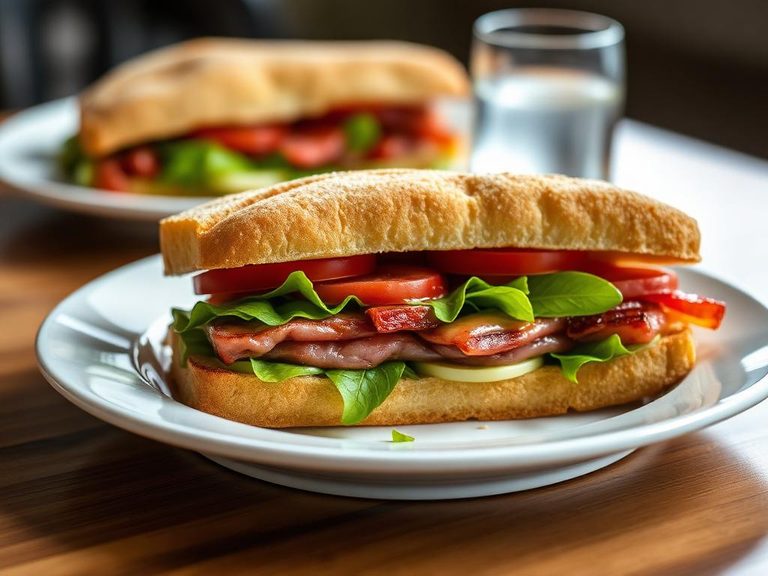
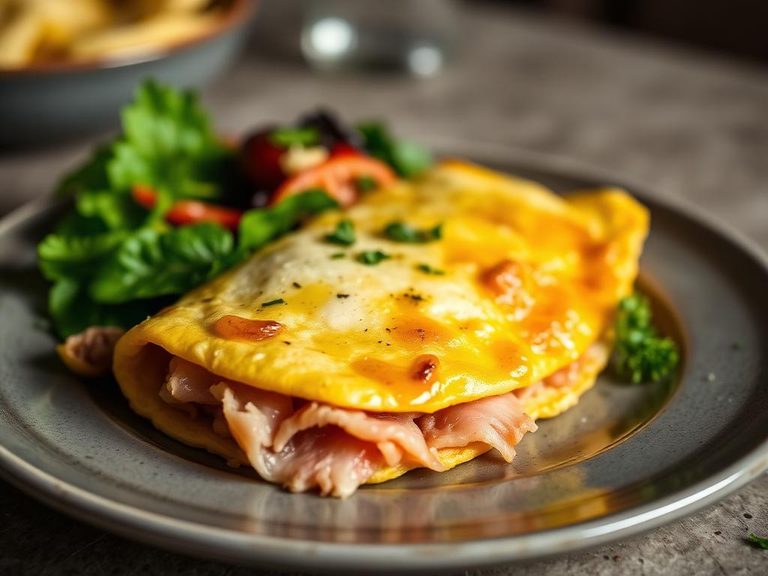
🌍 Where it's eaten
💡 Did you know?
The 'water added' designation means the ham was injected with a brine solution, which can increase its weight by up to 10%, making it juicier but also adding to its sodium content.
Full nutrition (USDA data · scales with serving)
| Water | 70.0 g |
| Energy | 128 kcal |
| Energy | 537 kj |
| Protein | 20.9 g |
| Total lipid (fat) | 4.4 g |
| Ash | 3.5 g |
| Carbohydrate, by difference | 1.2 g |
| Fiber, total dietary | 0.00 g |
| Total Sugars | 0.91 g |
| Sucrose | 0.70 g |
| Glucose | 0.15 g |
| Fructose | 0.06 g |
| Lactose | 0.00 g |
| Maltose | 0.00 g |
| Galactose | 0.00 g |
| Calcium, Ca | 9.0 mg |
| Iron, Fe | 1.6 mg |
| Magnesium, Mg | 18.0 mg |
| Phosphorus, P | 216 mg |
| Potassium, K | 241 mg |
| Sodium, Na | 1060 mg |
| Zinc, Zn | 3.1 mg |
| Copper, Cu | 0.12 mg |
| Manganese, Mn | 0.02 mg |
| Selenium, Se | 26.2 ug |
| Vitamin C, total ascorbic acid | 0.00 mg |
| Thiamin | 0.26 mg |
| Riboflavin | 0.19 mg |
| Niacin | 5.1 mg |
| Pantothenic acid | 0.54 mg |
| Vitamin B-6 | 0.35 mg |
| Folate, total | 1.0 ug |
| Folic acid | 0.00 ug |
| Folate, food | 1.0 ug |
| Folate, DFE | 1.0 ug |
| Choline, total | 91.1 mg |
| Betaine | 2.9 mg |
| Vitamin B-12 | 0.60 ug |
| Vitamin B-12, added | 0.00 ug |
| Vitamin A, RAE | 11.0 ug |
| Retinol | 11.0 ug |
| Carotene, beta | 0.00 ug |
| Carotene, alpha | 0.00 ug |
| Cryptoxanthin, beta | 0.00 ug |
| Vitamin A, IU | 37.0 iu |
| Lycopene | 0.00 ug |
| Lutein + zeaxanthin | 0.00 ug |
| Vitamin E (alpha-tocopherol) | 0.28 mg |
| Vitamin E, added | 0.00 mg |
| Tocopherol, beta | 0.01 mg |
| Tocopherol, gamma | 0.07 mg |
| Tocopherol, delta | 0.01 mg |
| Tocotrienol, alpha | 0.02 mg |
| Tocotrienol, beta | 0.00 mg |
| Tocotrienol, gamma | 0.01 mg |
| Tocotrienol, delta | 0.00 mg |
| Vitamin K (phylloquinone) | 0.00 ug |
| Vitamin K (Dihydrophylloquinone) | 0.00 ug |
| Vitamin K (Menaquinone-4) | 5.6 ug |
| Alcohol, ethyl | 0.00 g |
| Caffeine | 0.00 mg |
| Theobromine | 0.00 mg |
Fat & fatty acid profile (per 100g)
| Fatty acids, total saturated | 1.4 g |
| SFA 4:0 | 0.00 g |
| SFA 6:0 | 0.00 g |
| SFA 8:0 | 0.00 g |
| SFA 10:0 | 0.00 g |
| SFA 12:0 | 0.00 g |
| SFA 14:0 | 0.05 g |
| SFA 15:0 | 0.00 g |
| SFA 16:0 | 0.88 g |
| SFA 17:0 | 0.01 g |
| SFA 18:0 | 0.46 g |
| SFA 20:0 | 0.01 g |
| SFA 22:0 | 0.01 g |
| Fatty acids, total monounsaturated | 1.9 g |
| MUFA 14:1 | 0.00 g |
| MUFA 15:1 | 0.00 g |
| MUFA 16:1 | 0.09 g |
| MUFA 17:1 | 0.00 g |
| MUFA 18:1 | 1.8 g |
| MUFA 18:1 c | 1.8 g |
| MUFA 20:1 | 0.03 g |
| MUFA 22:1 | 0.00 g |
| Fatty acids, total polyunsaturated | 0.64 g |
| PUFA 18:2 | 0.54 g |
| PUFA 18:2 n-6 c,c | 0.51 g |
| PUFA 18:2 CLAs | 0.02 g |
| PUFA 18:3 | 0.01 g |
| PUFA 18:3 n-3 c,c,c (ALA) | 0.01 g |
| PUFA 18:3 n-6 c,c,c | 0.00 g |
| PUFA 18:4 | 0.00 g |
| PUFA 20:2 n-6 c,c | 0.02 g |
| PUFA 20:3 | 0.00 g |
| PUFA 20:4 | 0.07 g |
| PUFA 20:5 n-3 (EPA) | 0.00 g |
| PUFA 22:5 n-3 (DPA) | 0.00 g |
| PUFA 22:6 n-3 (DHA) | 0.00 g |
| Fatty acids, total trans | 0.03 g |
| Fatty acids, total trans-monoenoic | 0.01 g |
| TFA 18:1 t | 0.01 g |
| TFA 18:2 t,t | 0.01 g |
| Fatty acids, total trans-polyenoic | 0.01 g |
| Cholesterol | 65.0 mg |
Amino acid profile (per 100g)
| Tryptophan | 0.20 g |
| Threonine | 0.94 g |
| Isoleucine | 0.94 g |
| Leucine | 1.7 g |
| Lysine | 1.8 g |
| Methionine | 0.50 g |
| Cystine | 0.23 g |
| Phenylalanine | 0.84 g |
| Tyrosine | 0.68 g |
| Valine | 1.1 g |
| Arginine | 1.3 g |
| Histidine | 0.91 g |
| Alanine | 1.2 g |
| Aspartic acid | 1.8 g |
| Glutamic acid | 3.0 g |
| Glycine | 1.1 g |
| Proline | 0.90 g |
| Serine | 0.82 g |
| Hydroxyproline | 0.14 g |
FAQ
What's the difference between this and regular cured ham?
This specific cut is from the shank (lower leg), is lean-only, and has water added. Regular cured ham may include more fat, come from other parts of the leg, and may not have added water, affecting texture and sodium levels.
Is it pre-cooked?
Yes, as a cured and heated product, it is fully cooked and safe to eat cold. Heating it, like roasting or pan-searing, is primarily for flavor enhancement and texture.
How can I reduce the saltiness before cooking?
Soaking the ham in cold water for 1-2 hours, changing the water once, can help draw out some surface salt. Alternatively, pair it with unsalted, starchy sides like potatoes or rice during the meal to balance the flavors.
Nutrient density (calculated · NRF9.3)
Nutrient Rich Foods index: beneficial nutrients (protein, fiber, vitamins, minerals) minus saturated fat, added sugar & sodium, per 100 kcal.
NRF9.3 index — Fulgoni, Keast & Drewnowski, 2009. Computed from USDA nutrients.
Weight-loss friendliness (composite index)
Energy density 1.28 kcal/g · 65% calories from protein · 0.0 g fiber · 0.9 g sugar per 100 g.
Composite of energy density (Rolls et al., 1999), protein & fiber satiety, minus sugar. A calculated heuristic — ranks satiety-per-calorie, not a clinical measure.
Dietary load (calculated from USDA values)
Potential renal acid load. Positive = acid-forming, negative = alkaline-forming.
Sodium-to-potassium ratio: 4.40 (lower is better — aim for ≤ 1)
Sodium:potassium per WHO potassium guidance. Computed from USDA nutrients.