

Pork, cured, ham and water product, rump, bone-in, separable lean only, heated, roasted
Whole food · Pork Products
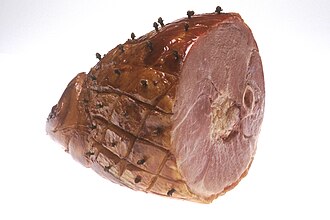
Photo: Wikipedia
This is a lean, bone-in cut of cured pork rump, roasted to a savory, slightly smoky finish. Its texture is firm yet tender, with a clean, meaty flavor and a satisfying, low-fat bite. Nutritionally, it's a protein powerhouse, delivering over 21 grams per 100 grams with minimal fat and carbohydrates.
Calorie split: 64% protein · 3% carbs · 32% fat
↓ Full nutrition💚 Why it's loved
People love it for its deep, savory umami flavor that's enhanced by roasting, and its incredible versatility in sandwiches, salads, and main courses. It's a staple of comfort food and holiday feasts across many cultures.
⚠️ Watch-outs & how to enjoy it better
As a cured meat, it can be high in sodium, which may be a concern for those monitoring blood pressure. To counteract this, pair it with potassium-rich foods like leafy greens or sweet potatoes, and practice portion control. The roasting process can also create a flavorful but salty crust, so consider rinsing slices lightly or balancing with a fresh, acidic side like a vinegar-based slaw.
Key benefits
- Excellent source of high-quality protein for muscle maintenance.
- Very low in fat, especially saturated fat.
- Carb-free, making it suitable for low-carb and ketogenic diets.
- Provides essential B vitamins like thiamine and niacin.
- Contains minerals like selenium and phosphorus.
🍽️ Popular dishes



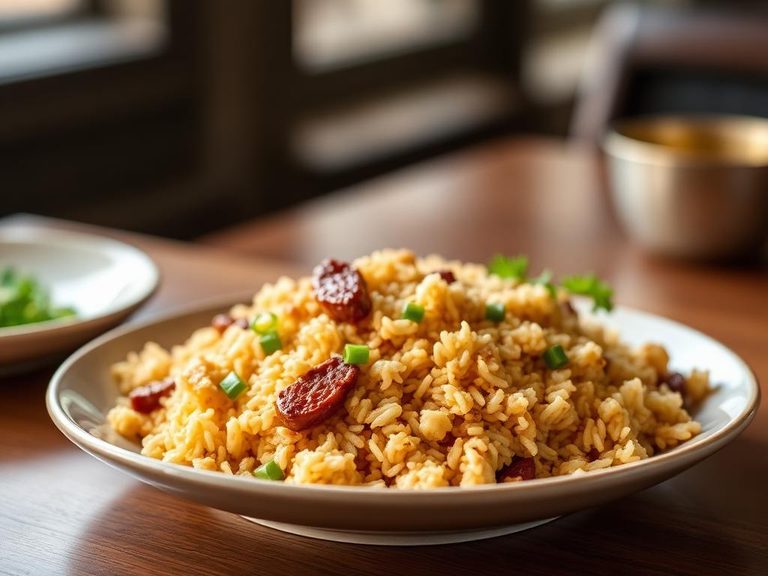
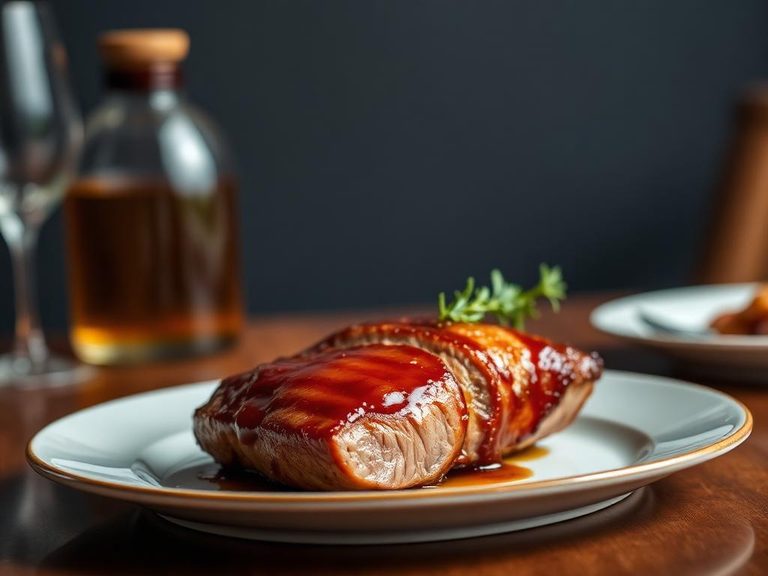
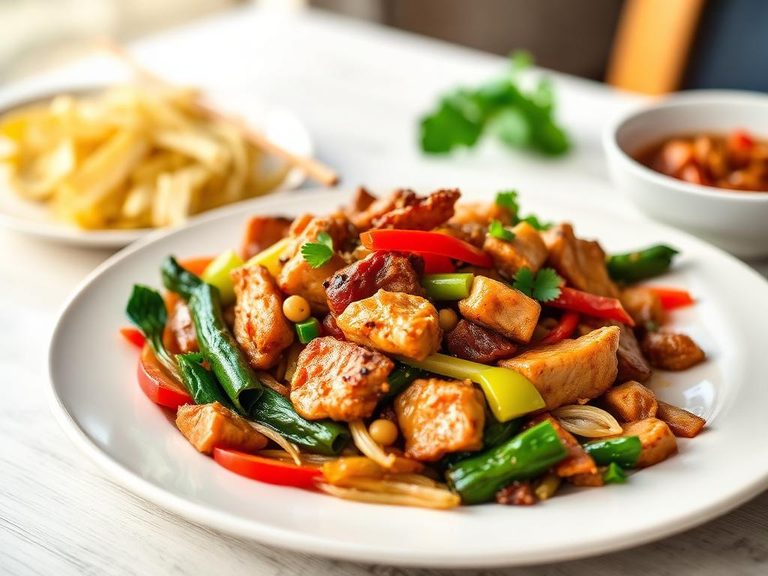
🌍 Where it's eaten
💡 Did you know?
The 'ham and water product' designation means the cut has been injected or marinated with a water-based solution to increase moisture and weight, a common practice to ensure juiciness in lean cuts after roasting.
Full nutrition (USDA data · scales with serving)
| Water | 69.5 g |
| Energy | 131 kcal |
| Energy | 550 kj |
| Protein | 21.3 g |
| Total lipid (fat) | 4.7 g |
| Ash | 3.5 g |
| Carbohydrate, by difference | 1.1 g |
| Fiber, total dietary | 0.00 g |
| Total Sugars | 1.1 g |
| Sucrose | 0.32 g |
| Glucose | 0.63 g |
| Fructose | 0.21 g |
| Lactose | 0.00 g |
| Maltose | 0.00 g |
| Galactose | 0.00 g |
| Calcium, Ca | 10.0 mg |
| Iron, Fe | 0.87 mg |
| Magnesium, Mg | 19.0 mg |
| Phosphorus, P | 221 mg |
| Potassium, K | 264 mg |
| Sodium, Na | 1267 mg |
| Zinc, Zn | 2.1 mg |
| Copper, Cu | 0.09 mg |
| Manganese, Mn | 0.02 mg |
| Selenium, Se | 43.4 ug |
| Vitamin C, total ascorbic acid | 0.00 mg |
| Thiamin | 0.33 mg |
| Riboflavin | 0.19 mg |
| Niacin | 4.0 mg |
| Pantothenic acid | 0.62 mg |
| Vitamin B-6 | 0.34 mg |
| Folate, total | 2.0 ug |
| Folic acid | 0.00 ug |
| Folate, food | 2.0 ug |
| Folate, DFE | 2.0 ug |
| Choline, total | 94.0 mg |
| Betaine | 3.6 mg |
| Vitamin B-12 | 0.49 ug |
| Vitamin B-12, added | 0.00 ug |
| Vitamin A, RAE | 11.0 ug |
| Retinol | 11.0 ug |
| Carotene, beta | 0.00 ug |
| Carotene, alpha | 0.00 ug |
| Cryptoxanthin, beta | 0.00 ug |
| Vitamin A, IU | 38.0 iu |
| Lycopene | 0.00 ug |
| Lutein + zeaxanthin | 0.00 ug |
| Vitamin E (alpha-tocopherol) | 0.21 mg |
| Vitamin E, added | 0.00 mg |
| Tocopherol, beta | 0.02 mg |
| Tocopherol, gamma | 0.05 mg |
| Tocopherol, delta | 0.01 mg |
| Tocotrienol, alpha | 0.02 mg |
| Tocotrienol, beta | 0.00 mg |
| Tocotrienol, gamma | 0.03 mg |
| Tocotrienol, delta | 0.00 mg |
| Vitamin K (phylloquinone) | 0.10 ug |
| Vitamin K (Dihydrophylloquinone) | 0.00 ug |
| Vitamin K (Menaquinone-4) | 6.1 ug |
| Alcohol, ethyl | 0.00 g |
| Caffeine | 0.00 mg |
| Theobromine | 0.00 mg |
Fat & fatty acid profile (per 100g)
| Fatty acids, total saturated | 1.5 g |
| SFA 4:0 | 0.00 g |
| SFA 6:0 | 0.00 g |
| SFA 8:0 | 0.00 g |
| SFA 10:0 | 0.00 g |
| SFA 12:0 | 0.00 g |
| SFA 14:0 | 0.06 g |
| SFA 15:0 | 0.00 g |
| SFA 16:0 | 0.96 g |
| SFA 17:0 | 0.01 g |
| SFA 18:0 | 0.49 g |
| SFA 20:0 | 0.01 g |
| SFA 22:0 | 0.01 g |
| Fatty acids, total monounsaturated | 2.1 g |
| MUFA 14:1 | 0.00 g |
| MUFA 15:1 | 0.00 g |
| MUFA 16:1 | 0.10 g |
| MUFA 17:1 | 0.00 g |
| MUFA 18:1 | 2.0 g |
| MUFA 18:1 c | 2.0 g |
| MUFA 20:1 | 0.04 g |
| MUFA 22:1 | 0.00 g |
| Fatty acids, total polyunsaturated | 0.63 g |
| PUFA 18:2 | 0.54 g |
| PUFA 18:2 n-6 c,c | 0.51 g |
| PUFA 18:2 CLAs | 0.02 g |
| PUFA 18:3 | 0.02 g |
| PUFA 18:3 n-3 c,c,c (ALA) | 0.02 g |
| PUFA 18:3 n-6 c,c,c | 0.00 g |
| PUFA 18:4 | 0.00 g |
| PUFA 20:2 n-6 c,c | 0.02 g |
| PUFA 20:3 | 0.00 g |
| PUFA 20:4 | 0.05 g |
| PUFA 20:5 n-3 (EPA) | 0.00 g |
| PUFA 22:5 n-3 (DPA) | 0.00 g |
| PUFA 22:6 n-3 (DHA) | 0.00 g |
| Fatty acids, total trans | 0.04 g |
| Fatty acids, total trans-monoenoic | 0.02 g |
| TFA 18:1 t | 0.02 g |
| TFA 18:2 t,t | 0.02 g |
| Fatty acids, total trans-polyenoic | 0.02 g |
| Cholesterol | 66.0 mg |
Amino acid profile (per 100g)
| Tryptophan | 0.20 g |
| Threonine | 0.95 g |
| Isoleucine | 0.96 g |
| Leucine | 1.7 g |
| Lysine | 1.8 g |
| Methionine | 0.51 g |
| Cystine | 0.24 g |
| Phenylalanine | 0.85 g |
| Tyrosine | 0.69 g |
| Valine | 1.1 g |
| Arginine | 1.4 g |
| Histidine | 0.93 g |
| Alanine | 1.3 g |
| Aspartic acid | 1.9 g |
| Glutamic acid | 3.0 g |
| Glycine | 1.1 g |
| Proline | 0.91 g |
| Serine | 0.83 g |
| Hydroxyproline | 0.14 g |
FAQ
What's the difference between this and a regular ham?
This specific cut is from the rump (the upper part of the leg), is bone-in, and is described as a 'ham and water product.' It's leaner than many other ham cuts and has been processed with added moisture, while a 'regular' ham might refer to the whole leg or other cuts with varying fat content.
Is this a good choice for a high-protein diet?
Yes, it's an excellent choice. With 21.28g of protein per 100g and very little fat or carbs, it's one of the most protein-dense and lean options available for supporting muscle growth and repair.
How should I store leftover roasted ham?
Store leftovers in an airtight container in the refrigerator for 3-4 days. For longer storage, slice or dice it and freeze in freezer-safe bags for up to 2 months. Reheat gently in a skillet or microwave to avoid drying it out.
Nutrient density (calculated · NRF9.3)
Nutrient Rich Foods index: beneficial nutrients (protein, fiber, vitamins, minerals) minus saturated fat, added sugar & sodium, per 100 kcal.
NRF9.3 index — Fulgoni, Keast & Drewnowski, 2009. Computed from USDA nutrients.
Weight-loss friendliness (composite index)
Energy density 1.31 kcal/g · 65% calories from protein · 0.0 g fiber · 1.1 g sugar per 100 g.
Composite of energy density (Rolls et al., 1999), protein & fiber satiety, minus sugar. A calculated heuristic — ranks satiety-per-calorie, not a clinical measure.
Dietary load (calculated from USDA values)
Potential renal acid load. Positive = acid-forming, negative = alkaline-forming.
Sodium-to-potassium ratio: 4.80 (lower is better — aim for ≤ 1)
Sodium:potassium per WHO potassium guidance. Computed from USDA nutrients.