

Formulated bar, POWER BAR, chocolate
Whole food · Snacks

Photo: Wikipedia
The Power Bar Chocolate is a dense, chewy, and slightly gritty formulated energy bar designed for quick fuel during athletic performance. Its flavor is a straightforward, semi-sweet chocolate that is more functional than indulgent, with a texture that can feel a bit sticky and compact. Nutritionally, it is a high-carbohydrate, moderate-protein bar that provides a rapid energy boost.
Calorie split: 16% protein · 77% carbs · 8% fat
↓ Full nutrition💚 Why it's loved
People love it for its reliable, no-fuss energy delivery during long workouts or hikes, and its familiar chocolate flavor makes it an easy choice. It's a staple in the endurance sports community, often seen as a trusted tool rather than a treat.
⚠️ Watch-outs & how to enjoy it better
The bar's high sugar content (30.07g per 100g) can lead to blood-sugar spikes and subsequent crashes, especially if consumed without activity. It may also feel overly dense or 'chalky' to some, and its high carbohydrate load is not ideal for low-carb diets. To mitigate, pair it with a source of healthy fat or protein (like nuts) to slow sugar absorption, or use it strictly around exercise sessions.
Key benefits
- Provides a quick, concentrated source of carbohydrates for energy.
- Offers a moderate protein content (14.15g per 100g) for muscle support.
- Contains dietary fiber (5.7g per 100g) to aid digestion.
- Convenient, portable format for on-the-go nutrition.
- Designed for sustained energy release during prolonged activity.
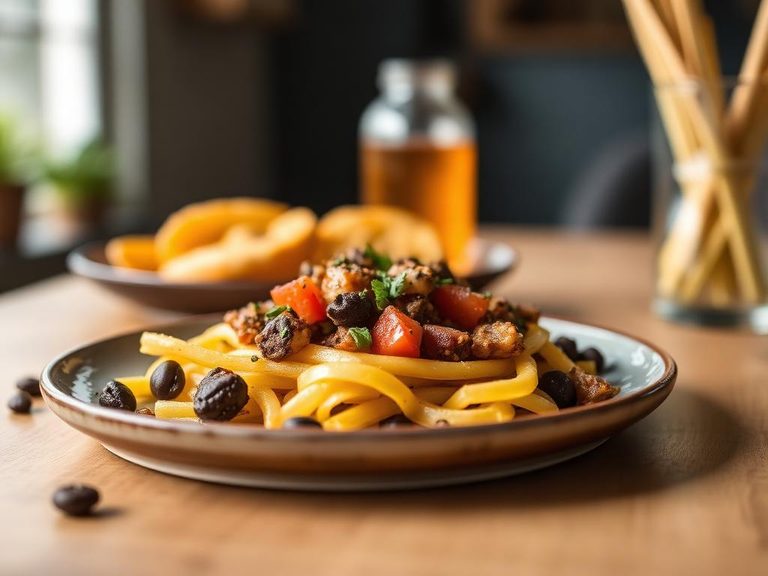
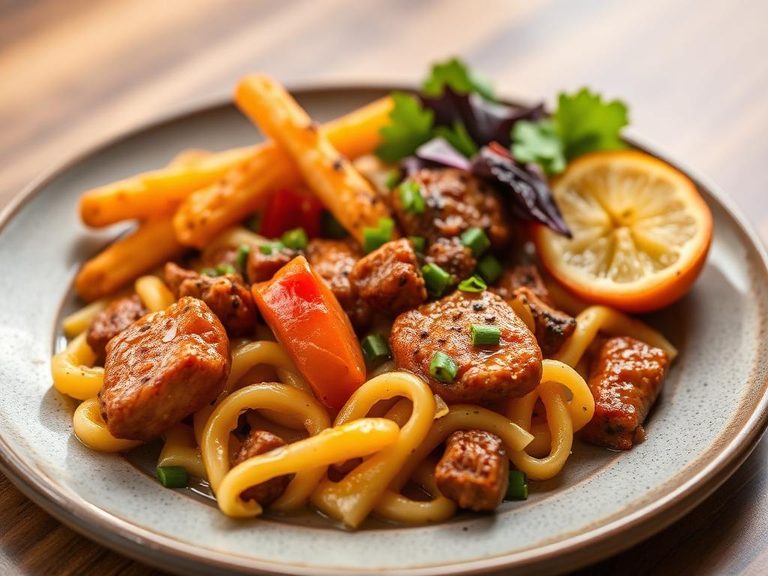
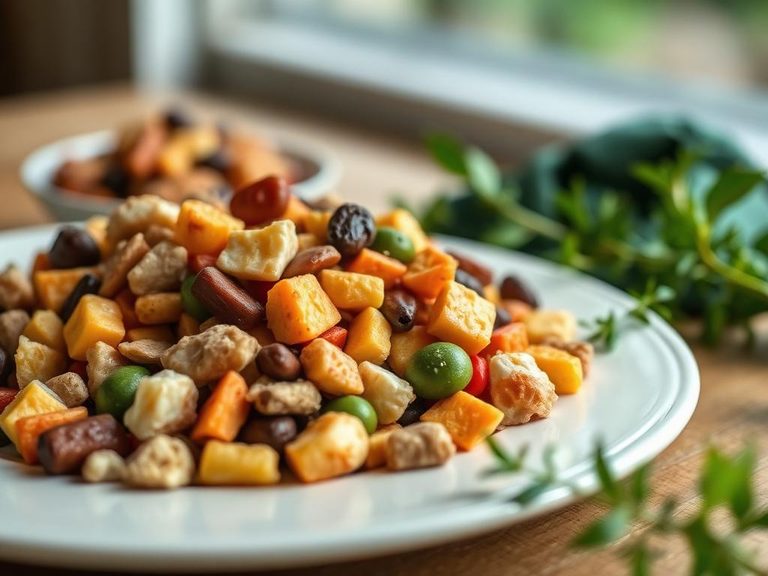
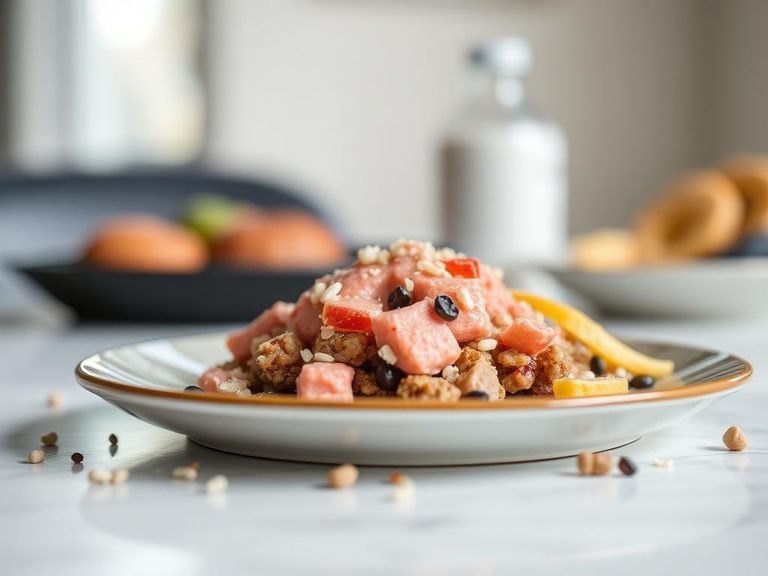
🍽️ Popular dishes

🌍 Where it's eaten
💡 Did you know?
The original Power Bar was created in 1986 by a bicycle racer and was one of the first commercially successful energy bars, essentially creating the modern 'energy bar' category.
Full nutrition (USDA data · scales with serving)
| Water | 9.8 g |
| Energy | 363 kcal |
| Energy | 1519 kj |
| Protein | 14.2 g |
| Total lipid (fat) | 3.1 g |
| Ash | 3.3 g |
| Carbohydrate, by difference | 69.6 g |
| Fiber, total dietary | 5.7 g |
| Total Sugars | 30.1 g |
| Sucrose | 0.52 g |
| Glucose | 11.9 g |
| Fructose | 16.0 g |
| Lactose | 0.00 g |
| Maltose | 1.6 g |
| Galactose | 0.00 g |
| Starch | 18.7 g |
| Calcium, Ca | 504 mg |
| Iron, Fe | 11.7 mg |
| Magnesium, Mg | 248 mg |
| Phosphorus, P | 614 mg |
| Potassium, K | 362 mg |
| Sodium, Na | 308 mg |
| Zinc, Zn | 10.0 mg |
| Copper, Cu | 1.4 mg |
| Manganese, Mn | 1.6 mg |
| Selenium, Se | 7.8 ug |
| Vitamin C, total ascorbic acid | 92.3 mg |
| Thiamin | 8.1 mg |
| Riboflavin | 1.9 mg |
| Niacin | 32.6 mg |
| Pantothenic acid | 15.9 mg |
| Vitamin B-6 | 2.2 mg |
| Folate, total | 615 ug |
| Folic acid | 615 ug |
| Folate, food | 0.00 ug |
| Folate, DFE | 1046 ug |
| Choline, total | 18.4 mg |
| Betaine | 4.3 mg |
| Vitamin B-12 | 5.6 ug |
| Vitamin B-12, added | 5.6 ug |
| Vitamin A, RAE | 0.00 ug |
| Retinol | 0.00 ug |
| Carotene, beta | 0.00 ug |
| Carotene, alpha | 0.00 ug |
| Cryptoxanthin, beta | 0.00 ug |
| Vitamin A, IU | 0.00 iu |
| Lycopene | 0.00 ug |
| Lutein + zeaxanthin | 0.00 ug |
| Vitamin E (alpha-tocopherol) | 8.3 mg |
| Vitamin E, added | 8.3 mg |
| Tocopherol, beta | 0.01 mg |
| Tocopherol, gamma | 0.33 mg |
| Tocopherol, delta | 0.05 mg |
| Tocotrienol, alpha | 1.0 mg |
| Tocotrienol, beta | 0.00 mg |
| Tocotrienol, gamma | 0.08 mg |
| Tocotrienol, delta | 0.00 mg |
| Vitamin D (D2 + D3), International Units | 0.00 iu |
| Vitamin D (D2 + D3) | 0.00 ug |
| Vitamin K (phylloquinone) | 1.1 ug |
| Vitamin K (Dihydrophylloquinone) | 0.00 ug |
| Alcohol, ethyl | 0.00 g |
| Caffeine | 0.00 mg |
| Theobromine | 0.00 mg |
Fat & fatty acid profile (per 100g)
| Fatty acids, total saturated | 1.3 g |
| SFA 4:0 | 0.00 g |
| SFA 6:0 | 0.00 g |
| SFA 8:0 | 0.00 g |
| SFA 10:0 | 0.00 g |
| SFA 12:0 | 0.00 g |
| SFA 14:0 | 0.01 g |
| SFA 15:0 | 0.00 g |
| SFA 16:0 | 0.64 g |
| SFA 17:0 | 0.01 g |
| SFA 18:0 | 0.63 g |
| SFA 20:0 | 0.02 g |
| SFA 22:0 | 0.00 g |
| SFA 24:0 | 0.00 g |
| Fatty acids, total monounsaturated | 1.1 g |
| MUFA 14:1 | 0.00 g |
| MUFA 15:1 | 0.00 g |
| MUFA 16:1 | 0.01 g |
| MUFA 16:1 c | 0.01 g |
| MUFA 17:1 | 0.00 g |
| MUFA 18:1 | 1.0 g |
| MUFA 18:1 c | 1.0 g |
| MUFA 20:1 | 0.01 g |
| MUFA 22:1 | 0.00 g |
| MUFA 22:1 c | 0.00 g |
| MUFA 24:1 c | 0.00 g |
| Fatty acids, total polyunsaturated | 0.59 g |
| PUFA 18:2 | 0.56 g |
| PUFA 18:2 n-6 c,c | 0.56 g |
| PUFA 18:2 CLAs | 0.00 g |
| PUFA 18:3 | 0.03 g |
| PUFA 18:3 n-3 c,c,c (ALA) | 0.03 g |
| PUFA 18:3 n-6 c,c,c | 0.00 g |
| PUFA 18:4 | 0.00 g |
| PUFA 20:2 n-6 c,c | 0.00 g |
| PUFA 20:3 | 0.00 g |
| PUFA 20:3 n-3 | 0.00 g |
| PUFA 20:3 n-6 | 0.00 g |
| PUFA 20:4 | 0.00 g |
| PUFA 20:5 n-3 (EPA) | 0.00 g |
| PUFA 22:5 n-3 (DPA) | 0.00 g |
| PUFA 22:6 n-3 (DHA) | 0.00 g |
| Fatty acids, total trans | 0.01 g |
| Fatty acids, total trans-monoenoic | 0.01 g |
| TFA 16:1 t | 0.00 g |
| TFA 18:1 t | 0.01 g |
| TFA 22:1 t | 0.00 g |
| TFA 18:2 t not further defined | 0.00 g |
| Fatty acids, total trans-polyenoic | 0.00 g |
| Cholesterol | 0.00 mg |
Amino acid profile (per 100g)
| Tryptophan | 0.19 g |
| Threonine | 0.54 g |
| Isoleucine | 0.66 g |
| Leucine | 1.3 g |
| Lysine | 0.98 g |
| Methionine | 0.29 g |
| Cystine | 0.22 g |
| Phenylalanine | 0.74 g |
| Tyrosine | 0.27 g |
| Valine | 0.83 g |
| Arginine | 0.61 g |
| Histidine | 0.36 g |
| Alanine | 0.51 g |
| Aspartic acid | 1.3 g |
| Glutamic acid | 3.1 g |
| Glycine | 0.42 g |
| Proline | 1.2 g |
| Serine | 0.86 g |
| Hydroxyproline | 0.09 g |
FAQ
Is a Power Bar a meal replacement?
No, it is designed as a supplemental energy source, not a full meal. It lacks the balanced macro and micronutrient profile needed for a complete meal.
When is the best time to eat a Power Bar?
It is most effective when consumed 30-60 minutes before or during prolonged physical activity (like running, cycling, or hiking) to provide sustained energy.
How does it differ from a protein bar?
A Power Bar is primarily a carbohydrate-focused energy bar, while a protein bar is designed to deliver a higher protein content for muscle repair and satiety.
Nutrient density (calculated · NRF9.3)
Nutrient Rich Foods index: beneficial nutrients (protein, fiber, vitamins, minerals) minus saturated fat, added sugar & sodium, per 100 kcal.
NRF9.3 index — Fulgoni, Keast & Drewnowski, 2009. Computed from USDA nutrients.
Weight-loss friendliness (composite index)
Energy density 3.63 kcal/g · 16% calories from protein · 5.7 g fiber · 30.1 g sugar per 100 g.
Composite of energy density (Rolls et al., 1999), protein & fiber satiety, minus sugar. A calculated heuristic — ranks satiety-per-calorie, not a clinical measure.
Dietary load (calculated from USDA values)
Potential renal acid load. Positive = acid-forming, negative = alkaline-forming.
Sodium-to-potassium ratio: 0.85 (lower is better — aim for ≤ 1)
Sodium:potassium per WHO potassium guidance. Computed from USDA nutrients.