

CRACKER BARREL, chicken tenderloin platter, fried, from kid's menu
Whole food · Restaurant Foods

Photo: Wikipedia
This kid's menu staple features tender chicken tenderloins, lightly battered and fried to a golden, crispy exterior with a juicy, mild interior. At 294 kcal per 100g, it's a protein-rich option that balances satisfying crunch with a familiar, comforting flavor profile. The dish delivers a solid 18.67g of protein alongside 20.24g of carbohydrates, making it a hearty, energy-dense choice for young appetites.
Calorie split: 25% protein · 28% carbs · 47% fat
↓ Full nutrition💚 Why it's loved
People love it for its classic, crowd-pleasing combination of crispy coating and tender chicken, which feels like a comforting treat. It's a versatile, no-fuss option that fits seamlessly into family dining, especially for kids who prefer simple, predictable flavors.
⚠️ Watch-outs & how to enjoy it better
The fried preparation can be high in sodium and saturated fat, which may concern those monitoring heart health or blood pressure. To counteract, pair it with a side of steamed vegetables or a fresh salad to add fiber and nutrients, and opt for a smaller portion to manage calorie intake.
Key benefits
- High protein content supports muscle growth and satiety
- Moderate fat provides sustained energy for active children
- Low sugar content avoids excessive sweetness
- Familiar, mild flavor appeals to picky eaters
- Portable and easy to eat for on-the-go meals
🍽️ Popular dishes
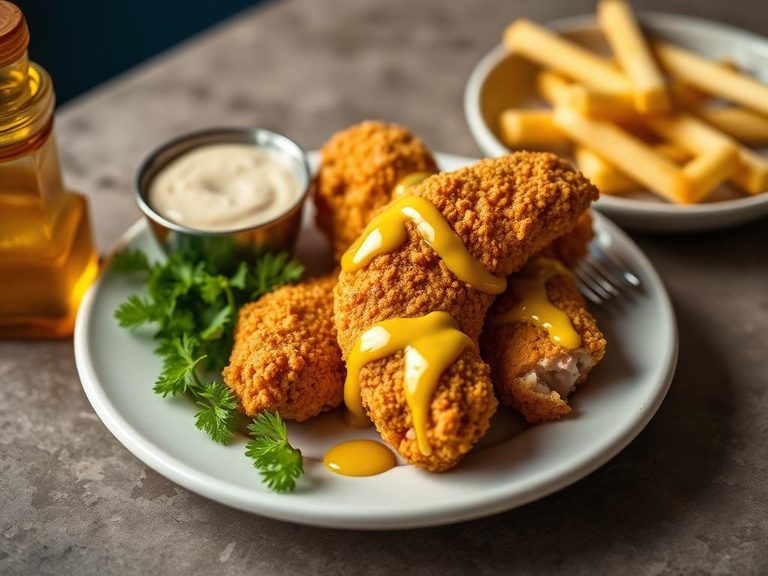


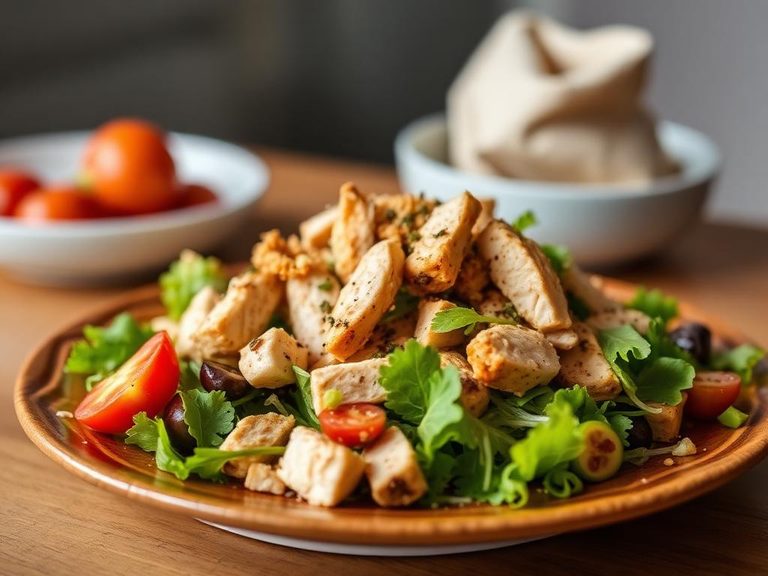

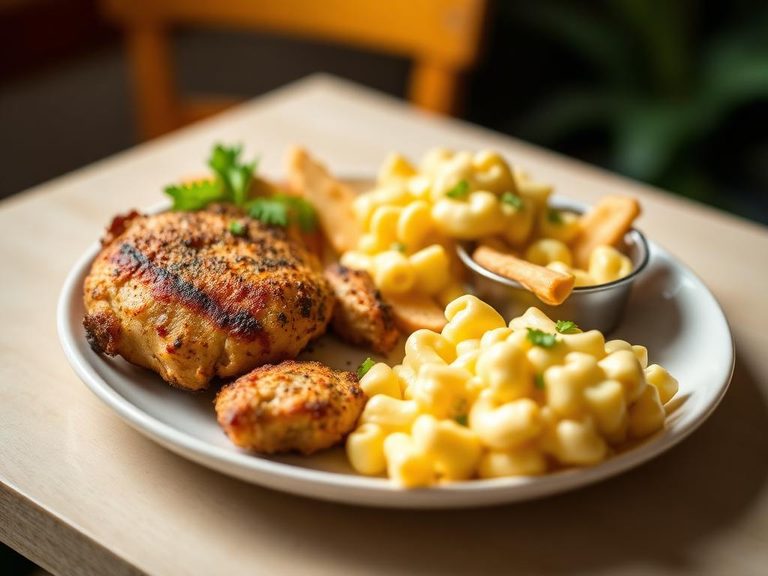
🌍 Where it's eaten
💡 Did you know?
Chicken tenderloins are actually a small, tender strip of muscle found under the breast, and they're often considered the most tender part of the chicken.
Full nutrition (USDA data · scales with serving)
| Water | 42.6 g |
| Energy | 294 kcal |
| Energy | 1231 kj |
| Protein | 18.7 g |
| Total lipid (fat) | 15.4 g |
| Ash | 3.1 g |
| Carbohydrate, by difference | 20.2 g |
| Fiber, total dietary | 1.0 g |
| Total Sugars | 0.19 g |
| Sucrose | 0.09 g |
| Glucose | 0.00 g |
| Fructose | 0.00 g |
| Lactose | 0.00 g |
| Maltose | 0.10 g |
| Galactose | 0.00 g |
| Starch | 20.7 g |
| Calcium, Ca | 12.0 mg |
| Iron, Fe | 0.58 mg |
| Magnesium, Mg | 29.0 mg |
| Phosphorus, P | 275 mg |
| Potassium, K | 330 mg |
| Sodium, Na | 871 mg |
| Zinc, Zn | 0.67 mg |
| Copper, Cu | 0.07 mg |
| Manganese, Mn | 0.27 mg |
| Selenium, Se | 15.2 ug |
| Thiamin | 0.09 mg |
| Riboflavin | 0.14 mg |
| Niacin | 7.0 mg |
| Pantothenic acid | 1.4 mg |
| Vitamin B-6 | 0.44 mg |
| Folate, total | 7.0 ug |
| Folate, food | 7.0 ug |
| Vitamin B-12 | 0.13 ug |
| Vitamin A, RAE | 2.0 ug |
| Retinol | 2.0 ug |
| Carotene, beta | 2.0 ug |
| Carotene, alpha | 0.00 ug |
| Cryptoxanthin, beta | 1.0 ug |
| Vitamin A, IU | 10.0 iu |
| Lycopene | 0.00 ug |
| Lutein + zeaxanthin | 49.0 ug |
| Vitamin E (alpha-tocopherol) | 1.3 mg |
| Tocopherol, beta | 0.15 mg |
| Tocopherol, gamma | 7.0 mg |
| Tocopherol, delta | 2.5 mg |
| Tocotrienol, alpha | 0.00 mg |
| Tocotrienol, beta | 0.11 mg |
| Tocotrienol, gamma | 0.06 mg |
| Tocotrienol, delta | 0.00 mg |
| Vitamin K (phylloquinone) | 33.3 ug |
| Vitamin K (Dihydrophylloquinone) | 0.00 ug |
| Vitamin K (Menaquinone-4) | 5.9 ug |
Fat & fatty acid profile (per 100g)
| Fatty acids, total saturated | 2.8 g |
| SFA 4:0 | 0.00 g |
| SFA 6:0 | 0.00 g |
| SFA 8:0 | 0.01 g |
| SFA 10:0 | 0.00 g |
| SFA 12:0 | 0.00 g |
| SFA 14:0 | 0.02 g |
| SFA 15:0 | 0.01 g |
| SFA 16:0 | 1.7 g |
| SFA 17:0 | 0.01 g |
| SFA 18:0 | 0.95 g |
| SFA 20:0 | 0.05 g |
| SFA 22:0 | 0.05 g |
| SFA 24:0 | 0.02 g |
| Fatty acids, total monounsaturated | 3.4 g |
| MUFA 14:1 | 0.00 g |
| MUFA 15:1 | 0.00 g |
| MUFA 16:1 | 0.04 g |
| MUFA 16:1 c | 0.04 g |
| MUFA 17:1 | 0.01 g |
| MUFA 18:1 | 3.3 g |
| MUFA 18:1 c | 3.3 g |
| MUFA 20:1 | 0.05 g |
| MUFA 22:1 | 0.00 g |
| MUFA 22:1 c | 0.00 g |
| MUFA 24:1 c | 0.00 g |
| Fatty acids, total polyunsaturated | 8.1 g |
| PUFA 18:2 | 7.1 g |
| PUFA 18:2 n-6 c,c | 7.0 g |
| PUFA 18:2 CLAs | 0.02 g |
| PUFA 18:3 | 0.92 g |
| PUFA 18:3 n-3 c,c,c (ALA) | 0.85 g |
| PUFA 18:3 n-6 c,c,c | 0.07 g |
| PUFA 18:3i | 0.00 g |
| PUFA 18:4 | 0.00 g |
| PUFA 20:2 n-6 c,c | 0.01 g |
| PUFA 20:3 | 0.01 g |
| PUFA 20:3 n-3 | 0.00 g |
| PUFA 20:3 n-6 | 0.01 g |
| PUFA 20:4 | 0.04 g |
| PUFA 20:5 n-3 (EPA) | 0.00 g |
| PUFA 22:4 | 0.01 g |
| PUFA 22:5 n-3 (DPA) | 0.00 g |
| PUFA 22:6 n-3 (DHA) | 0.00 g |
| Fatty acids, total trans | 0.13 g |
| Fatty acids, total trans-monoenoic | 0.03 g |
| TFA 16:1 t | 0.00 g |
| TFA 18:1 t | 0.03 g |
| TFA 22:1 t | 0.00 g |
| TFA 18:2 t not further defined | 0.10 g |
| Fatty acids, total trans-polyenoic | 0.10 g |
| Cholesterol | 42.0 mg |
Amino acid profile (per 100g)
| Tryptophan | 0.21 g |
| Threonine | 0.54 g |
| Isoleucine | 0.82 g |
| Leucine | 1.6 g |
| Lysine | 2.3 g |
| Methionine | 0.53 g |
| Cystine | 0.27 g |
| Phenylalanine | 0.74 g |
| Tyrosine | 0.54 g |
| Valine | 0.89 g |
| Arginine | 1.3 g |
| Histidine | 0.76 g |
| Alanine | 0.97 g |
| Aspartic acid | 1.3 g |
| Glutamic acid | 3.3 g |
| Glycine | 0.88 g |
| Proline | 1.2 g |
| Serine | 0.77 g |
| Hydroxyproline | 0.03 g |
FAQ
Is this dish suitable for a low-carb diet?
The 20.24g of carbs per 100g comes mainly from the batter, so it's not ideal for strict low-carb diets. Opting for grilled chicken instead would reduce carbs significantly.
Can I make a healthier version at home?
Yes, you can bake or air-fry the chicken tenders with a light coating of whole-grain breadcrumbs to reduce fat and calories while keeping the crunch.
What are the best dipping sauces to pair with it?
Classic options include honey mustard, barbecue sauce, or ranch dressing. For a healthier twist, try a yogurt-based dip with herbs or a spicy sriracha mayo.
Nutrient density (calculated · NRF9.3)
Nutrient Rich Foods index: beneficial nutrients (protein, fiber, vitamins, minerals) minus saturated fat, added sugar & sodium, per 100 kcal.
NRF9.3 index — Fulgoni, Keast & Drewnowski, 2009. Computed from USDA nutrients.
Weight-loss friendliness (composite index)
Energy density 2.94 kcal/g · 25% calories from protein · 1.0 g fiber · 0.2 g sugar per 100 g.
Composite of energy density (Rolls et al., 1999), protein & fiber satiety, minus sugar. A calculated heuristic — ranks satiety-per-calorie, not a clinical measure.
Dietary load (calculated from USDA values)
Potential renal acid load. Positive = acid-forming, negative = alkaline-forming.
Sodium-to-potassium ratio: 2.64 (lower is better — aim for ≤ 1)
Sodium:potassium per WHO potassium guidance. Computed from USDA nutrients.