

Chicken, broilers or fryers, leg, meat only, raw
Whole food · Poultry Products

Photo: Wikipedia
This is the raw, meaty portion of a broiler or fryer chicken leg, prized for its rich, savory flavor and slightly firmer, more succulent texture than breast meat. Its deep pink hue and marbling promise a juicy, flavorful result when cooked. Nutritionally, it's a powerhouse of lean protein with a modest amount of healthy fats.
Calorie split: 67% protein · 0% carbs · 33% fat
↓ Full nutrition💚 Why it's loved
People love it for its superior flavor and forgiving nature; the higher fat content compared to breast keeps it moist and delicious through various cooking methods. It's a beloved, economical cut central to countless comforting home-cooked meals worldwide.
⚠️ Watch-outs & how to enjoy it better
The skin (if included) is high in saturated fat and calories, which can be a concern for heart health. To counteract this, simply remove the skin before or after cooking. The meat itself is lean and safe for most diets, but as with all poultry, it must be cooked thoroughly to an internal temperature of 165°F (74°C) to eliminate harmful bacteria.
Key benefits
- Excellent source of high-quality, complete protein for muscle maintenance.
- Provides essential minerals like selenium and phosphorus.
- Contains B vitamins, notably niacin and B6, for energy metabolism.
- A versatile, budget-friendly protein staple.
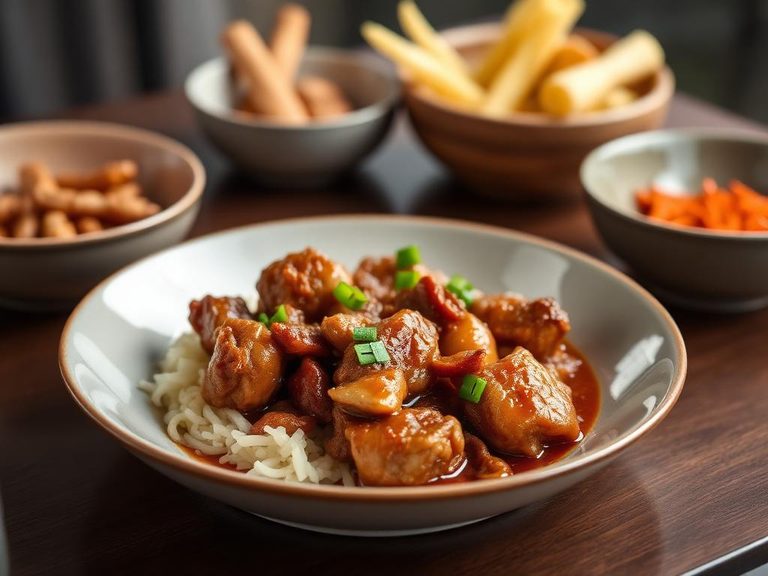
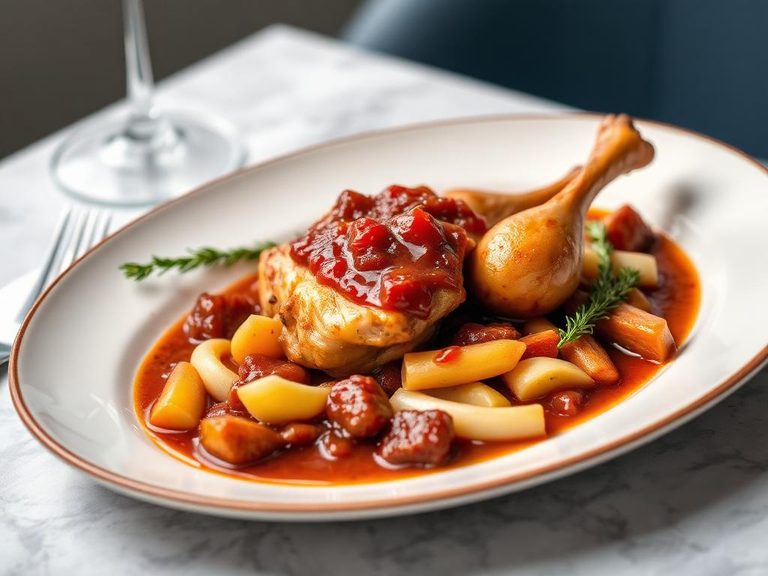
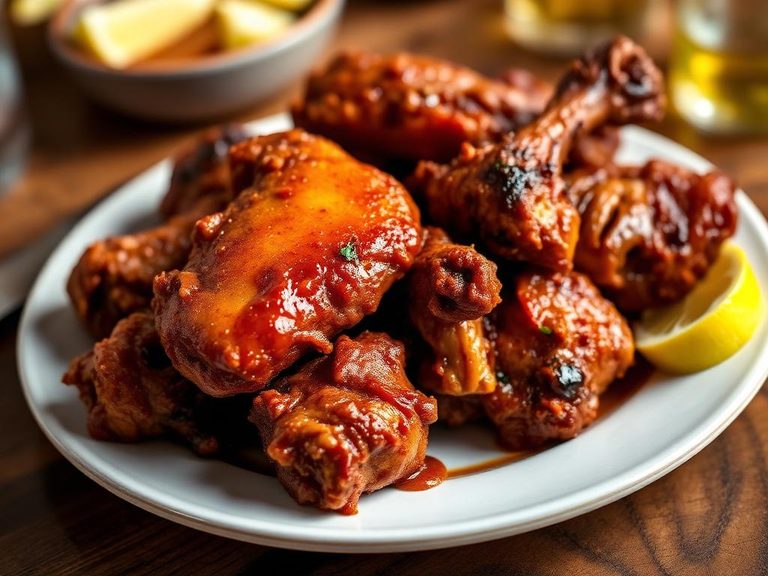
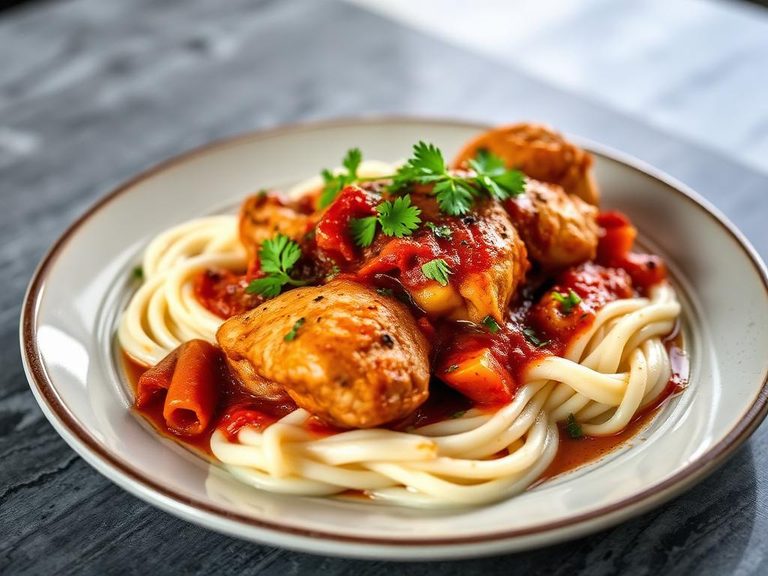
🍽️ Popular dishes

🌍 Where it's eaten
💡 Did you know?
The dark color of leg meat comes from myoglobin, a protein that stores oxygen in muscle cells, which is more abundant in muscles used for sustained activity like walking.
Full nutrition (USDA data · scales with serving)
| Water | 76.4 g |
| Energy | 120 kcal |
| Energy | 501 kj |
| Protein | 19.2 g |
| Total lipid (fat) | 4.2 g |
| Ash | 0.95 g |
| Carbohydrate, by difference | 0.00 g |
| Fiber, total dietary | 0.00 g |
| Total Sugars | 0.00 g |
| Calcium, Ca | 10.0 mg |
| Iron, Fe | 0.78 mg |
| Magnesium, Mg | 23.0 mg |
| Phosphorus, P | 180 mg |
| Potassium, K | 238 mg |
| Sodium, Na | 96.0 mg |
| Zinc, Zn | 1.8 mg |
| Copper, Cu | 0.06 mg |
| Manganese, Mn | 0.02 mg |
| Selenium, Se | 21.0 ug |
| Vitamin C, total ascorbic acid | 0.00 mg |
| Thiamin | 0.09 mg |
| Riboflavin | 0.18 mg |
| Niacin | 5.6 mg |
| Pantothenic acid | 1.2 mg |
| Vitamin B-6 | 0.41 mg |
| Folate, total | 4.0 ug |
| Folic acid | 0.00 ug |
| Folate, food | 4.0 ug |
| Folate, DFE | 4.0 ug |
| Choline, total | 48.6 mg |
| Betaine | 8.7 mg |
| Vitamin B-12 | 0.57 ug |
| Vitamin B-12, added | 0.00 ug |
| Vitamin A, RAE | 10.0 ug |
| Retinol | 10.0 ug |
| Carotene, beta | 0.00 ug |
| Carotene, alpha | 0.00 ug |
| Cryptoxanthin, beta | 0.00 ug |
| Vitamin A, IU | 32.0 iu |
| Lycopene | 0.00 ug |
| Lutein + zeaxanthin | 95.0 ug |
| Vitamin E (alpha-tocopherol) | 0.18 mg |
| Vitamin E, added | 0.00 mg |
| Tocopherol, beta | 0.00 mg |
| Tocopherol, gamma | 0.06 mg |
| Tocopherol, delta | 0.00 mg |
| Tocotrienol, alpha | 0.01 mg |
| Tocotrienol, beta | 0.02 mg |
| Tocotrienol, gamma | 0.02 mg |
| Tocotrienol, delta | 0.00 mg |
| Vitamin D (D2 + D3), International Units | 1.0 iu |
| Vitamin D (D2 + D3) | 0.00 ug |
| Vitamin D3 (cholecalciferol) | 0.00 ug |
| Vitamin K (phylloquinone) | 2.8 ug |
| Alcohol, ethyl | 0.00 g |
| Caffeine | 0.00 mg |
| Theobromine | 0.00 mg |
Fat & fatty acid profile (per 100g)
| Fatty acids, total saturated | 1.1 g |
| SFA 4:0 | 0.00 g |
| SFA 6:0 | 0.00 g |
| SFA 8:0 | 0.00 g |
| SFA 10:0 | 0.00 g |
| SFA 12:0 | 0.01 g |
| SFA 14:0 | 0.02 g |
| SFA 15:0 | 0.00 g |
| SFA 16:0 | 0.76 g |
| SFA 17:0 | 0.00 g |
| SFA 18:0 | 0.25 g |
| SFA 20:0 | 0.00 g |
| SFA 22:0 | 0.01 g |
| SFA 24:0 | 0.00 g |
| Fatty acids, total monounsaturated | 1.4 g |
| MUFA 14:1 | 0.01 g |
| MUFA 15:1 | 0.00 g |
| MUFA 16:1 | 0.21 g |
| MUFA 16:1 c | 0.18 g |
| MUFA 17:1 | 0.00 g |
| MUFA 18:1 | 1.2 g |
| MUFA 18:1 c | 1.0 g |
| MUFA 20:1 | 0.01 g |
| MUFA 22:1 | 0.00 g |
| MUFA 22:1 c | 0.00 g |
| MUFA 24:1 c | 0.00 g |
| Fatty acids, total polyunsaturated | 0.96 g |
| PUFA 18:2 | 0.75 g |
| PUFA 18:2 n-6 c,c | 0.62 g |
| PUFA 18:2 CLAs | 0.01 g |
| PUFA 18:3 | 0.04 g |
| PUFA 18:3 n-3 c,c,c (ALA) | 0.03 g |
| PUFA 18:3 n-6 c,c,c | 0.01 g |
| PUFA 18:4 | 0.00 g |
| PUFA 20:2 n-6 c,c | 0.01 g |
| PUFA 20:3 | 0.01 g |
| PUFA 20:3 n-3 | 0.00 g |
| PUFA 20:3 n-6 | 0.01 g |
| PUFA 20:4 | 0.10 g |
| PUFA 20:5 n-3 (EPA) | 0.00 g |
| PUFA 22:4 | 0.02 g |
| PUFA 22:5 n-3 (DPA) | 0.01 g |
| PUFA 22:6 n-3 (DHA) | 0.01 g |
| Fatty acids, total trans | 0.01 g |
| Fatty acids, total trans-monoenoic | 0.01 g |
| TFA 16:1 t | 0.00 g |
| TFA 18:1 t | 0.01 g |
| TFA 22:1 t | 0.00 g |
| TFA 18:2 t not further defined | 0.00 g |
| Fatty acids, total trans-polyenoic | 0.00 g |
| Cholesterol | 91.0 mg |
Amino acid profile (per 100g)
| Tryptophan | 0.22 g |
| Threonine | 0.90 g |
| Isoleucine | 0.93 g |
| Leucine | 1.6 g |
| Lysine | 1.8 g |
| Methionine | 0.55 g |
| Cystine | 0.23 g |
| Phenylalanine | 0.77 g |
| Tyrosine | 0.71 g |
| Valine | 0.93 g |
| Arginine | 1.3 g |
| Histidine | 0.57 g |
| Alanine | 1.1 g |
| Aspartic acid | 1.9 g |
| Glutamic acid | 3.1 g |
| Glycine | 0.89 g |
| Proline | 0.77 g |
| Serine | 0.79 g |
FAQ
Is chicken leg meat healthier than breast meat?
It's a trade-off. Breast meat is leaner with fewer calories and fats, while leg meat offers more iron, zinc, and a richer flavor due to its slightly higher fat content. Both are excellent sources of protein.
How do I get tender chicken legs?
For tender results, avoid overcooking. Use a meat thermometer to pull them at 165°F (74°C). Braising, stewing, or slow-roasting are great methods that break down connective tissue over time.
Can I eat this raw?
No. Raw chicken must always be handled with care to avoid cross-contamination and must be cooked thoroughly to a safe internal temperature of 165°F (74°C) to kill bacteria like Salmonella.
Nutrient density (calculated · NRF9.3)
Nutrient Rich Foods index: beneficial nutrients (protein, fiber, vitamins, minerals) minus saturated fat, added sugar & sodium, per 100 kcal.
NRF9.3 index — Fulgoni, Keast & Drewnowski, 2009. Computed from USDA nutrients.
Weight-loss friendliness (composite index)
Energy density 1.20 kcal/g · 64% calories from protein · 0.0 g fiber · 0.0 g sugar per 100 g.
Composite of energy density (Rolls et al., 1999), protein & fiber satiety, minus sugar. A calculated heuristic — ranks satiety-per-calorie, not a clinical measure.
Dietary load (calculated from USDA values)
Potential renal acid load. Positive = acid-forming, negative = alkaline-forming.
Sodium-to-potassium ratio: 0.40 (lower is better — aim for ≤ 1)
Sodium:potassium per WHO potassium guidance. Computed from USDA nutrients.