

Chicken, broilers or fryers, dark meat, drumstick, meat only, raw
Whole food · Poultry Products

Photo: Wikipedia
A raw chicken drumstick is the lower leg portion of a broiler or fryer, prized for its juicy, tender dark meat that stays succulent even when cooked thoroughly. Nutritionally, it's a powerhouse of high-quality protein with a modest amount of healthy fats, making it a lean yet flavorful foundation for countless meals.
Calorie split: 70% protein · 0% carbs · 30% fat
↓ Full nutrition💚 Why it's loved
People love drumsticks for their rich, savory flavor and forgiving texture that remains moist and tender with almost any cooking method. They are a universal, budget-friendly staple that can be dressed up for a feast or kept simple for a weeknight dinner.
⚠️ Watch-outs & how to enjoy it better
The skin is high in saturated fat and calories, and some preparation methods (like frying) can add significant sodium. For those monitoring saturated fat intake, simply removing the skin before or after cooking drastically reduces the fat content while retaining the meat's juiciness.
Key benefits
- Excellent source of complete protein for muscle repair and growth.
- Rich in essential minerals like iron, zinc, and phosphorus.
- Contains B vitamins, particularly niacin and B6, for energy metabolism.
- Dark meat provides more iron and zinc than white meat cuts.
🍽️ Popular dishes
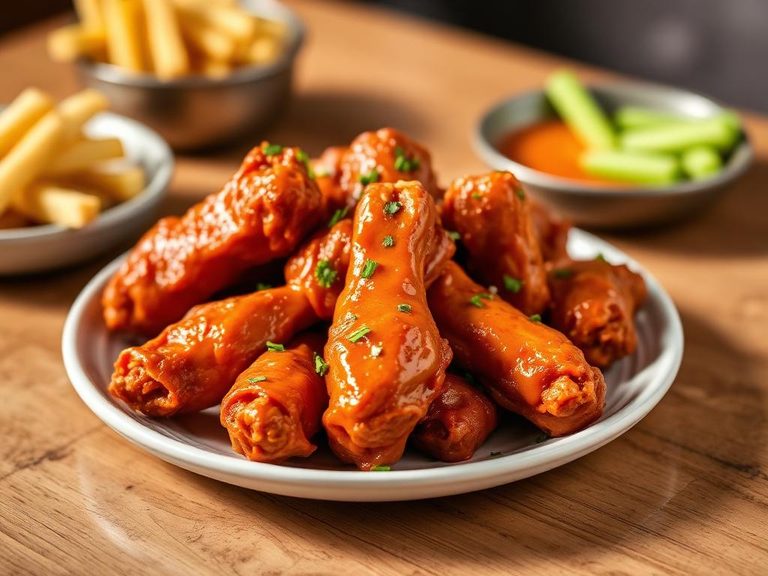
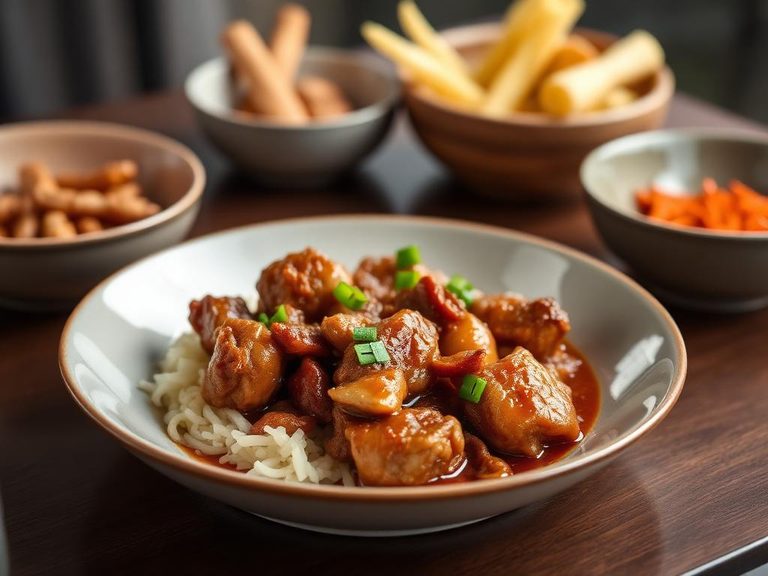
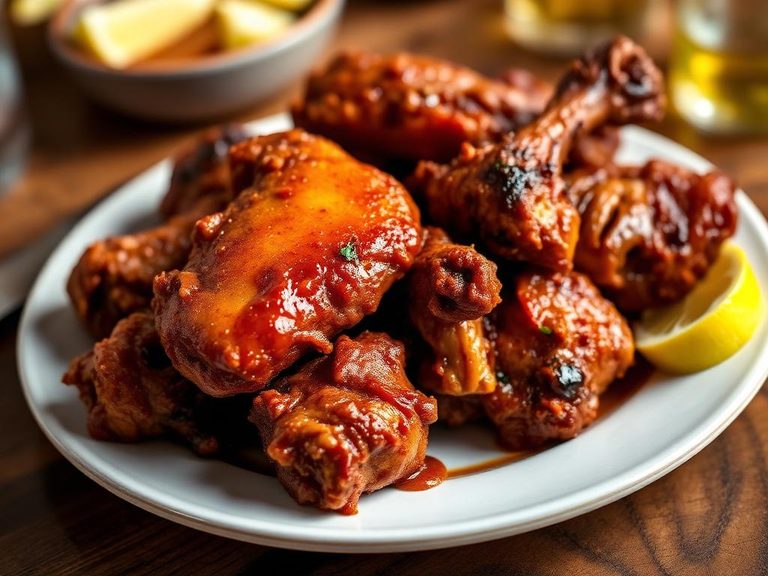
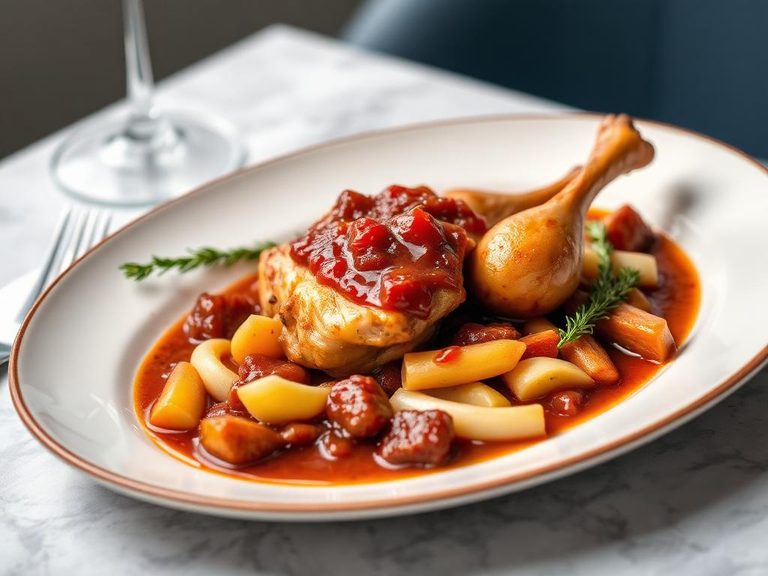


🌍 Where it's eaten
💡 Did you know?
The drumstick is often considered the most flavorful part of the chicken because dark meat has more myoglobin, an oxygen-storing protein that gives it a richer taste and darker color.
Full nutrition (USDA data · scales with serving)
| Water | 76.8 g |
| Energy | 116 kcal |
| Energy | 487 kj |
| Protein | 19.4 g |
| Total lipid (fat) | 3.7 g |
| Ash | 0.92 g |
| Carbohydrate, by difference | 0.00 g |
| Fiber, total dietary | 0.00 g |
| Total Sugars | 0.00 g |
| Calcium, Ca | 9.0 mg |
| Iron, Fe | 0.76 mg |
| Magnesium, Mg | 20.0 mg |
| Phosphorus, P | 174 mg |
| Potassium, K | 225 mg |
| Sodium, Na | 114 mg |
| Zinc, Zn | 2.0 mg |
| Copper, Cu | 0.07 mg |
| Manganese, Mn | 0.01 mg |
| Selenium, Se | 21.8 ug |
| Vitamin C, total ascorbic acid | 0.00 mg |
| Thiamin | 0.09 mg |
| Riboflavin | 0.22 mg |
| Niacin | 5.2 mg |
| Pantothenic acid | 1.1 mg |
| Vitamin B-6 | 0.38 mg |
| Folate, total | 4.0 ug |
| Folic acid | 0.00 ug |
| Folate, food | 4.0 ug |
| Folate, DFE | 4.0 ug |
| Choline, total | 56.7 mg |
| Betaine | 8.7 mg |
| Vitamin B-12 | 0.51 ug |
| Vitamin B-12, added | 0.00 ug |
| Vitamin A, RAE | 7.0 ug |
| Retinol | 7.0 ug |
| Carotene, beta | 0.00 ug |
| Carotene, alpha | 0.00 ug |
| Cryptoxanthin, beta | 0.00 ug |
| Vitamin A, IU | 22.0 iu |
| Lycopene | 0.00 ug |
| Lutein + zeaxanthin | 102 ug |
| Vitamin E (alpha-tocopherol) | 0.18 mg |
| Vitamin E, added | 0.00 mg |
| Tocopherol, beta | 0.00 mg |
| Tocopherol, gamma | 0.07 mg |
| Tocopherol, delta | 0.00 mg |
| Tocotrienol, alpha | 0.01 mg |
| Tocotrienol, beta | 0.01 mg |
| Tocotrienol, gamma | 0.02 mg |
| Tocotrienol, delta | 0.00 mg |
| Vitamin D (D2 + D3), International Units | 1.0 iu |
| Vitamin D (D2 + D3) | 0.00 ug |
| Vitamin D3 (cholecalciferol) | 0.00 ug |
| Vitamin K (phylloquinone) | 2.9 ug |
| Alcohol, ethyl | 0.00 g |
| Caffeine | 0.00 mg |
| Theobromine | 0.00 mg |
Fat & fatty acid profile (per 100g)
| Fatty acids, total saturated | 0.95 g |
| SFA 4:0 | 0.00 g |
| SFA 6:0 | 0.00 g |
| SFA 8:0 | 0.00 g |
| SFA 10:0 | 0.00 g |
| SFA 12:0 | 0.00 g |
| SFA 14:0 | 0.02 g |
| SFA 15:0 | 0.00 g |
| SFA 16:0 | 0.69 g |
| SFA 17:0 | 0.00 g |
| SFA 18:0 | 0.22 g |
| SFA 20:0 | 0.00 g |
| SFA 22:0 | 0.01 g |
| SFA 24:0 | 0.00 g |
| Fatty acids, total monounsaturated | 1.3 g |
| MUFA 14:1 | 0.01 g |
| MUFA 15:1 | 0.00 g |
| MUFA 16:1 | 0.20 g |
| MUFA 16:1 c | 0.20 g |
| MUFA 17:1 | 0.00 g |
| MUFA 18:1 | 1.1 g |
| MUFA 18:1 c | 1.1 g |
| MUFA 20:1 | 0.01 g |
| MUFA 22:1 | 0.00 g |
| MUFA 22:1 c | 0.00 g |
| MUFA 24:1 c | 0.00 g |
| Fatty acids, total polyunsaturated | 0.85 g |
| PUFA 18:2 | 0.66 g |
| PUFA 18:2 n-6 c,c | 0.65 g |
| PUFA 18:2 CLAs | 0.00 g |
| PUFA 18:3 | 0.03 g |
| PUFA 18:3 n-3 c,c,c (ALA) | 0.03 g |
| PUFA 18:3 n-6 c,c,c | 0.01 g |
| PUFA 18:4 | 0.00 g |
| PUFA 20:2 n-6 c,c | 0.01 g |
| PUFA 20:3 | 0.02 g |
| PUFA 20:3 n-3 | 0.00 g |
| PUFA 20:3 n-6 | 0.02 g |
| PUFA 20:4 | 0.09 g |
| PUFA 20:5 n-3 (EPA) | 0.00 g |
| PUFA 22:4 | 0.02 g |
| PUFA 22:5 n-3 (DPA) | 0.01 g |
| PUFA 22:6 n-3 (DHA) | 0.01 g |
| Fatty acids, total trans | 0.02 g |
| Fatty acids, total trans-monoenoic | 0.01 g |
| TFA 16:1 t | 0.00 g |
| TFA 18:1 t | 0.01 g |
| TFA 22:1 t | 0.00 g |
| TFA 18:2 t not further defined | 0.01 g |
| Fatty acids, total trans-polyenoic | 0.01 g |
| Cholesterol | 89.0 mg |
Amino acid profile (per 100g)
| Tryptophan | 0.22 g |
| Threonine | 0.92 g |
| Isoleucine | 0.93 g |
| Leucine | 1.7 g |
| Lysine | 1.8 g |
| Methionine | 0.56 g |
| Cystine | 0.23 g |
| Phenylalanine | 0.78 g |
| Tyrosine | 0.73 g |
| Valine | 0.94 g |
| Arginine | 1.4 g |
| Histidine | 0.58 g |
| Alanine | 1.2 g |
| Aspartic acid | 1.9 g |
| Glutamic acid | 3.2 g |
| Glycine | 0.89 g |
| Proline | 0.78 g |
| Serine | 0.81 g |
FAQ
What's the difference between a drumstick and a drumette?
A drumstick is the lower leg portion of the chicken, while a drumette is the upper, meatier part of the wing that resembles a tiny drumstick.
Is dark meat less healthy than white meat?
Not necessarily. While dark meat has slightly more fat and calories, it is also richer in certain minerals like iron and zinc, and the fats are largely unsaturated. The overall nutritional difference is modest.
How can I tell when a chicken drumstick is fully cooked?
The safest method is using a meat thermometer; the internal temperature should reach 165°F (74°C) at the thickest part. The juices should run clear, and the meat should be opaque all the way to the bone.
Nutrient density (calculated · NRF9.3)
Nutrient Rich Foods index: beneficial nutrients (protein, fiber, vitamins, minerals) minus saturated fat, added sugar & sodium, per 100 kcal.
NRF9.3 index — Fulgoni, Keast & Drewnowski, 2009. Computed from USDA nutrients.
Weight-loss friendliness (composite index)
Energy density 1.16 kcal/g · 67% calories from protein · 0.0 g fiber · 0.0 g sugar per 100 g.
Composite of energy density (Rolls et al., 1999), protein & fiber satiety, minus sugar. A calculated heuristic — ranks satiety-per-calorie, not a clinical measure.
Dietary load (calculated from USDA values)
Potential renal acid load. Positive = acid-forming, negative = alkaline-forming.
Sodium-to-potassium ratio: 0.51 (lower is better — aim for ≤ 1)
Sodium:potassium per WHO potassium guidance. Computed from USDA nutrients.