

Chicken, broilers or fryers, dark meat, drumstick, meat only, cooked, braised
Whole food · Poultry Products
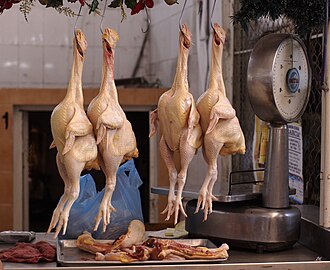
Photo: Wikipedia
This is the lean, dark meat from a chicken drumstick, cooked by braising until tender and juicy. It boasts a rich, savory flavor and a satisfying, slightly firmer texture than breast meat, with a nutritional profile packed with protein and minimal fat.
Calorie split: 64% protein · 0% carbs · 36% fat
↓ Full nutrition💚 Why it's loved
People adore braised chicken drumsticks for their deep, savory flavor that develops from slow cooking in flavorful liquids. The meat becomes fall-off-the-bone tender while retaining a pleasant chew, making it both comforting and versatile for countless cuisines.
⚠️ Watch-outs & how to enjoy it better
The braising process often involves added sodium from broths or sauces, which can be a concern for those monitoring salt intake. To counteract this, use low-sodium broth, rinse canned ingredients, and balance the meal with potassium-rich vegetables like spinach or sweet potatoes.
Key benefits
- Excellent source of high-quality protein for muscle maintenance
- Provides essential minerals like zinc and iron from dark meat
- Low in carbohydrates, suitable for low-carb diets
- Braising method helps retain moisture and nutrients
- Good source of B vitamins, particularly niacin and B6
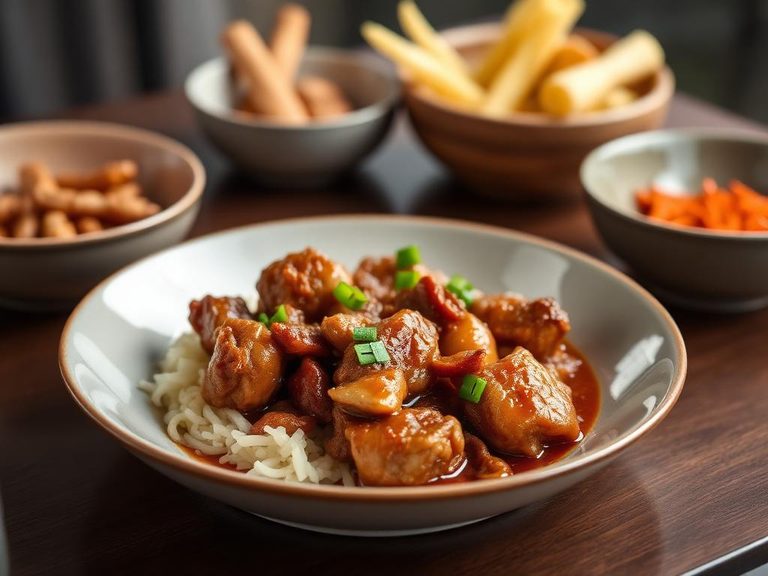
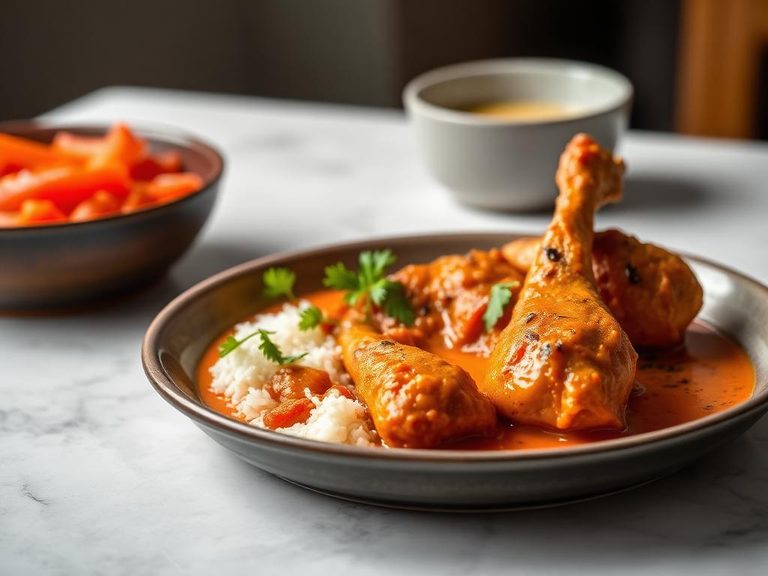
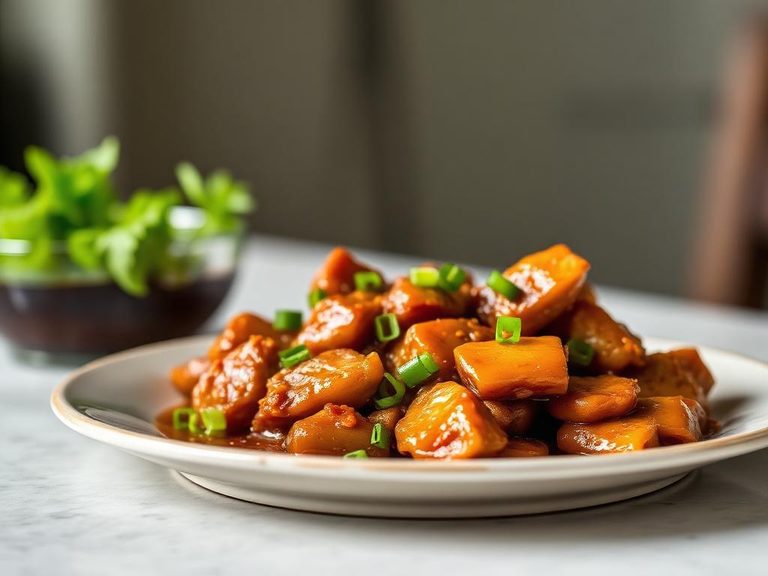
🍽️ Popular dishes

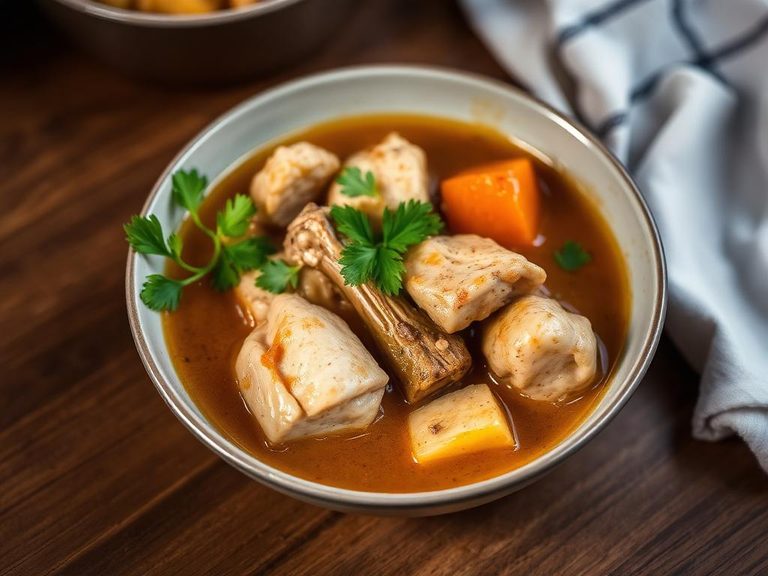
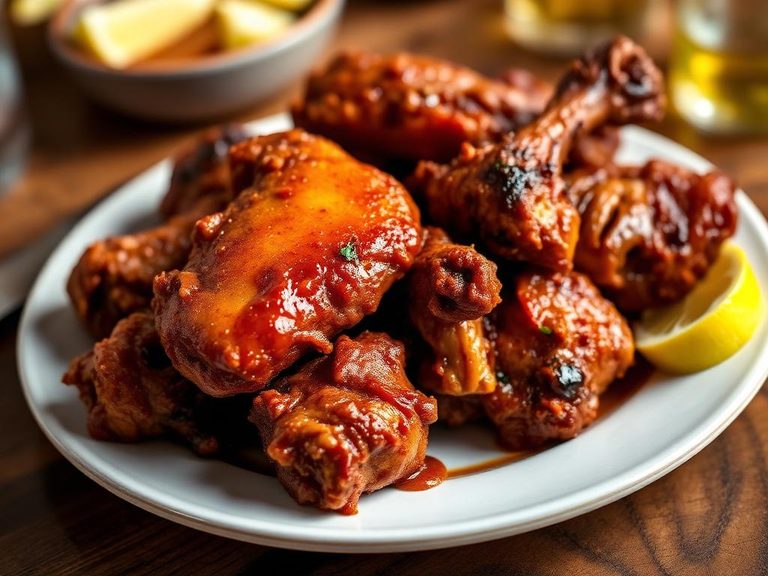
🌍 Where it's eaten
💡 Did you know?
Braising is a combination cooking method that first sears the meat at high heat, then finishes it in liquid at a lower temperature, which breaks down collagen into gelatin, creating a naturally rich sauce.
Full nutrition (USDA data · scales with serving)
| Water | 69.9 g |
| Energy | 149 kcal |
| Energy | 625 kj |
| Protein | 23.9 g |
| Total lipid (fat) | 6.0 g |
| Ash | 0.98 g |
| Carbohydrate, by difference | 0.00 g |
| Fiber, total dietary | 0.00 g |
| Total Sugars | 0.00 g |
| Calcium, Ca | 12.0 mg |
| Iron, Fe | 0.94 mg |
| Magnesium, Mg | 22.0 mg |
| Phosphorus, P | 184 mg |
| Potassium, K | 239 mg |
| Sodium, Na | 117 mg |
| Zinc, Zn | 2.5 mg |
| Copper, Cu | 0.06 mg |
| Manganese, Mn | 0.02 mg |
| Selenium, Se | 27.9 ug |
| Vitamin C, total ascorbic acid | 0.00 mg |
| Thiamin | 0.09 mg |
| Riboflavin | 0.18 mg |
| Niacin | 5.0 mg |
| Pantothenic acid | 1.1 mg |
| Vitamin B-6 | 0.37 mg |
| Folate, total | 5.0 ug |
| Folic acid | 0.00 ug |
| Folate, food | 5.0 ug |
| Folate, DFE | 5.0 ug |
| Choline, total | 72.0 mg |
| Betaine | 11.1 mg |
| Vitamin B-12 | 0.41 ug |
| Vitamin B-12, added | 0.00 ug |
| Vitamin A, RAE | 7.0 ug |
| Retinol | 7.0 ug |
| Carotene, beta | 0.00 ug |
| Carotene, alpha | 0.00 ug |
| Cryptoxanthin, beta | 0.00 ug |
| Vitamin A, IU | 24.0 iu |
| Lycopene | 0.00 ug |
| Lutein + zeaxanthin | 0.00 ug |
| Vitamin E (alpha-tocopherol) | 0.17 mg |
| Vitamin E, added | 0.00 mg |
| Tocopherol, beta | 0.00 mg |
| Tocopherol, gamma | 0.08 mg |
| Tocopherol, delta | 0.00 mg |
| Tocotrienol, alpha | 0.01 mg |
| Tocotrienol, beta | 0.00 mg |
| Tocotrienol, gamma | 0.05 mg |
| Tocotrienol, delta | 0.00 mg |
| Vitamin D (D2 + D3), International Units | 2.0 iu |
| Vitamin D (D2 + D3) | 0.10 ug |
| Vitamin D3 (cholecalciferol) | 0.10 ug |
| Vitamin K (phylloquinone) | 0.20 ug |
| Alcohol, ethyl | 0.00 g |
| Caffeine | 0.00 mg |
| Theobromine | 0.00 mg |
Fat & fatty acid profile (per 100g)
| Fatty acids, total saturated | 1.6 g |
| SFA 4:0 | 0.00 g |
| SFA 6:0 | 0.00 g |
| SFA 8:0 | 0.00 g |
| SFA 10:0 | 0.00 g |
| SFA 12:0 | 0.00 g |
| SFA 14:0 | 0.03 g |
| SFA 15:0 | 0.01 g |
| SFA 16:0 | 1.2 g |
| SFA 17:0 | 0.01 g |
| SFA 18:0 | 0.35 g |
| SFA 20:0 | 0.00 g |
| SFA 22:0 | 0.01 g |
| SFA 24:0 | 0.00 g |
| Fatty acids, total monounsaturated | 2.4 g |
| MUFA 14:1 | 0.01 g |
| MUFA 15:1 | 0.00 g |
| MUFA 16:1 | 0.37 g |
| MUFA 16:1 c | 0.37 g |
| MUFA 17:1 | 0.00 g |
| MUFA 18:1 | 2.0 g |
| MUFA 18:1 c | 1.9 g |
| MUFA 20:1 | 0.02 g |
| MUFA 22:1 | 0.00 g |
| MUFA 22:1 c | 0.00 g |
| MUFA 24:1 c | 0.00 g |
| Fatty acids, total polyunsaturated | 1.3 g |
| PUFA 18:2 | 1.1 g |
| PUFA 18:2 n-6 c,c | 1.1 g |
| PUFA 18:2 CLAs | 0.01 g |
| PUFA 18:3 | 0.06 g |
| PUFA 18:3 n-3 c,c,c (ALA) | 0.04 g |
| PUFA 18:3 n-6 c,c,c | 0.01 g |
| PUFA 18:4 | 0.00 g |
| PUFA 20:2 n-6 c,c | 0.01 g |
| PUFA 20:3 | 0.02 g |
| PUFA 20:3 n-3 | 0.00 g |
| PUFA 20:3 n-6 | 0.02 g |
| PUFA 20:4 | 0.09 g |
| PUFA 20:5 n-3 (EPA) | 0.00 g |
| PUFA 22:4 | 0.02 g |
| PUFA 22:5 n-3 (DPA) | 0.01 g |
| PUFA 22:6 n-3 (DHA) | 0.01 g |
| Fatty acids, total trans | 0.03 g |
| Fatty acids, total trans-monoenoic | 0.02 g |
| TFA 16:1 t | 0.00 g |
| TFA 18:1 t | 0.02 g |
| TFA 22:1 t | 0.00 g |
| TFA 18:2 t not further defined | 0.01 g |
| Fatty acids, total trans-polyenoic | 0.01 g |
| Cholesterol | 132 mg |
Amino acid profile (per 100g)
| Tryptophan | 0.27 g |
| Threonine | 1.1 g |
| Isoleucine | 1.1 g |
| Leucine | 2.0 g |
| Lysine | 2.3 g |
| Methionine | 0.69 g |
| Cystine | 0.28 g |
| Phenylalanine | 0.96 g |
| Tyrosine | 0.90 g |
| Valine | 1.2 g |
| Arginine | 1.7 g |
| Histidine | 0.71 g |
| Alanine | 1.4 g |
| Aspartic acid | 2.4 g |
| Glutamic acid | 3.9 g |
| Glycine | 1.1 g |
| Proline | 0.97 g |
| Serine | 1.0 g |
FAQ
How is braised chicken drumstick different from roasted or grilled?
Braising involves cooking the drumstick slowly in a flavorful liquid (like broth, wine, or tomatoes) after an initial sear. This method makes the meat exceptionally tender and infuses it with the flavors of the cooking liquid, unlike the drier, crispier results from dry-heat methods like roasting or grilling.
Is the skin included in the nutritional data?
No, the data is for 'meat only,' meaning the skin has been removed. Including the skin would significantly increase the fat and calorie content.
Can I use this in a meal prep for the week?
Absolutely. Braised chicken drumsticks store well in the refrigerator for 3-4 days and can be frozen for up to 3 months. The flavors often improve after a day as the meat absorbs more of the braising liquid.
Nutrient density (calculated · NRF9.3)
Nutrient Rich Foods index: beneficial nutrients (protein, fiber, vitamins, minerals) minus saturated fat, added sugar & sodium, per 100 kcal.
NRF9.3 index — Fulgoni, Keast & Drewnowski, 2009. Computed from USDA nutrients.
Weight-loss friendliness (composite index)
Energy density 1.49 kcal/g · 64% calories from protein · 0.0 g fiber · 0.0 g sugar per 100 g.
Composite of energy density (Rolls et al., 1999), protein & fiber satiety, minus sugar. A calculated heuristic — ranks satiety-per-calorie, not a clinical measure.
Dietary load (calculated from USDA values)
Potential renal acid load. Positive = acid-forming, negative = alkaline-forming.
Sodium-to-potassium ratio: 0.49 (lower is better — aim for ≤ 1)
Sodium:potassium per WHO potassium guidance. Computed from USDA nutrients.