

Cheese, white, queso blanco
Whole food · Dairy and Egg Products
Queso blanco is a fresh, white, crumbly cheese with a mild, milky flavor and a slightly grainy texture that softens when heated. It is a high-protein, high-fat dairy staple with virtually no carbohydrates, making it a dense source of energy. Unlike many cheeses, it does not melt when heated, instead becoming soft and creamy while holding its shape.
Calorie split: 26% protein · 3% carbs · 70% fat
↓ Full nutrition💚 Why it's loved
People love queso blanco for its mild, milky flavor that complements rather than overpowers other ingredients, and its unique ability to soften without melting makes it ideal for grilling or frying. It is a cornerstone of Latin American cuisine, offering a fresh, creamy contrast to spicy salsas and hearty dishes.
⚠️ Watch-outs & how to enjoy it better
As a dairy product, it is a common allergen for those with lactose intolerance or milk allergies, and its high sodium content can be a concern for blood pressure management. To mitigate these, opt for low-sodium varieties if available, and pair it with fiber-rich vegetables or whole grains to balance the meal. For lactose-sensitive individuals, small portions or lactase supplements can help.
Key benefits
- Excellent source of complete protein (20g per 100g)
- Very low in carbohydrates and sugars
- Provides calcium and phosphorus for bone health
- Versatile in both cooked and raw applications
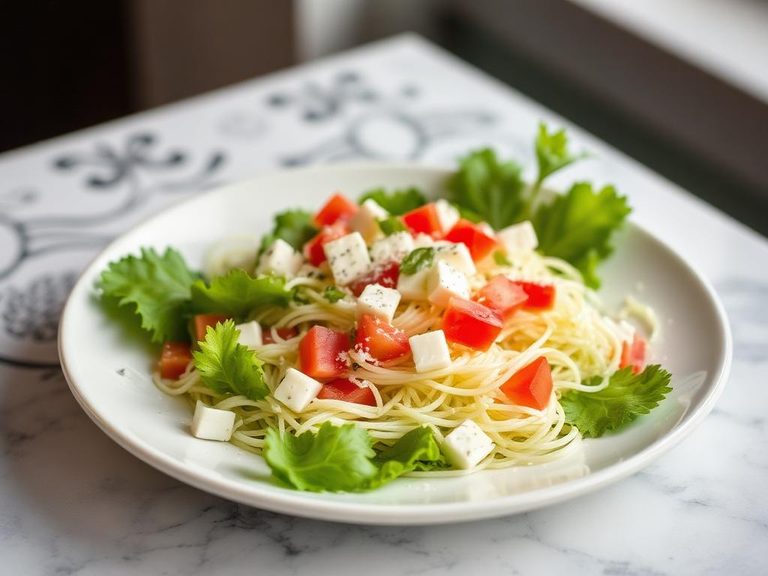
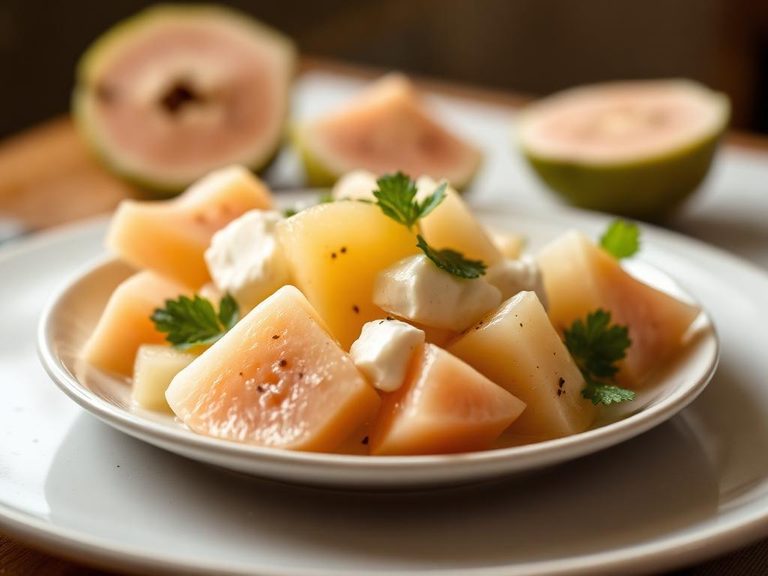
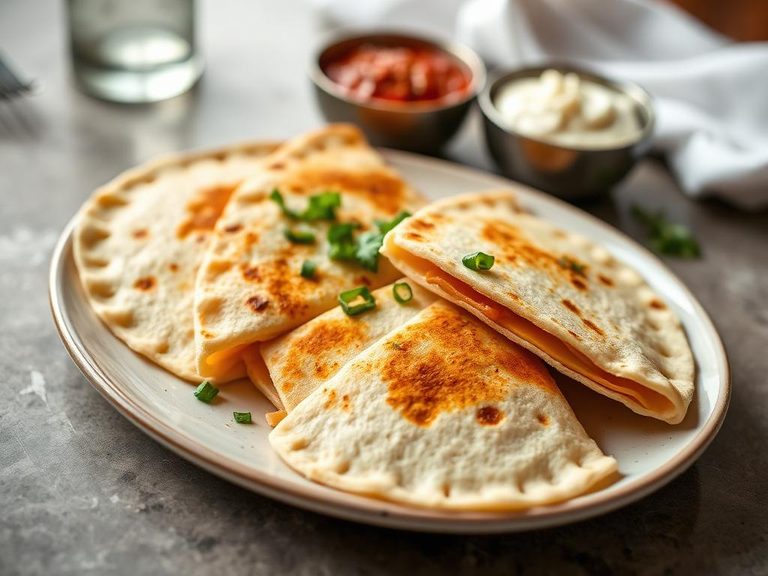
🍽️ Popular dishes


🌍 Where it's eaten
💡 Did you know?
Queso blanco is sometimes called 'queso de freír' because it can be fried in a pan until golden and crispy on the outside while remaining soft inside, a technique that highlights its unique non-melting property.
Full nutrition (USDA data · scales with serving)
| Water | 48.7 g |
| Energy | 310 kcal |
| Energy | 1299 kj |
| Protein | 20.4 g |
| Total lipid (fat) | 24.3 g |
| Ash | 4.1 g |
| Carbohydrate, by difference | 2.5 g |
| Total Sugars | 1.8 g |
| Sucrose | 0.00 g |
| Glucose | 0.00 g |
| Fructose | 0.00 g |
| Lactose | 1.6 g |
| Maltose | 0.00 g |
| Galactose | 0.16 g |
| Calcium, Ca | 690 mg |
| Iron, Fe | 0.18 mg |
| Magnesium, Mg | 29.0 mg |
| Phosphorus, P | 467 mg |
| Potassium, K | 126 mg |
| Sodium, Na | 704 mg |
| Zinc, Zn | 3.1 mg |
| Copper, Cu | 0.03 mg |
| Manganese, Mn | 0.02 mg |
| Selenium, Se | 13.8 ug |
| Thiamin | 0.05 mg |
| Riboflavin | 0.23 mg |
| Niacin | 0.04 mg |
| Pantothenic acid | 0.40 mg |
| Vitamin B-6 | 0.09 mg |
| Choline, total | 15.4 mg |
| Betaine | 0.90 mg |
| Vitamin B-12 | 1.8 ug |
| Vitamin A, RAE | 157 ug |
| Retinol | 155 ug |
| Carotene, beta | 23.0 ug |
| Carotene, alpha | 0.00 ug |
| Cryptoxanthin, beta | 2.0 ug |
| Vitamin A, IU | 555 iu |
| Lycopene | 0.00 ug |
| Lutein + zeaxanthin | 3.0 ug |
| Vitamin E (alpha-tocopherol) | 0.47 mg |
| Tocopherol, beta | 0.00 mg |
| Tocopherol, gamma | 0.04 mg |
| Tocopherol, delta | 0.00 mg |
| Tocotrienol, alpha | 0.01 mg |
| Tocotrienol, beta | 0.00 mg |
| Tocotrienol, gamma | 0.01 mg |
| Tocotrienol, delta | 0.00 mg |
| Vitamin D (D2 + D3), International Units | 27.0 iu |
| Vitamin D (D2 + D3) | 0.70 ug |
| Vitamin D3 (cholecalciferol) | 0.70 ug |
| Vitamin K (phylloquinone) | 1.6 ug |
| Vitamin K (Menaquinone-4) | 5.8 ug |
Fat & fatty acid profile (per 100g)
| Fatty acids, total saturated | 13.7 g |
| SFA 4:0 | 0.52 g |
| SFA 6:0 | 0.42 g |
| SFA 8:0 | 0.25 g |
| SFA 10:0 | 0.57 g |
| SFA 12:0 | 0.65 g |
| SFA 14:0 | 2.2 g |
| SFA 15:0 | 0.23 g |
| SFA 16:0 | 6.0 g |
| SFA 17:0 | 0.14 g |
| SFA 18:0 | 2.6 g |
| SFA 20:0 | 0.04 g |
| SFA 22:0 | 0.01 g |
| SFA 24:0 | 0.01 g |
| Fatty acids, total monounsaturated | 6.5 g |
| MUFA 14:1 | 0.18 g |
| MUFA 15:1 | 0.00 g |
| MUFA 16:1 | 0.44 g |
| MUFA 16:1 c | 0.37 g |
| MUFA 17:1 | 0.05 g |
| MUFA 18:1 | 5.7 g |
| MUFA 18:1 c | 5.1 g |
| MUFA 20:1 | 0.04 g |
| MUFA 22:1 | 0.00 g |
| MUFA 22:1 c | 0.00 g |
| MUFA 24:1 c | 0.00 g |
| Fatty acids, total polyunsaturated | 1.1 g |
| PUFA 18:2 | 0.92 g |
| PUFA 18:2 n-6 c,c | 0.61 g |
| PUFA 18:2 CLAs | 0.14 g |
| PUFA 18:3 | 0.11 g |
| PUFA 18:3 n-3 c,c,c (ALA) | 0.10 g |
| PUFA 18:3 n-6 c,c,c | 0.01 g |
| PUFA 18:4 | 0.01 g |
| PUFA 20:2 n-6 c,c | 0.01 g |
| PUFA 20:3 | 0.03 g |
| PUFA 20:3 n-3 | 0.00 g |
| PUFA 20:3 n-6 | 0.03 g |
| PUFA 20:4 | 0.04 g |
| PUFA 20:5 n-3 (EPA) | 0.01 g |
| PUFA 22:4 | 0.01 g |
| PUFA 22:5 n-3 (DPA) | 0.02 g |
| PUFA 22:6 n-3 (DHA) | 0.00 g |
| Fatty acids, total trans | 0.89 g |
| Fatty acids, total trans-monoenoic | 0.72 g |
| TFA 16:1 t | 0.08 g |
| TFA 18:1 t | 0.64 g |
| TFA 22:1 t | 0.00 g |
| TFA 18:2 t not further defined | 0.17 g |
| Fatty acids, total trans-polyenoic | 0.17 g |
| Cholesterol | 70.0 mg |
Amino acid profile (per 100g)
Estimated from Cheese, cottage, with vegetables — USDA does not publish this profile for Cheese.
| Tryptophan | 0.13 g |
| Threonine | 0.53 g |
| Isoleucine | 0.70 g |
| Leucine | 1.2 g |
| Lysine | 0.97 g |
| Methionine | 0.36 g |
| Cystine | 0.11 g |
| Phenylalanine | 0.65 g |
| Tyrosine | 0.64 g |
| Valine | 0.74 g |
| Arginine | 0.55 g |
| Histidine | 0.40 g |
| Alanine | 0.62 g |
| Aspartic acid | 0.82 g |
| Glutamic acid | 2.6 g |
| Glycine | 0.27 g |
| Proline | 1.4 g |
| Serine | 0.67 g |
FAQ
Is queso blanco the same as queso fresco?
No, though they are similar. Queso blanco is typically made from cow's milk and is denser, while queso fresco is often made from a mix of cow's and goat's milk and is more crumbly. Both are fresh cheeses, but queso blanco holds its shape better when heated.
Can I substitute queso blanco with another cheese?
Yes, for similar texture and mild flavor, you can use paneer (Indian) or halloumi (Cypriot), which also do not melt. For a softer, more crumbly option, queso fresco or feta can work in some dishes.
How should I store queso blanco?
Keep it in its original packaging or wrap it in plastic wrap, and store it in the refrigerator. It typically lasts 1-2 weeks after opening. For longer storage, you can freeze it, but the texture may become crumbly.
Nutrient density (calculated · NRF9.3)
Nutrient Rich Foods index: beneficial nutrients (protein, fiber, vitamins, minerals) minus saturated fat, added sugar & sodium, per 100 kcal.
NRF9.3 index — Fulgoni, Keast & Drewnowski, 2009. Computed from USDA nutrients.
Weight-loss friendliness (composite index)
Energy density 3.10 kcal/g · 26% calories from protein · 0.0 g fiber · 1.8 g sugar per 100 g.
Composite of energy density (Rolls et al., 1999), protein & fiber satiety, minus sugar. A calculated heuristic — ranks satiety-per-calorie, not a clinical measure.
Dietary load (calculated from USDA values)
Potential renal acid load. Positive = acid-forming, negative = alkaline-forming.
Sodium-to-potassium ratio: 5.59 (lower is better — aim for ≤ 1)
Sodium:potassium per WHO potassium guidance. Computed from USDA nutrients.