

Beans, baked, canned, with pork and sweet sauce
Whole food · Legumes and Legume Products

Photo: Wikipedia
This is a classic comfort food of tender navy beans simmered in a rich, sweet, and savory tomato-based sauce with small bits of savory pork. The texture is soft and hearty, with a satisfying balance of sweetness from brown sugar or molasses and a subtle smoky depth. Nutritionally, it's a low-fat, high-fiber source of plant-based protein, making it a filling and energy-efficient staple.
Calorie split: 16% protein · 77% carbs · 7% fat
↓ Full nutrition💚 Why it's loved
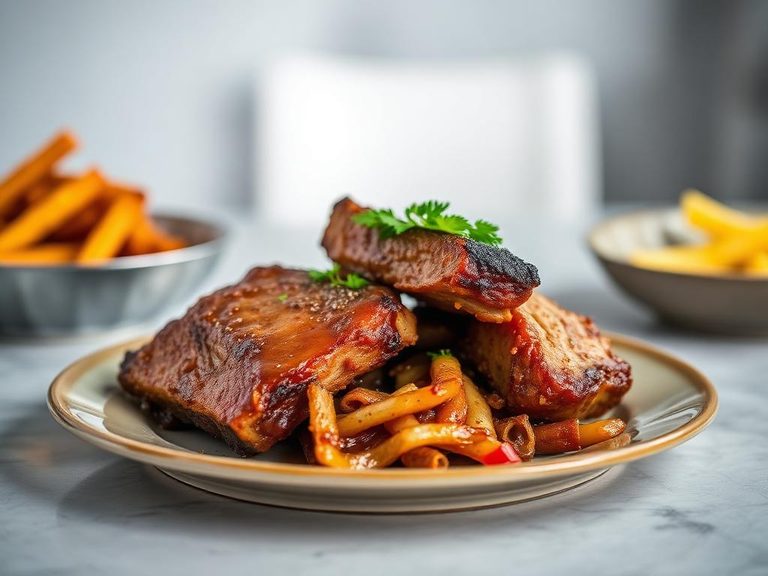
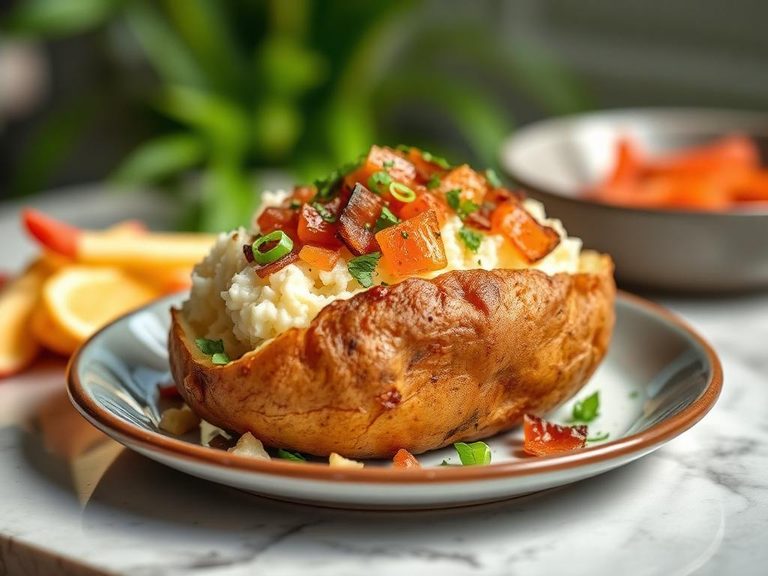
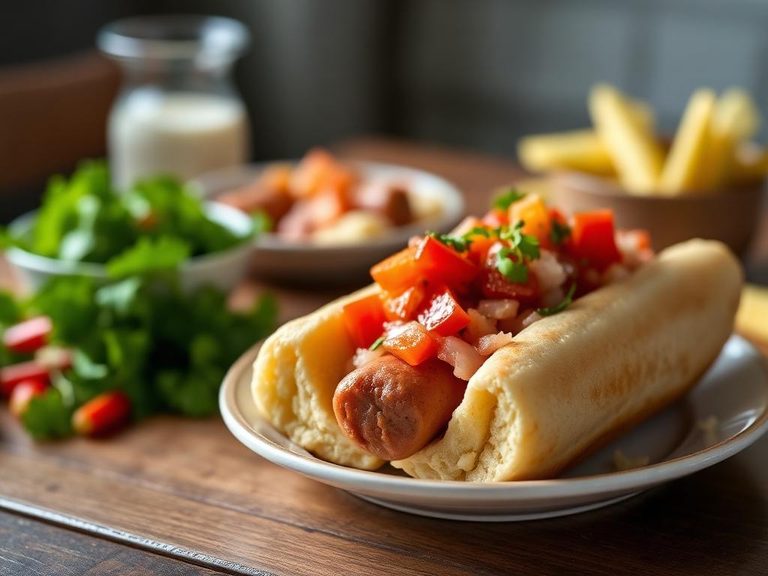
People love it for its nostalgic, homestyle flavor—a perfect blend of sweet, savory, and smoky that feels like a warm hug. It's incredibly versatile, serving as a standalone meal, a side dish for barbecue, or a topping for hot dogs and baked potatoes.
⚠️ Watch-outs & how to enjoy it better
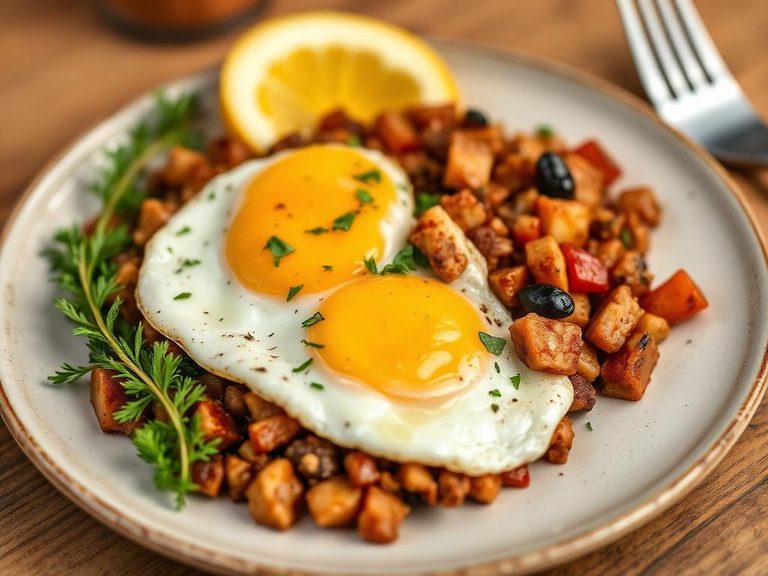
The sweet sauce can contain significant added sugars (8.23g per 100g), which may cause blood-sugar spikes for some. Canned versions are often high in sodium. To counteract this, pair it with a source of protein (like a grilled chicken breast or a fried egg) and healthy fats (like avocado or a sprinkle of cheese) to slow sugar absorption, and choose 'low-sodium' varieties or rinse the beans lightly before serving.
Key benefits
- Excellent source of dietary fiber (4.4g per 100g) for digestive health.
- Good plant-based protein source (4.52g per 100g) for muscle maintenance.
- Very low in fat (0.89g per 100g), supporting heart-healthy diets.
- Provides a quick, satisfying energy boost from complex carbohydrates.
- Contains essential minerals like iron and potassium from the beans.
🍽️ Popular dishes
🌍 Where it's eaten
💡 Did you know?
The iconic canned version was popularized in the United States in the late 19th century, with the Heinz company introducing its 'pork and beans' in 1895, marketing it as a convenient, ready-to-eat meal.
Full nutrition (USDA data · scales with serving)
| Water | 71.5 g |
| Energy | 105 kcal |
| Energy | 441 kj |
| Protein | 4.5 g |
| Total lipid (fat) | 0.89 g |
| Ash | 1.5 g |
| Carbohydrate, by difference | 21.6 g |
| Fiber, total dietary | 4.4 g |
| Total Sugars | 8.2 g |
| Sucrose | 5.8 g |
| Glucose | 1.1 g |
| Fructose | 1.3 g |
| Lactose | 0.00 g |
| Maltose | 0.00 g |
| Galactose | 0.00 g |
| Starch | 8.1 g |
| Calcium, Ca | 39.0 mg |
| Iron, Fe | 1.4 mg |
| Magnesium, Mg | 30.0 mg |
| Phosphorus, P | 88.0 mg |
| Potassium, K | 231 mg |
| Sodium, Na | 391 mg |
| Zinc, Zn | 0.51 mg |
| Copper, Cu | 0.17 mg |
| Manganese, Mn | 0.36 mg |
| Selenium, Se | 4.8 ug |
| Vitamin C, total ascorbic acid | 0.00 mg |
| Thiamin | 0.03 mg |
| Riboflavin | 0.01 mg |
| Niacin | 0.30 mg |
| Pantothenic acid | 0.15 mg |
| Vitamin B-6 | 0.05 mg |
| Folate, total | 8.0 ug |
| Folic acid | 0.00 ug |
| Folate, food | 8.0 ug |
| Folate, DFE | 8.0 ug |
| Choline, total | 22.3 mg |
| Betaine | 0.20 mg |
| Vitamin B-12 | 0.00 ug |
| Vitamin B-12, added | 0.00 ug |
| Vitamin A, RAE | 1.0 ug |
| Retinol | 0.00 ug |
| Carotene, beta | 9.0 ug |
| Carotene, alpha | 0.00 ug |
| Cryptoxanthin, beta | 2.0 ug |
| Vitamin A, IU | 17.0 iu |
| Lycopene | 83.0 ug |
| Lutein + zeaxanthin | 9.0 ug |
| Vitamin E (alpha-tocopherol) | 0.04 mg |
| Vitamin E, added | 0.00 mg |
| Tocopherol, beta | 0.01 mg |
| Tocopherol, gamma | 1.1 mg |
| Tocopherol, delta | 0.06 mg |
| Tocotrienol, alpha | 0.00 mg |
| Tocotrienol, beta | 0.00 mg |
| Tocotrienol, gamma | 0.01 mg |
| Tocotrienol, delta | 0.00 mg |
| Vitamin D (D2 + D3), International Units | 0.00 iu |
| Vitamin D (D2 + D3) | 0.00 ug |
| Vitamin K (phylloquinone) | 0.40 ug |
| Alcohol, ethyl | 0.00 g |
| Caffeine | 0.00 mg |
| Theobromine | 0.00 mg |
Fat & fatty acid profile (per 100g)
| Fatty acids, total saturated | 0.23 g |
| SFA 4:0 | 0.00 g |
| SFA 6:0 | 0.00 g |
| SFA 8:0 | 0.00 g |
| SFA 10:0 | 0.00 g |
| SFA 12:0 | 0.00 g |
| SFA 14:0 | 0.01 g |
| SFA 15:0 | 0.00 g |
| SFA 16:0 | 0.16 g |
| SFA 17:0 | 0.00 g |
| SFA 18:0 | 0.05 g |
| SFA 20:0 | 0.00 g |
| SFA 22:0 | 0.00 g |
| SFA 24:0 | 0.00 g |
| Fatty acids, total monounsaturated | 0.22 g |
| MUFA 14:1 | 0.00 g |
| MUFA 15:1 | 0.00 g |
| MUFA 16:1 | 0.01 g |
| MUFA 16:1 c | 0.01 g |
| MUFA 17:1 | 0.00 g |
| MUFA 18:1 | 0.20 g |
| MUFA 18:1 c | 0.20 g |
| MUFA 20:1 | 0.01 g |
| MUFA 22:1 | 0.01 g |
| MUFA 22:1 c | 0.01 g |
| MUFA 24:1 c | 0.00 g |
| Fatty acids, total polyunsaturated | 0.40 g |
| PUFA 18:2 | 0.22 g |
| PUFA 18:2 n-6 c,c | 0.22 g |
| PUFA 18:2 CLAs | 0.00 g |
| PUFA 18:3 | 0.18 g |
| PUFA 18:3 n-3 c,c,c (ALA) | 0.18 g |
| PUFA 18:3 n-6 c,c,c | 0.00 g |
| PUFA 18:4 | 0.00 g |
| PUFA 20:2 n-6 c,c | 0.00 g |
| PUFA 20:3 | 0.00 g |
| PUFA 20:3 n-3 | 0.00 g |
| PUFA 20:3 n-6 | 0.00 g |
| PUFA 20:4 | 0.00 g |
| PUFA 20:5 n-3 (EPA) | 0.00 g |
| PUFA 22:4 | 0.00 g |
| PUFA 22:5 n-3 (DPA) | 0.00 g |
| PUFA 22:6 n-3 (DHA) | 0.00 g |
| Fatty acids, total trans | 0.00 g |
| Fatty acids, total trans-monoenoic | 0.00 g |
| TFA 16:1 t | 0.00 g |
| TFA 18:1 t | 0.00 g |
| TFA 22:1 t | 0.00 g |
| TFA 18:2 t not further defined | 0.00 g |
| Fatty acids, total trans-polyenoic | 0.00 g |
| Cholesterol | 7.0 mg |
Amino acid profile (per 100g)
| Tryptophan | 0.05 g |
| Threonine | 0.14 g |
| Isoleucine | 0.23 g |
| Leucine | 0.40 g |
| Lysine | 0.29 g |
| Methionine | 0.05 g |
| Cystine | 0.04 g |
| Phenylalanine | 0.26 g |
| Tyrosine | 0.12 g |
| Valine | 0.26 g |
| Arginine | 0.23 g |
| Histidine | 0.13 g |
| Alanine | 0.19 g |
| Aspartic acid | 0.61 g |
| Glutamic acid | 0.71 g |
| Glycine | 0.19 g |
| Proline | 0.24 g |
| Serine | 0.31 g |
FAQ
Is canned baked beans with pork vegetarian?
No, traditional versions contain small pieces of pork or pork fat for flavor. Vegetarian or vegan versions are widely available, using vegetable oil and smoky flavorings instead.
How can I reduce the sugar content?
Look for 'low sugar' or 'no added sugar' varieties on the label. You can also make them from scratch, controlling the amount of brown sugar, molasses, or maple syrup you add.
What's the best way to store leftovers?
Transfer any uneaten beans from the can to a sealed container and refrigerate. They will keep for 3-4 days. They can also be frozen in airtight containers for up to 3 months.
Nutrient density (calculated · NRF9.3)
Nutrient Rich Foods index: beneficial nutrients (protein, fiber, vitamins, minerals) minus saturated fat, added sugar & sodium, per 100 kcal.
NRF9.3 index — Fulgoni, Keast & Drewnowski, 2009. Computed from USDA nutrients.
Weight-loss friendliness (composite index)
Energy density 1.05 kcal/g · 17% calories from protein · 4.4 g fiber · 8.2 g sugar per 100 g.
Composite of energy density (Rolls et al., 1999), protein & fiber satiety, minus sugar. A calculated heuristic — ranks satiety-per-calorie, not a clinical measure.
Dietary load (calculated from USDA values)
Potential renal acid load. Positive = acid-forming, negative = alkaline-forming.
Sodium-to-potassium ratio: 1.69 (lower is better — aim for ≤ 1)
Sodium:potassium per WHO potassium guidance. Computed from USDA nutrients.