Fast foods, submarine sandwich, tuna on white bread with lettuce and tomato
Whole food · Fast Foods

Photo: Wikipedia
A classic American submarine sandwich, this handheld meal features flaky, savory tuna salad—creamy with mayonnaise and seasoned with a hint of pepper—nestled in a soft, white hoagie roll. Crisp lettuce and juicy tomato slices add a fresh, cool crunch against the rich filling. While satisfying, it's a calorie-dense option with over 200 kcal per 100g, primarily from fats and carbs.
💚 Why it's loved
People love it for the satisfying, creamy-savory flavor of the tuna salad paired with the soft, yielding texture of the bread and the crisp freshness of the vegetables. It's a nostalgic, comforting staple of deli counters and lunch menus, valued for its simplicity and hearty, filling nature.
⚠️ Watch-outs & how to enjoy it better
The white bread and mayonnaise can lead to a rapid blood-sugar spike and are high in refined carbs and saturated fats. The tuna itself is a common allergen, and canned varieties may contain higher sodium. To counteract this, choose whole-grain bread for more fiber, use a lighter mayo or Greek yogurt blend, and pair the sandwich with a side salad or vegetable sticks to slow digestion and add nutrients.
Key benefits
- Provides a quick source of protein for muscle maintenance.
- Offers a convenient, portable meal option.
- Contains omega-3 fatty acids from the tuna.
- The white bread offers easily digestible energy.
- Vegetable additions contribute some vitamins and fiber.
🍽️ Popular dishes
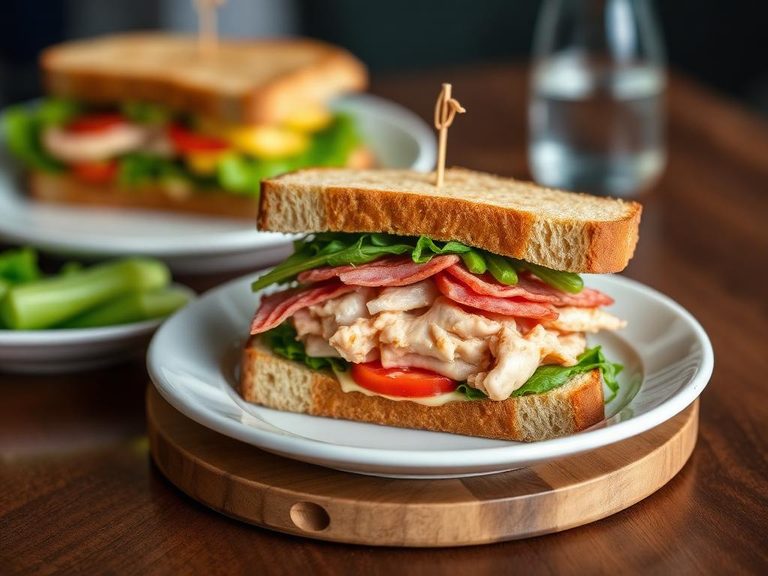
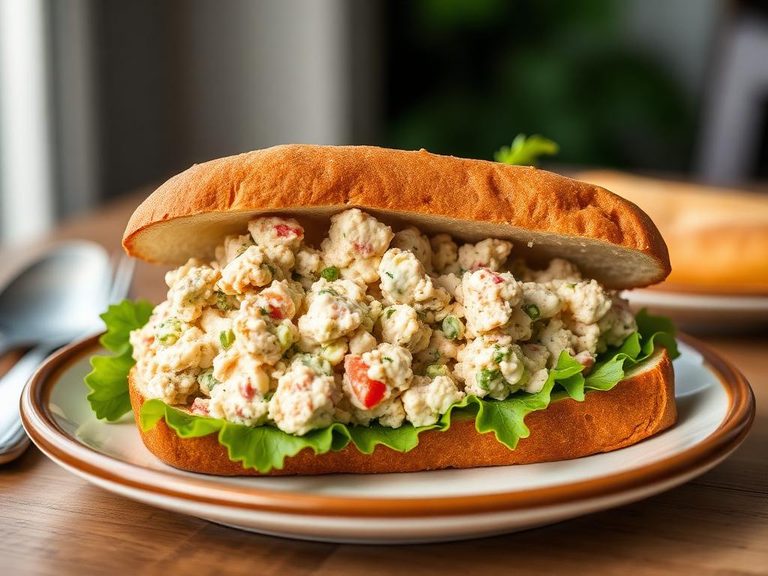
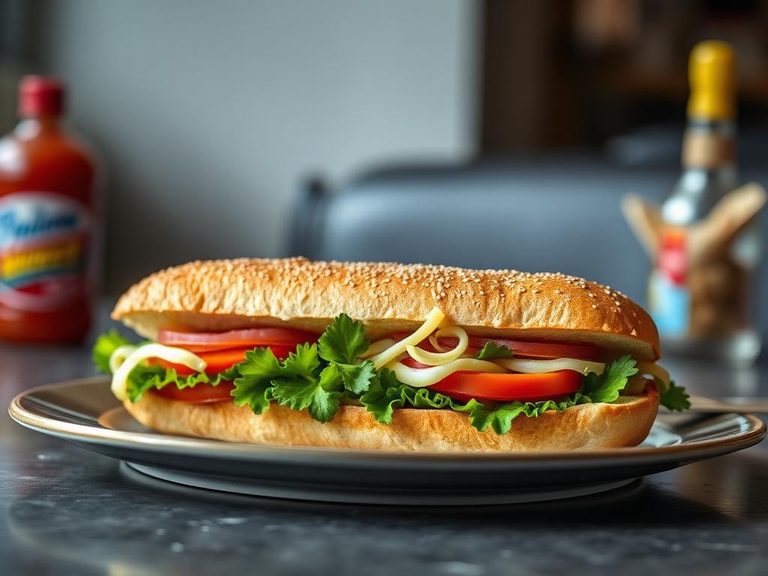
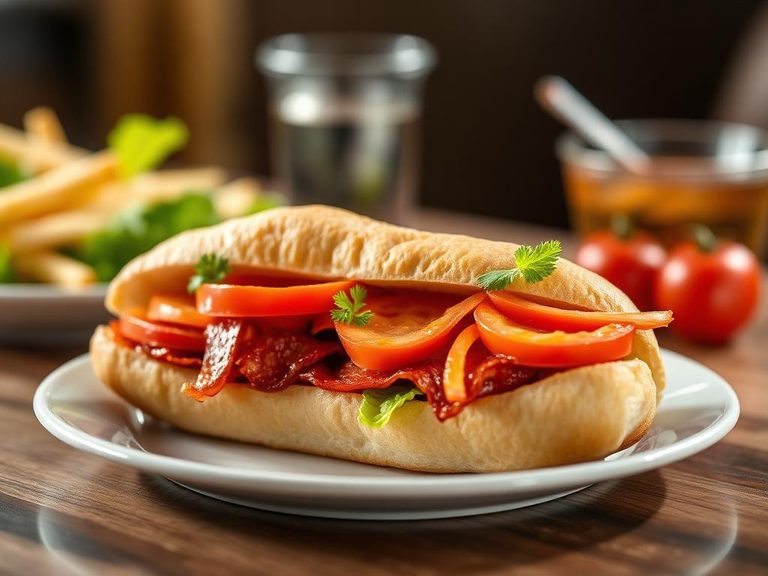
🌍 Where it's eaten
💡 Did you know?
The term 'submarine' for this type of sandwich is believed to have originated during World War II, as the long, cylindrical shape of the sandwich resembled the submarines used by the Navy.
Full nutrition (scales with serving)
| Water | 58.2 g |
| Energy | 218 kcal |
| Energy | 914 kj |
| Protein | 12.3 g |
| Total lipid (fat) | 12.0 g |
| Ash | 1.5 g |
| Carbohydrate, by difference | 15.9 g |
| Fiber, total dietary | 0.70 g |
| Total Sugars | 1.9 g |
| Sucrose | 0.00 g |
| Glucose | 0.47 g |
| Fructose | 1.1 g |
| Lactose | 0.00 g |
| Maltose | 0.37 g |
| Galactose | 0.00 g |
| Starch | 12.4 g |
| Calcium, Ca | 136 mg |
| Iron, Fe | 1.6 mg |
| Magnesium, Mg | 22.0 mg |
| Phosphorus, P | 109 mg |
| Potassium, K | 177 mg |
| Sodium, Na | 329 mg |
| Zinc, Zn | 0.67 mg |
| Copper, Cu | 0.07 mg |
| Manganese, Mn | 0.21 mg |
| Selenium, Se | 39.2 ug |
| Vitamin C, total ascorbic acid | 0.00 mg |
| Thiamin | 0.19 mg |
| Riboflavin | 0.22 mg |
| Niacin | 7.7 mg |
| Pantothenic acid | 0.35 mg |
| Vitamin B-6 | 0.27 mg |
| Folate, total | 51.0 ug |
| Folic acid | 33.0 ug |
| Folate, food | 18.0 ug |
| Folate, DFE | 74.0 ug |
| Choline, total | 18.2 mg |
| Vitamin B-12 | 1.1 ug |
| Vitamin B-12, added | 0.00 ug |
| Vitamin A, RAE | 11.0 ug |
| Retinol | 9.0 ug |
| Carotene, beta | 29.0 ug |
| Carotene, alpha | 0.00 ug |
| Cryptoxanthin, beta | 1.0 ug |
| Vitamin A, IU | 78.0 iu |
| Lycopene | 143 ug |
| Lutein + zeaxanthin | 51.0 ug |
| Vitamin E (alpha-tocopherol) | 1.6 mg |
| Vitamin E, added | 0.00 mg |
| Tocopherol, beta | 0.17 mg |
| Tocopherol, gamma | 7.1 mg |
| Tocopherol, delta | 2.4 mg |
| Tocotrienol, alpha | 0.04 mg |
| Tocotrienol, beta | 0.24 mg |
| Tocotrienol, gamma | 0.00 mg |
| Tocotrienol, delta | 0.00 mg |
| Vitamin D (D2 + D3), International Units | 21.0 iu |
| Vitamin D (D2 + D3) | 0.50 ug |
| Vitamin K (phylloquinone) | 22.4 ug |
| Alcohol, ethyl | 0.00 g |
| Caffeine | 0.00 mg |
| Theobromine | 0.00 mg |
Fat & fatty acid profile (per 100g)
| Fatty acids, total saturated | 2.1 g |
| SFA 4:0 | 0.01 g |
| SFA 6:0 | 0.00 g |
| SFA 8:0 | 0.00 g |
| SFA 10:0 | 0.01 g |
| SFA 12:0 | 0.01 g |
| SFA 14:0 | 0.04 g |
| SFA 15:0 | 0.01 g |
| SFA 16:0 | 1.3 g |
| SFA 17:0 | 0.02 g |
| SFA 18:0 | 0.60 g |
| SFA 20:0 | 0.04 g |
| SFA 22:0 | 0.04 g |
| SFA 24:0 | 0.01 g |
| Fatty acids, total monounsaturated | 2.7 g |
| MUFA 14:1 | 0.00 g |
| MUFA 15:1 | 0.00 g |
| MUFA 16:1 | 0.04 g |
| MUFA 16:1 c | 0.03 g |
| MUFA 17:1 | 0.01 g |
| MUFA 18:1 | 2.6 g |
| MUFA 18:1 c | 2.6 g |
| MUFA 20:1 | 0.04 g |
| MUFA 22:1 | 0.00 g |
| MUFA 22:1 c | 0.00 g |
| MUFA 24:1 c | 0.00 g |
| Fatty acids, total polyunsaturated | 6.5 g |
| PUFA 18:2 | 5.6 g |
| PUFA 18:2 n-6 c,c | 5.5 g |
| PUFA 18:2 CLAs | 0.00 g |
| PUFA 18:3 | 0.72 g |
| PUFA 18:3 n-3 c,c,c (ALA) | 0.69 g |
| PUFA 18:3 n-6 c,c,c | 0.03 g |
| PUFA 18:3i | 0.00 g |
| PUFA 18:4 | 0.00 g |
| PUFA 20:2 n-6 c,c | 0.01 g |
| PUFA 20:3 | 0.00 g |
| PUFA 20:3 n-3 | 0.00 g |
| PUFA 20:3 n-6 | 0.00 g |
| PUFA 20:4 | 0.02 g |
| PUFA 20:5 n-3 (EPA) | 0.02 g |
| PUFA 22:4 | 0.00 g |
| PUFA 22:5 n-3 (DPA) | 0.00 g |
| PUFA 22:6 n-3 (DHA) | 0.12 g |
| Fatty acids, total trans | 0.04 g |
| Fatty acids, total trans-monoenoic | 0.01 g |
| TFA 16:1 t | 0.00 g |
| TFA 18:1 t | 0.01 g |
| TFA 22:1 t | 0.00 g |
| TFA 18:2 t not further defined | 0.03 g |
| Fatty acids, total trans-polyenoic | 0.03 g |
| Cholesterol | 28.0 mg |
Amino acid profile (per 100g)
| Tryptophan | 0.12 g |
| Threonine | 0.44 g |
| Isoleucine | 0.55 g |
| Leucine | 0.90 g |
| Lysine | 0.73 g |
| Methionine | 0.30 g |
| Phenylalanine | 0.52 g |
| Tyrosine | 0.34 g |
| Valine | 0.64 g |
| Arginine | 0.60 g |
| Histidine | 0.69 g |
| Alanine | 0.59 g |
| Aspartic acid | 0.96 g |
| Glutamic acid | 2.4 g |
| Glycine | 0.49 g |
| Proline | 0.96 g |
| Serine | 0.48 g |
| Hydroxyproline | 0.00 g |
FAQ
Is a tuna sub a healthy choice?
It can be part of a balanced diet, but its nutritional profile varies greatly. A standard version on white bread with full-fat mayo is high in calories, refined carbs, and saturated fat. Opting for whole-grain bread, light mayo, and loading up on extra veggies makes it a more nutritious, balanced meal.
How much protein is in a typical tuna sub?
A standard 6-inch (approx. 150g) tuna sub typically contains about 18-22 grams of protein, primarily from the tuna and mayonnaise, making it a decent source of this macronutrient.
Why does my tuna sub sometimes taste fishy?
A strong 'fishy' taste often comes from the type of tuna (e.g., albacore can be stronger than light), the freshness of the can, or the oil it's packed in. Mixing the tuna with a bit of lemon juice, vinegar, or fresh herbs like dill can help brighten the flavor and reduce any overpowering fishiness.