Restaurant, family style, macaroni & cheese, from kids' menu
Whole food · Restaurant Foods

Photo: Wikipedia
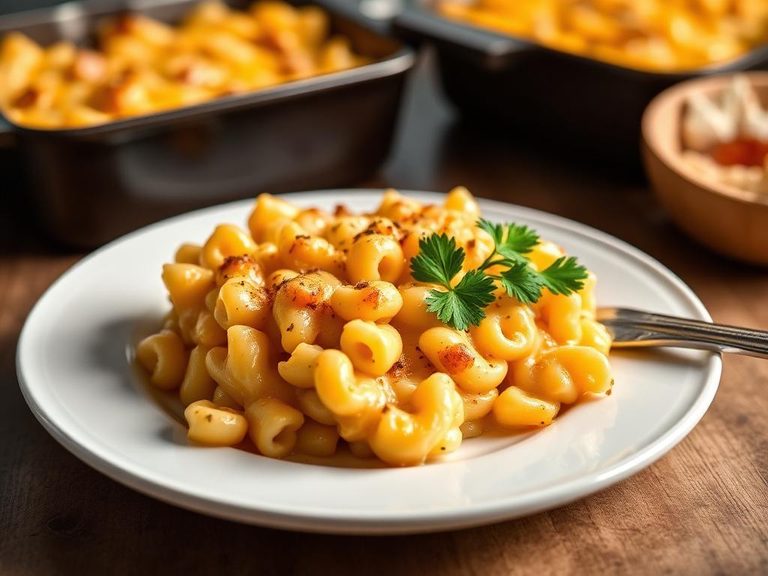
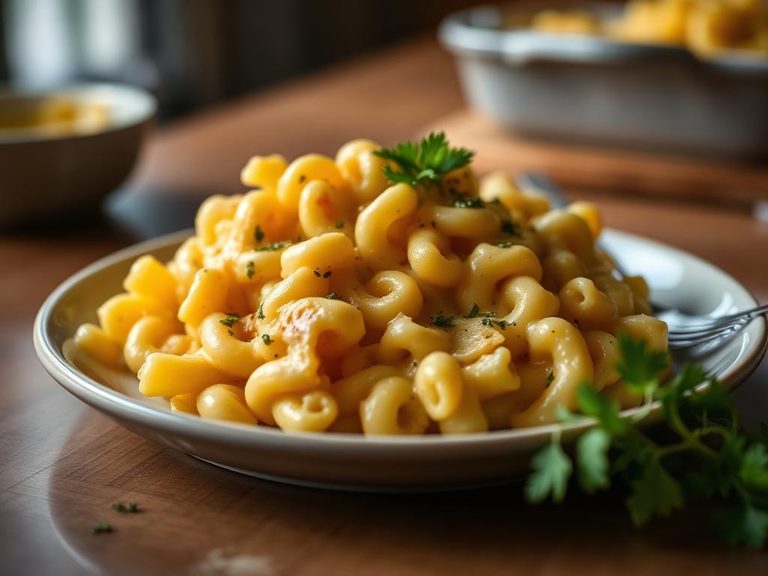
This is the classic, creamy, and comforting macaroni and cheese served in a family-style restaurant's kids' menu, featuring tender elbow pasta coated in a rich, cheesy sauce. Its texture is typically soft and slightly gooey, with a mild, savory flavor profile that appeals to children. Nutritionally, it is a calorie-dense side or main, providing a balance of carbohydrates and fat with a moderate amount of protein.
💚 Why it's loved
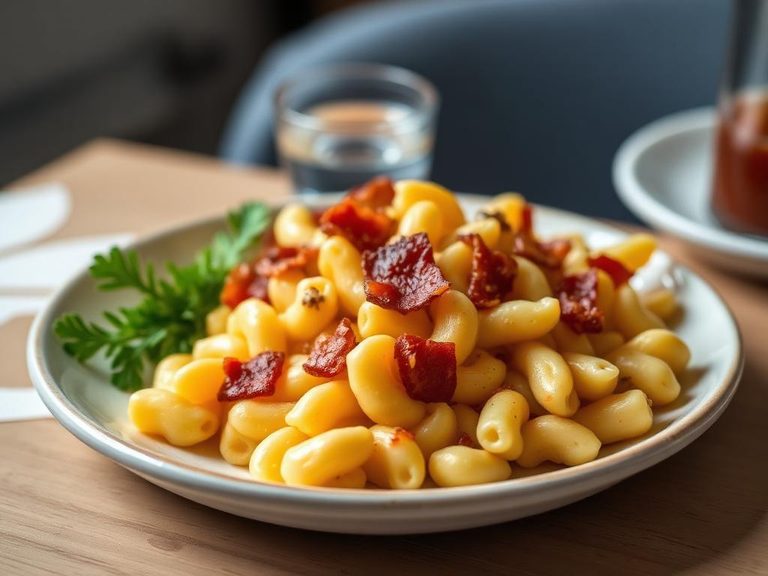
People love it for its nostalgic, comforting flavor and creamy, cheesy texture that feels like a warm hug. It's incredibly versatile, serving as a standalone meal, a side dish, or a base for adding proteins like bacon or broccoli.
⚠️ Watch-outs & how to enjoy it better
The dish can be high in sodium and saturated fat, which may concern those monitoring heart health or blood pressure. To counteract this, pair it with a fiber-rich vegetable like steamed broccoli or a lean protein like grilled chicken, and practice portion control by opting for a smaller serving as a side rather than a main. Additionally, the refined carbohydrates can cause blood-sugar spikes, so balancing it with protein and healthy fats (like adding nuts or a side salad) can help stabilize energy levels.
Key benefits
- Provides a quick source of energy from carbohydrates
- Offers a moderate amount of protein for muscle maintenance
- Contains calcium from cheese for bone health
- A familiar comfort food that can encourage eating in picky children
- Easy to digest for many people
🍽️ Popular dishes
🌍 Where it's eaten
💡 Did you know?
The earliest known recipe for macaroni and cheese appeared in a 14th-century Italian cookbook called 'Liber de Coquina,' which described pasta with grated cheese.
Full nutrition (scales with serving)
| Water | 68.2 g |
| Energy | 151 kcal |
| Energy | 634 kj |
| Protein | 5.4 g |
| Total lipid (fat) | 6.1 g |
| Ash | 1.5 g |
| Carbohydrate, by difference | 18.8 g |
| Fiber, total dietary | 1.1 g |
| Total Sugars | 3.1 g |
| Sucrose | 0.00 g |
| Glucose | 0.00 g |
| Fructose | 0.00 g |
| Lactose | 3.0 g |
| Maltose | 0.07 g |
| Galactose | 0.01 g |
| Starch | 13.6 g |
| Calcium, Ca | 99.0 mg |
| Iron, Fe | 0.68 mg |
| Magnesium, Mg | 19.0 mg |
| Phosphorus, P | 137 mg |
| Potassium, K | 135 mg |
| Sodium, Na | 361 mg |
| Zinc, Zn | 0.64 mg |
| Copper, Cu | 0.06 mg |
| Manganese, Mn | 0.19 mg |
| Selenium, Se | 19.4 ug |
| Vitamin C, total ascorbic acid | 0.00 mg |
| Thiamin | 0.10 mg |
| Riboflavin | 0.25 mg |
| Niacin | 0.78 mg |
| Pantothenic acid | 0.47 mg |
| Vitamin B-6 | 0.06 mg |
| Folate, total | 34.0 ug |
| Folic acid | 12.0 ug |
| Folate, food | 22.0 ug |
| Folate, DFE | 42.0 ug |
| Choline, total | 3.9 mg |
| Vitamin B-12 | 0.18 ug |
| Vitamin B-12, added | 0.00 ug |
| Vitamin A, RAE | 31.0 ug |
| Retinol | 30.0 ug |
| Carotene, beta | 9.0 ug |
| Carotene, alpha | 1.0 ug |
| Cryptoxanthin, beta | 0.00 ug |
| Vitamin A, IU | 118 iu |
| Lycopene | 0.00 ug |
| Lutein + zeaxanthin | 77.0 ug |
| Vitamin E (alpha-tocopherol) | 0.75 mg |
| Vitamin E, added | 0.00 mg |
| Tocopherol, beta | 0.04 mg |
| Tocopherol, gamma | 1.7 mg |
| Tocopherol, delta | 0.41 mg |
| Tocotrienol, alpha | 0.03 mg |
| Tocotrienol, beta | 0.23 mg |
| Tocotrienol, gamma | 0.09 mg |
| Tocotrienol, delta | 0.01 mg |
| Vitamin D (D2 + D3), International Units | 3.0 iu |
| Vitamin D (D2 + D3) | 0.10 ug |
| Vitamin K (phylloquinone) | 0.50 ug |
| Alcohol, ethyl | 0.00 g |
| Caffeine | 0.00 mg |
| Theobromine | 0.00 mg |
Fat & fatty acid profile (per 100g)
| Fatty acids, total saturated | 2.1 g |
| SFA 4:0 | 0.06 g |
| SFA 6:0 | 0.05 g |
| SFA 8:0 | 0.03 g |
| SFA 10:0 | 0.07 g |
| SFA 12:0 | 0.08 g |
| SFA 14:0 | 0.27 g |
| SFA 15:0 | 0.03 g |
| SFA 16:0 | 1.1 g |
| SFA 17:0 | 0.02 g |
| SFA 18:0 | 0.43 g |
| SFA 20:0 | 0.02 g |
| SFA 22:0 | 0.01 g |
| SFA 24:0 | 0.01 g |
| Fatty acids, total monounsaturated | 2.0 g |
| MUFA 14:1 | 0.03 g |
| MUFA 15:1 | 0.00 g |
| MUFA 16:1 | 0.05 g |
| MUFA 16:1 c | 0.04 g |
| MUFA 17:1 | 0.01 g |
| MUFA 18:1 | 1.8 g |
| MUFA 18:1 c | 1.8 g |
| MUFA 20:1 | 0.04 g |
| MUFA 22:1 | 0.00 g |
| MUFA 22:1 c | 0.00 g |
| MUFA 24:1 c | 0.00 g |
| Fatty acids, total polyunsaturated | 1.7 g |
| PUFA 18:2 | 1.4 g |
| PUFA 18:2 n-6 c,c | 1.3 g |
| PUFA 18:2 CLAs | 0.02 g |
| PUFA 18:3 | 0.25 g |
| PUFA 18:3 n-3 c,c,c (ALA) | 0.24 g |
| PUFA 18:3 n-6 c,c,c | 0.01 g |
| PUFA 18:3i | 0.00 g |
| PUFA 18:4 | 0.00 g |
| PUFA 20:2 n-6 c,c | 0.00 g |
| PUFA 20:3 | 0.00 g |
| PUFA 20:3 n-3 | 0.00 g |
| PUFA 20:3 n-6 | 0.00 g |
| PUFA 20:4 | 0.01 g |
| PUFA 20:5 n-3 (EPA) | 0.00 g |
| PUFA 22:4 | 0.00 g |
| PUFA 22:5 n-3 (DPA) | 0.00 g |
| PUFA 22:6 n-3 (DHA) | 0.00 g |
| Fatty acids, total trans | 0.12 g |
| Fatty acids, total trans-monoenoic | 0.08 g |
| TFA 16:1 t | 0.01 g |
| TFA 18:1 t | 0.07 g |
| TFA 22:1 t | 0.00 g |
| TFA 18:2 t not further defined | 0.03 g |
| Fatty acids, total trans-polyenoic | 0.03 g |
| Cholesterol | 10.0 mg |
Amino acid profile (per 100g)
| Tryptophan | 0.08 g |
| Threonine | 0.17 g |
| Isoleucine | 0.29 g |
| Leucine | 0.55 g |
| Lysine | 0.32 g |
| Methionine | 0.12 g |
| Cystine | 0.09 g |
| Phenylalanine | 0.32 g |
| Tyrosine | 0.22 g |
| Valine | 0.47 g |
| Arginine | 0.23 g |
| Histidine | 0.16 g |
| Alanine | 0.21 g |
| Aspartic acid | 0.39 g |
| Glutamic acid | 1.8 g |
| Glycine | 0.17 g |
| Proline | 0.67 g |
| Serine | 0.32 g |
| Hydroxyproline | 0.00 g |
FAQ
Is macaroni and cheese a good source of protein?
It provides a moderate amount of protein (about 5.42g per 100g), primarily from cheese and pasta, but it's not a high-protein food on its own. Pairing it with lean meats or beans can boost its protein content.
Can I make macaroni and cheese healthier?
Yes, you can use whole-grain pasta, reduce cheese or use lower-fat varieties, add vegetables like spinach or cauliflower, and incorporate lean proteins to improve its nutritional profile.
Is macaroni and cheese suitable for people with lactose intolerance?
Traditional macaroni and cheese contains dairy, which can be problematic for those with lactose intolerance. However, lactose-free cheese or dairy-free alternatives can be used to make a suitable version.