Restaurant, Chinese, kung pao chicken
Whole food · Restaurant Foods

Photo: Wikipedia
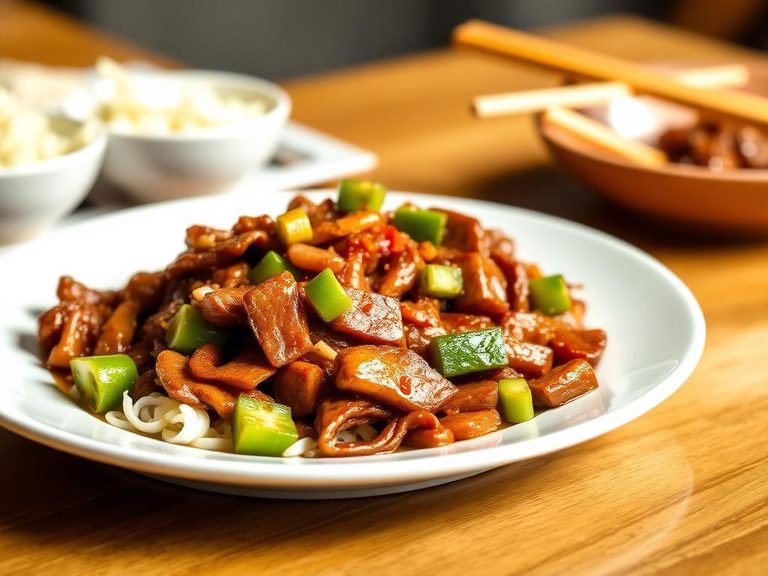
Kung Pao Chicken is a vibrant Sichuan stir-fry featuring diced chicken, roasted peanuts, and dried chili peppers in a glossy, savory-sweet sauce. The dish delivers a signature 'málà' (numbing-spicy) kick from Sichuan peppercorns, balanced by the crunch of peanuts and tender chicken. Nutritionally, it's a protein-rich dish with a moderate calorie profile per 100g, making it a flavorful yet balanced meal component.
💚 Why it's loved
People adore Kung Pao Chicken for its complex, addictive flavor profile—a perfect harmony of spicy, numbing, sweet, and savory. It's a beloved staple in Chinese restaurants worldwide, celebrated for its versatility and ability to satisfy a wide range of palates.
⚠️ Watch-outs & how to enjoy it better
The dish can be high in sodium and added sugars from the sauce, which may concern those monitoring blood pressure or blood sugar. The dried chilies and Sichuan peppercorns can be intense for sensitive stomachs. To counteract, opt for reduced-sodium soy sauce, control portion size, and pair it with steamed vegetables or brown rice to increase fiber and slow sugar absorption.
Key benefits
- High-quality protein from chicken supports muscle maintenance.
- Contains capsaicin from dried chilies, which may boost metabolism.
- Peanuts add healthy monounsaturated fats and a satisfying crunch.
- Sichuan peppercorns contain compounds that may have anti-inflammatory properties.
- The stir-fry cooking method helps retain vegetable nutrients.
🍽️ Popular dishes
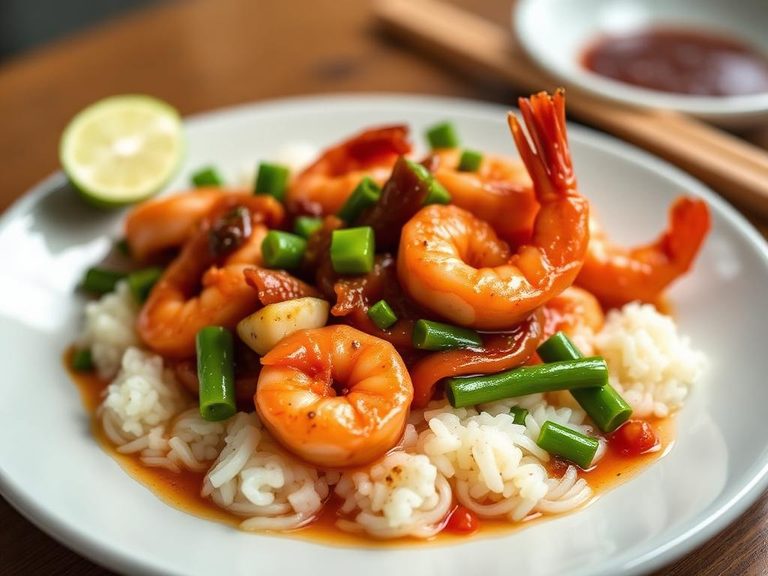
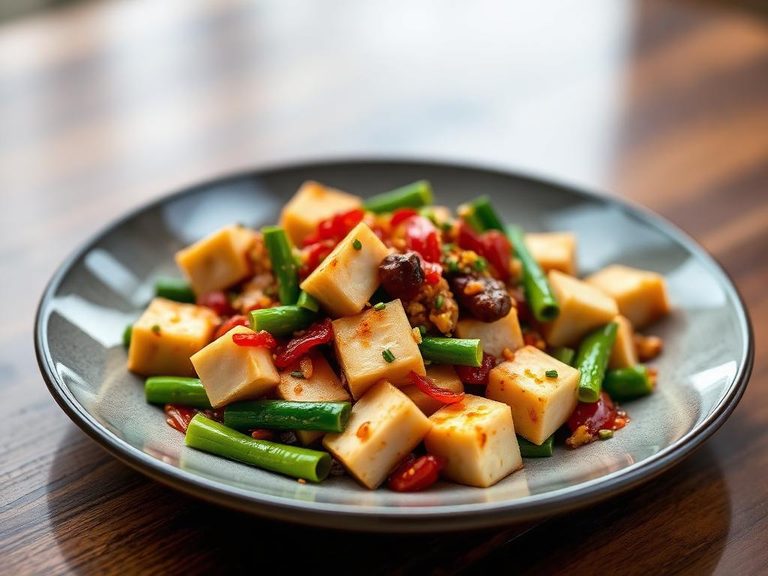
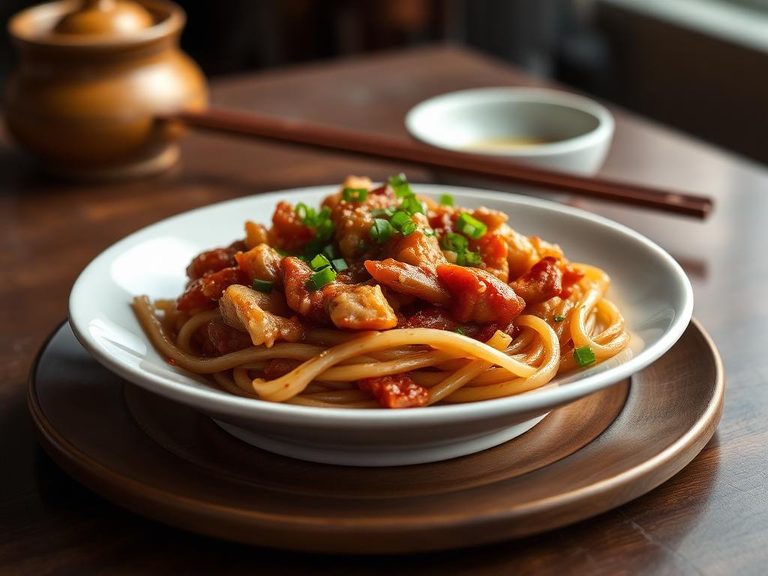
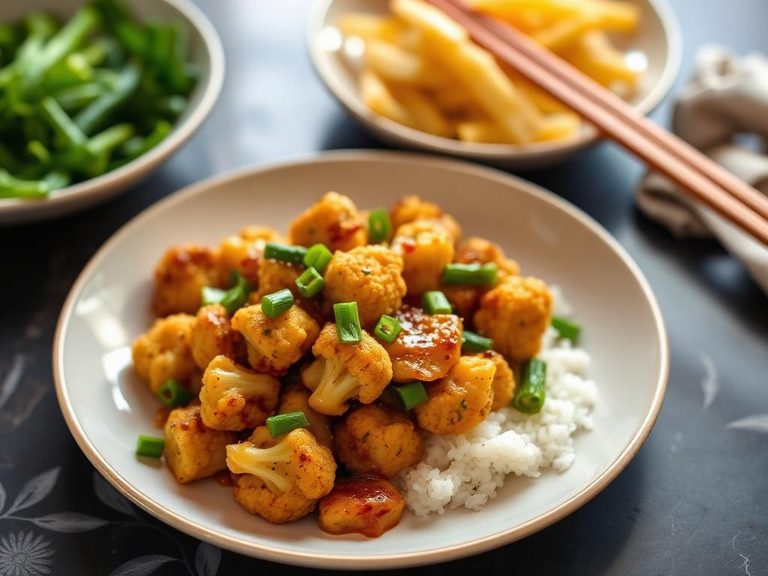
🌍 Where it's eaten
💡 Did you know?
The dish is named after Ding Baozhen, a late Qing Dynasty official whose title was 'Gōng Bǎo' (Palace Guardian), and the name was later adapted to 'Kung Pao' in English.
Full nutrition (scales with serving)
| Water | 74.8 g |
| Energy | 129 kcal |
| Energy | 541 kj |
| Protein | 9.8 g |
| Total lipid (fat) | 7.0 g |
| Ash | 1.6 g |
| Carbohydrate, by difference | 6.9 g |
| Fiber, total dietary | 1.5 g |
| Total Sugars | 3.0 g |
| Sucrose | 1.9 g |
| Glucose | 0.63 g |
| Fructose | 0.54 g |
| Lactose | 0.00 g |
| Maltose | 0.00 g |
| Galactose | 0.00 g |
| Starch | 2.5 g |
| Calcium, Ca | 20.0 mg |
| Iron, Fe | 0.76 mg |
| Magnesium, Mg | 24.0 mg |
| Phosphorus, P | 94.0 mg |
| Potassium, K | 218 mg |
| Sodium, Na | 402 mg |
| Zinc, Zn | 0.74 mg |
| Copper, Cu | 0.07 mg |
| Manganese, Mn | 0.26 mg |
| Selenium, Se | 8.1 ug |
| Vitamin C, total ascorbic acid | 7.1 mg |
| Thiamin | 0.03 mg |
| Riboflavin | 0.06 mg |
| Niacin | 2.8 mg |
| Pantothenic acid | 0.50 mg |
| Vitamin B-6 | 0.24 mg |
| Folate, total | 16.0 ug |
| Folic acid | 0.00 ug |
| Folate, food | 16.0 ug |
| Folate, DFE | 16.0 ug |
| Choline, total | 37.4 mg |
| Betaine | 3.7 mg |
| Vitamin B-12 | 0.11 ug |
| Vitamin B-12, added | 0.00 ug |
| Vitamin A, RAE | 65.0 ug |
| Retinol | 0.00 ug |
| Carotene, beta | 601 ug |
| Carotene, alpha | 341 ug |
| Cryptoxanthin, beta | 16.0 ug |
| Vitamin A, IU | 1299 iu |
| Lycopene | 0.00 ug |
| Lutein + zeaxanthin | 226 ug |
| Vitamin E (alpha-tocopherol) | 1.0 mg |
| Vitamin E, added | 0.00 mg |
| Tocopherol, beta | 0.05 mg |
| Tocopherol, gamma | 2.0 mg |
| Tocopherol, delta | 0.61 mg |
| Tocotrienol, alpha | 0.00 mg |
| Tocotrienol, beta | 0.00 mg |
| Tocotrienol, gamma | 0.01 mg |
| Tocotrienol, delta | 0.00 mg |
| Vitamin D (D2 + D3), International Units | 0.00 iu |
| Vitamin D (D2 + D3) | 0.00 ug |
| Vitamin K (phylloquinone) | 13.6 ug |
| Vitamin K (Menaquinone-4) | 2.2 ug |
| Alcohol, ethyl | 0.00 g |
| Caffeine | 0.00 mg |
| Theobromine | 0.00 mg |
Fat & fatty acid profile (per 100g)
| Fatty acids, total saturated | 1.4 g |
| SFA 4:0 | 0.00 g |
| SFA 6:0 | 0.00 g |
| SFA 8:0 | 0.00 g |
| SFA 10:0 | 0.00 g |
| SFA 12:0 | 0.00 g |
| SFA 14:0 | 0.01 g |
| SFA 15:0 | 0.00 g |
| SFA 16:0 | 0.90 g |
| SFA 17:0 | 0.01 g |
| SFA 18:0 | 0.29 g |
| SFA 20:0 | 0.04 g |
| SFA 22:0 | 0.06 g |
| SFA 24:0 | 0.03 g |
| Fatty acids, total monounsaturated | 2.2 g |
| MUFA 14:1 | 0.00 g |
| MUFA 15:1 | 0.00 g |
| MUFA 16:1 | 0.08 g |
| MUFA 16:1 c | 0.08 g |
| MUFA 17:1 | 0.01 g |
| MUFA 18:1 | 2.0 g |
| MUFA 18:1 c | 2.0 g |
| MUFA 20:1 | 0.04 g |
| MUFA 22:1 | 0.00 g |
| MUFA 22:1 c | 0.00 g |
| MUFA 24:1 c | 0.00 g |
| Fatty acids, total polyunsaturated | 3.0 g |
| PUFA 18:2 | 2.7 g |
| PUFA 18:2 n-6 c,c | 2.7 g |
| PUFA 18:2 CLAs | 0.01 g |
| PUFA 18:3 | 0.25 g |
| PUFA 18:3 n-3 c,c,c (ALA) | 0.24 g |
| PUFA 18:3 n-6 c,c,c | 0.00 g |
| PUFA 18:4 | 0.00 g |
| PUFA 20:2 n-6 c,c | 0.01 g |
| PUFA 20:3 | 0.01 g |
| PUFA 20:3 n-3 | 0.00 g |
| PUFA 20:3 n-6 | 0.01 g |
| PUFA 20:4 | 0.03 g |
| PUFA 20:5 n-3 (EPA) | 0.00 g |
| PUFA 22:4 | 0.01 g |
| PUFA 22:5 n-3 (DPA) | 0.00 g |
| PUFA 22:6 n-3 (DHA) | 0.00 g |
| Fatty acids, total trans | 0.03 g |
| Fatty acids, total trans-monoenoic | 0.01 g |
| TFA 16:1 t | 0.00 g |
| TFA 18:1 t | 0.01 g |
| TFA 22:1 t | 0.00 g |
| TFA 18:2 t not further defined | 0.02 g |
| Fatty acids, total trans-polyenoic | 0.02 g |
| Cholesterol | 26.0 mg |
Amino acid profile (per 100g)
| Tryptophan | 0.12 g |
| Threonine | 0.41 g |
| Isoleucine | 0.43 g |
| Leucine | 0.78 g |
| Lysine | 0.45 g |
| Methionine | 0.24 g |
| Cystine | 0.10 g |
| Phenylalanine | 0.40 g |
| Tyrosine | 0.35 g |
| Valine | 0.47 g |
| Arginine | 0.64 g |
| Histidine | 0.27 g |
| Alanine | 0.57 g |
| Aspartic acid | 0.97 g |
| Glutamic acid | 1.8 g |
| Glycine | 0.40 g |
| Proline | 0.34 g |
| Serine | 0.40 g |
FAQ
Is Kung Pao Chicken spicy?
Yes, traditionally it is spicy and numbing from dried chilies and Sichuan peppercorns. However, many Westernized versions are milder, with the heat level adjustable.
What's the difference between Kung Pao and General Tso's chicken?
Kung Pao is a Sichuan dish with peanuts and a numbing-spicy sauce, while General Tso's is a sweeter, deeper-fried Hunanese-American dish without peanuts or peppercorns.
Can I make it less oily?
Yes. Use a non-stick pan with minimal oil, and choose lean chicken breast. The restaurant version is often oilier for flavor and texture.