

Snacks, pretzels, hard, plain, salted
Whole food · Snacks
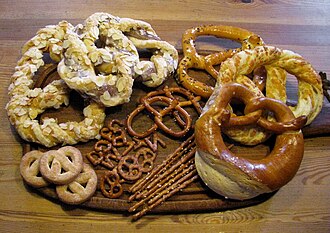
Photo: Wikipedia
A hard, crunchy, stick- or knot-shaped baked bread product with a deeply bronzed, glossy crust and a coarse salt finish. Its signature snap gives way to a dry, airy interior with a malty, wheaty flavor and a pronounced salty kick. Nutritionally, it's a low-fat, high-carb energy source, providing over 80g of carbohydrates per 100g.
Calorie split: 10% protein · 83% carbs · 7% fat
↓ Full nutrition💚 Why it's loved
People adore the satisfying, audible crunch and the perfect balance of salty and savory flavors. Its versatility makes it a staple for dipping in mustard, cheese sauce, or beer cheese, and it's a cultural icon at German beer halls and American sporting events.
⚠️ Watch-outs & how to enjoy it better
The high carbohydrate content can cause rapid blood-sugar spikes, especially without pairing. Its significant sodium content (often over 1000mg per 100g) is a concern for those monitoring salt intake. Tip: Pair with a protein or fat like hummus, cheese, or nuts to slow digestion, and practice portion control by measuring a single serving.
Key benefits
- Low in fat (under 3g per 100g)
- Good source of quick-release energy from complex carbs
- Provides a modest amount of plant-based protein
- Very low in sugar
- Durable and portable for on-the-go snacking
🍽️ Popular dishes



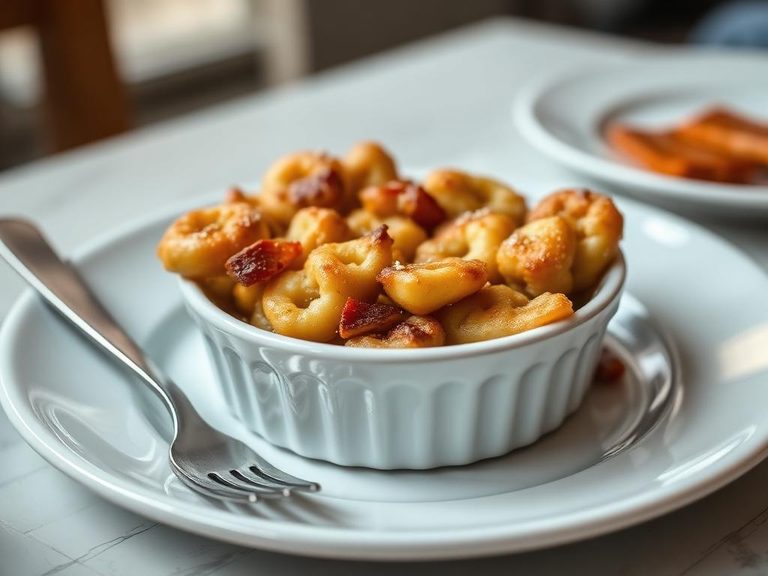
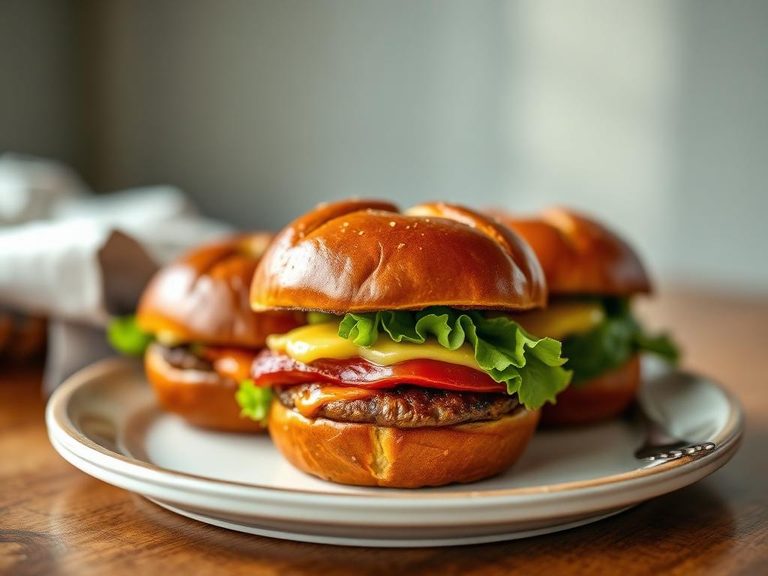
🌍 Where it's eaten
💡 Did you know?
The distinctive pretzel shape is said to represent a child's arms folded in prayer, and the word 'pretzel' may derive from the Latin 'bracellae' (little arms).
Full nutrition (USDA data · scales with serving)
| Water | 3.1 g |
| Energy | 384 kcal |
| Energy | 1608 kj |
| Protein | 10.0 g |
| Total lipid (fat) | 2.9 g |
| Ash | 3.5 g |
| Carbohydrate, by difference | 80.4 g |
| Fiber, total dietary | 3.4 g |
| Total Sugars | 2.2 g |
| Glucose | 0.69 g |
| Fructose | 0.31 g |
| Maltose | 1.1 g |
| Galactose | 0.00 g |
| Starch | 72.6 g |
| Calcium, Ca | 27.0 mg |
| Iron, Fe | 4.6 mg |
| Magnesium, Mg | 29.0 mg |
| Phosphorus, P | 128 mg |
| Potassium, K | 223 mg |
| Sodium, Na | 1240 mg |
| Zinc, Zn | 1.0 mg |
| Copper, Cu | 0.16 mg |
| Manganese, Mn | 1.0 mg |
| Selenium, Se | 4.4 ug |
| Vitamin C, total ascorbic acid | 2.1 mg |
| Thiamin | 0.42 mg |
| Riboflavin | 0.33 mg |
| Niacin | 5.3 mg |
| Pantothenic acid | 0.32 mg |
| Vitamin B-6 | 0.07 mg |
| Folate, total | 166 ug |
| Folic acid | 0.00 ug |
| Folate, food | 166 ug |
| Folate, DFE | 166 ug |
| Choline, total | 29.5 mg |
| Betaine | 50.0 mg |
| Vitamin B-12 | 0.00 ug |
| Vitamin B-12, added | 0.00 ug |
| Vitamin A, RAE | 0.00 ug |
| Retinol | 0.00 ug |
| Carotene, beta | 0.00 ug |
| Carotene, alpha | 0.00 ug |
| Cryptoxanthin, beta | 0.00 ug |
| Vitamin A, IU | 0.00 iu |
| Lycopene | 0.00 ug |
| Lutein + zeaxanthin | 9.0 ug |
| Vitamin E (alpha-tocopherol) | 0.47 mg |
| Vitamin E, added | 0.00 mg |
| Tocopherol, beta | 0.26 mg |
| Tocopherol, gamma | 0.62 mg |
| Tocopherol, delta | 0.02 mg |
| Tocotrienol, alpha | 0.03 mg |
| Tocotrienol, beta | 1.1 mg |
| Tocotrienol, gamma | 0.00 mg |
| Tocotrienol, delta | 0.32 mg |
| Vitamin D (D2 + D3), International Units | 0.00 iu |
| Vitamin D (D2 + D3) | 0.00 ug |
| Vitamin K (phylloquinone) | 2.8 ug |
| Vitamin K (Dihydrophylloquinone) | 5.2 ug |
| Alcohol, ethyl | 0.00 g |
| Caffeine | 0.00 mg |
| Theobromine | 0.00 mg |
Fat & fatty acid profile (per 100g)
| Fatty acids, total saturated | 0.39 g |
| SFA 4:0 | 0.00 g |
| SFA 6:0 | 0.00 g |
| SFA 8:0 | 0.00 g |
| SFA 10:0 | 0.00 g |
| SFA 12:0 | 0.00 g |
| SFA 14:0 | 0.00 g |
| SFA 15:0 | 0.00 g |
| SFA 16:0 | 0.32 g |
| SFA 17:0 | 0.00 g |
| SFA 18:0 | 0.05 g |
| SFA 20:0 | 0.01 g |
| SFA 22:0 | 0.00 g |
| SFA 24:0 | 0.00 g |
| Fatty acids, total monounsaturated | 0.73 g |
| MUFA 14:1 | 0.00 g |
| MUFA 15:1 | 0.00 g |
| MUFA 16:1 | 0.00 g |
| MUFA 16:1 c | 0.00 g |
| MUFA 17:1 | 0.00 g |
| MUFA 18:1 | 0.71 g |
| MUFA 18:1 c | 0.70 g |
| MUFA 20:1 | 0.02 g |
| MUFA 22:1 | 0.00 g |
| MUFA 22:1 c | 0.00 g |
| MUFA 24:1 c | 0.00 g |
| Fatty acids, total polyunsaturated | 1.3 g |
| PUFA 18:2 | 1.2 g |
| PUFA 18:2 n-6 c,c | 1.2 g |
| PUFA 18:2 CLAs | 0.00 g |
| PUFA 18:3 | 0.06 g |
| PUFA 18:3 n-3 c,c,c (ALA) | 0.06 g |
| PUFA 18:3 n-6 c,c,c | 0.00 g |
| PUFA 18:3i | 0.00 g |
| PUFA 18:4 | 0.00 g |
| PUFA 20:2 n-6 c,c | 0.00 g |
| PUFA 20:3 | 0.00 g |
| PUFA 20:3 n-3 | 0.00 g |
| PUFA 20:3 n-6 | 0.00 g |
| PUFA 20:4 | 0.00 g |
| PUFA 20:5 n-3 (EPA) | 0.00 g |
| PUFA 22:4 | 0.00 g |
| PUFA 22:5 n-3 (DPA) | 0.00 g |
| PUFA 22:6 n-3 (DHA) | 0.00 g |
| Fatty acids, total trans | 0.00 g |
| Fatty acids, total trans-monoenoic | 0.00 g |
| TFA 16:1 t | 0.00 g |
| TFA 18:1 t | 0.00 g |
| TFA 22:1 t | 0.00 g |
| TFA 18:2 t not further defined | 0.00 g |
| Fatty acids, total trans-polyenoic | 0.00 g |
| Cholesterol | 0.00 mg |
Amino acid profile (per 100g)
| Tryptophan | 0.10 g |
| Threonine | 0.25 g |
| Isoleucine | 0.41 g |
| Leucine | 0.76 g |
| Lysine | 0.26 g |
| Methionine | 0.18 g |
| Cystine | 0.17 g |
| Phenylalanine | 0.52 g |
| Tyrosine | 0.32 g |
| Valine | 0.48 g |
| Arginine | 0.36 g |
| Histidine | 0.22 g |
| Alanine | 0.34 g |
| Aspartic acid | 0.60 g |
| Glutamic acid | 3.6 g |
| Glycine | 0.42 g |
| Proline | 1.2 g |
FAQ
Are pretzels a healthier snack than potato chips?
Generally, yes. Hard pretzels are significantly lower in fat and calories than most fried potato chips. However, they are still high in refined carbs and sodium, so they should be enjoyed in moderation.
Why are pretzels shiny and brown?
Before baking, the dough is briefly dipped in a lye (sodium hydroxide) or baking soda solution. This alkaline bath promotes the Maillard reaction, creating the characteristic deep brown color, glossy sheen, and unique flavor.
Can I eat pretzels on a gluten-free diet?
Traditional pretzels are made from wheat flour and contain gluten. For a gluten-free diet, you must seek out pretzels specifically made from alternative flours like rice, corn, or sorghum.
Nutrient density (calculated · NRF9.3)
Nutrient Rich Foods index: beneficial nutrients (protein, fiber, vitamins, minerals) minus saturated fat, added sugar & sodium, per 100 kcal.
NRF9.3 index — Fulgoni, Keast & Drewnowski, 2009. Computed from USDA nutrients.
Weight-loss friendliness (composite index)
Energy density 3.84 kcal/g · 10% calories from protein · 3.4 g fiber · 2.2 g sugar per 100 g.
Composite of energy density (Rolls et al., 1999), protein & fiber satiety, minus sugar. A calculated heuristic — ranks satiety-per-calorie, not a clinical measure.
Dietary load (calculated from USDA values)
Potential renal acid load. Positive = acid-forming, negative = alkaline-forming.
Sodium-to-potassium ratio: 5.56 (lower is better — aim for ≤ 1)
Sodium:potassium per WHO potassium guidance. Computed from USDA nutrients.