

Sauce, peanut, made from peanut butter, water, soy sauce
Whole food · Soups, Sauces, and Gravies

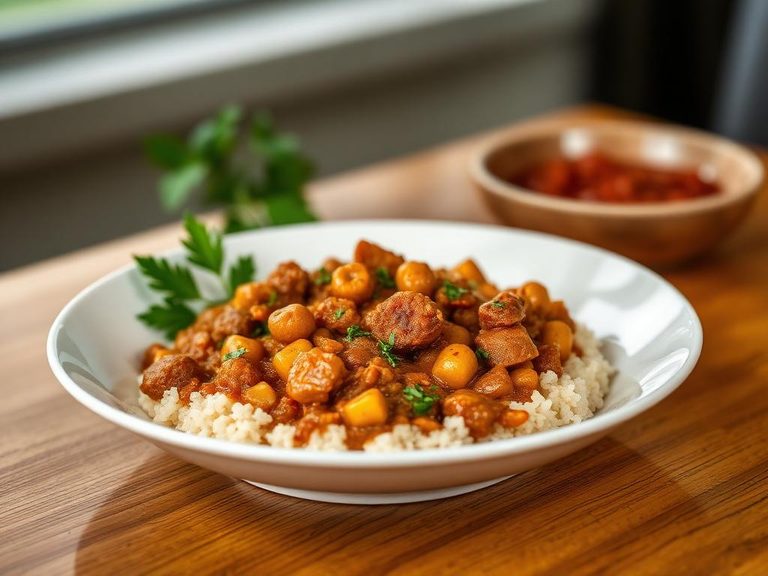
Photo: Wikipedia
This is a rich, savory, and creamy sauce that masterfully blends the nutty depth of peanut butter with the salty umami of soy sauce, all smoothed out with water. Its texture is thick yet pourable, clinging beautifully to noodles or vegetables, while its flavor profile is a perfect balance of salty, sweet, and deeply savory.
Calorie split: 10% protein · 34% carbs · 56% fat
↓ Full nutrition💚 Why it's loved
People adore this sauce for its incredibly versatile and addictive flavor that can transform a simple dish like steamed vegetables or plain noodles into a satisfying meal. It's a cornerstone of many comfort foods, offering a creamy, salty, and slightly sweet punch that feels both indulgent and familiar.
⚠️ Watch-outs & how to enjoy it better
This sauce is high in sodium and sugar, which can contribute to blood pressure and blood sugar spikes if consumed in large amounts. As it is a peanut-based product, it is a major allergen and unsafe for those with peanut allergies. To mitigate, use it as a flavoring agent in small portions rather than a main sauce, and pair it with fiber-rich vegetables or lean protein to slow sugar absorption.
Key benefits
- Provides plant-based protein from peanuts
- Contains monounsaturated fats from peanuts
- Offers a quick source of energy from carbohydrates
- Can enhance the palatability of vegetable dishes
- A staple condiment for adding complex flavor
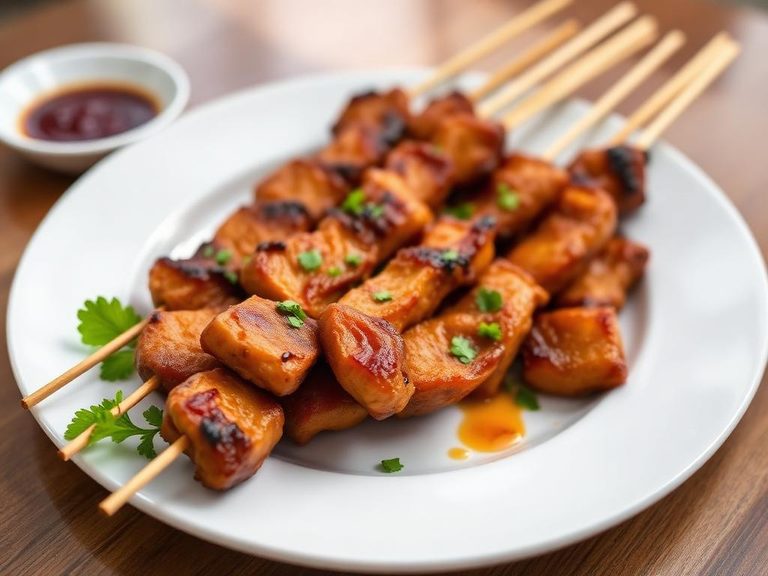
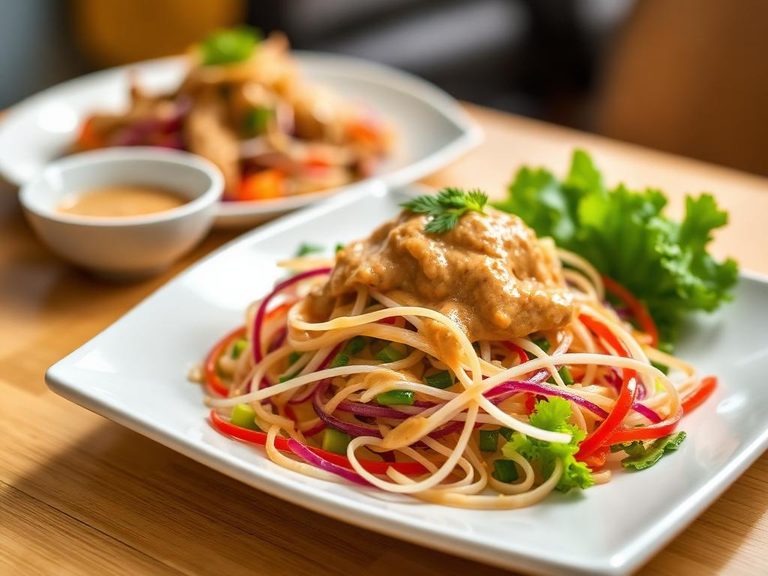
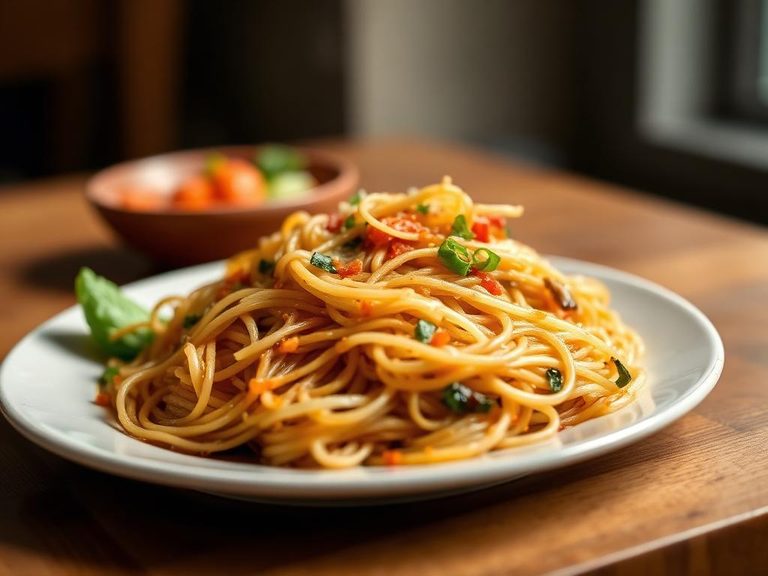
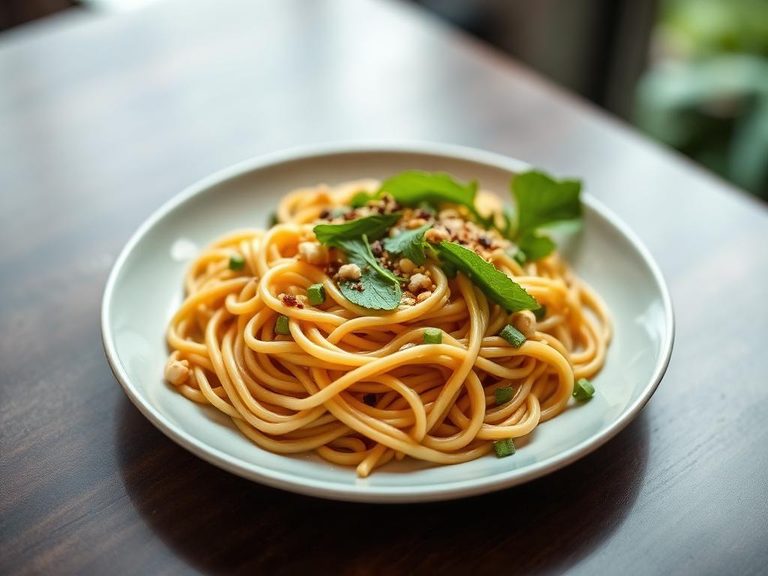
🍽️ Popular dishes
🌍 Where it's eaten
💡 Did you know?
The combination of peanuts and soy sauce in a sauce is a relatively modern culinary innovation, as peanuts are a New World crop that only became widely integrated into Asian cuisines after the Columbian Exchange.
Full nutrition (USDA data · scales with serving)
| Water | 51.4 g |
| Energy | 257 kcal |
| Energy | 1077 kj |
| Protein | 6.3 g |
| Total lipid (fat) | 16.0 g |
| Ash | 4.3 g |
| Carbohydrate, by difference | 22.0 g |
| Fiber, total dietary | 1.8 g |
| Total Sugars | 17.1 g |
| Sucrose | 12.4 g |
| Glucose | 2.5 g |
| Fructose | 2.1 g |
| Lactose | 0.00 g |
| Maltose | 0.00 g |
| Galactose | 0.00 g |
| Starch | 0.00 g |
| Calcium, Ca | 22.0 mg |
| Iron, Fe | 0.91 mg |
| Magnesium, Mg | 45.0 mg |
| Phosphorus, P | 107 mg |
| Potassium, K | 235 mg |
| Sodium, Na | 1338 mg |
| Zinc, Zn | 0.78 mg |
| Copper, Cu | 0.12 mg |
| Manganese, Mn | 0.48 mg |
| Selenium, Se | 3.4 ug |
| Vitamin C, total ascorbic acid | 0.00 mg |
| Thiamin | 0.06 mg |
| Riboflavin | 0.13 mg |
| Niacin | 3.2 mg |
| Pantothenic acid | 0.31 mg |
| Vitamin B-6 | 0.19 mg |
| Folate, total | 22.0 ug |
| Folic acid | 0.00 ug |
| Folate, food | 22.0 ug |
| Folate, DFE | 22.0 ug |
| Choline, total | 28.9 mg |
| Betaine | 7.4 mg |
| Vitamin B-12 | 0.00 ug |
| Vitamin B-12, added | 0.00 ug |
| Vitamin A, RAE | 0.00 ug |
| Retinol | 0.00 ug |
| Carotene, beta | 0.00 ug |
| Carotene, alpha | 0.00 ug |
| Cryptoxanthin, beta | 0.00 ug |
| Vitamin A, IU | 0.00 iu |
| Lycopene | 0.00 ug |
| Lutein + zeaxanthin | 0.00 ug |
| Vitamin E (alpha-tocopherol) | 2.2 mg |
| Vitamin E, added | 0.00 mg |
| Tocopherol, beta | 0.09 mg |
| Tocopherol, gamma | 5.2 mg |
| Tocopherol, delta | 0.44 mg |
| Tocotrienol, alpha | 0.05 mg |
| Tocotrienol, beta | 0.00 mg |
| Tocotrienol, gamma | 2.3 mg |
| Tocotrienol, delta | 0.00 mg |
| Vitamin D (D2 + D3), International Units | 0.00 iu |
| Vitamin D (D2 + D3) | 0.00 ug |
| Vitamin K (phylloquinone) | 1.0 ug |
| Alcohol, ethyl | 0.00 g |
| Caffeine | 0.00 mg |
| Theobromine | 0.00 mg |
Fat & fatty acid profile (per 100g)
| Fatty acids, total saturated | 2.9 g |
| SFA 4:0 | 0.00 g |
| SFA 6:0 | 0.00 g |
| SFA 8:0 | 0.01 g |
| SFA 10:0 | 0.02 g |
| SFA 12:0 | 0.00 g |
| SFA 14:0 | 0.01 g |
| SFA 15:0 | 0.00 g |
| SFA 16:0 | 1.4 g |
| SFA 17:0 | 0.01 g |
| SFA 18:0 | 0.74 g |
| SFA 20:0 | 0.18 g |
| SFA 22:0 | 0.36 g |
| SFA 24:0 | 0.16 g |
| Fatty acids, total monounsaturated | 7.0 g |
| MUFA 14:1 | 0.00 g |
| MUFA 15:1 | 0.00 g |
| MUFA 16:1 | 0.01 g |
| MUFA 16:1 c | 0.01 g |
| MUFA 17:1 | 0.01 g |
| MUFA 18:1 | 6.8 g |
| MUFA 18:1 c | 6.8 g |
| MUFA 20:1 | 0.14 g |
| MUFA 22:1 | 0.01 g |
| MUFA 22:1 c | 0.01 g |
| MUFA 24:1 c | 0.00 g |
| Fatty acids, total polyunsaturated | 4.8 g |
| PUFA 18:2 | 4.8 g |
| PUFA 18:2 n-6 c,c | 4.7 g |
| PUFA 18:2 CLAs | 0.00 g |
| PUFA 18:3 | 0.03 g |
| PUFA 18:3 n-3 c,c,c (ALA) | 0.03 g |
| PUFA 18:3 n-6 c,c,c | 0.00 g |
| PUFA 18:3i | 0.00 g |
| PUFA 18:4 | 0.00 g |
| PUFA 20:2 n-6 c,c | 0.00 g |
| PUFA 20:3 | 0.00 g |
| PUFA 20:3 n-3 | 0.00 g |
| PUFA 20:3 n-6 | 0.00 g |
| PUFA 20:4 | 0.01 g |
| PUFA 20:5 n-3 (EPA) | 0.00 g |
| PUFA 22:4 | 0.00 g |
| PUFA 22:5 n-3 (DPA) | 0.00 g |
| PUFA 22:6 n-3 (DHA) | 0.00 g |
| Fatty acids, total trans | 0.04 g |
| Fatty acids, total trans-monoenoic | 0.02 g |
| TFA 16:1 t | 0.00 g |
| TFA 18:1 t | 0.02 g |
| TFA 22:1 t | 0.00 g |
| TFA 18:2 t not further defined | 0.02 g |
| Fatty acids, total trans-polyenoic | 0.02 g |
| Cholesterol | 0.00 mg |
Amino acid profile (per 100g)
Estimated from Sauce, homemade, white, medium — USDA does not publish this profile for Sauce.
| Tryptophan | 0.04 g |
| Threonine | 0.14 g |
| Isoleucine | 0.19 g |
| Leucine | 0.30 g |
| Lysine | 0.24 g |
| Methionine | 0.08 g |
| Cystine | 0.03 g |
| Phenylalanine | 0.15 g |
| Tyrosine | 0.15 g |
| Valine | 0.20 g |
| Arginine | 0.11 g |
| Histidine | 0.08 g |
| Alanine | 0.10 g |
| Aspartic acid | 0.23 g |
| Glutamic acid | 0.64 g |
| Glycine | 0.07 g |
| Proline | 0.30 g |
| Serine | 0.17 g |
FAQ
Is this the same as store-bought satay sauce?
It's very similar and often forms the base, but commercial satay sauces may include additional ingredients like lemongrass, galangal, or chili for more complexity.
Can I make a lighter version?
Yes, you can reduce the sugar, use a low-sodium soy sauce, and thin it with more water or a splash of rice vinegar to cut the richness.
How long does homemade peanut sauce last?
Stored in an airtight container in the refrigerator, it typically keeps well for 5-7 days. The oils may separate; simply stir well before using.
Nutrient density (calculated · NRF9.3)
Nutrient Rich Foods index: beneficial nutrients (protein, fiber, vitamins, minerals) minus saturated fat, added sugar & sodium, per 100 kcal.
NRF9.3 index — Fulgoni, Keast & Drewnowski, 2009. Computed from USDA nutrients.
Weight-loss friendliness (composite index)
Energy density 2.57 kcal/g · 10% calories from protein · 1.8 g fiber · 17.1 g sugar per 100 g.
Composite of energy density (Rolls et al., 1999), protein & fiber satiety, minus sugar. A calculated heuristic — ranks satiety-per-calorie, not a clinical measure.
Dietary load (calculated from USDA values)
Potential renal acid load. Positive = acid-forming, negative = alkaline-forming.
Sodium-to-potassium ratio: 5.69 (lower is better — aim for ≤ 1)
Sodium:potassium per WHO potassium guidance. Computed from USDA nutrients.