

Potato salad with egg
Whole food · Meals, Entrees, and Side Dishes
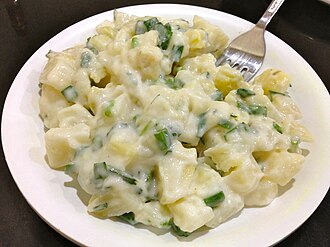
Photo: Wikipedia
A creamy, comforting salad of tender boiled potatoes and chopped hard-boiled eggs, bound with mayonnaise or a tangy vinaigrette. It offers a satisfying contrast between the soft, starchy potato and the rich, velvety egg yolk. At 157 kcal per 100g, it's a moderate-energy side dish where the primary fuel comes from carbohydrates, with a notable contribution from fats.
Calorie split: 5% protein · 41% carbs · 54% fat
↓ Full nutrition💚 Why it's loved
People adore its nostalgic, homestyle comfort and the way it balances creamy, tangy, and savory flavors. It's a beloved staple at barbecues, potlucks, and family dinners, valued for its simplicity and ability to be customized.
⚠️ Watch-outs & how to enjoy it better
The mayonnaise-based versions can be high in saturated fat and calories, and the high glycemic load from potatoes may cause blood-sugar spikes. Those watching sodium or calories should opt for a vinegar-based dressing, use a light mayo, and pair the salad with lean protein or non-starchy vegetables to balance the meal.
Key benefits
- Provides quick-release energy from potato starch.
- Eggs add high-quality protein and essential nutrients like choline.
- The fat content enhances satiety and helps absorb fat-soluble vitamins.
- A versatile base for adding other vegetables like celery or onion.
- A classic, crowd-pleasing dish for gatherings and picnics.
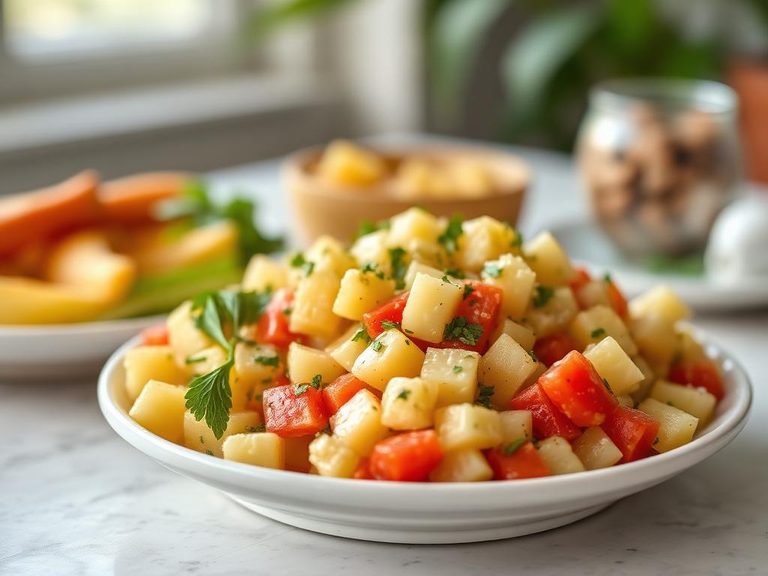
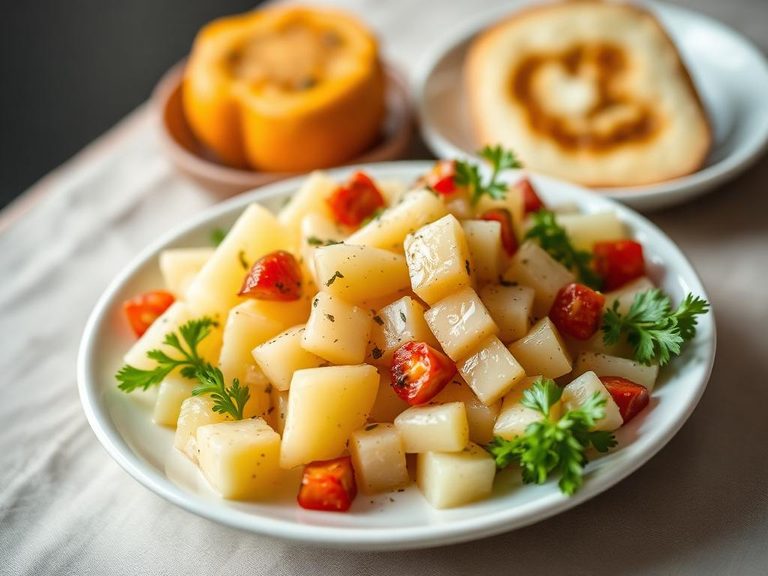
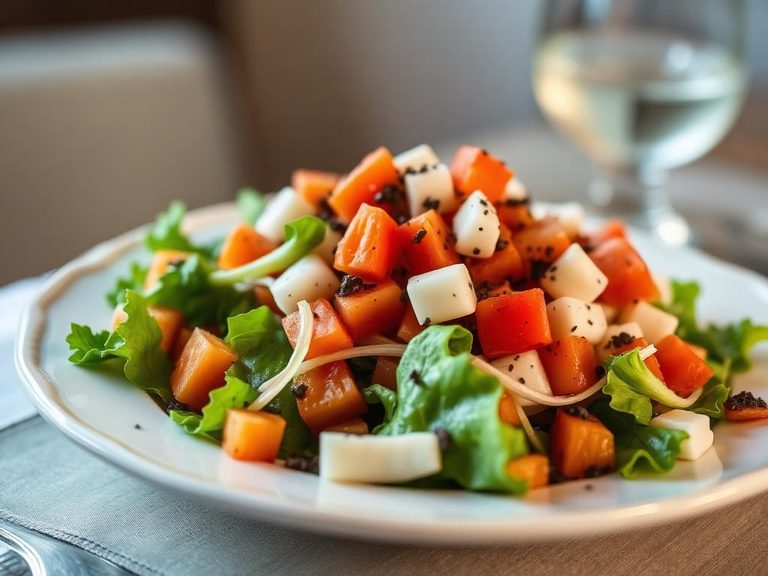
🍽️ Popular dishes
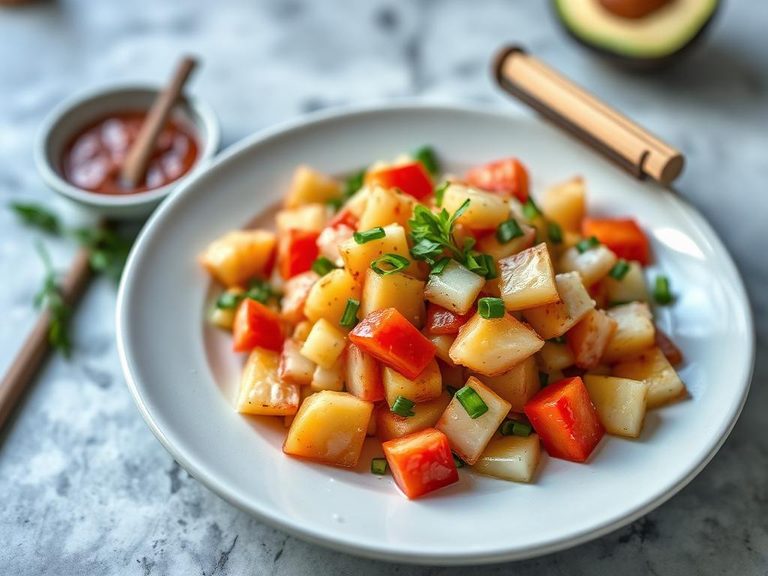
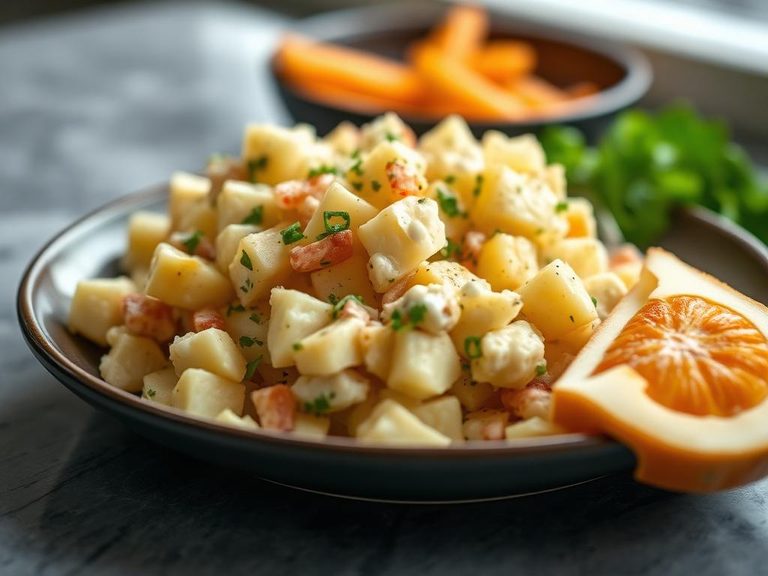
🌍 Where it's eaten
💡 Did you know?
The addition of hard-boiled eggs to potato salad is a hallmark of American-style versions, a practice that became widespread in the early 20th century with the popularization of commercial mayonnaise.
Full nutrition (USDA data · scales with serving)
| Water | 71.0 g |
| Energy | 157 kcal |
| Energy | 658 kj |
| Protein | 2.0 g |
| Total lipid (fat) | 9.4 g |
| Ash | 1.5 g |
| Carbohydrate, by difference | 16.2 g |
| Fiber, total dietary | 1.3 g |
| Total Sugars | 5.0 g |
| Sucrose | 1.7 g |
| Glucose | 1.5 g |
| Fructose | 1.3 g |
| Lactose | 0.00 g |
| Maltose | 0.39 g |
| Galactose | 0.00 g |
| Starch | 8.5 g |
| Calcium, Ca | 15.0 mg |
| Iron, Fe | 0.50 mg |
| Magnesium, Mg | 15.0 mg |
| Phosphorus, P | 53.0 mg |
| Potassium, K | 242 mg |
| Sodium, Na | 329 mg |
| Zinc, Zn | 0.33 mg |
| Copper, Cu | 0.04 mg |
| Manganese, Mn | 0.11 mg |
| Selenium, Se | 2.4 ug |
| Vitamin C, total ascorbic acid | 0.80 mg |
| Thiamin | 0.03 mg |
| Riboflavin | 0.02 mg |
| Niacin | 0.80 mg |
| Pantothenic acid | 0.44 mg |
| Vitamin B-6 | 0.12 mg |
| Folate, total | 13.0 ug |
| Folic acid | 0.00 ug |
| Folate, food | 13.0 ug |
| Folate, DFE | 13.0 ug |
| Choline, total | 18.2 mg |
| Vitamin B-12 | 0.07 ug |
| Vitamin B-12, added | 0.00 ug |
| Vitamin A, RAE | 19.0 ug |
| Retinol | 13.0 ug |
| Carotene, beta | 67.0 ug |
| Carotene, alpha | 5.0 ug |
| Cryptoxanthin, beta | 3.0 ug |
| Vitamin A, IU | 163 iu |
| Lycopene | 0.00 ug |
| Lutein + zeaxanthin | 43.0 ug |
| Vitamin E (alpha-tocopherol) | 0.68 mg |
| Vitamin E, added | 0.00 mg |
| Tocopherol, beta | 0.17 mg |
| Tocopherol, gamma | 5.7 mg |
| Tocopherol, delta | 2.2 mg |
| Tocotrienol, alpha | 0.00 mg |
| Tocotrienol, beta | 0.00 mg |
| Tocotrienol, gamma | 0.01 mg |
| Tocotrienol, delta | 0.00 mg |
| Vitamin D (D2 + D3), International Units | 4.0 iu |
| Vitamin D (D2 + D3) | 0.10 ug |
| Vitamin K (phylloquinone) | 14.3 ug |
| Alcohol, ethyl | 0.00 g |
| Caffeine | 0.00 mg |
| Theobromine | 0.00 mg |
Fat & fatty acid profile (per 100g)
| Fatty acids, total saturated | 1.4 g |
| SFA 4:0 | 0.00 g |
| SFA 6:0 | 0.00 g |
| SFA 8:0 | 0.00 g |
| SFA 10:0 | 0.00 g |
| SFA 12:0 | 0.00 g |
| SFA 14:0 | 0.01 g |
| SFA 15:0 | 0.00 g |
| SFA 16:0 | 0.96 g |
| SFA 17:0 | 0.01 g |
| SFA 18:0 | 0.39 g |
| SFA 20:0 | 0.03 g |
| SFA 22:0 | 0.03 g |
| SFA 24:0 | 0.01 g |
| Fatty acids, total monounsaturated | 2.0 g |
| MUFA 14:1 | 0.00 g |
| MUFA 15:1 | 0.00 g |
| MUFA 16:1 | 0.02 g |
| MUFA 16:1 c | 0.02 g |
| MUFA 17:1 | 0.01 g |
| MUFA 18:1 | 1.9 g |
| MUFA 18:1 c | 1.9 g |
| MUFA 20:1 | 0.03 g |
| MUFA 22:1 | 0.02 g |
| MUFA 22:1 c | 0.01 g |
| MUFA 24:1 c | 0.00 g |
| Fatty acids, total polyunsaturated | 5.0 g |
| PUFA 18:2 | 4.3 g |
| PUFA 18:2 n-6 c,c | 4.3 g |
| PUFA 18:2 CLAs | 0.00 g |
| PUFA 18:3 | 0.63 g |
| PUFA 18:3 n-3 c,c,c (ALA) | 0.63 g |
| PUFA 18:3 n-6 c,c,c | 0.00 g |
| PUFA 18:4 | 0.00 g |
| PUFA 20:2 n-6 c,c | 0.00 g |
| PUFA 20:3 | 0.00 g |
| PUFA 20:3 n-3 | 0.00 g |
| PUFA 20:3 n-6 | 0.00 g |
| PUFA 20:4 | 0.01 g |
| PUFA 20:5 n-3 (EPA) | 0.00 g |
| PUFA 22:4 | 0.00 g |
| PUFA 22:5 n-3 (DPA) | 0.00 g |
| PUFA 22:6 n-3 (DHA) | 0.00 g |
| Fatty acids, total trans | 0.03 g |
| Fatty acids, total trans-monoenoic | 0.01 g |
| TFA 16:1 t | 0.00 g |
| TFA 18:1 t | 0.00 g |
| TFA 22:1 t | 0.00 g |
| TFA 18:2 t not further defined | 0.02 g |
| Fatty acids, total trans-polyenoic | 0.02 g |
| Cholesterol | 17.0 mg |
Amino acid profile (per 100g)
Estimated from Potato salad, home-prepared — USDA does not publish this profile for Potato salad with egg.
| Tryptophan | 0.04 g |
| Threonine | 0.12 g |
| Isoleucine | 0.14 g |
| Leucine | 0.20 g |
| Lysine | 0.17 g |
| Methionine | 0.07 g |
| Cystine | 0.05 g |
| Phenylalanine | 0.14 g |
| Tyrosine | 0.10 g |
| Valine | 0.17 g |
| Arginine | 0.15 g |
| Histidine | 0.06 g |
| Alanine | 0.12 g |
| Aspartic acid | 0.42 g |
| Glutamic acid | 0.39 g |
| Glycine | 0.09 g |
| Proline | 0.10 g |
| Serine | 0.16 g |
FAQ
Why does my potato salad get watery?
This often happens if you dress the potatoes while they're still warm, causing them to release moisture. Let the boiled potatoes cool slightly, and consider a starchy potato variety like Russet that holds its shape better.
Can I make it healthier?
Absolutely. Substitute some or all of the mayonnaise with Greek yogurt or mashed avocado for creaminess. Use a vinegar or mustard-based dressing, and load it up with crunchy vegetables like celery, bell peppers, or pickles.
What's the best potato for it?
Waxy potatoes (like Red Bliss or Yukon Gold) are ideal because they hold their shape after boiling and have a creamier texture. Starchy potatoes (like Russets) can work but may crumble more easily.
Nutrient density (calculated · NRF9.3)
Nutrient Rich Foods index: beneficial nutrients (protein, fiber, vitamins, minerals) minus saturated fat, added sugar & sodium, per 100 kcal.
NRF9.3 index — Fulgoni, Keast & Drewnowski, 2009. Computed from USDA nutrients.
Weight-loss friendliness (composite index)
Energy density 1.57 kcal/g · 5% calories from protein · 1.3 g fiber · 5.0 g sugar per 100 g.
Composite of energy density (Rolls et al., 1999), protein & fiber satiety, minus sugar. A calculated heuristic — ranks satiety-per-calorie, not a clinical measure.
Dietary load (calculated from USDA values)
Potential renal acid load. Positive = acid-forming, negative = alkaline-forming.
Sodium-to-potassium ratio: 1.36 (lower is better — aim for ≤ 1)
Sodium:potassium per WHO potassium guidance. Computed from USDA nutrients.