

Pork, cured, ham and water product, shank, bone-in, separable lean only, heated, roasted
Whole food · Pork Products

Photo: Wikipedia
This is a lean, roasted cut of cured pork shank, offering a satisfyingly firm yet tender texture with a distinct, savory, and subtly smoky ham flavor. It's a protein powerhouse, delivering over 21 grams per 100g with minimal fat, making it a lean and satisfying choice. The curing process gives it its characteristic pink hue and seasoned taste, perfect for slicing and serving warm.
Calorie split: 66% protein · 4% carbs · 30% fat
↓ Full nutrition💚 Why it's loved
People love it for its deep, savory ham flavor and satisfying texture that holds up well in both hot and cold dishes. It's a versatile staple, easily sliced for sandwiches, diced into salads, or served as a hearty main course, often associated with comforting, traditional meals.
⚠️ Watch-outs & how to enjoy it better
The curing process typically means it's high in sodium, which can be a concern for those managing blood pressure. To counteract this, pair it with potassium-rich vegetables like steamed spinach or roasted sweet potatoes, and be mindful of portion sizes. Additionally, it's a processed meat, so some may prefer to enjoy it in moderation.
Key benefits
- High in protein for muscle maintenance
- Very low in fat, especially saturated fat
- Excellent source of B vitamins, like thiamine and niacin
- Low in carbohydrates and sugar
- Provides essential minerals like phosphorus and selenium
🍽️ Popular dishes
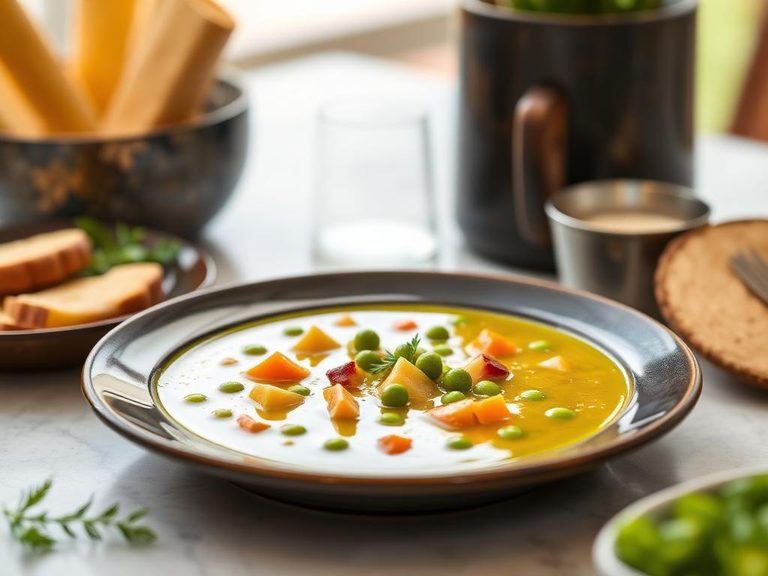

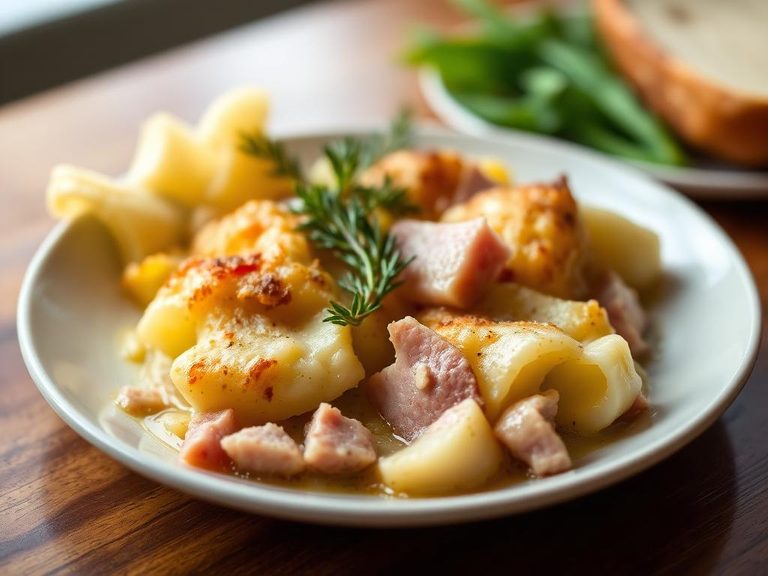
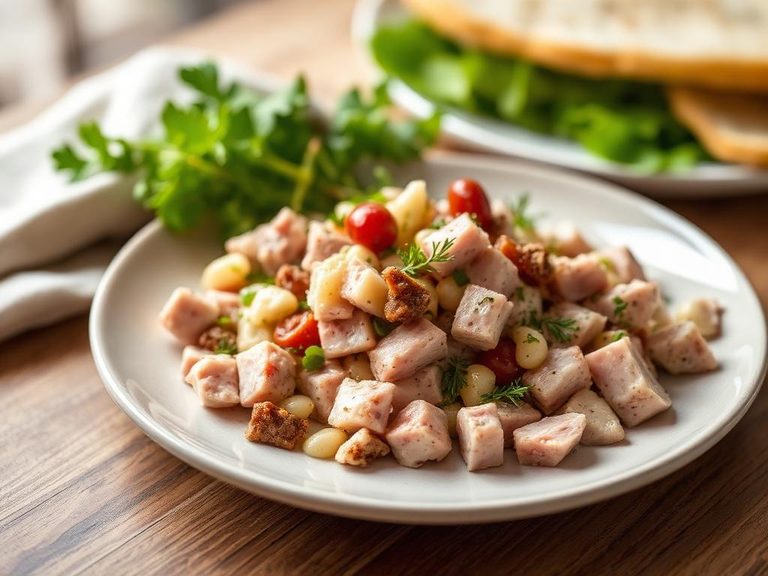
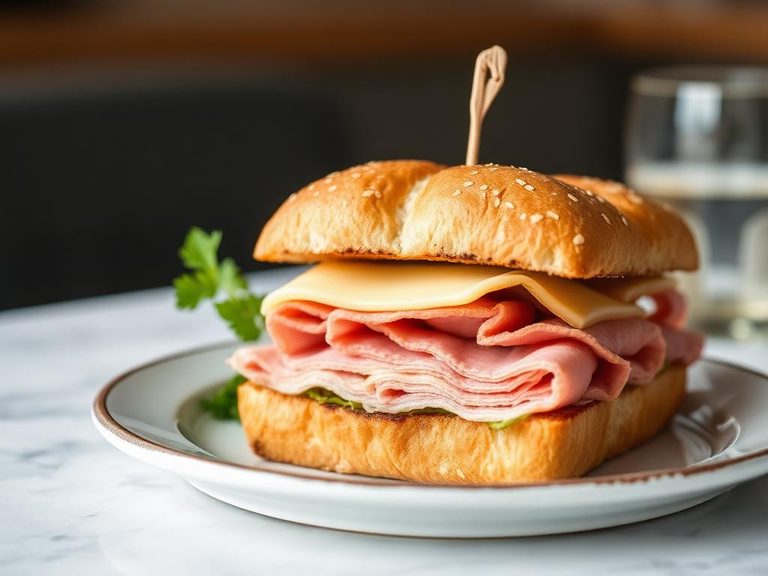
🌍 Where it's eaten
💡 Did you know?
The shank, or leg, is a hard-working muscle, which is why it develops a firm, lean texture when cured and roasted, making it ideal for slicing rather than pulling apart like a shoulder cut.
Full nutrition (USDA data · scales with serving)
| Water | 69.2 g |
| Energy | 132 kcal |
| Energy | 551 kj |
| Protein | 21.7 g |
| Total lipid (fat) | 4.5 g |
| Ash | 3.4 g |
| Carbohydrate, by difference | 1.3 g |
| Fiber, total dietary | 0.00 g |
| Total Sugars | 1.3 g |
| Sucrose | 0.65 g |
| Glucose | 0.48 g |
| Fructose | 0.13 g |
| Lactose | 0.00 g |
| Maltose | 0.00 g |
| Galactose | 0.00 g |
| Calcium, Ca | 9.0 mg |
| Iron, Fe | 1.2 mg |
| Magnesium, Mg | 15.0 mg |
| Phosphorus, P | 202 mg |
| Potassium, K | 224 mg |
| Sodium, Na | 1045 mg |
| Zinc, Zn | 2.8 mg |
| Copper, Cu | 0.10 mg |
| Manganese, Mn | 0.02 mg |
| Selenium, Se | 45.3 ug |
| Vitamin C, total ascorbic acid | 0.00 mg |
| Thiamin | 0.39 mg |
| Riboflavin | 0.20 mg |
| Niacin | 4.6 mg |
| Pantothenic acid | 0.58 mg |
| Vitamin B-6 | 0.40 mg |
| Folate, total | 2.0 ug |
| Folic acid | 0.00 ug |
| Folate, food | 2.0 ug |
| Folate, DFE | 2.0 ug |
| Choline, total | 103 mg |
| Betaine | 5.3 mg |
| Vitamin B-12 | 0.46 ug |
| Vitamin B-12, added | 0.00 ug |
| Vitamin A, RAE | 11.0 ug |
| Retinol | 11.0 ug |
| Carotene, beta | 0.00 ug |
| Carotene, alpha | 0.00 ug |
| Cryptoxanthin, beta | 0.00 ug |
| Vitamin A, IU | 37.0 iu |
| Lycopene | 0.00 ug |
| Lutein + zeaxanthin | 0.00 ug |
| Vitamin E (alpha-tocopherol) | 0.29 mg |
| Vitamin E, added | 0.00 mg |
| Tocopherol, beta | 0.00 mg |
| Tocopherol, gamma | 0.07 mg |
| Tocopherol, delta | 0.00 mg |
| Tocotrienol, alpha | 0.04 mg |
| Tocotrienol, beta | 0.00 mg |
| Tocotrienol, gamma | 0.05 mg |
| Tocotrienol, delta | 0.00 mg |
| Vitamin K (phylloquinone) | 0.00 ug |
| Vitamin K (Dihydrophylloquinone) | 0.00 ug |
| Vitamin K (Menaquinone-4) | 4.8 ug |
| Alcohol, ethyl | 0.00 g |
| Caffeine | 0.00 mg |
| Theobromine | 0.00 mg |
Fat & fatty acid profile (per 100g)
| Fatty acids, total saturated | 1.5 g |
| SFA 4:0 | 0.00 g |
| SFA 6:0 | 0.00 g |
| SFA 8:0 | 0.00 g |
| SFA 10:0 | 0.00 g |
| SFA 12:0 | 0.00 g |
| SFA 14:0 | 0.05 g |
| SFA 15:0 | 0.00 g |
| SFA 16:0 | 0.92 g |
| SFA 17:0 | 0.01 g |
| SFA 18:0 | 0.48 g |
| SFA 20:0 | 0.01 g |
| SFA 22:0 | 0.01 g |
| Fatty acids, total monounsaturated | 2.0 g |
| MUFA 14:1 | 0.00 g |
| MUFA 15:1 | 0.00 g |
| MUFA 16:1 | 0.10 g |
| MUFA 17:1 | 0.00 g |
| MUFA 18:1 | 1.8 g |
| MUFA 18:1 c | 1.8 g |
| MUFA 20:1 | 0.03 g |
| MUFA 22:1 | 0.00 g |
| Fatty acids, total polyunsaturated | 0.71 g |
| PUFA 18:2 | 0.60 g |
| PUFA 18:2 n-6 c,c | 0.57 g |
| PUFA 18:2 CLAs | 0.01 g |
| PUFA 18:3 | 0.02 g |
| PUFA 18:3 n-3 c,c,c (ALA) | 0.02 g |
| PUFA 18:3 n-6 c,c,c | 0.00 g |
| PUFA 18:4 | 0.00 g |
| PUFA 20:2 n-6 c,c | 0.02 g |
| PUFA 20:3 | 0.00 g |
| PUFA 20:4 | 0.08 g |
| PUFA 20:5 n-3 (EPA) | 0.00 g |
| PUFA 22:5 n-3 (DPA) | 0.00 g |
| PUFA 22:6 n-3 (DHA) | 0.00 g |
| Fatty acids, total trans | 0.04 g |
| Fatty acids, total trans-monoenoic | 0.03 g |
| TFA 18:1 t | 0.03 g |
| TFA 18:2 t,t | 0.02 g |
| Fatty acids, total trans-polyenoic | 0.02 g |
| Cholesterol | 72.0 mg |
Amino acid profile (per 100g)
| Tryptophan | 0.20 g |
| Threonine | 0.97 g |
| Isoleucine | 0.98 g |
| Leucine | 1.7 g |
| Lysine | 1.8 g |
| Methionine | 0.52 g |
| Cystine | 0.24 g |
| Phenylalanine | 0.87 g |
| Tyrosine | 0.70 g |
| Valine | 1.1 g |
| Arginine | 1.4 g |
| Histidine | 0.94 g |
| Alanine | 1.3 g |
| Aspartic acid | 1.9 g |
| Glutamic acid | 3.1 g |
| Glycine | 1.1 g |
| Proline | 0.93 g |
| Serine | 0.85 g |
| Hydroxyproline | 0.14 g |
FAQ
Is this the same as a fresh ham roast?
No, this is a cured and processed product, meaning it has been treated with salt and often other seasonings for preservation and flavor, unlike a fresh, uncured ham roast.
Can I use this in recipes that call for fresh pork?
It's best used in recipes designed for cured ham, as its salt content and flavor are already developed. Using it in place of fresh pork would make the dish overly salty.
How should I store leftover cooked ham?
Store it in an airtight container in the refrigerator for up to 4 days, or freeze it for up to 2 months for best quality.
Nutrient density (calculated · NRF9.3)
Nutrient Rich Foods index: beneficial nutrients (protein, fiber, vitamins, minerals) minus saturated fat, added sugar & sodium, per 100 kcal.
NRF9.3 index — Fulgoni, Keast & Drewnowski, 2009. Computed from USDA nutrients.
Weight-loss friendliness (composite index)
Energy density 1.32 kcal/g · 66% calories from protein · 0.0 g fiber · 1.3 g sugar per 100 g.
Composite of energy density (Rolls et al., 1999), protein & fiber satiety, minus sugar. A calculated heuristic — ranks satiety-per-calorie, not a clinical measure.
Dietary load (calculated from USDA values)
Potential renal acid load. Positive = acid-forming, negative = alkaline-forming.
Sodium-to-potassium ratio: 4.67 (lower is better — aim for ≤ 1)
Sodium:potassium per WHO potassium guidance. Computed from USDA nutrients.