

Mushrooms, white, raw
Whole food · Vegetables and Vegetable Products
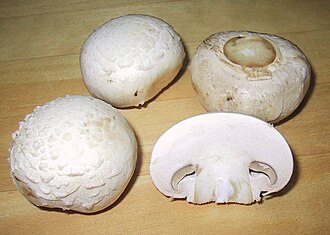
Photo: Wikipedia
The common white button mushroom is the world's most widely cultivated fungus, prized for its mild, earthy flavor and firm, meaty texture that softens beautifully when cooked. Nutritionally, it's a low-calorie powerhouse, offering a surprising 3 grams of protein per 100g alongside essential B vitamins and the antioxidant selenium.
Calorie split: 43% protein · 46% carbs · 11% fat
↓ Full nutrition💚 Why it's loved
People love its incredible versatility and ability to absorb flavors like a sponge, making it a staple in everything from stir-fries to creamy sauces. Its mild taste and satisfying texture also make it a familiar, approachable ingredient for picky eaters and a classic comfort food.
⚠️ Watch-outs & how to enjoy it better
Some may find its raw, slightly spongy texture unappealing, and cooking can release water that dilutes flavors if not managed. For those on low-potassium diets, mushrooms can be a concern; counteract this by blanching them in boiling water for a few minutes and discarding the water before final cooking.
Key benefits
- Excellent low-calorie, low-fat base for meals.
- Good source of immune-supporting selenium and B vitamins like riboflavin.
- Provides dietary fiber and prebiotics for gut health.
- Versatile meat substitute in vegetarian and vegan cooking.
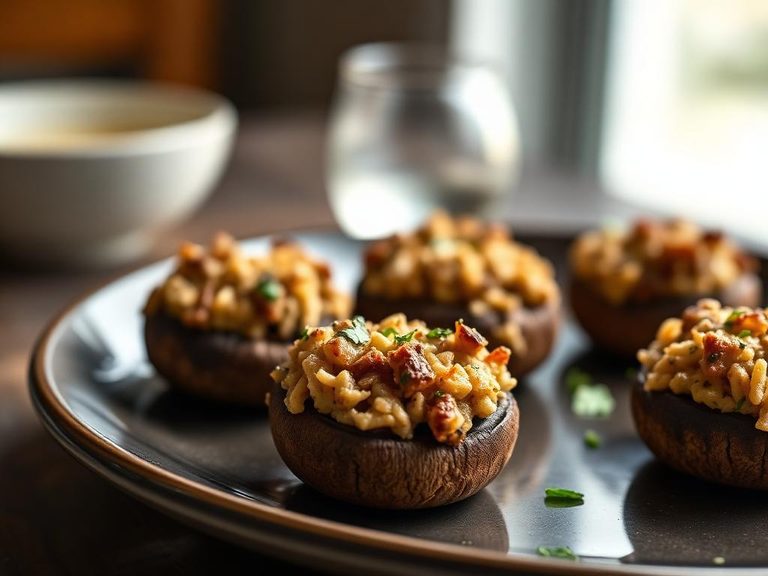
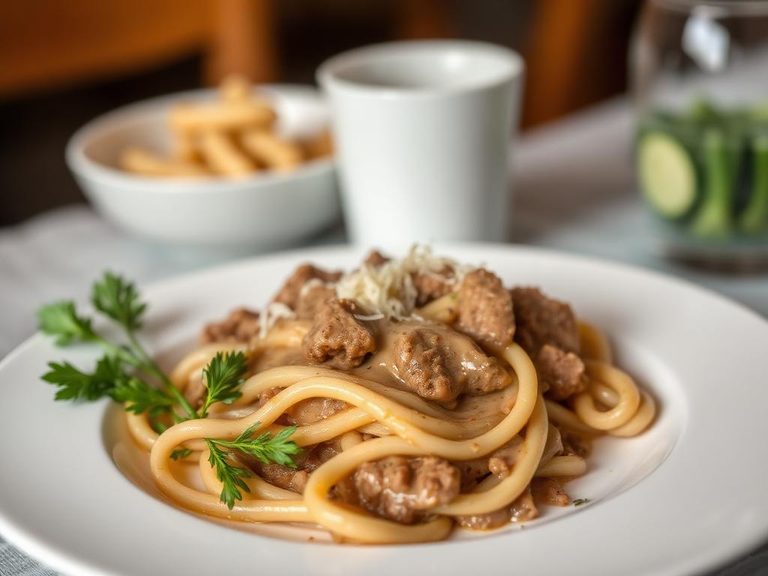
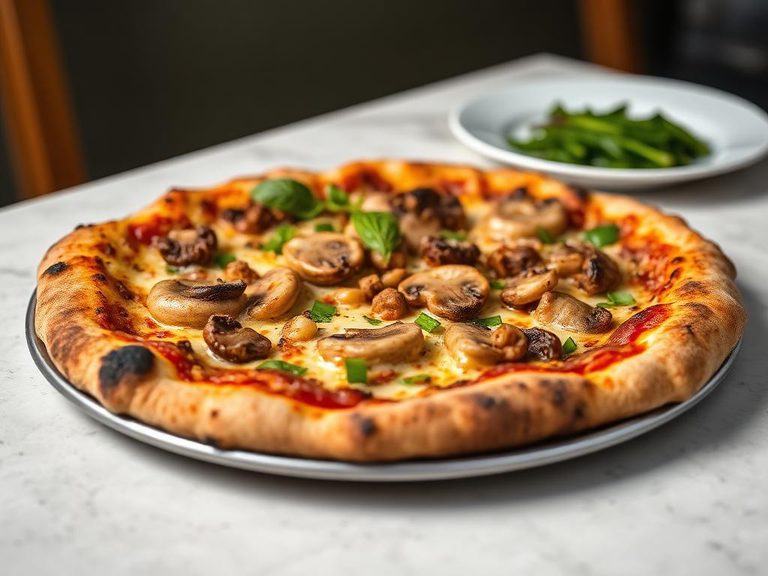
🍽️ Popular dishes
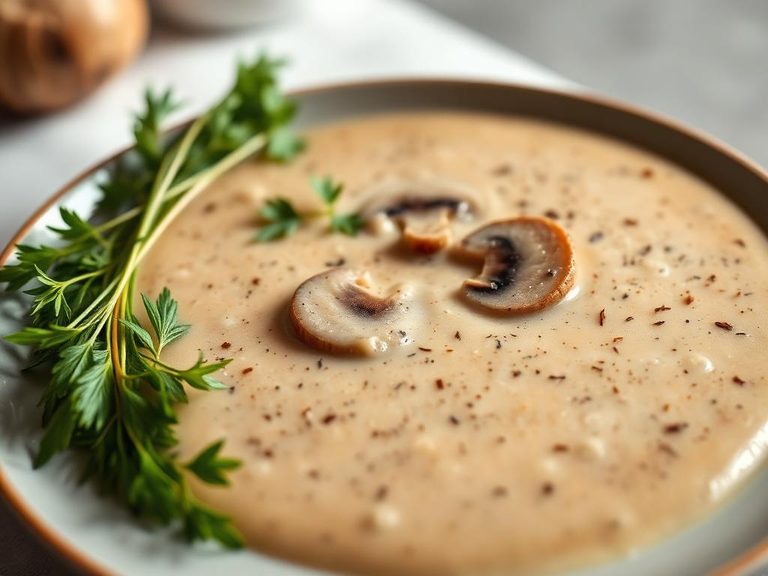
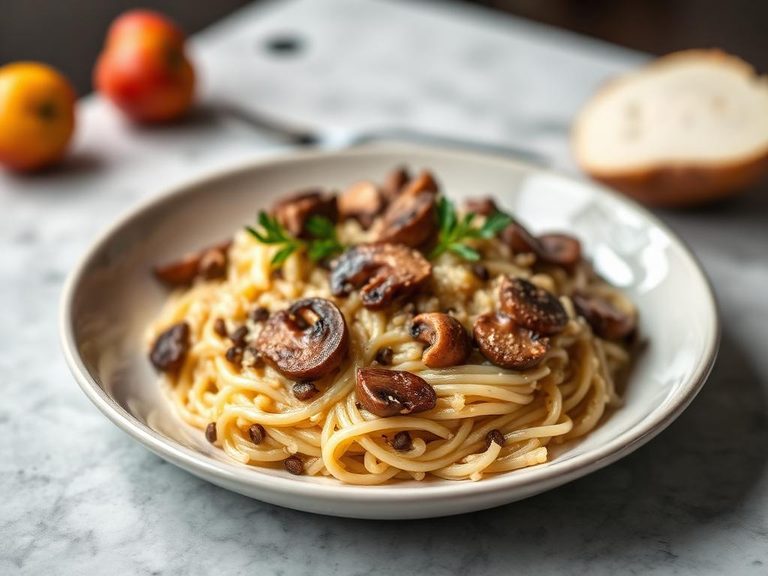
🌍 Where it's eaten
💡 Did you know?
The common button mushroom, cremini, and portobello are all the same species (Agaricus bisporus) at different stages of maturity and color.
Full nutrition (USDA data · scales with serving)
| Water | 92.5 g |
| Energy | 22.0 kcal |
| Energy | 93.0 kj |
| Protein | 3.1 g |
| Total lipid (fat) | 0.34 g |
| Ash | 0.85 g |
| Carbohydrate, by difference | 3.3 g |
| Fiber, total dietary | 1.0 g |
| Total Sugars | 2.0 g |
| Sucrose | 0.00 g |
| Glucose | 1.5 g |
| Fructose | 0.17 g |
| Lactose | 0.00 g |
| Maltose | 0.00 g |
| Galactose | 0.00 g |
| Starch | 0.00 g |
| Calcium, Ca | 3.0 mg |
| Iron, Fe | 0.50 mg |
| Magnesium, Mg | 9.0 mg |
| Phosphorus, P | 86.0 mg |
| Potassium, K | 318 mg |
| Sodium, Na | 5.0 mg |
| Zinc, Zn | 0.52 mg |
| Copper, Cu | 0.32 mg |
| Manganese, Mn | 0.05 mg |
| Selenium, Se | 9.3 ug |
| Vitamin C, total ascorbic acid | 2.1 mg |
| Thiamin | 0.08 mg |
| Riboflavin | 0.40 mg |
| Niacin | 3.6 mg |
| Pantothenic acid | 1.5 mg |
| Vitamin B-6 | 0.10 mg |
| Folate, total | 17.0 ug |
| Folic acid | 0.00 ug |
| Folate, food | 17.0 ug |
| Folate, DFE | 17.0 ug |
| Choline, total | 17.3 mg |
| Betaine | 9.4 mg |
| Vitamin B-12 | 0.04 ug |
| Vitamin B-12, added | 0.00 ug |
| Vitamin A, RAE | 0.00 ug |
| Retinol | 0.00 ug |
| Carotene, beta | 0.00 ug |
| Carotene, alpha | 0.00 ug |
| Cryptoxanthin, beta | 0.00 ug |
| Vitamin A, IU | 0.00 iu |
| Lycopene | 0.00 ug |
| Lutein + zeaxanthin | 0.00 ug |
| Vitamin E (alpha-tocopherol) | 0.01 mg |
| Vitamin E, added | 0.00 mg |
| Tocopherol, beta | 0.01 mg |
| Tocopherol, gamma | 0.01 mg |
| Tocopherol, delta | 0.01 mg |
| Tocotrienol, alpha | 0.05 mg |
| Tocotrienol, beta | 0.00 mg |
| Tocotrienol, gamma | 0.00 mg |
| Tocotrienol, delta | 0.00 mg |
| Vitamin D (D2 + D3), International Units | 7.0 iu |
| Vitamin D (D2 + D3) | 0.20 ug |
| Vitamin D2 (ergocalciferol) | 0.20 ug |
| Vitamin D3 (cholecalciferol) | 0.00 ug |
| Vitamin K (phylloquinone) | 0.00 ug |
| Vitamin K (Dihydrophylloquinone) | 1.0 ug |
| Vitamin K (Menaquinone-4) | 0.00 ug |
| Alcohol, ethyl | 0.00 g |
| Caffeine | 0.00 mg |
| Theobromine | 0.00 mg |
Fat & fatty acid profile (per 100g)
| Fatty acids, total saturated | 0.05 g |
| SFA 4:0 | 0.00 g |
| SFA 6:0 | 0.00 g |
| SFA 8:0 | 0.00 g |
| SFA 10:0 | 0.00 g |
| SFA 12:0 | 0.00 g |
| SFA 14:0 | 0.00 g |
| SFA 15:0 | 0.00 g |
| SFA 16:0 | 0.04 g |
| SFA 17:0 | 0.00 g |
| SFA 18:0 | 0.01 g |
| SFA 20:0 | 0.00 g |
| SFA 22:0 | 0.00 g |
| SFA 24:0 | 0.00 g |
| Fatty acids, total monounsaturated | 0.00 g |
| MUFA 14:1 | 0.00 g |
| MUFA 15:1 | 0.00 g |
| MUFA 16:1 | 0.00 g |
| MUFA 17:1 | 0.00 g |
| MUFA 18:1 | 0.00 g |
| MUFA 20:1 | 0.00 g |
| MUFA 22:1 | 0.00 g |
| MUFA 24:1 c | 0.00 g |
| Fatty acids, total polyunsaturated | 0.16 g |
| PUFA 18:2 | 0.16 g |
| PUFA 18:3 | 0.00 g |
| PUFA 18:4 | 0.00 g |
| PUFA 20:2 n-6 c,c | 0.00 g |
| PUFA 20:3 | 0.00 g |
| PUFA 20:4 | 0.00 g |
| PUFA 20:5 n-3 (EPA) | 0.00 g |
| PUFA 21:5 | 0.00 g |
| PUFA 22:4 | 0.00 g |
| PUFA 22:5 n-3 (DPA) | 0.00 g |
| PUFA 22:6 n-3 (DHA) | 0.00 g |
| Fatty acids, total trans | 0.00 g |
| Cholesterol | 0.00 mg |
| Stigmasterol | 0.00 mg |
| Campesterol | 2.0 mg |
| Beta-sitosterol | 0.00 mg |
Amino acid profile (per 100g)
| Tryptophan | 0.04 g |
| Threonine | 0.11 g |
| Isoleucine | 0.08 g |
| Leucine | 0.12 g |
| Lysine | 0.11 g |
| Methionine | 0.03 g |
| Cystine | 0.01 g |
| Phenylalanine | 0.09 g |
| Tyrosine | 0.04 g |
| Valine | 0.23 g |
| Arginine | 0.08 g |
| Histidine | 0.06 g |
| Alanine | 0.20 g |
| Aspartic acid | 0.20 g |
| Glutamic acid | 0.34 g |
| Glycine | 0.09 g |
| Proline | 0.08 g |
| Serine | 0.09 g |
FAQ
How should I store fresh mushrooms?
Store them in a paper bag in the refrigerator to absorb excess moisture and prevent sliminess. Avoid washing until ready to use.
Is it safe to eat mushrooms raw?
Yes, white button mushrooms are safe to eat raw. However, cooking enhances their flavor, improves digestibility, and can increase the availability of some nutrients like antioxidants.
Why do mushrooms get rubbery when overcooked?
Mushrooms are over 90% water. Overcooking causes them to release all their moisture and then become tough and rubbery as the proteins tighten. Cook them quickly over medium-high heat until just tender.
Nutrient density (calculated · NRF9.3)
Nutrient Rich Foods index: beneficial nutrients (protein, fiber, vitamins, minerals) minus saturated fat, added sugar & sodium, per 100 kcal.
NRF9.3 index — Fulgoni, Keast & Drewnowski, 2009. Computed from USDA nutrients.
Weight-loss friendliness (composite index)
Energy density 0.22 kcal/g · 56% calories from protein · 1.0 g fiber · 2.0 g sugar per 100 g.
Composite of energy density (Rolls et al., 1999), protein & fiber satiety, minus sugar. A calculated heuristic — ranks satiety-per-calorie, not a clinical measure.
Dietary load (calculated from USDA values)
Potential renal acid load. Positive = acid-forming, negative = alkaline-forming.
Sodium-to-potassium ratio: 0.02 (lower is better — aim for ≤ 1)
Sodium:potassium per WHO potassium guidance. Computed from USDA nutrients.