

Fish, trout, rainbow, farmed, raw
Whole food · Finfish and Shellfish Products

Photo: Wikipedia
Farmed rainbow trout offers a delicate, buttery flavor with a tender, flaky texture that is milder than its wild counterparts. It is a nutritional powerhouse, delivering a substantial 19.94 grams of high-quality protein per 100g with virtually no carbohydrates. Its healthy fat profile, including omega-3s, makes it a satisfying and nutrient-dense choice for a lean meal.
Calorie split: 59% protein · 0% carbs · 41% fat
↓ Full nutrition💚 Why it's loved
People love rainbow trout for its mild, sweet flavor that doesn't overpower other ingredients, making it incredibly versatile for grilling, baking, or pan-searing. Its tender, flaky texture and elegant appearance make it a favorite for both everyday dinners and special occasions, often celebrated in culinary traditions from the Pacific Northwest to European rivers.
⚠️ Watch-outs & how to enjoy it better
Farmed trout can have a slightly higher fat content and potential for contaminants if not sourced from reputable farms, which may concern some eaters. To mitigate this, look for trout certified by organizations like the Aquaculture Stewardship Council (ASC) or choose wild-caught varieties, and pair it with fiber-rich vegetables to balance the meal.
Key benefits
- Excellent source of high-quality protein for muscle maintenance.
- Rich in omega-3 fatty acids, known for supporting heart health.
- Very low in carbohydrates and sugar, suitable for low-carb diets.
- Contains essential nutrients like Vitamin D and B vitamins.
- Lean protein source that is low in saturated fat.
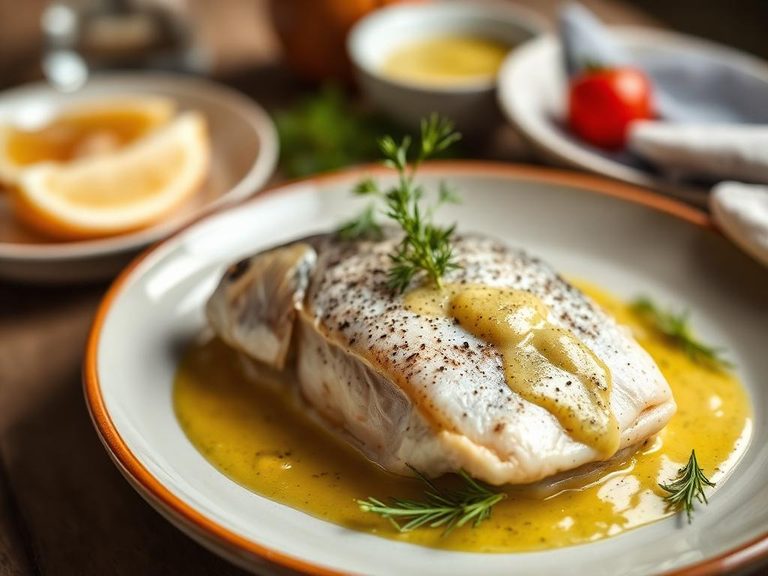
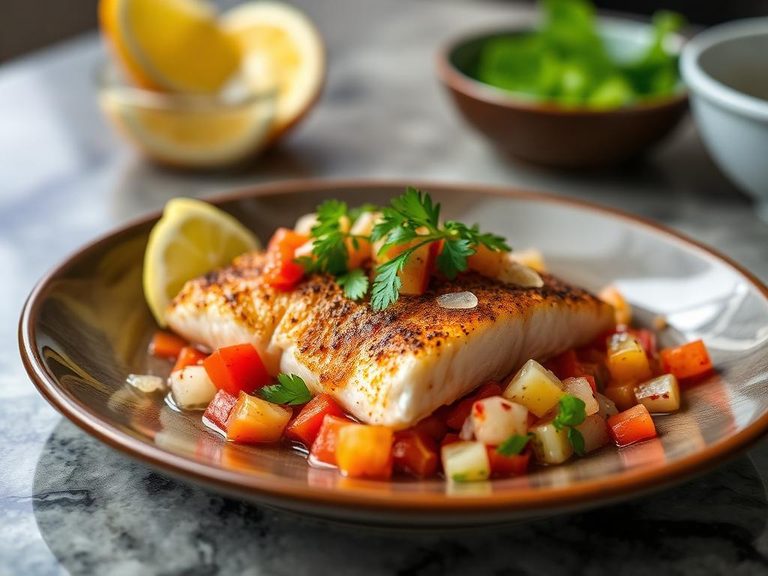
🍽️ Popular dishes
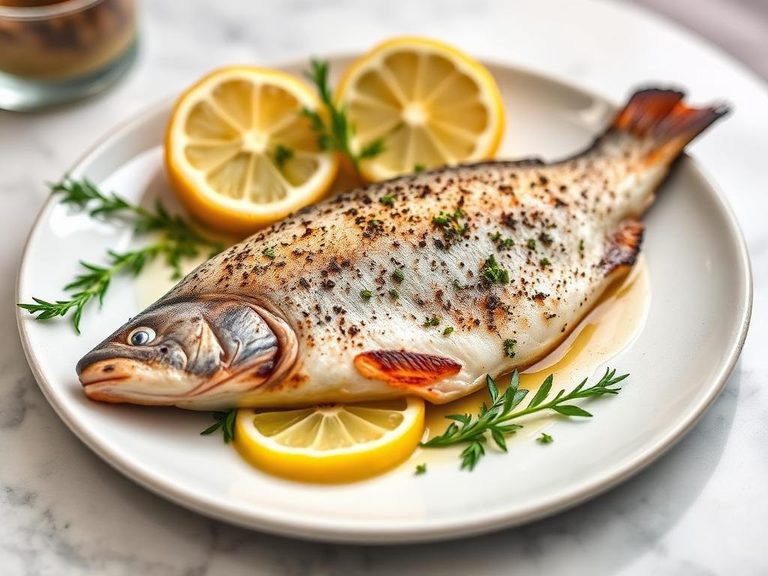
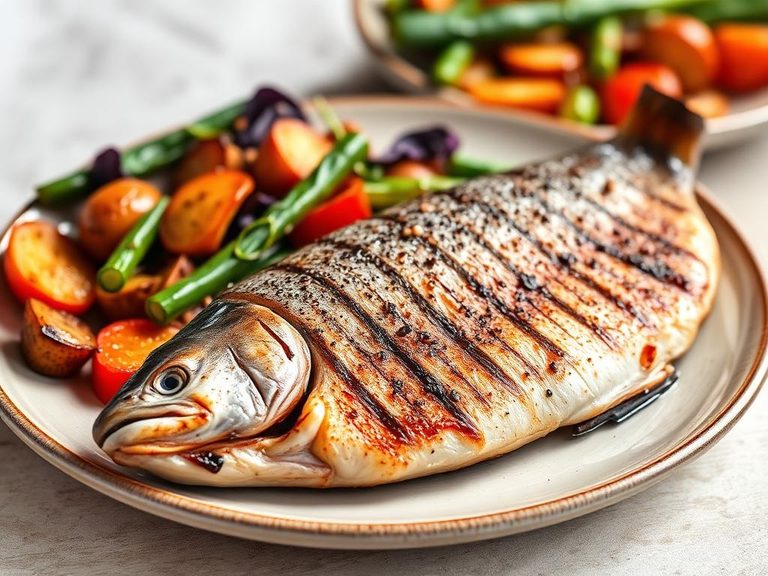
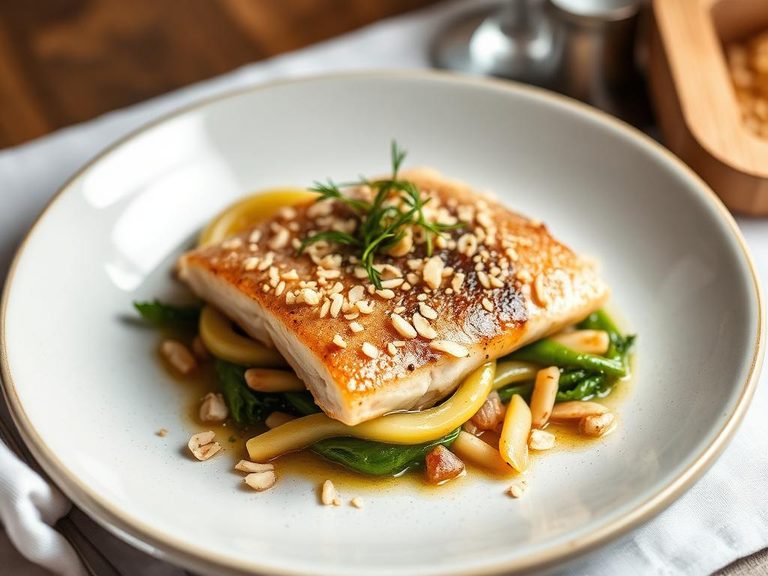
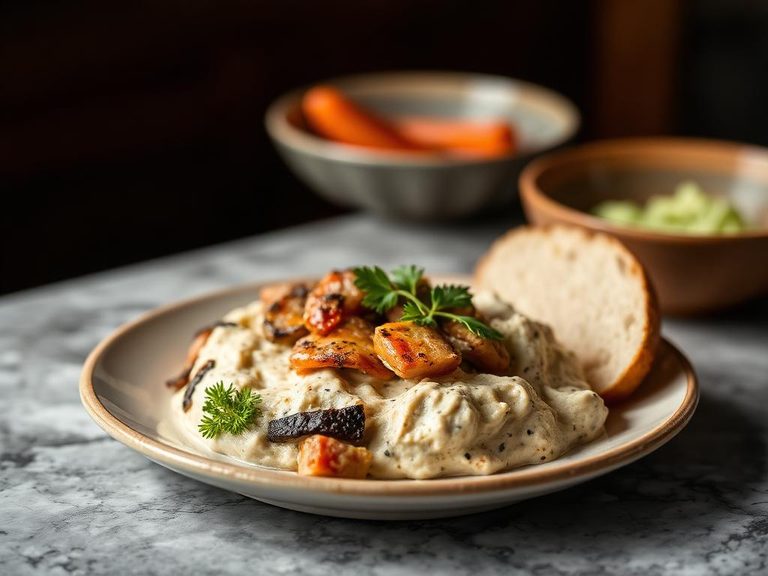
🌍 Where it's eaten
💡 Did you know?
Rainbow trout are a type of salmonid, and their flesh can develop a pinkish hue from their diet of crustaceans and algae, similar to salmon, though farmed trout are often fed pigmented feed to enhance this color.
Full nutrition (USDA data · scales with serving)
| Water | 73.8 g |
| Energy | 141 kcal |
| Energy | 589 kj |
| Protein | 19.9 g |
| Total lipid (fat) | 6.2 g |
| Ash | 1.2 g |
| Carbohydrate, by difference | 0.00 g |
| Fiber, total dietary | 0.00 g |
| Total Sugars | 0.00 g |
| Calcium, Ca | 25.0 mg |
| Iron, Fe | 0.31 mg |
| Magnesium, Mg | 25.0 mg |
| Phosphorus, P | 226 mg |
| Potassium, K | 377 mg |
| Sodium, Na | 51.0 mg |
| Zinc, Zn | 0.45 mg |
| Copper, Cu | 0.05 mg |
| Manganese, Mn | 0.01 mg |
| Selenium, Se | 23.6 ug |
| Vitamin C, total ascorbic acid | 2.9 mg |
| Thiamin | 0.12 mg |
| Riboflavin | 0.09 mg |
| Niacin | 5.6 mg |
| Pantothenic acid | 1.7 mg |
| Vitamin B-6 | 0.34 mg |
| Folate, total | 11.0 ug |
| Folic acid | 0.00 ug |
| Folate, food | 11.0 ug |
| Folate, DFE | 11.0 ug |
| Choline, total | 65.0 mg |
| Vitamin B-12 | 4.3 ug |
| Vitamin B-12, added | 0.00 ug |
| Vitamin A, RAE | 84.0 ug |
| Retinol | 84.0 ug |
| Carotene, beta | 0.00 ug |
| Carotene, alpha | 0.00 ug |
| Cryptoxanthin, beta | 0.00 ug |
| Vitamin A, IU | 280 iu |
| Lycopene | 0.00 ug |
| Lutein + zeaxanthin | 0.00 ug |
| Vitamin E (alpha-tocopherol) | 2.3 mg |
| Vitamin E, added | 0.00 mg |
| Tocopherol, beta | 0.00 mg |
| Tocopherol, gamma | 0.04 mg |
| Tocopherol, delta | 0.00 mg |
| Tocotrienol, alpha | 0.01 mg |
| Tocotrienol, beta | 0.00 mg |
| Tocotrienol, gamma | 0.01 mg |
| Tocotrienol, delta | 0.00 mg |
| Vitamin D (D2 + D3), International Units | 635 iu |
| Vitamin D (D2 + D3) | 15.9 ug |
| Vitamin D3 (cholecalciferol) | 15.9 ug |
| Vitamin K (phylloquinone) | 0.10 ug |
| Alcohol, ethyl | 0.00 g |
| Caffeine | 0.00 mg |
| Theobromine | 0.00 mg |
Fat & fatty acid profile (per 100g)
| Fatty acids, total saturated | 1.4 g |
| SFA 4:0 | 0.00 g |
| SFA 6:0 | 0.00 g |
| SFA 8:0 | 0.00 g |
| SFA 10:0 | 0.00 g |
| SFA 12:0 | 0.00 g |
| SFA 14:0 | 0.18 g |
| SFA 15:0 | 0.01 g |
| SFA 16:0 | 0.93 g |
| SFA 17:0 | 0.01 g |
| SFA 18:0 | 0.23 g |
| SFA 20:0 | 0.01 g |
| SFA 22:0 | 0.00 g |
| SFA 24:0 | 0.00 g |
| Fatty acids, total monounsaturated | 2.0 g |
| MUFA 14:1 | 0.00 g |
| MUFA 15:1 | 0.01 g |
| MUFA 16:1 | 0.34 g |
| MUFA 16:1 c | 0.34 g |
| MUFA 17:1 | 0.00 g |
| MUFA 18:1 | 1.4 g |
| MUFA 18:1 c | 1.4 g |
| MUFA 20:1 | 0.22 g |
| MUFA 22:1 | 0.02 g |
| MUFA 22:1 c | 0.02 g |
| MUFA 24:1 c | 0.02 g |
| Fatty acids, total polyunsaturated | 1.5 g |
| PUFA 18:2 | 0.49 g |
| PUFA 18:2 n-6 c,c | 0.47 g |
| PUFA 18:2 CLAs | 0.01 g |
| PUFA 18:3 | 0.07 g |
| PUFA 18:3 n-3 c,c,c (ALA) | 0.06 g |
| PUFA 18:3 n-6 c,c,c | 0.01 g |
| PUFA 18:4 | 0.00 g |
| PUFA 20:2 n-6 c,c | 0.04 g |
| PUFA 20:3 | 0.03 g |
| PUFA 20:3 n-3 | 0.01 g |
| PUFA 20:3 n-6 | 0.02 g |
| PUFA 20:4 | 0.04 g |
| PUFA 20:5 n-3 (EPA) | 0.22 g |
| PUFA 22:4 | 0.01 g |
| PUFA 22:5 n-3 (DPA) | 0.09 g |
| PUFA 22:6 n-3 (DHA) | 0.52 g |
| Fatty acids, total trans | 0.05 g |
| Fatty acids, total trans-monoenoic | 0.03 g |
| TFA 16:1 t | 0.01 g |
| TFA 18:1 t | 0.02 g |
| TFA 22:1 t | 0.00 g |
| TFA 18:2 t not further defined | 0.02 g |
| Fatty acids, total trans-polyenoic | 0.02 g |
| Cholesterol | 59.0 mg |
Amino acid profile (per 100g)
| Tryptophan | 0.23 g |
| Threonine | 0.92 g |
| Isoleucine | 0.96 g |
| Leucine | 1.7 g |
| Lysine | 1.9 g |
| Methionine | 0.62 g |
| Cystine | 0.22 g |
| Phenylalanine | 0.81 g |
| Tyrosine | 0.70 g |
| Valine | 1.1 g |
| Arginine | 1.2 g |
| Histidine | 0.61 g |
| Alanine | 1.3 g |
| Aspartic acid | 2.1 g |
| Glutamic acid | 3.1 g |
| Glycine | 1.0 g |
| Proline | 0.74 g |
| Serine | 0.85 g |
FAQ
Is farmed rainbow trout as healthy as wild trout?
Yes, farmed rainbow trout is still a nutritious choice, offering similar protein and omega-3 benefits, though it may have slightly higher fat content and potential for contaminants if not sourced responsibly. Look for sustainably farmed options to ensure quality.
How should I store raw rainbow trout?
Store raw trout in the coldest part of your refrigerator, ideally on a plate or in a sealed container, and use it within 1-2 days. For longer storage, freeze it in airtight packaging for up to 3 months.
What are the best cooking methods for rainbow trout?
Rainbow trout is versatile and can be grilled, baked, pan-seared, or smoked. For a quick meal, pan-searing with a bit of olive oil and lemon brings out its natural sweetness, while baking with herbs keeps it moist and flavorful.
Nutrient density (calculated · NRF9.3)
Nutrient Rich Foods index: beneficial nutrients (protein, fiber, vitamins, minerals) minus saturated fat, added sugar & sodium, per 100 kcal.
NRF9.3 index — Fulgoni, Keast & Drewnowski, 2009. Computed from USDA nutrients.
Weight-loss friendliness (composite index)
Energy density 1.41 kcal/g · 57% calories from protein · 0.0 g fiber · 0.0 g sugar per 100 g.
Composite of energy density (Rolls et al., 1999), protein & fiber satiety, minus sugar. A calculated heuristic — ranks satiety-per-calorie, not a clinical measure.
Dietary load (calculated from USDA values)
Potential renal acid load. Positive = acid-forming, negative = alkaline-forming.
Sodium-to-potassium ratio: 0.14 (lower is better — aim for ≤ 1)
Sodium:potassium per WHO potassium guidance. Computed from USDA nutrients.