

Chicken, broilers or fryers, drumstick, rotisserie, original seasoning, meat only, cooked
Whole food · Poultry Products

Photo: Wikipedia
This is the lean, juicy meat from a rotisserie-cooked chicken drumstick, seasoned simply and then pulled from the bone. It offers a tender, slightly firm texture with a savory, subtly salty flavor from the original seasoning. Nutritionally, it's a powerhouse of high-quality protein with minimal fat and virtually zero carbohydrates.
Calorie split: 65% protein · 0% carbs · 35% fat
↓ Full nutrition💚 Why it's loved
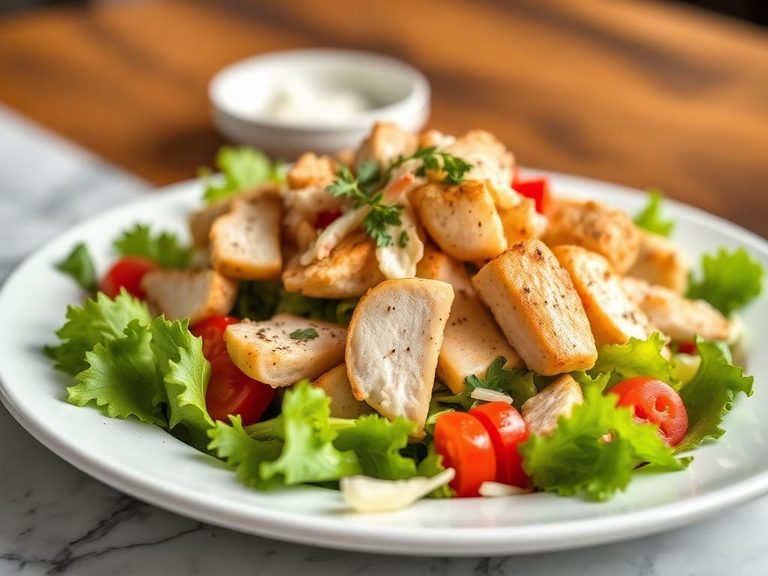
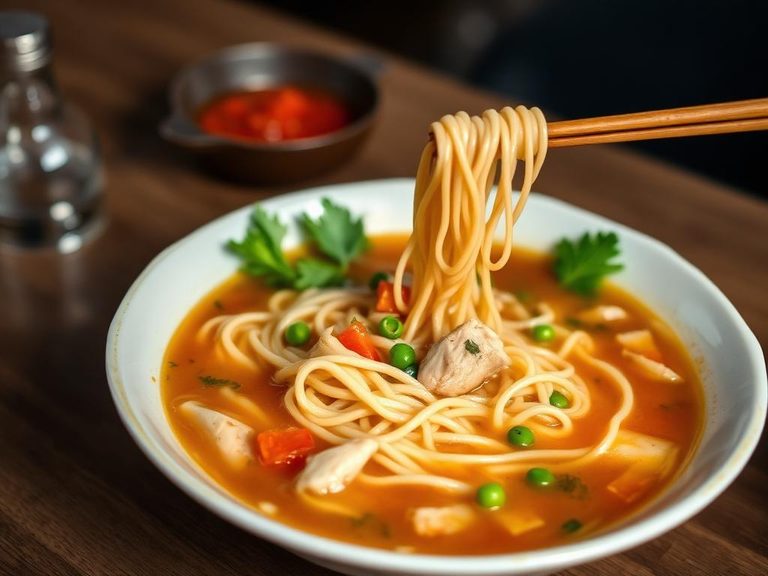
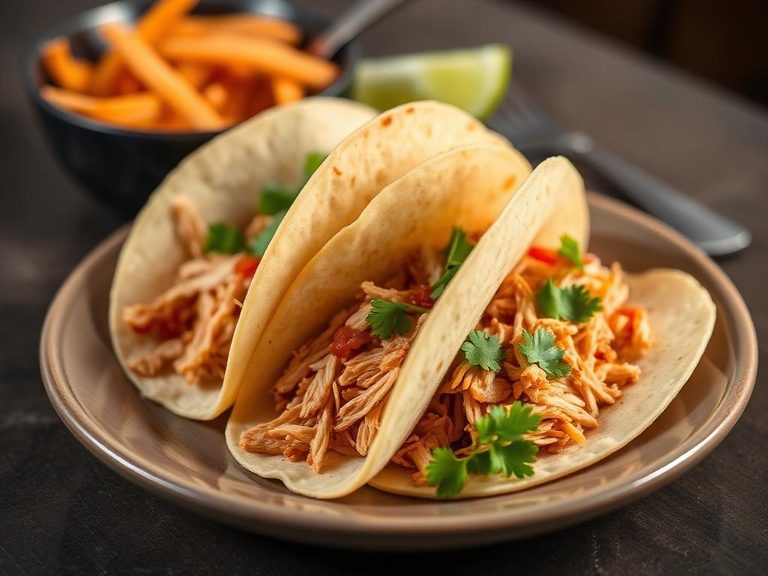
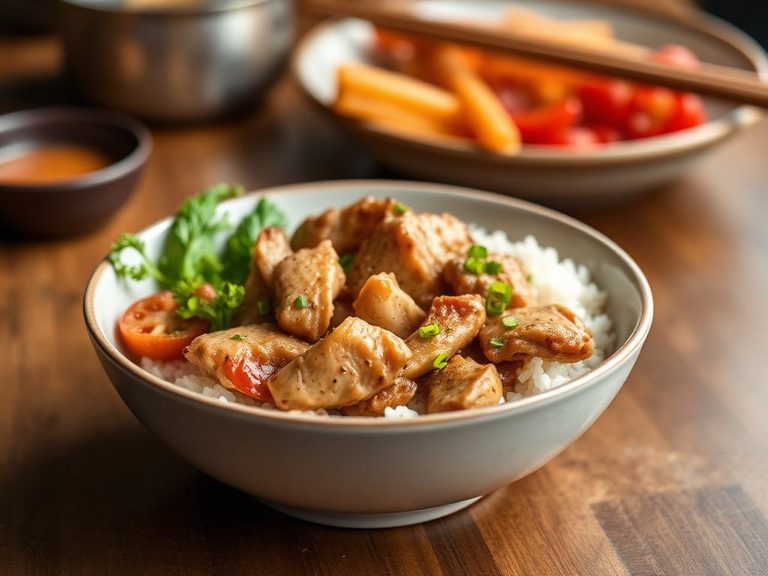
People love it for the deep, savory flavor that comes from slow rotisserie cooking, which keeps the meat moist and infuses it with seasoning. It's also incredibly versatile, perfect for salads, wraps, soups, or as a standalone protein.
⚠️ Watch-outs & how to enjoy it better
The primary caution is its sodium content from the seasoning, which can be high for those monitoring salt intake. To counteract this, rinse the meat lightly if possible, or pair it with unsalted, potassium-rich foods like steamed vegetables or a side of avocado to help balance electrolytes.
Key benefits
- Excellent source of complete protein for muscle maintenance.
- Very low in carbohydrates, suitable for low-carb diets.
- Provides essential minerals like selenium and phosphorus.
- Convenient, pre-cooked protein source for quick meals.
🍽️ Popular dishes
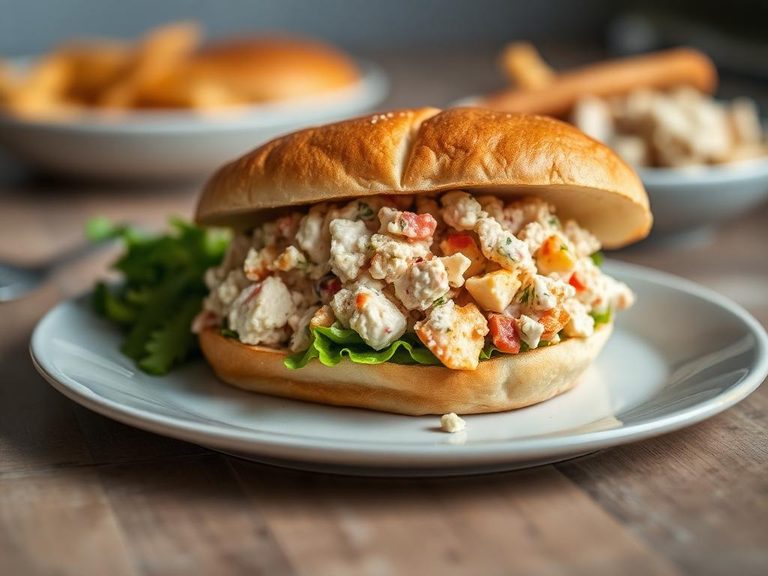
🌍 Where it's eaten
💡 Did you know?
The rotisserie method's constant rotation allows the chicken to self-baste in its own juices, which is why even the lean breast meat from a whole rotisserie chicken can stay surprisingly moist.
Full nutrition (USDA data · scales with serving)
| Water | 63.0 g |
| Energy | 176 kcal |
| Energy | 738 kj |
| Protein | 28.7 g |
| Total lipid (fat) | 6.8 g |
| Ash | 1.9 g |
| Carbohydrate, by difference | 0.00 g |
| Fiber, total dietary | 0.00 g |
| Total Sugars | 0.00 g |
| Sucrose | 0.00 g |
| Glucose | 0.00 g |
| Fructose | 0.00 g |
| Lactose | 0.00 g |
| Maltose | 0.00 g |
| Galactose | 0.00 g |
| Starch | 0.00 g |
| Calcium, Ca | 21.0 mg |
| Iron, Fe | 1.1 mg |
| Magnesium, Mg | 24.0 mg |
| Phosphorus, P | 257 mg |
| Potassium, K | 301 mg |
| Sodium, Na | 417 mg |
| Zinc, Zn | 3.0 mg |
| Copper, Cu | 0.09 mg |
| Manganese, Mn | 0.02 mg |
| Selenium, Se | 38.2 ug |
| Vitamin C, total ascorbic acid | 0.00 mg |
| Thiamin | 0.07 mg |
| Riboflavin | 0.24 mg |
| Niacin | 6.0 mg |
| Pantothenic acid | 1.3 mg |
| Vitamin B-6 | 0.19 mg |
| Folate, total | 10.0 ug |
| Folic acid | 0.00 ug |
| Folate, food | 10.0 ug |
| Folate, DFE | 10.0 ug |
| Choline, total | 86.1 mg |
| Betaine | 12.8 mg |
| Vitamin B-12 | 0.49 ug |
| Vitamin B-12, added | 0.00 ug |
| Vitamin A, RAE | 10.0 ug |
| Retinol | 10.0 ug |
| Carotene, beta | 0.00 ug |
| Carotene, alpha | 0.00 ug |
| Cryptoxanthin, beta | 0.00 ug |
| Vitamin A, IU | 34.0 iu |
| Lycopene | 0.00 ug |
| Lutein + zeaxanthin | 0.00 ug |
| Vitamin E (alpha-tocopherol) | 0.30 mg |
| Vitamin E, added | 0.00 mg |
| Tocopherol, beta | 0.00 mg |
| Tocopherol, gamma | 0.14 mg |
| Tocopherol, delta | 0.00 mg |
| Tocotrienol, alpha | 0.05 mg |
| Tocotrienol, beta | 0.00 mg |
| Tocotrienol, gamma | 0.04 mg |
| Tocotrienol, delta | 0.00 mg |
| Vitamin K (phylloquinone) | 0.00 ug |
| Vitamin K (Dihydrophylloquinone) | 0.00 ug |
| Vitamin K (Menaquinone-4) | 35.7 ug |
| Alcohol, ethyl | 0.00 g |
| Caffeine | 0.00 mg |
| Theobromine | 0.00 mg |
Fat & fatty acid profile (per 100g)
| Fatty acids, total saturated | 1.6 g |
| SFA 4:0 | 0.00 g |
| SFA 6:0 | 0.00 g |
| SFA 8:0 | 0.00 g |
| SFA 10:0 | 0.00 g |
| SFA 12:0 | 0.00 g |
| SFA 14:0 | 0.03 g |
| SFA 15:0 | 0.01 g |
| SFA 16:0 | 1.3 g |
| SFA 17:0 | 0.00 g |
| SFA 18:0 | 0.28 g |
| SFA 20:0 | 0.00 g |
| SFA 22:0 | 0.00 g |
| SFA 24:0 | 0.00 g |
| Fatty acids, total monounsaturated | 2.9 g |
| MUFA 14:1 | 0.01 g |
| MUFA 15:1 | 0.00 g |
| MUFA 16:1 | 0.51 g |
| MUFA 17:1 | 0.00 g |
| MUFA 18:1 | 2.3 g |
| MUFA 18:1 c | 2.3 g |
| MUFA 20:1 | 0.02 g |
| MUFA 22:1 | 0.00 g |
| MUFA 22:1 c | 0.00 g |
| Fatty acids, total polyunsaturated | 1.0 g |
| PUFA 18:2 | 0.94 g |
| PUFA 18:2 n-6 c,c | 0.92 g |
| PUFA 18:3 | 0.06 g |
| PUFA 18:3 n-3 c,c,c (ALA) | 0.04 g |
| PUFA 18:3 n-6 c,c,c | 0.01 g |
| PUFA 18:4 | 0.00 g |
| PUFA 20:2 n-6 c,c | 0.01 g |
| PUFA 20:3 | 0.00 g |
| PUFA 20:4 | 0.04 g |
| PUFA 20:5 n-3 (EPA) | 0.00 g |
| PUFA 22:5 n-3 (DPA) | 0.00 g |
| PUFA 22:6 n-3 (DHA) | 0.00 g |
| Fatty acids, total trans | 0.08 g |
| Fatty acids, total trans-monoenoic | 0.05 g |
| TFA 18:1 t | 0.05 g |
| TFA 18:2 t,t | 0.02 g |
| Fatty acids, total trans-polyenoic | 0.02 g |
| Cholesterol | 160 mg |
Amino acid profile (per 100g)
| Tryptophan | 0.27 g |
| Threonine | 0.94 g |
| Isoleucine | 1.2 g |
| Leucine | 2.3 g |
| Lysine | 2.6 g |
| Methionine | 0.80 g |
| Cystine | 0.29 g |
| Phenylalanine | 1.1 g |
| Tyrosine | 0.89 g |
| Valine | 1.4 g |
| Arginine | 1.8 g |
| Histidine | 0.79 g |
| Alanine | 1.5 g |
| Aspartic acid | 2.6 g |
| Glutamic acid | 4.2 g |
| Glycine | 1.4 g |
| Proline | 1.6 g |
| Serine | 1.3 g |
| Hydroxyproline | 0.13 g |
FAQ
Is rotisserie chicken drumstick meat healthier than fried?
Generally, yes. Rotisserie cooking uses dry heat and doesn't require breading or submersion in oil, resulting in significantly less added fat and calories compared to a typical fried chicken drumstick.
How should I store leftover rotisserie chicken meat?
Remove meat from the bone within two hours of cooking. Store in an airtight container in the refrigerator for up to 4 days, or freeze for up to 3 months for best quality.
Can I use this in a low-sodium diet?
You can, but be mindful. The 'original seasoning' often contains salt. Look for unseasoned rotisserie chicken if available, or rinse the meat briefly under water to reduce surface sodium, then use your own herbs and spices for flavor.
Nutrient density (calculated · NRF9.3)
Nutrient Rich Foods index: beneficial nutrients (protein, fiber, vitamins, minerals) minus saturated fat, added sugar & sodium, per 100 kcal.
NRF9.3 index — Fulgoni, Keast & Drewnowski, 2009. Computed from USDA nutrients.
Weight-loss friendliness (composite index)
Energy density 1.76 kcal/g · 65% calories from protein · 0.0 g fiber · 0.0 g sugar per 100 g.
Composite of energy density (Rolls et al., 1999), protein & fiber satiety, minus sugar. A calculated heuristic — ranks satiety-per-calorie, not a clinical measure.
Dietary load (calculated from USDA values)
Potential renal acid load. Positive = acid-forming, negative = alkaline-forming.
Sodium-to-potassium ratio: 1.39 (lower is better — aim for ≤ 1)
Sodium:potassium per WHO potassium guidance. Computed from USDA nutrients.