

Cereals, farina, enriched, assorted brands including CREAM OF WHEAT, quick (1-3 minutes), cooked with water, without salt
Whole food · Breakfast Cereals
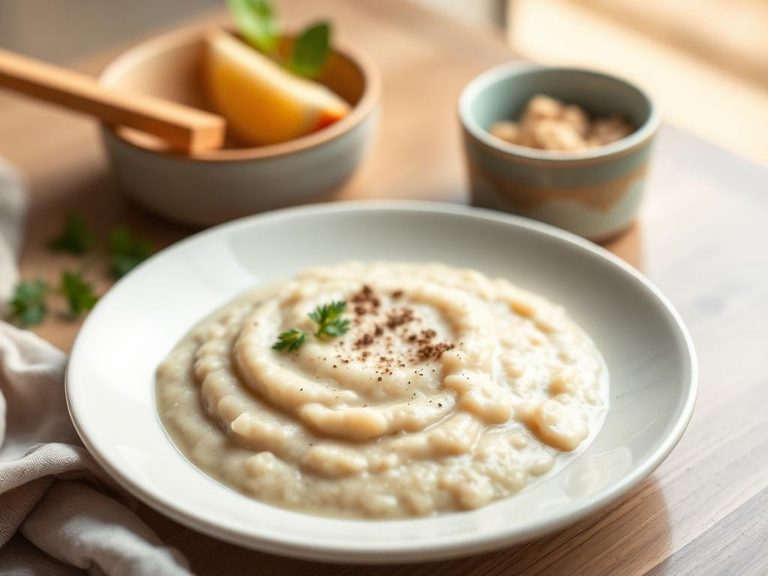
This is a smooth, creamy porridge made from finely ground, enriched wheat kernels, known for its velvety texture and mild, comforting flavor. It cooks rapidly in just 1-3 minutes, making it a staple for quick breakfasts. Nutritionally, it's a low-fat, low-calorie source of carbohydrates and provides added B-vitamins and iron from enrichment.
Calorie split: 13% protein · 81% carbs · 6% fat
↓ Full nutrition💚 Why it's loved
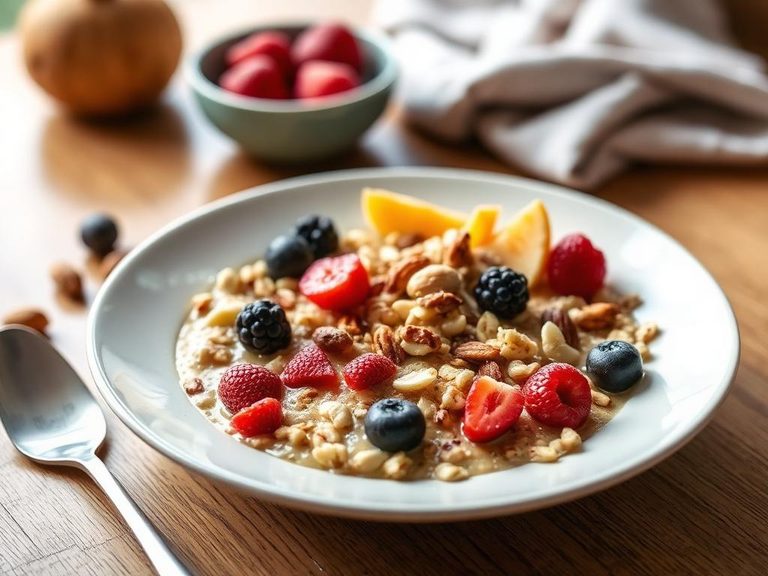
People love it for its comforting, nostalgic warmth and incredibly smooth, non-gritty texture that's easy to digest. It's a blank canvas that pairs perfectly with sweet or savory toppings, from brown sugar and butter to fruit and nuts.
⚠️ Watch-outs & how to enjoy it better
Its high carbohydrate content and lack of significant protein or fiber can lead to a quick blood-sugar spike, potentially causing an energy crash later. To counteract this, always pair it with a source of protein (like nuts, seeds, or a dollop of Greek yogurt) and healthy fat (like a pat of butter or a drizzle of nut butter) to slow digestion and promote satiety. Those with celiac disease or gluten sensitivity must avoid it, as it is made from wheat.
Key benefits
- Quick-cooking convenience (1-3 minutes)
- Enriched with iron and B-vitamins (thiamin, riboflavin, niacin, folic acid)
- Low in fat and calories
- Provides a gentle source of energy from complex carbohydrates
- Good base for adding other nutritious toppings
🍽️ Popular dishes

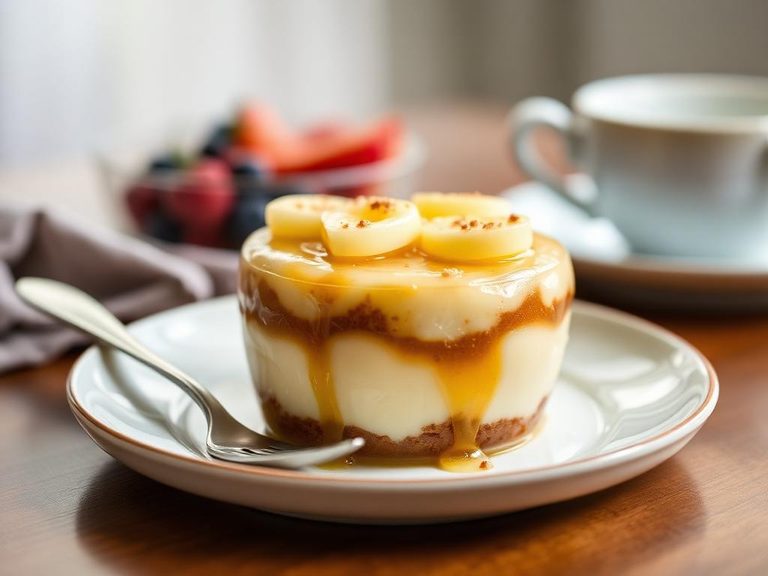
🌍 Where it's eaten
💡 Did you know?
Cream of Wheat was first produced in 1893 in Grand Forks, North Dakota, and its iconic logo featuring a chef, 'Rastus,' has been a subject of cultural discussion and revision over the decades.
Full nutrition (USDA data · scales with serving)
| Water | 86.5 g |
| Energy | 55.0 kcal |
| Energy | 231 kj |
| Protein | 1.8 g |
| Total lipid (fat) | 0.34 g |
| Ash | 0.38 g |
| Carbohydrate, by difference | 10.9 g |
| Fiber, total dietary | 0.80 g |
| Total Sugars | 0.76 g |
| Sucrose | 0.07 g |
| Glucose | 0.00 g |
| Fructose | 0.00 g |
| Lactose | 0.00 g |
| Maltose | 0.69 g |
| Galactose | 0.00 g |
| Starch | 10.6 g |
| Calcium, Ca | 97.0 mg |
| Iron, Fe | 5.3 mg |
| Magnesium, Mg | 7.0 mg |
| Phosphorus, P | 37.0 mg |
| Potassium, K | 23.0 mg |
| Sodium, Na | 18.0 mg |
| Zinc, Zn | 0.23 mg |
| Copper, Cu | 0.04 mg |
| Manganese, Mn | 0.20 mg |
| Selenium, Se | 12.8 ug |
| Vitamin C, total ascorbic acid | 0.00 mg |
| Thiamin | 0.13 mg |
| Riboflavin | 0.07 mg |
| Niacin | 1.5 mg |
| Pantothenic acid | 0.26 mg |
| Vitamin B-6 | 0.10 mg |
| Folate, total | 77.0 ug |
| Folic acid | 60.0 ug |
| Folate, food | 17.0 ug |
| Folate, DFE | 119 ug |
| Choline, total | 3.5 mg |
| Betaine | 6.9 mg |
| Vitamin B-12 | 0.00 ug |
| Vitamin A, RAE | 0.00 ug |
| Retinol | 0.00 ug |
| Vitamin A, IU | 0.00 iu |
| Vitamin E (alpha-tocopherol) | 0.04 mg |
| Tocopherol, beta | 0.02 mg |
| Tocopherol, gamma | 0.16 mg |
| Tocopherol, delta | 0.00 mg |
| Tocotrienol, alpha | 0.02 mg |
| Tocotrienol, beta | 0.00 mg |
| Tocotrienol, gamma | 0.00 mg |
| Tocotrienol, delta | 0.00 mg |
| Vitamin K (phylloquinone) | 0.00 ug |
| Vitamin K (Dihydrophylloquinone) | 0.00 ug |
| Vitamin K (Menaquinone-4) | 0.00 ug |
Fat & fatty acid profile (per 100g)
| Fatty acids, total saturated | 0.07 g |
| SFA 4:0 | 0.00 g |
| SFA 6:0 | 0.00 g |
| SFA 8:0 | 0.00 g |
| SFA 10:0 | 0.00 g |
| SFA 12:0 | 0.00 g |
| SFA 14:0 | 0.00 g |
| SFA 15:0 | 0.00 g |
| SFA 16:0 | 0.06 g |
| SFA 17:0 | 0.00 g |
| SFA 18:0 | 0.01 g |
| SFA 20:0 | 0.00 g |
| SFA 22:0 | 0.00 g |
| SFA 24:0 | 0.00 g |
| Fatty acids, total monounsaturated | 0.04 g |
| MUFA 14:1 | 0.00 g |
| MUFA 15:1 | 0.00 g |
| MUFA 16:1 | 0.00 g |
| MUFA 16:1 c | 0.00 g |
| MUFA 17:1 | 0.00 g |
| MUFA 18:1 | 0.04 g |
| MUFA 18:1 c | 0.04 g |
| MUFA 20:1 | 0.00 g |
| MUFA 22:1 | 0.00 g |
| MUFA 22:1 c | 0.00 g |
| MUFA 24:1 c | 0.00 g |
| Fatty acids, total polyunsaturated | 0.13 g |
| PUFA 18:2 | 0.12 g |
| PUFA 18:2 n-6 c,c | 0.09 g |
| PUFA 18:2 CLAs | 0.00 g |
| PUFA 18:3 | 0.01 g |
| PUFA 18:3 n-3 c,c,c (ALA) | 0.01 g |
| PUFA 18:3 n-6 c,c,c | 0.00 g |
| PUFA 18:4 | 0.00 g |
| PUFA 20:2 n-6 c,c | 0.00 g |
| PUFA 20:3 | 0.00 g |
| PUFA 20:3 n-3 | 0.00 g |
| PUFA 20:3 n-6 | 0.00 g |
| PUFA 20:4 | 0.00 g |
| PUFA 20:5 n-3 (EPA) | 0.00 g |
| PUFA 22:4 | 0.00 g |
| PUFA 22:5 n-3 (DPA) | 0.00 g |
| PUFA 22:6 n-3 (DHA) | 0.00 g |
| Fatty acids, total trans | 0.03 g |
| Fatty acids, total trans-monoenoic | 0.00 g |
| TFA 18:1 t | 0.00 g |
| TFA 22:1 t | 0.00 g |
| TFA 18:2 t not further defined | 0.03 g |
| Fatty acids, total trans-polyenoic | 0.03 g |
| Cholesterol | 0.00 mg |
Amino acid profile (per 100g)
| Tryptophan | 0.02 g |
| Threonine | 0.05 g |
| Isoleucine | 0.08 g |
| Leucine | 0.15 g |
| Lysine | 0.09 g |
| Methionine | 0.04 g |
| Cystine | 0.04 g |
| Phenylalanine | 0.11 g |
| Tyrosine | 0.07 g |
| Valine | 0.10 g |
| Arginine | 0.07 g |
| Histidine | 0.04 g |
| Alanine | 0.08 g |
| Aspartic acid | 0.11 g |
| Glutamic acid | 0.76 g |
| Glycine | 0.09 g |
| Proline | 0.35 g |
| Serine | 0.12 g |
| Hydroxyproline | 0.00 g |
FAQ
What is the difference between farina and Cream of Wheat?
Farina is the general term for a wheat-based cereal, while Cream of Wheat is a specific, popular brand of enriched farina known for its fine grind and smooth texture.
Is this a good food for people with diabetes?
It can be part of a diet, but its high glycemic index means it can cause rapid blood sugar rises. It's best consumed in controlled portions and paired with protein and fiber to mitigate this effect.
How does it differ from oatmeal?
Farina is made from wheat and has a much finer, smoother texture when cooked, while oatmeal (rolled or steel-cut oats) is made from oats and has a chewier, more distinct grain texture.
Nutrient density (calculated · NRF9.3)
Nutrient Rich Foods index: beneficial nutrients (protein, fiber, vitamins, minerals) minus saturated fat, added sugar & sodium, per 100 kcal.
NRF9.3 index — Fulgoni, Keast & Drewnowski, 2009. Computed from USDA nutrients.
Weight-loss friendliness (composite index)
Energy density 0.55 kcal/g · 13% calories from protein · 0.8 g fiber · 0.8 g sugar per 100 g.
Composite of energy density (Rolls et al., 1999), protein & fiber satiety, minus sugar. A calculated heuristic — ranks satiety-per-calorie, not a clinical measure.
Dietary load (calculated from USDA values)
Potential renal acid load. Positive = acid-forming, negative = alkaline-forming.
Sodium-to-potassium ratio: 0.78 (lower is better — aim for ≤ 1)
Sodium:potassium per WHO potassium guidance. Computed from USDA nutrients.