

Bread, white, commercially prepared (includes soft bread crumbs)
Whole food · Baked Products
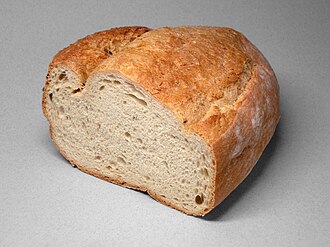
Photo: Wikipedia
This is the ubiquitous, soft, pillowy white sandwich bread, a staple in many households for its mild, slightly sweet flavor and tender, uniform crumb. Nutritionally, it's a quick source of carbohydrates, providing about 266 calories and 49g of carbs per 100g, with modest protein and very little fat or fiber.
Calorie split: 13% protein · 75% carbs · 11% fat
↓ Full nutrition💚 Why it's loved
People adore its comforting, neutral taste and soft texture that acts as the perfect canvas for everything from classic peanut butter and jelly to gourmet sandwiches. Its convenience and nostalgic association with simple meals make it a go-to for quick breakfasts, lunches, and snacks.
⚠️ Watch-outs & how to enjoy it better
Its low fiber and high glycemic index can lead to rapid blood sugar spikes, making it less ideal for sustained energy. To counteract this, pair it with protein (like eggs or turkey) or healthy fats (like avocado or nut butter) to slow digestion. Those monitoring sodium intake should check labels, as commercial loaves can be surprisingly salty.
Key benefits
- Quick source of energy from carbohydrates
- Fortified with B vitamins and iron in many commercial brands
- Soft texture is easy to chew and digest
- Long shelf life and convenient for meal prep
- Mild flavor pairs with both sweet and savory fillings
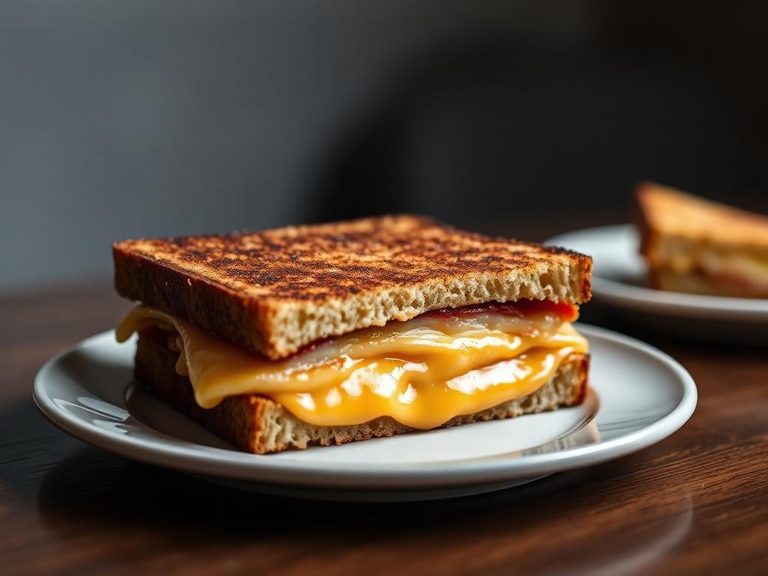
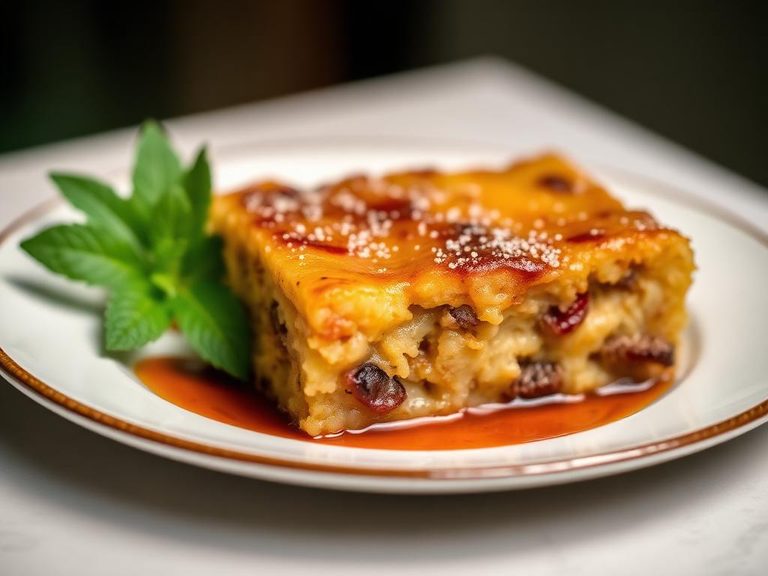
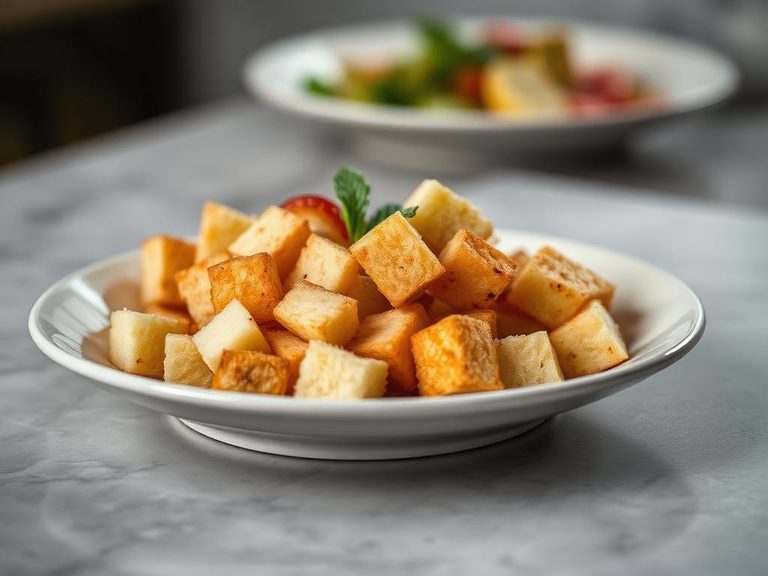
🍽️ Popular dishes


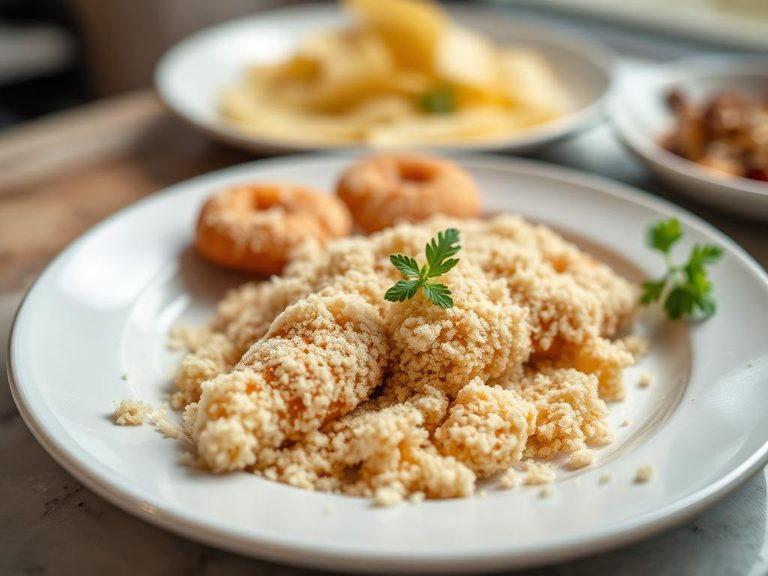
🌍 Where it's eaten
💡 Did you know?
The soft, square shape of modern sandwich bread is largely due to the 'Pullman loaf' pan, which was designed in the 19th century to fit neatly into railroad dining car storage.
Full nutrition (USDA data · scales with serving)
| Water | 36.4 g |
| Energy | 266 kcal |
| Energy | 1113 kj |
| Protein | 8.8 g |
| Total lipid (fat) | 3.3 g |
| Ash | 2.0 g |
| Carbohydrate, by difference | 49.4 g |
| Fiber, total dietary | 2.7 g |
| Total Sugars | 5.7 g |
| Sucrose | 0.00 g |
| Glucose | 1.6 g |
| Fructose | 2.4 g |
| Lactose | 0.00 g |
| Maltose | 1.7 g |
| Galactose | 0.00 g |
| Starch | 37.2 g |
| Calcium, Ca | 144 mg |
| Iron, Fe | 3.6 mg |
| Magnesium, Mg | 23.0 mg |
| Phosphorus, P | 98.0 mg |
| Potassium, K | 126 mg |
| Sodium, Na | 490 mg |
| Zinc, Zn | 0.74 mg |
| Copper, Cu | 0.10 mg |
| Manganese, Mn | 0.54 mg |
| Selenium, Se | 22.0 ug |
| Fluoride, F | 48.9 ug |
| Vitamin C, total ascorbic acid | 0.00 mg |
| Thiamin | 0.53 mg |
| Riboflavin | 0.24 mg |
| Niacin | 4.8 mg |
| Pantothenic acid | 0.54 mg |
| Vitamin B-6 | 0.09 mg |
| Folate, total | 111 ug |
| Folic acid | 86.0 ug |
| Folate, food | 25.0 ug |
| Folate, DFE | 171 ug |
| Choline, total | 14.6 mg |
| Betaine | 102 mg |
| Vitamin B-12 | 0.00 ug |
| Vitamin B-12, added | 0.00 ug |
| Vitamin A, RAE | 0.00 ug |
| Retinol | 0.00 ug |
| Carotene, beta | 0.00 ug |
| Carotene, alpha | 0.00 ug |
| Cryptoxanthin, beta | 0.00 ug |
| Vitamin A, IU | 1.0 iu |
| Lycopene | 0.00 ug |
| Lutein + zeaxanthin | 44.0 ug |
| Vitamin E (alpha-tocopherol) | 0.22 mg |
| Vitamin E, added | 0.00 mg |
| Vitamin D (D2 + D3), International Units | 0.00 iu |
| Vitamin D (D2 + D3) | 0.00 ug |
| Vitamin K (phylloquinone) | 0.20 ug |
| Alcohol, ethyl | 0.00 g |
| Caffeine | 0.00 mg |
| Theobromine | 0.00 mg |
Fat & fatty acid profile (per 100g)
| Fatty acids, total saturated | 0.70 g |
| SFA 4:0 | 0.00 g |
| SFA 6:0 | 0.00 g |
| SFA 8:0 | 0.01 g |
| SFA 10:0 | 0.01 g |
| SFA 12:0 | 0.01 g |
| SFA 14:0 | 0.01 g |
| SFA 15:0 | 0.00 g |
| SFA 16:0 | 0.42 g |
| SFA 17:0 | 0.00 g |
| SFA 18:0 | 0.22 g |
| SFA 20:0 | 0.01 g |
| SFA 22:0 | 0.01 g |
| SFA 24:0 | 0.00 g |
| Fatty acids, total monounsaturated | 0.60 g |
| MUFA 14:1 | 0.00 g |
| MUFA 15:1 | 0.00 g |
| MUFA 16:1 | 0.02 g |
| MUFA 16:1 c | 0.02 g |
| MUFA 17:1 | 0.00 g |
| MUFA 18:1 | 0.57 g |
| MUFA 18:1 c | 0.55 g |
| MUFA 20:1 | 0.01 g |
| MUFA 22:1 | 0.00 g |
| MUFA 22:1 c | 0.00 g |
| MUFA 24:1 c | 0.00 g |
| Fatty acids, total polyunsaturated | 1.6 g |
| PUFA 18:2 | 1.4 g |
| PUFA 18:2 CLAs | 0.00 g |
| PUFA 18:3 | 0.17 g |
| PUFA 18:3 n-3 c,c,c (ALA) | 0.17 g |
| PUFA 18:3 n-6 c,c,c | 0.00 g |
| PUFA 18:4 | 0.00 g |
| PUFA 20:2 n-6 c,c | 0.00 g |
| PUFA 20:3 | 0.00 g |
| PUFA 20:3 n-3 | 0.00 g |
| PUFA 20:3 n-6 | 0.00 g |
| PUFA 20:4 | 0.00 g |
| PUFA 20:5 n-3 (EPA) | 0.00 g |
| PUFA 22:4 | 0.01 g |
| PUFA 22:5 n-3 (DPA) | 0.00 g |
| PUFA 22:6 n-3 (DHA) | 0.00 g |
| Fatty acids, total trans | 0.03 g |
| Fatty acids, total trans-monoenoic | 0.02 g |
| TFA 16:1 t | 0.00 g |
| TFA 18:1 t | 0.02 g |
| TFA 22:1 t | 0.00 g |
| TFA 18:2 t not further defined | 0.01 g |
| Fatty acids, total trans-polyenoic | 0.01 g |
| Cholesterol | 0.00 mg |
Amino acid profile (per 100g)
Estimated from Bread, salvadoran sweet cheese (quesadilla salvadorena) — USDA does not publish this profile for Bread.
| Tryptophan | 0.07 g |
| Threonine | 0.21 g |
| Isoleucine | 0.30 g |
| Leucine | 0.65 g |
| Lysine | 0.50 g |
| Methionine | 0.28 g |
| Cystine | 0.06 g |
| Phenylalanine | 0.37 g |
| Tyrosine | 0.23 g |
| Valine | 0.43 g |
| Arginine | 0.25 g |
| Histidine | 0.15 g |
| Alanine | 0.36 g |
| Aspartic acid | 0.59 g |
| Glutamic acid | 1.3 g |
| Glycine | 0.20 g |
| Proline | 0.83 g |
| Serine | 0.45 g |
| Hydroxyproline | 0.00 g |
FAQ
Is white bread nutritionally empty?
While lower in fiber and certain nutrients than whole-grain bread, many commercial white breads are enriched with iron and B vitamins (like folic acid, niacin, thiamin, and riboflavin), adding back nutrients lost during processing.
Why does it have such a long shelf life?
The combination of commercial preservatives, a fine, uniform crumb structure that retains moisture, and often the addition of fats or emulsifiers helps prevent staling and mold growth, extending its freshness.
Can it be part of a healthy diet?
Yes, in moderation. Its role is best as part of a balanced meal that includes protein, healthy fats, and fiber-rich vegetables to create a more nutritionally complete and satisfying plate.
Nutrient density (calculated · NRF9.3)
Nutrient Rich Foods index: beneficial nutrients (protein, fiber, vitamins, minerals) minus saturated fat, added sugar & sodium, per 100 kcal.
NRF9.3 index — Fulgoni, Keast & Drewnowski, 2009. Computed from USDA nutrients.
Weight-loss friendliness (composite index)
Energy density 2.66 kcal/g · 13% calories from protein · 2.7 g fiber · 5.7 g sugar per 100 g.
Composite of energy density (Rolls et al., 1999), protein & fiber satiety, minus sugar. A calculated heuristic — ranks satiety-per-calorie, not a clinical measure.
Dietary load (calculated from USDA values)
Potential renal acid load. Positive = acid-forming, negative = alkaline-forming.
Sodium-to-potassium ratio: 3.89 (lower is better — aim for ≤ 1)
Sodium:potassium per WHO potassium guidance. Computed from USDA nutrients.