Crustaceans, crab, alaska king, imitation, made from surimi
Whole food · Finfish and Shellfish Products

Photo: Wikipedia
Alaska king crab imitation, crafted from surimi (processed white fish paste), delivers a sweet, briny flavor and a firm, slightly chewy texture that convincingly mimics real crab. Nutritionally, it's a lean, low-fat protein source with a moderate carbohydrate content from added starches and sugars. Its bright white and red coloring makes it a visually appealing addition to many dishes.
💚 Why it's loved
People love it for its sweet, oceanic flavor and satisfying, crab-like texture at a fraction of the cost of real crab. Its versatility makes it a staple in everything from chilled salads to hot stir-fries and sushi, appealing to both budget-conscious cooks and lovers of Japanese-American cuisine.
⚠️ Watch-outs & how to enjoy it better
As a processed food, it can be high in sodium and contains added sugars (6.25g per 100g), which may concern those monitoring blood sugar or salt intake. It's also a common allergen (fish, shellfish analog) and not suitable for strict seafood or vegan diets. To counteract, pair with fresh vegetables and healthy fats (like avocado or olive oil) to balance the meal, practice portion control, and rinse it lightly before use to reduce surface sodium.
Key benefits
- Excellent low-fat protein source (7.62g per 100g)
- Very low in fat (0.46g per 100g)
- Provides a moderate energy boost from carbohydrates
- Contains dietary fiber (0.5g per 100g)
- Cost-effective alternative to real crab meat
🍽️ Popular dishes
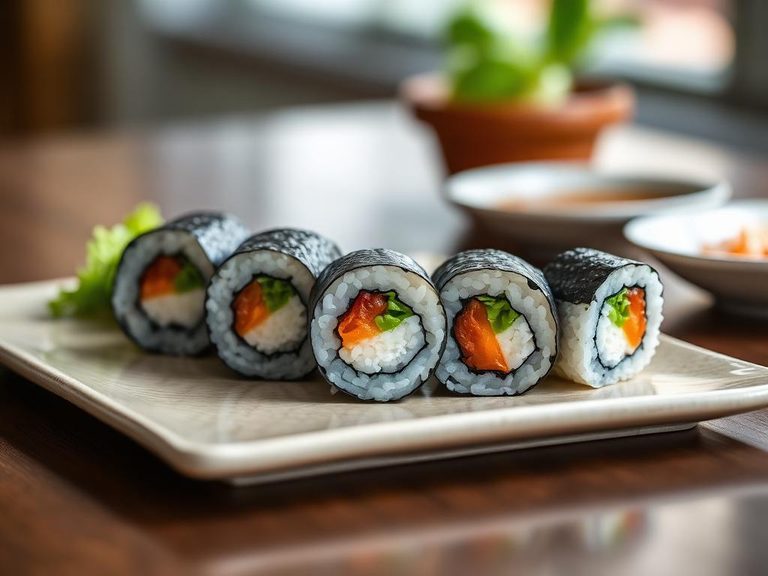
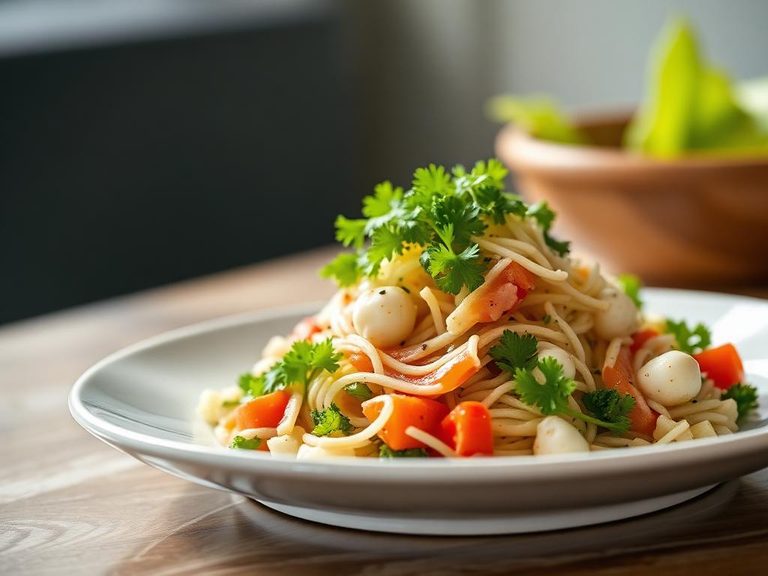
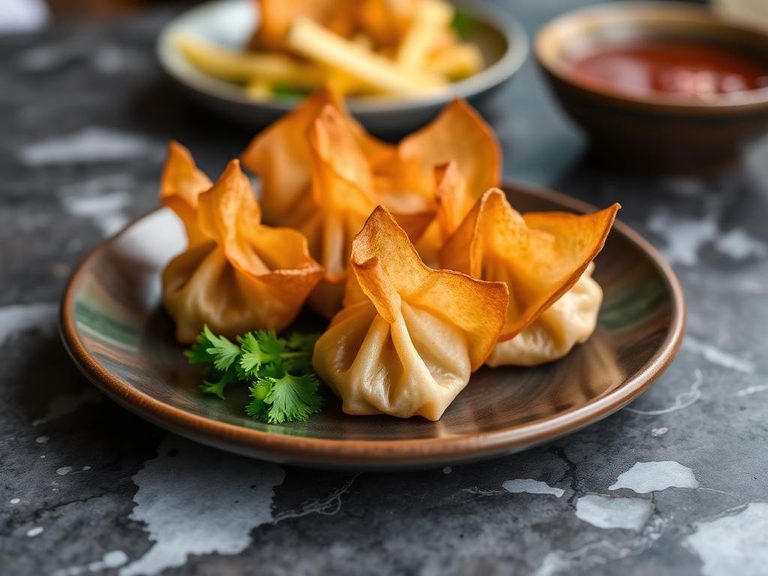
🌍 Where it's eaten
💡 Did you know?
The primary ingredient in surimi is typically Alaska pollock, which is minced, washed, and mixed with binders and flavorings to create the 'crab' product—a process perfected in Japan in the 1960s to utilize abundant white fish catches.
Full nutrition (scales with serving)
| Water | 74.7 g |
| Energy | 95.0 kcal |
| Energy | 396 kj |
| Protein | 7.6 g |
| Total lipid (fat) | 0.46 g |
| Ash | 2.3 g |
| Carbohydrate, by difference | 15.0 g |
| Fiber, total dietary | 0.50 g |
| Total Sugars | 6.3 g |
| Sucrose | 3.0 g |
| Glucose | 2.7 g |
| Fructose | 0.62 g |
| Lactose | 0.00 g |
| Maltose | 0.00 g |
| Galactose | 0.00 g |
| Starch | 3.5 g |
| Calcium, Ca | 13.0 mg |
| Iron, Fe | 0.39 mg |
| Magnesium, Mg | 43.0 mg |
| Phosphorus, P | 282 mg |
| Potassium, K | 90.0 mg |
| Sodium, Na | 529 mg |
| Zinc, Zn | 0.33 mg |
| Copper, Cu | 0.03 mg |
| Manganese, Mn | 0.01 mg |
| Selenium, Se | 22.3 ug |
| Vitamin C, total ascorbic acid | 0.00 mg |
| Thiamin | 0.03 mg |
| Riboflavin | 0.08 mg |
| Niacin | 0.62 mg |
| Pantothenic acid | 0.00 mg |
| Vitamin B-6 | 0.13 mg |
| Folate, total | 0.00 ug |
| Folic acid | 0.00 ug |
| Folate, food | 0.00 ug |
| Folate, DFE | 0.00 ug |
| Choline, total | 13.0 mg |
| Betaine | 1.8 mg |
| Vitamin B-12 | 0.57 ug |
| Vitamin B-12, added | 0.00 ug |
| Vitamin A, RAE | 0.00 ug |
| Retinol | 0.00 ug |
| Carotene, beta | 0.00 ug |
| Carotene, alpha | 0.00 ug |
| Cryptoxanthin, beta | 0.00 ug |
| Vitamin A, IU | 0.00 iu |
| Lycopene | 0.00 ug |
| Lutein + zeaxanthin | 0.00 ug |
| Vitamin E (alpha-tocopherol) | 0.17 mg |
| Vitamin E, added | 0.00 mg |
| Tocopherol, beta | 0.00 mg |
| Tocopherol, gamma | 0.10 mg |
| Tocopherol, delta | 0.04 mg |
| Tocotrienol, alpha | 0.03 mg |
| Tocotrienol, beta | 0.00 mg |
| Tocotrienol, gamma | 0.00 mg |
| Tocotrienol, delta | 0.00 mg |
| Vitamin D (D2 + D3), International Units | 0.00 iu |
| Vitamin D (D2 + D3) | 0.00 ug |
| Vitamin D3 (cholecalciferol) | 0.00 ug |
| Vitamin K (phylloquinone) | 0.40 ug |
| Vitamin K (Dihydrophylloquinone) | 0.00 ug |
| Vitamin K (Menaquinone-4) | 0.00 ug |
| Alcohol, ethyl | 0.00 g |
| Caffeine | 0.00 mg |
| Theobromine | 0.00 mg |
Fat & fatty acid profile (per 100g)
| Fatty acids, total saturated | 0.22 g |
| SFA 4:0 | 0.00 g |
| SFA 6:0 | 0.00 g |
| SFA 8:0 | 0.00 g |
| SFA 10:0 | 0.00 g |
| SFA 12:0 | 0.02 g |
| SFA 14:0 | 0.02 g |
| SFA 15:0 | 0.00 g |
| SFA 16:0 | 0.11 g |
| SFA 17:0 | 0.00 g |
| SFA 18:0 | 0.05 g |
| SFA 20:0 | 0.00 g |
| SFA 22:0 | 0.00 g |
| SFA 24:0 | 0.02 g |
| Fatty acids, total monounsaturated | 0.28 g |
| MUFA 14:1 | 0.00 g |
| MUFA 15:1 | 0.00 g |
| MUFA 16:1 | 0.01 g |
| MUFA 16:1 c | 0.01 g |
| MUFA 17:1 | 0.00 g |
| MUFA 18:1 | 0.11 g |
| MUFA 18:1 c | 0.12 g |
| MUFA 20:1 | 0.00 g |
| MUFA 22:1 | 0.01 g |
| MUFA 22:1 c | 0.00 g |
| MUFA 24:1 c | 0.00 g |
| Fatty acids, total polyunsaturated | 0.14 g |
| PUFA 18:2 | 0.01 g |
| PUFA 18:2 n-6 c,c | 0.09 g |
| PUFA 18:2 CLAs | 0.00 g |
| PUFA 18:3 | 0.01 g |
| PUFA 18:3 n-3 c,c,c (ALA) | 0.01 g |
| PUFA 18:3 n-6 c,c,c | 0.00 g |
| PUFA 18:4 | 0.00 g |
| PUFA 20:2 n-6 c,c | 0.00 g |
| PUFA 20:3 n-3 | 0.00 g |
| PUFA 20:3 n-6 | 0.00 g |
| PUFA 20:4 | 0.00 g |
| PUFA 20:5 n-3 (EPA) | 0.00 g |
| PUFA 22:4 | 0.00 g |
| PUFA 22:5 n-3 (DPA) | 0.00 g |
| PUFA 22:6 n-3 (DHA) | 0.03 g |
| Fatty acids, total trans | 0.01 g |
| Fatty acids, total trans-monoenoic | 0.01 g |
| TFA 16:1 t | 0.00 g |
| TFA 18:1 t | 0.01 g |
| TFA 22:1 t | 0.00 g |
| TFA 18:2 t not further defined | 0.00 g |
| Fatty acids, total trans-polyenoic | 0.00 g |
| Cholesterol | 20.0 mg |
Amino acid profile (per 100g)
| Tryptophan | 0.07 g |
| Threonine | 0.28 g |
| Isoleucine | 0.23 g |
| Leucine | 0.61 g |
| Lysine | 0.71 g |
| Methionine | 0.26 g |
| Cystine | 0.08 g |
| Phenylalanine | 0.26 g |
| Tyrosine | 0.22 g |
| Valine | 0.29 g |
| Arginine | 0.49 g |
| Histidine | 0.16 g |
| Alanine | 0.43 g |
| Aspartic acid | 0.89 g |
| Glutamic acid | 1.4 g |
| Glycine | 0.28 g |
| Proline | 0.33 g |
| Serine | 0.46 g |
FAQ
Is imitation crab actually crab?
No. It's a seafood product called surimi, primarily made from minced white fish (like pollock), water, starch, sugar, and crab flavoring. It's designed to mimic the taste and texture of crab.
Can I eat imitation crab raw?
Yes, it's pre-cooked during manufacturing and is safe to eat straight from the package, as commonly done in salads and sushi.
How does its nutrition compare to real crab?
Imitation crab is significantly lower in fat and calories but higher in carbohydrates and sodium. Real crab offers more natural omega-3s and a different micronutrient profile.