

Spices, garlic powder
Whole food · Spices and Herbs
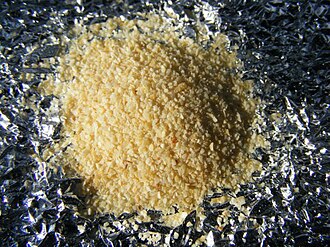
Photo: Wikipedia
Garlic powder is a finely ground, dehydrated form of garlic, offering a potent, concentrated burst of savory, umami-rich flavor with a dry, free-flowing texture. It delivers the classic pungent, slightly sweet essence of fresh garlic without the moisture or prep work. Nutritionally, it's a surprisingly good source of plant-based protein and dietary fiber, while being virtually fat-free.
Calorie split: 18% protein · 80% carbs · 2% fat
↓ Full nutrition💚 Why it's loved
People love garlic powder for its unparalleled convenience and ability to deliver a deep, savory garlic flavor instantly to any dish, from rubs and marinades to soups and sauces. It's a staple in spice cabinets worldwide, forming the backbone of countless flavor profiles and offering a consistent taste that fresh garlic can vary in.
⚠️ Watch-outs & how to enjoy it better
The primary downside is its high carbohydrate content (72.73g per 100g), which can contribute to blood sugar spikes if used excessively, especially by those monitoring their intake. It also lacks the fresh, sharp bite of raw garlic and can become bitter if burned. To counteract this, use it as part of a balanced seasoning blend with herbs and spices, and add it later in cooking to prevent scorching.
Key benefits
- High in plant-based protein (16.55g per 100g)
- Excellent source of dietary fiber (9g per 100g)
- Virtually fat-free (0.73g per 100g)
- Provides concentrated allicin-related compounds from garlic
- Long shelf life and convenient flavor base
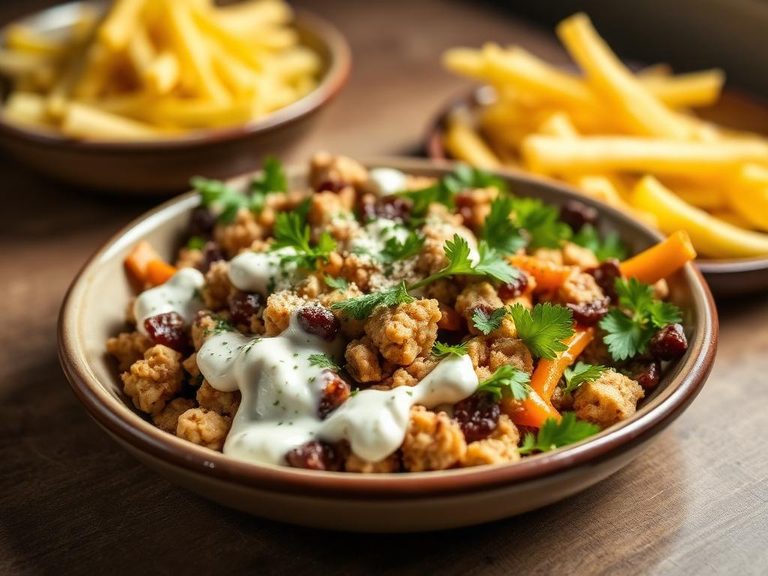
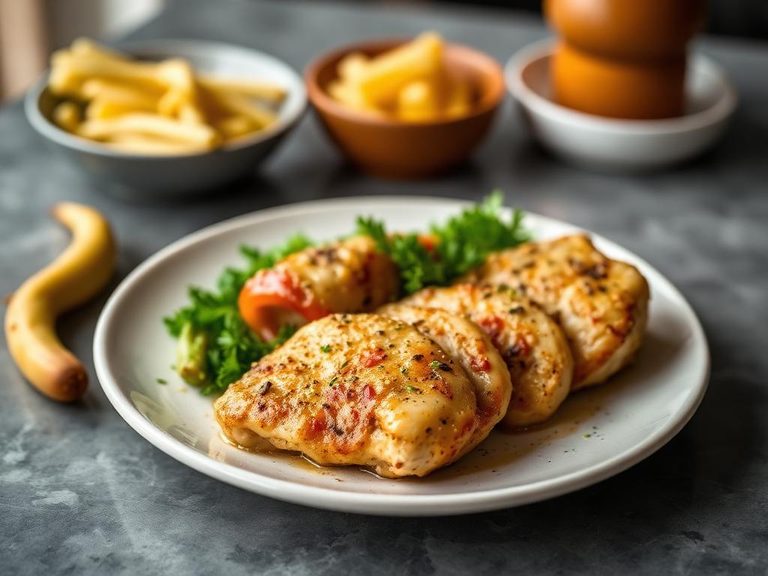
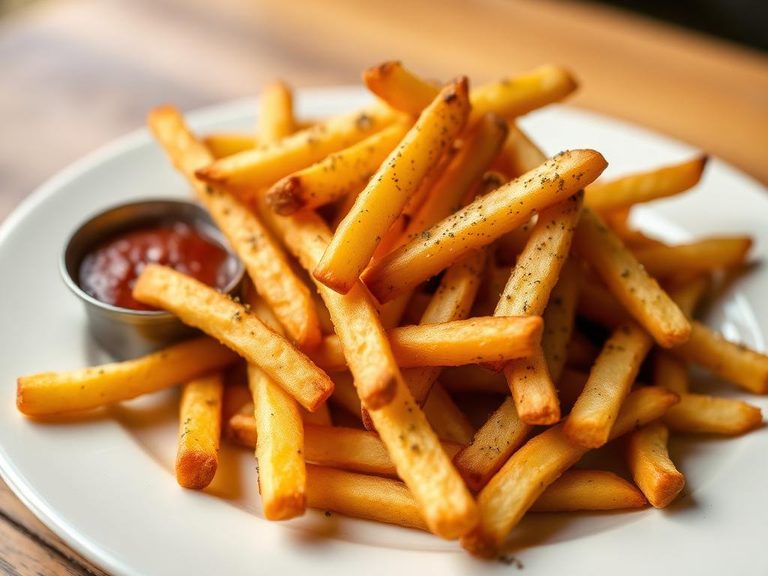
🍽️ Popular dishes
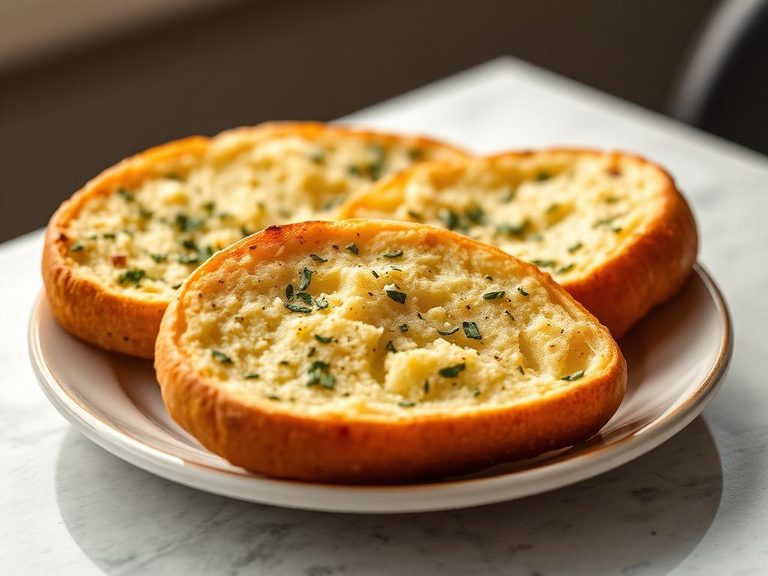
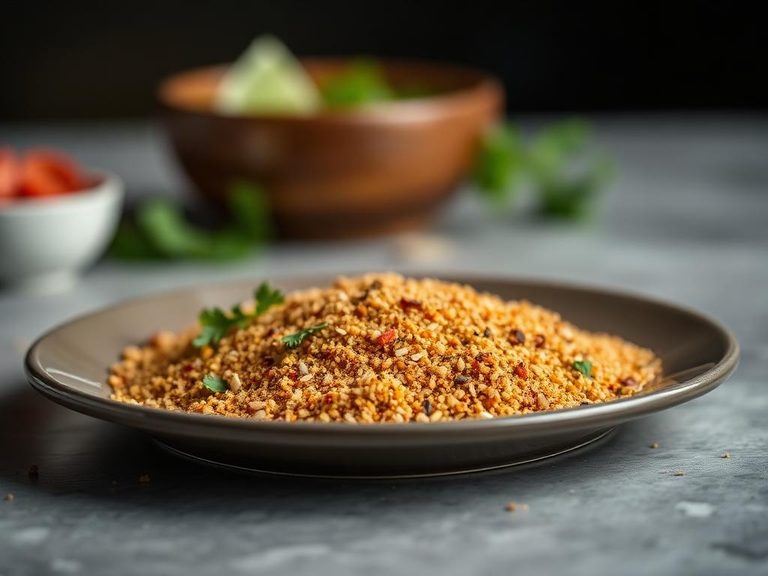
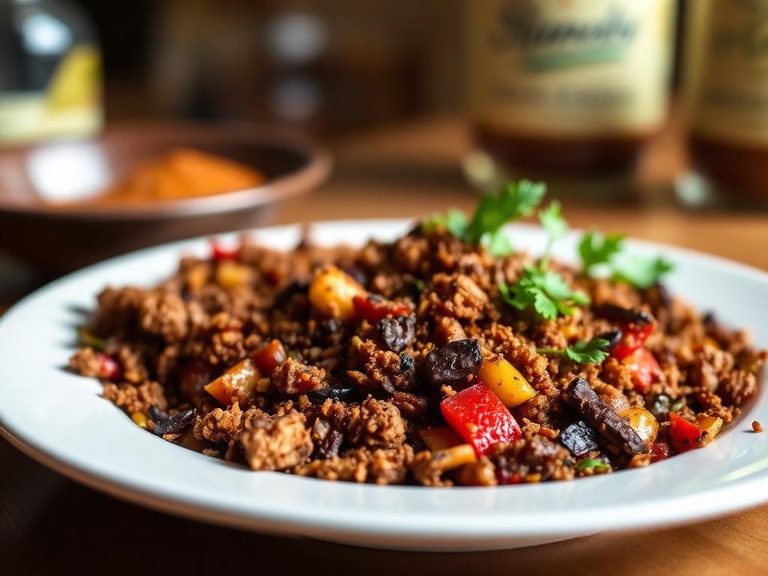
🌍 Where it's eaten
💡 Did you know?
To produce just one pound of garlic powder, approximately 10 pounds of fresh garlic cloves must be peeled, dehydrated, and ground.
Full nutrition (USDA data · scales with serving)
| Water | 6.5 g |
| Energy | 331 kcal |
| Energy | 1386 kj |
| Protein | 16.6 g |
| Total lipid (fat) | 0.73 g |
| Ash | 3.5 g |
| Carbohydrate, by difference | 72.7 g |
| Fiber, total dietary | 9.0 g |
| Total Sugars | 2.4 g |
| Sucrose | 2.0 g |
| Glucose | 0.07 g |
| Fructose | 0.31 g |
| Lactose | 0.00 g |
| Maltose | 0.00 g |
| Galactose | 0.00 g |
| Calcium, Ca | 79.0 mg |
| Iron, Fe | 5.7 mg |
| Magnesium, Mg | 77.0 mg |
| Phosphorus, P | 414 mg |
| Potassium, K | 1193 mg |
| Sodium, Na | 60.0 mg |
| Zinc, Zn | 3.0 mg |
| Copper, Cu | 0.53 mg |
| Manganese, Mn | 0.98 mg |
| Selenium, Se | 23.9 ug |
| Vitamin C, total ascorbic acid | 1.2 mg |
| Thiamin | 0.43 mg |
| Riboflavin | 0.14 mg |
| Niacin | 0.80 mg |
| Pantothenic acid | 0.74 mg |
| Vitamin B-6 | 1.7 mg |
| Folate, total | 47.0 ug |
| Folic acid | 0.00 ug |
| Folate, food | 47.0 ug |
| Folate, DFE | 47.0 ug |
| Choline, total | 67.5 mg |
| Betaine | 6.1 mg |
| Vitamin B-12 | 0.00 ug |
| Vitamin B-12, added | 0.00 ug |
| Vitamin A, RAE | 0.00 ug |
| Retinol | 0.00 ug |
| Carotene, beta | 0.00 ug |
| Carotene, alpha | 0.00 ug |
| Cryptoxanthin, beta | 0.00 ug |
| Vitamin A, IU | 0.00 iu |
| Lycopene | 0.00 ug |
| Lutein + zeaxanthin | 0.00 ug |
| Vitamin E (alpha-tocopherol) | 0.67 mg |
| Vitamin E, added | 0.00 mg |
| Tocopherol, beta | 0.00 mg |
| Tocopherol, gamma | 0.00 mg |
| Tocopherol, delta | 0.00 mg |
| Tocotrienol, alpha | 0.00 mg |
| Tocotrienol, beta | 0.00 mg |
| Tocotrienol, gamma | 0.00 mg |
| Tocotrienol, delta | 0.00 mg |
| Vitamin D (D2 + D3), International Units | 0.00 iu |
| Vitamin D (D2 + D3) | 0.00 ug |
| Vitamin K (phylloquinone) | 0.40 ug |
| Vitamin K (Dihydrophylloquinone) | 0.00 ug |
| Alcohol, ethyl | 0.00 g |
| Caffeine | 0.00 mg |
| Theobromine | 0.00 mg |
Fat & fatty acid profile (per 100g)
| Fatty acids, total saturated | 0.25 g |
| SFA 4:0 | 0.00 g |
| SFA 6:0 | 0.00 g |
| SFA 8:0 | 0.00 g |
| SFA 10:0 | 0.00 g |
| SFA 12:0 | 0.00 g |
| SFA 13:0 | 0.00 g |
| SFA 14:0 | 0.01 g |
| SFA 15:0 | 0.00 g |
| SFA 16:0 | 0.10 g |
| SFA 17:0 | 0.00 g |
| SFA 18:0 | 0.10 g |
| SFA 20:0 | 0.00 g |
| SFA 22:0 | 0.03 g |
| SFA 24:0 | 0.00 g |
| Fatty acids, total monounsaturated | 0.12 g |
| MUFA 14:1 | 0.00 g |
| MUFA 15:1 | 0.00 g |
| MUFA 16:1 | 0.00 g |
| MUFA 17:1 | 0.00 g |
| MUFA 18:1 | 0.11 g |
| MUFA 18:1 c | 0.11 g |
| MUFA 20:1 | 0.00 g |
| MUFA 22:1 | 0.00 g |
| MUFA 24:1 c | 0.01 g |
| Fatty acids, total polyunsaturated | 0.18 g |
| PUFA 18:2 | 0.14 g |
| PUFA 18:3 | 0.01 g |
| PUFA 18:3 n-3 c,c,c (ALA) | 0.01 g |
| PUFA 18:3 n-6 c,c,c | 0.00 g |
| PUFA 18:4 | 0.00 g |
| PUFA 20:2 n-6 c,c | 0.02 g |
| PUFA 20:3 | 0.00 g |
| PUFA 20:4 | 0.00 g |
| PUFA 20:5 n-3 (EPA) | 0.00 g |
| PUFA 22:5 n-3 (DPA) | 0.00 g |
| PUFA 22:6 n-3 (DHA) | 0.00 g |
| Fatty acids, total trans | 0.00 g |
| Fatty acids, total trans-monoenoic | 0.00 g |
| TFA 18:1 t | 0.00 g |
| Cholesterol | 0.00 mg |
| Phytosterols | 8.0 mg |
Amino acid profile (per 100g)
| Tryptophan | 0.12 g |
| Threonine | 0.37 g |
| Isoleucine | 0.41 g |
| Leucine | 0.73 g |
| Lysine | 0.77 g |
| Methionine | 0.11 g |
| Cystine | 0.25 g |
| Phenylalanine | 0.53 g |
| Tyrosine | 0.45 g |
| Valine | 0.67 g |
| Arginine | 3.4 g |
| Histidine | 0.26 g |
| Alanine | 0.48 g |
| Aspartic acid | 1.9 g |
| Glutamic acid | 3.7 g |
| Glycine | 0.53 g |
| Proline | 1.4 g |
| Serine | 0.51 g |
| Hydroxyproline | 0.00 g |
FAQ
How does garlic powder compare nutritionally to fresh garlic?
Garlic powder is more concentrated. Per gram, it has significantly more calories, protein, and carbs than fresh garlic because the water has been removed. However, fresh garlic retains more of certain volatile compounds like allicin, which are responsible for some of its health benefits.
Can garlic powder be used as a 1:1 substitute for fresh garlic?
Generally, no. The flavor is more concentrated and less nuanced. A common guideline is 1/8 teaspoon of garlic powder equals 1 clove of fresh garlic. Start with less and adjust to taste, as the powder can overpower a dish if overused.
Why does my garlic powder sometimes clump?
Clumping occurs when the powder absorbs moisture from the air. To prevent this, store it in a cool, dark place in an airtight container. Adding a few grains of uncooked rice to the jar can help absorb excess moisture and keep the powder free-flowing.
Nutrient density (calculated · NRF9.3)
Nutrient Rich Foods index: beneficial nutrients (protein, fiber, vitamins, minerals) minus saturated fat, added sugar & sodium, per 100 kcal.
NRF9.3 index — Fulgoni, Keast & Drewnowski, 2009. Computed from USDA nutrients.
Weight-loss friendliness (composite index)
Energy density 3.31 kcal/g · 20% calories from protein · 9.0 g fiber · 2.4 g sugar per 100 g.
Composite of energy density (Rolls et al., 1999), protein & fiber satiety, minus sugar. A calculated heuristic — ranks satiety-per-calorie, not a clinical measure.
Dietary load (calculated from USDA values)
Potential renal acid load. Positive = acid-forming, negative = alkaline-forming.
Sodium-to-potassium ratio: 0.05 (lower is better — aim for ≤ 1)
Sodium:potassium per WHO potassium guidance. Computed from USDA nutrients.