

Garlic Bread
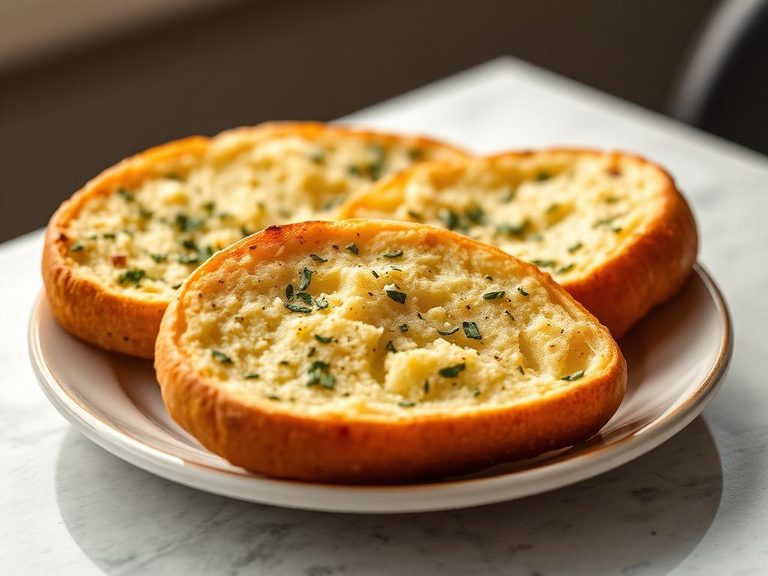
Garlic bread is a popular side dish made from bread, typically a baguette or Italian loaf, that is sliced and topped with a mixture of butter or olive oil, garlic, and often herbs like parsley or oregano. Originating from Italy, it is a staple in Italian-American cuisine and is commonly served alongside pasta dishes, soups, or salads. The bread is usually baked or toasted until golden and crispy, creating a flavorful and aromatic accompaniment to meals.
🍳 View the full Garlic Bread recipe →
🍽️ Nutrition at a glance
Garlic bread is generally high in carbohydrates due to the bread base, and it can be high in fat if made with butter or olive oil. It provides some key nutrients like carbohydrates for energy, and small amounts of vitamins and minerals from garlic and herbs, but it is not a significant source of protein. A typical serving of garlic bread (about 2-3 slices) can range from 150 to 300 calories, depending on the recipe and portion size.
Nutrition breakdown
| Calories | 150 kcal |
| Protein | 3 g |
| Carbs | 18 g |
| Fat | 7 g |
| Fiber | 1 g |
| Sugar | 1 g |
| Calcium | 30 mg |
| Iron | 1 mg |
| Potassium | 40 mg |
| Vitamin A | 20 IU |
| Vitamin B1 (Thiamine) | 0.1 mg |
| Vitamin B2 (Riboflavin) | 0.05 mg |
| Niacin (B3) | 1 mg |
| Folate | 20 µg |
Per 1 slice (approx. 50 g) · estimated, varies by recipe
💡 What's interesting
Garlic bread is culturally significant as a beloved comfort food in many Western countries, especially in the United States, where it is often served in Italian restaurants and homes. Nutritionally, garlic contains allicin, a compound with potential health benefits, but the high fat and calorie content of garlic bread means it is best enjoyed in moderation as part of a balanced diet.
🍽️ Related dishes







AI estimate may be inaccurate · Terms