Sausage, breakfast sausage, beef, pre-cooked, unprepared
Whole food · Sausages and Luncheon Meats
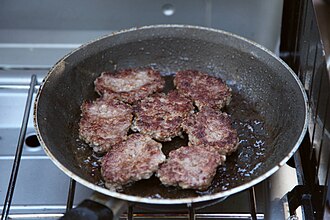
Photo: Wikipedia
Pre-cooked beef breakfast sausage is a savory, crumbly, and juicy ground beef patty or link, seasoned with a blend of spices like sage, thyme, and black pepper. It offers a rich, meaty flavor with a satisfying, slightly coarse texture, and is a protein-dense option for a quick morning meal.
💚 Why it's loved
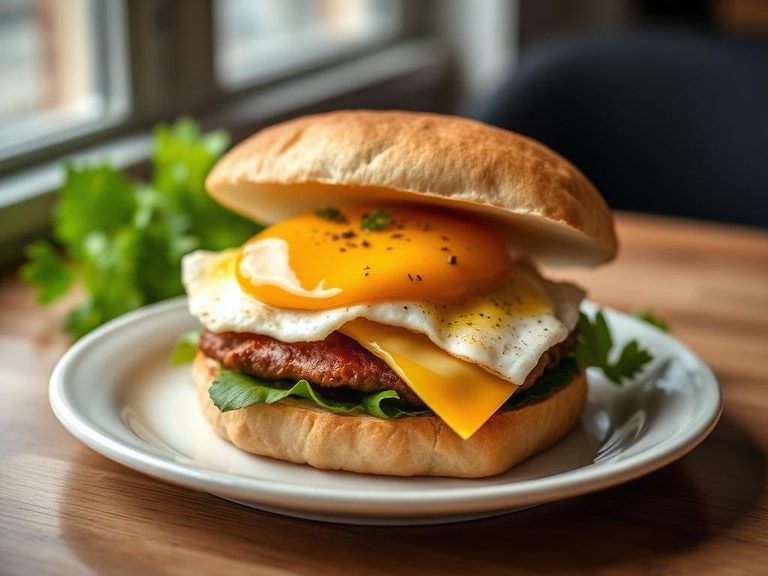
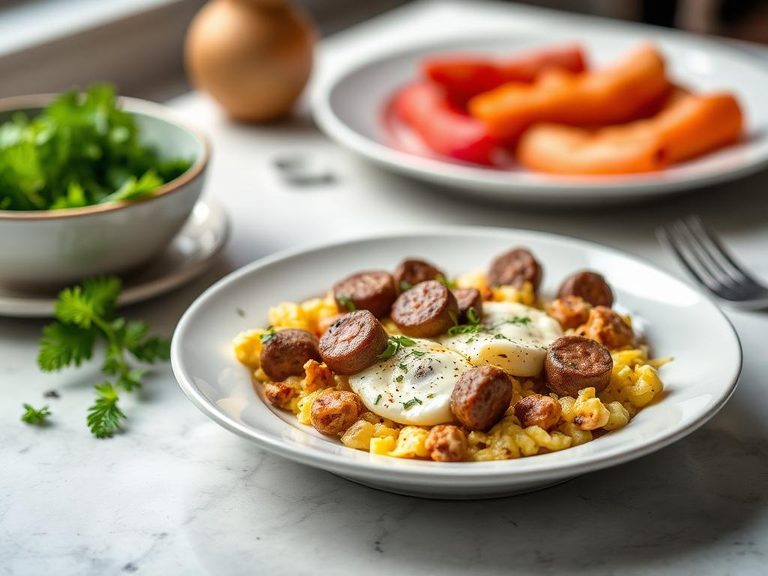
People love it for its hearty, comforting flavor that anchors a classic breakfast, and its versatility to be crumbled into scrambles, served alongside eggs, or used in breakfast sandwiches. It's a staple in many cultures for its satisfying, savory taste and ease of preparation.
⚠️ Watch-outs & how to enjoy it better
The high fat and sodium content can be a concern for those monitoring heart health or blood pressure. To counteract, pair it with fiber-rich vegetables like spinach or tomatoes, and practice portion control by using just one patty or link per meal. If sensitive to saturated fat, consider draining excess grease after cooking.
Key benefits
- High in protein for muscle maintenance and satiety
- Provides a quick source of energy from its fat content
- Convenient and fast to prepare for busy mornings
- Rich in iron and B vitamins from beef
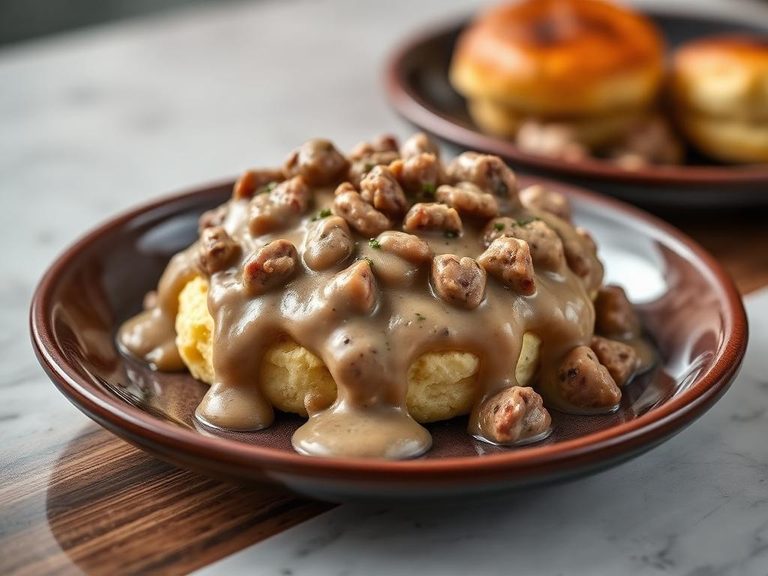
🍽️ Popular dishes
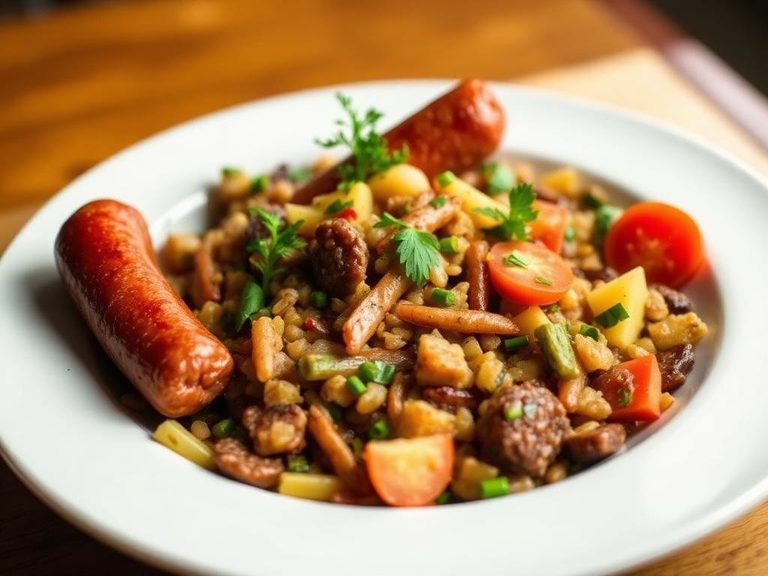
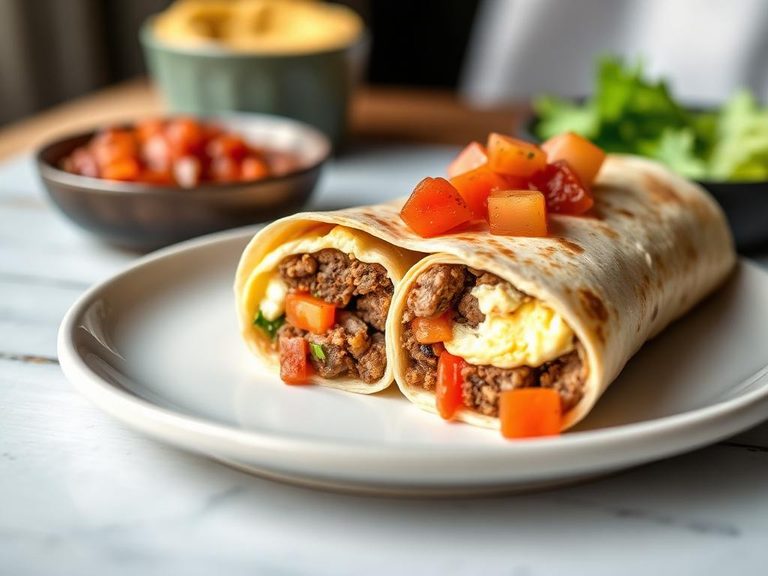
🌍 Where it's eaten
💡 Did you know?
The term 'breakfast sausage' in the U.S. often refers to pork, but beef versions became popular in the 20th century as a leaner alternative, especially in regions with strong cattle farming traditions.
Full nutrition (scales with serving)
| Water | 51.7 g |
| Energy (Atwater General Factors) | 341 kcal |
| Energy (Atwater Specific Factors) | 346 kcal |
| Energy | 328 kcal |
| Energy | 1370 kj |
| Nitrogen | 2.1 g |
| Protein | 13.3 g |
| Total lipid (fat) | 28.7 g |
| Total fat (NLEA) | 27.1 g |
| Ash | 3.0 g |
| Carbohydrate, by difference | 3.4 g |
| Sugars, Total | 1.0 g |
| Sucrose | 0.00 g |
| Glucose | 1.0 g |
| Fructose | 0.00 g |
| Lactose | 0.00 g |
| Maltose | 0.00 g |
| Galactose | 0.00 g |
| Calcium, Ca | 35.0 mg |
| Iron, Fe | 1.6 mg |
| Magnesium, Mg | 19.7 mg |
| Phosphorus, P | 124 mg |
| Potassium, K | 263 mg |
| Sodium, Na | 866 mg |
| Zinc, Zn | 2.1 mg |
| Copper, Cu | 0.07 mg |
| Manganese, Mn | 0.17 mg |
| Selenium, Se | 11.6 ug |
| Vitamin C, total ascorbic acid | 19.2 mg |
| Thiamin | 0.05 mg |
| Riboflavin | 0.13 mg |
| Niacin | 2.4 mg |
| Pantothenic acid | 0.32 mg |
| Vitamin B-6 | 0.15 mg |
| Choline, total | 38.3 mg |
| Choline, free | 2.3 mg |
| Choline, from phosphocholine | 27.7 mg |
| Choline, from phosphotidyl choline | 0.40 mg |
| Choline, from glycerophosphocholine | 1.9 mg |
| Choline, from sphingomyelin | 6.0 mg |
| Betaine | 2.8 mg |
| Vitamin B-12 | 1.1 ug |
| Vitamin A, RAE | 18.0 ug |
| Retinol | 18.0 ug |
| Vitamin E (alpha-tocopherol) | 0.33 mg |
| Tocopherol, beta | 0.00 mg |
| Tocopherol, gamma | 0.14 mg |
| Tocopherol, delta | 0.00 mg |
| Tocotrienol, alpha | 0.00 mg |
| Tocotrienol, beta | 0.00 mg |
| Tocotrienol, gamma | 0.00 mg |
| Tocotrienol, delta | 0.00 mg |
| Fatty acids, total saturated | 11.3 g |
| SFA 4:0 | 0.00 g |
| SFA 6:0 | 0.00 g |
| SFA 8:0 | 0.00 g |
| SFA 10:0 | 0.00 g |
| SFA 11:0 | 0.00 g |
| SFA 12:0 | 0.02 g |
| SFA 14:0 | 0.78 g |
| SFA 15:0 | 0.10 g |
| SFA 16:0 | 6.7 g |
| SFA 17:0 | 0.26 g |
| SFA 18:0 | 3.5 g |
| SFA 20:0 | 0.03 g |
| SFA 22:0 | 0.00 g |
| SFA 24:0 | 0.00 g |
| Fatty acids, total monounsaturated | 12.7 g |
| MUFA 14:1 c | 0.25 g |
| MUFA 15:1 | 0.00 g |
| MUFA 16:1 c | 1.1 g |
| MUFA 17:1 | 0.20 g |
| MUFA 17:1 c | 0.20 g |
| MUFA 18:1 c | 11.0 g |
| MUFA 20:1 c | 0.11 g |
| MUFA 22:1 c | 0.02 g |
| MUFA 22:1 n-9 | 0.02 g |
| MUFA 24:1 c | 0.00 g |
| Fatty acids, total polyunsaturated | 1.9 g |
| PUFA 18:2 c | 1.7 g |
| PUFA 18:2 n-6 c,c | 1.6 g |
| PUFA 18:2 CLAs | 0.13 g |
| PUFA 18:3 c | 0.09 g |
| PUFA 18:3 n-3 c,c,c (ALA) | 0.09 g |
| PUFA 18:3 n-6 c,c,c | 0.00 g |
| PUFA 18:4 | 0.00 g |
| PUFA 20:2 c | 0.03 g |
| PUFA 20:2 n-6 c,c | 0.03 g |
| PUFA 20:3 c | 0.03 g |
| PUFA 20:3 n-3 | 0.00 g |
| PUFA 20:3 n-6 | 0.03 g |
| PUFA 20:3 n-9 | 0.00 g |
| PUFA 20:4 | 0.05 g |
| PUFA 20:4c | 0.05 g |
| PUFA 20:5c | 0.00 g |
| PUFA 20:5 n-3 (EPA) | 0.00 g |
| PUFA 22:2 | 0.00 g |
| PUFA 22:5 c | 0.01 g |
| PUFA 22:4 | 0.01 g |
| PUFA 22:5 n-3 (DPA) | 0.01 g |
| PUFA 22:6 c | 0.00 g |
| PUFA 22:6 n-3 (DHA) | 0.00 g |
| Fatty acids, total trans | 1.2 g |
| Fatty acids, total trans-monoenoic | 1.1 g |
| TFA 16:1 t | 0.06 g |
| TFA 18:1 t | 1.0 g |
| TFA 22:1 t | 0.00 g |
| Fatty acids, total trans-dienoic | 0.09 g |
| TFA 18:2 t not further defined | 0.09 g |
| Fatty acids, total trans-polyenoic | 0.00 g |
| TFA 18:3 t | 0.00 g |
| Cholesterol | 61.0 mg |
| Tryptophan | 0.12 g |
| Threonine | 0.50 g |
| Isoleucine | 0.46 g |
| Leucine | 0.93 g |
| Lysine | 0.95 g |
| Methionine | 0.26 g |
| Phenylalanine | 0.60 g |
| Tyrosine | 0.39 g |
| Valine | 0.53 g |
| Arginine | 0.83 g |
| Histidine | 0.35 g |
| Alanine | 0.77 g |
| Aspartic acid | 1.2 g |
| Glutamic acid | 1.9 g |
| Glycine | 0.94 g |
| Proline | 0.84 g |
| Serine | 0.55 g |
| Hydroxyproline | 0.29 g |
| Cysteine | 0.17 g |
FAQ
Is pre-cooked beef breakfast sausage safe to eat cold?
Yes, it is safe to eat cold as it is fully cooked, but it's often reheated for better flavor and texture.
How does beef breakfast sausage compare nutritionally to pork sausage?
Beef sausage typically has slightly less saturated fat than pork sausage, but both are high in fat and sodium. Beef may offer more iron and B12.
Can I use beef breakfast sausage in non-breakfast dishes?
Absolutely! It can be used in casseroles, pasta sauces, or as a topping for pizza, adding a savory, spiced flavor.