

Raisins, dark, seedless (Includes foods for USDA's Food Distribution Program)
Whole food · Fruits and Fruit Juices

Photo: Wikipedia
Dark, seedless raisins are sun-dried grapes, typically from the Thompson Seedless variety, that have shriveled into intensely sweet, chewy morsels. Their deep purple-black color signals a high concentration of antioxidants. Nutritionally, they are a dense source of quick energy, packing nearly 80 grams of carbohydrates and over 65 grams of sugar per 100 grams.
Calorie split: 4% protein · 95% carbs · 1% fat
↓ Full nutrition💚 Why it's loved
People love raisins for their concentrated, honey-like sweetness and satisfying chew, which adds a burst of flavor and texture to both sweet and savory dishes. They are a beloved, portable snack with deep cultural roots in cuisines worldwide, from trail mixes to holiday baking.
⚠️ Watch-outs & how to enjoy it better
Due to their very high sugar content, a large handful can cause a rapid spike in blood sugar, making portion control key for those managing diabetes. Their sticky, dense texture can also be a dental concern if not followed by brushing. To counteract this, pair them with a protein or fat source (like nuts or cheese) to slow sugar absorption, and practice mindful portioning.
Key benefits
- Excellent source of quick, natural energy
- High in fiber, aiding digestion
- Rich in antioxidants like phenols and polyphenols
- Contains essential minerals like iron, potassium, and copper
- No added fat or cholesterol
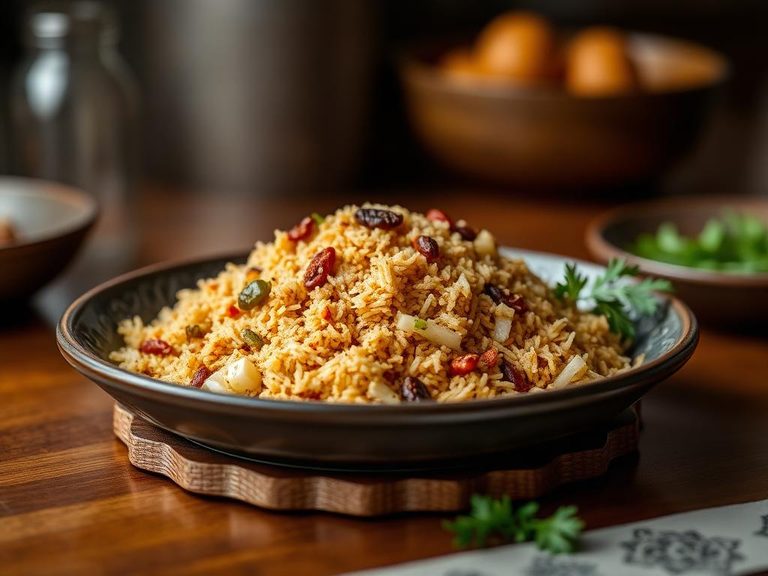
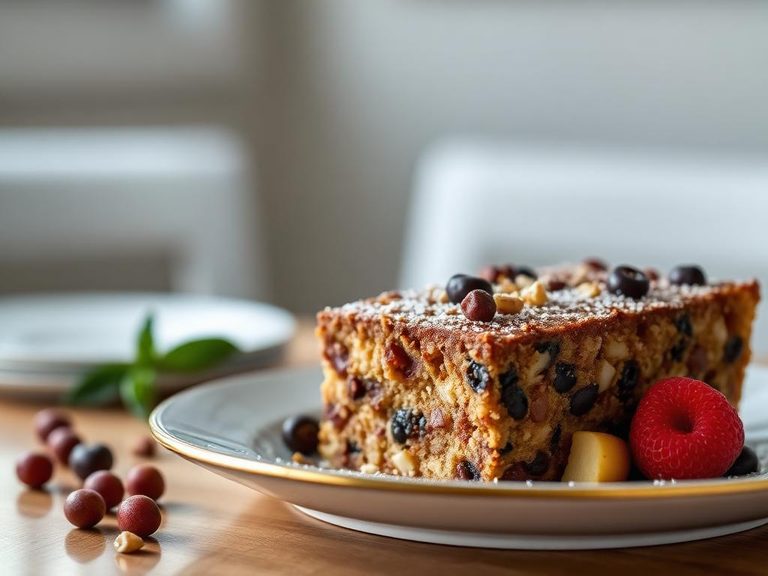
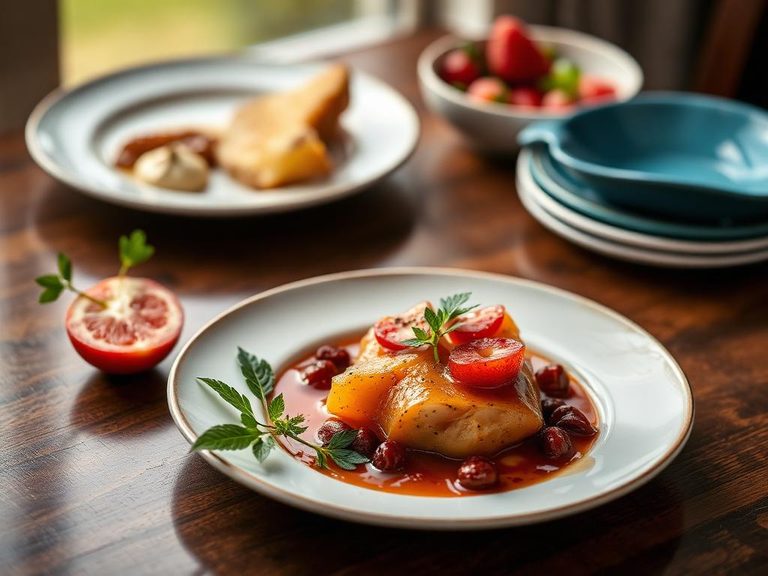
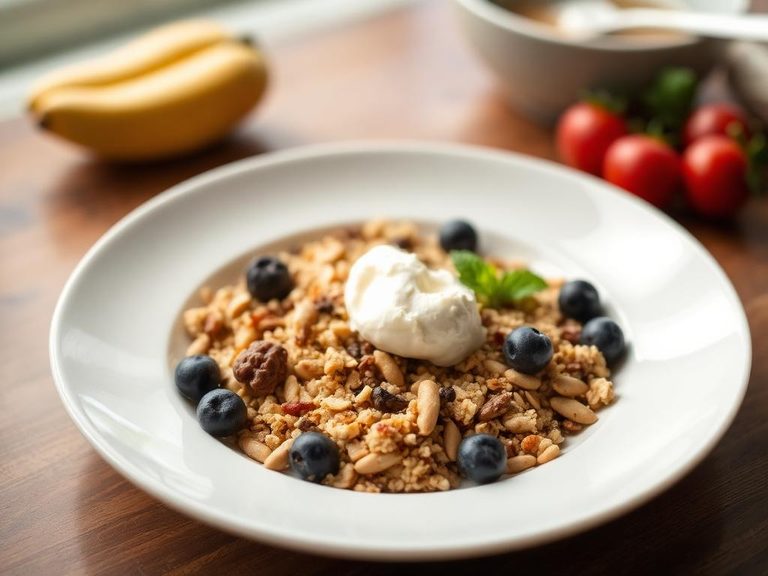
🍽️ Popular dishes

🌍 Where it's eaten
💡 Did you know?
The word 'raisin' comes from the Old French 'raisin' for 'grape,' but in the UK and Ireland, 'raisin' specifically refers to the dark, dried variety, while lighter, larger dried grapes are called 'sultanas.'
Full nutrition (USDA data · scales with serving)
| Water | 15.5 g |
| Energy | 299 kcal |
| Energy | 1250 kj |
| Protein | 3.3 g |
| Total lipid (fat) | 0.25 g |
| Ash | 1.7 g |
| Carbohydrate, by difference | 79.3 g |
| Fiber, total dietary | 4.5 g |
| Total Sugars | 65.2 g |
| Sucrose | 0.00 g |
| Glucose | 30.5 g |
| Fructose | 34.7 g |
| Lactose | 0.00 g |
| Maltose | 0.00 g |
| Calcium, Ca | 62.0 mg |
| Iron, Fe | 1.8 mg |
| Magnesium, Mg | 36.0 mg |
| Phosphorus, P | 98.0 mg |
| Potassium, K | 744 mg |
| Sodium, Na | 26.0 mg |
| Zinc, Zn | 0.36 mg |
| Copper, Cu | 0.27 mg |
| Manganese, Mn | 0.28 mg |
| Selenium, Se | 0.60 ug |
| Fluoride, F | 234 ug |
| Vitamin C, total ascorbic acid | 2.3 mg |
| Thiamin | 0.11 mg |
| Riboflavin | 0.13 mg |
| Niacin | 0.77 mg |
| Vitamin B-6 | 0.17 mg |
| Folate, total | 5.0 ug |
| Folic acid | 0.00 ug |
| Folate, food | 5.0 ug |
| Folate, DFE | 5.0 ug |
| Choline, total | 11.1 mg |
| Vitamin B-12 | 0.00 ug |
| Vitamin B-12, added | 0.00 ug |
| Vitamin A, RAE | 0.00 ug |
| Retinol | 0.00 ug |
| Carotene, beta | 0.00 ug |
| Carotene, alpha | 0.00 ug |
| Cryptoxanthin, beta | 0.00 ug |
| Vitamin A, IU | 0.00 iu |
| Lycopene | 0.00 ug |
| Lutein + zeaxanthin | 0.00 ug |
| Vitamin E (alpha-tocopherol) | 0.12 mg |
| Vitamin E, added | 0.00 mg |
| Vitamin D (D2 + D3), International Units | 0.00 iu |
| Vitamin D (D2 + D3) | 0.00 ug |
| Vitamin D3 (cholecalciferol) | 0.00 ug |
| Vitamin K (phylloquinone) | 3.5 ug |
| Alcohol, ethyl | 0.00 g |
| Caffeine | 0.00 mg |
| Theobromine | 0.00 mg |
Fat & fatty acid profile (per 100g)
| Fatty acids, total saturated | 0.09 g |
| SFA 4:0 | 0.01 g |
| SFA 6:0 | 0.00 g |
| SFA 8:0 | 0.00 g |
| SFA 10:0 | 0.00 g |
| SFA 12:0 | 0.00 g |
| SFA 14:0 | 0.00 g |
| SFA 15:0 | 0.00 g |
| SFA 16:0 | 0.06 g |
| SFA 17:0 | 0.00 g |
| SFA 18:0 | 0.01 g |
| SFA 20:0 | 0.00 g |
| SFA 22:0 | 0.00 g |
| SFA 24:0 | 0.00 g |
| Fatty acids, total monounsaturated | 0.02 g |
| MUFA 14:1 | 0.00 g |
| MUFA 15:1 | 0.00 g |
| MUFA 16:1 | 0.00 g |
| MUFA 16:1 c | 0.00 g |
| MUFA 17:1 | 0.00 g |
| MUFA 18:1 | 0.02 g |
| MUFA 18:1 c | 0.02 g |
| MUFA 20:1 | 0.00 g |
| MUFA 22:1 | 0.00 g |
| MUFA 22:1 c | 0.00 g |
| MUFA 24:1 c | 0.00 g |
| Fatty acids, total polyunsaturated | 0.05 g |
| PUFA 18:2 | 0.04 g |
| PUFA 18:2 n-6 c,c | 0.04 g |
| PUFA 18:2 CLAs | 0.00 g |
| PUFA 18:3 | 0.01 g |
| PUFA 18:3 n-3 c,c,c (ALA) | 0.01 g |
| PUFA 18:3 n-6 c,c,c | 0.00 g |
| PUFA 18:3i | 0.00 g |
| PUFA 18:4 | 0.00 g |
| PUFA 20:2 n-6 c,c | 0.00 g |
| PUFA 20:3 | 0.00 g |
| PUFA 20:3 n-3 | 0.00 g |
| PUFA 20:3 n-6 | 0.00 g |
| PUFA 20:4 | 0.00 g |
| PUFA 20:5 n-3 (EPA) | 0.00 g |
| PUFA 22:4 | 0.00 g |
| PUFA 22:5 n-3 (DPA) | 0.00 g |
| PUFA 22:6 n-3 (DHA) | 0.00 g |
| Fatty acids, total trans | 0.00 g |
| Fatty acids, total trans-monoenoic | 0.00 g |
| TFA 16:1 t | 0.00 g |
| TFA 18:1 t | 0.00 g |
| TFA 22:1 t | 0.00 g |
| TFA 18:2 t not further defined | 0.00 g |
| Fatty acids, total trans-polyenoic | 0.00 g |
| Cholesterol | 0.00 mg |
Amino acid profile (per 100g)
Estimated from Muffins, wheat bran, toaster-type with raisins, toasted — USDA does not publish this profile for Raisins.
| Tryptophan | 0.07 g |
| Threonine | 0.20 g |
| Isoleucine | 0.22 g |
| Leucine | 0.39 g |
| Lysine | 0.25 g |
| Methionine | 0.09 g |
| Cystine | 0.11 g |
| Phenylalanine | 0.26 g |
| Tyrosine | 0.18 g |
| Valine | 0.25 g |
| Arginine | 0.33 g |
| Histidine | 0.14 g |
| Alanine | 0.23 g |
| Aspartic acid | 0.46 g |
| Glutamic acid | 1.3 g |
| Glycine | 0.23 g |
| Proline | 0.41 g |
| Serine | 0.29 g |
FAQ
Are raisins considered a whole fruit or a processed food?
They are considered a whole fruit. Raisins are simply grapes that have been dried, concentrating their natural sugars and nutrients without added processing or ingredients.
Why are some raisins coated in oil and why do they look different?
Some raisins, often labeled 'light' or 'golden,' are treated with sulfur dioxide to preserve their lighter color and prevent browning. A light coating of vegetable oil may be added to prevent clumping. Dark raisins are typically sun-dried without this treatment.
How should I store raisins to keep them fresh?
Store them in a cool, dark place in an airtight container. For long-term storage (over a year), refrigeration or freezing is ideal to maintain moisture and prevent them from becoming overly hard.
Nutrient density (calculated · NRF9.3)
Nutrient Rich Foods index: beneficial nutrients (protein, fiber, vitamins, minerals) minus saturated fat, added sugar & sodium, per 100 kcal.
NRF9.3 index — Fulgoni, Keast & Drewnowski, 2009. Computed from USDA nutrients.
Weight-loss friendliness (composite index)
Energy density 2.99 kcal/g · 4% calories from protein · 4.5 g fiber · 65.2 g sugar per 100 g.
Composite of energy density (Rolls et al., 1999), protein & fiber satiety, minus sugar. A calculated heuristic — ranks satiety-per-calorie, not a clinical measure.
Dietary load (calculated from USDA values)
Potential renal acid load. Positive = acid-forming, negative = alkaline-forming.
Sodium-to-potassium ratio: 0.03 (lower is better — aim for ≤ 1)
Sodium:potassium per WHO potassium guidance. Computed from USDA nutrients.