

Muesli
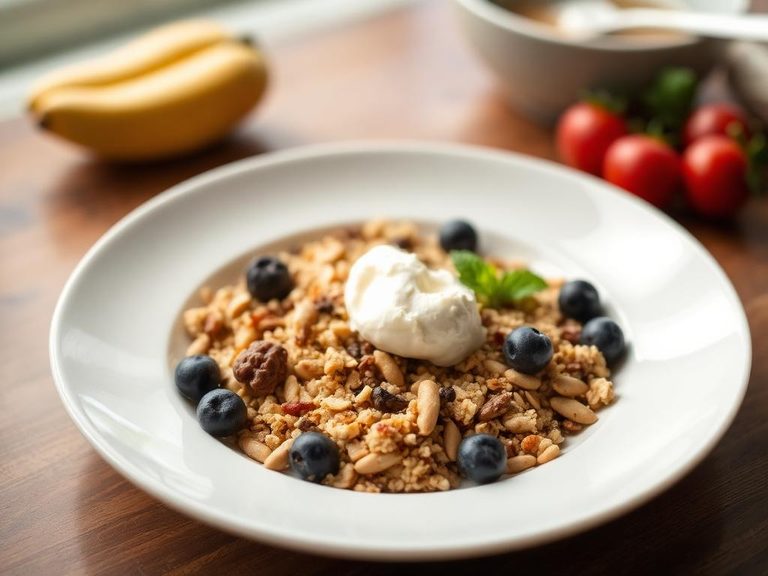
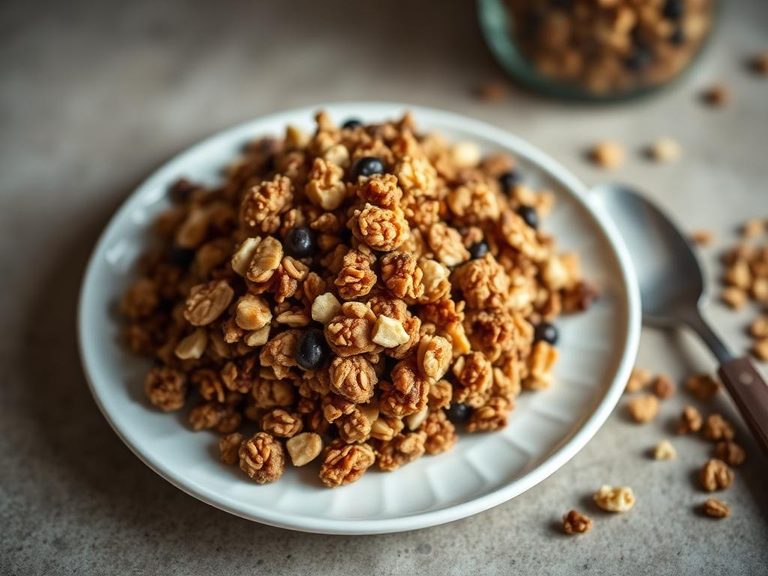
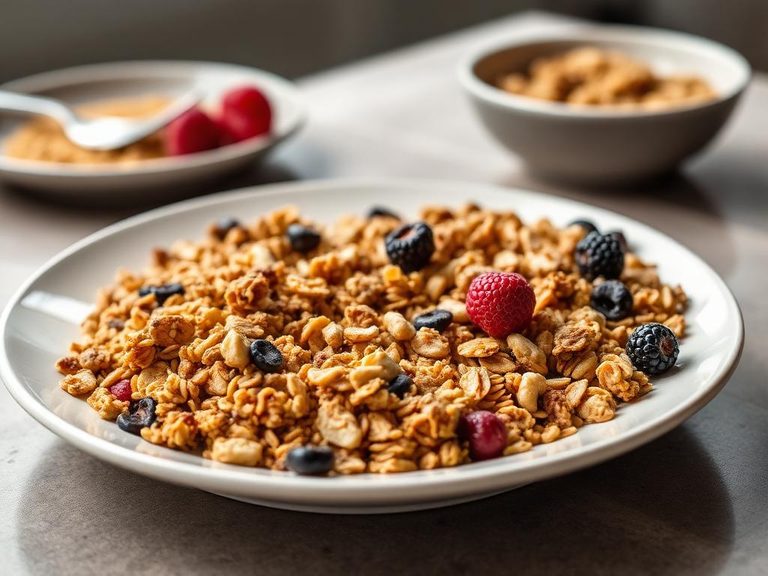
Muesli is a cold, ready-to-eat cereal originating from Switzerland, traditionally made from rolled oats, dried fruits, nuts, and seeds. It's often soaked overnight in milk, yogurt, or fruit juice, softening the grains for a creamy, porridge-like texture.
🍳 View the full Muesli recipe →
🍽️ Nutrition at a glance
Muesli is typically high in complex carbohydrates and dietary fiber, with moderate protein and healthy fats from nuts and seeds. A standard serving (about 3/4 cup dry) provides around 250-300 calories, along with key nutrients like iron, magnesium, and B vitamins.
Nutrition breakdown
| Calories | 600 kcal |
| Protein | 18 g |
| Carbs | 84 g |
| Fat | 22 g |
| Fiber | 12 g |
| Sugar | 24 g |
| Sodium | 15 mg |
| Iron | 6 mg |
| Magnesium | 200 mg |
| Phosphorus | 450 mg |
| Zinc | 5 mg |
| Thiamin (B1) | 0.6 mg |
| Folate | 80 µg |
| Vitamin E | 4 mg |
| Copper | 0.5 mg |
Per 1 cup (150 g) · estimated, varies by recipe
💡 What's interesting
Muesli was originally developed in the early 1900s by a Swiss physician as a health food, making it one of the earliest commercial 'health cereals.' Its customizable nature—allowing for endless combinations of grains, fruits, and toppings—has made it a global breakfast staple that adapts to local tastes and dietary preferences.
🍽️ Related dishes



AI estimate may be inaccurate · Terms