

Pork, cured, ham with natural juices, slice, bone-in, separable lean only, heated, pan-broil
Whole food · Pork Products
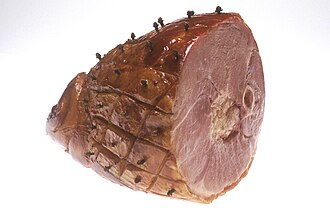
Photo: Wikipedia
This is a lean, bone-in cut of cured ham, pan-broiled to a savory, slightly caramelized finish. The texture is tender yet firm, with a concentrated pork flavor and a satisfying, meaty bite. It's a high-protein, zero-carb powerhouse, delivering nearly 28 grams of protein per 100 grams with minimal fat.
Calorie split: 74% protein · 0% carbs · 26% fat
↓ Full nutrition💚 Why it's loved
People love it for its deep, salty-sweet ham flavor and the satisfying texture that holds up well to pan-broiling. It's incredibly versatile, serving as a quick protein for breakfast, lunch, or dinner, and carries a comforting, classic taste that feels both hearty and refined.
⚠️ Watch-outs & how to enjoy it better
The primary concern is its high sodium content from the curing process, which can be problematic for those monitoring blood pressure or fluid retention. To counteract this, pair it with potassium-rich foods like leafy greens or avocado, and be mindful of portion sizes. Additionally, some cured meats contain nitrates; choosing brands without added nitrates or nitrites can be a healthier option.
Key benefits
- Excellent source of complete protein for muscle maintenance
- Virtually zero carbohydrates, making it ideal for low-carb and keto diets
- Very low in fat, especially saturated fat, compared to other pork cuts
- Provides essential minerals like selenium and phosphorus
- Quick-cooking and convenient for high-protein meals
🍽️ Popular dishes
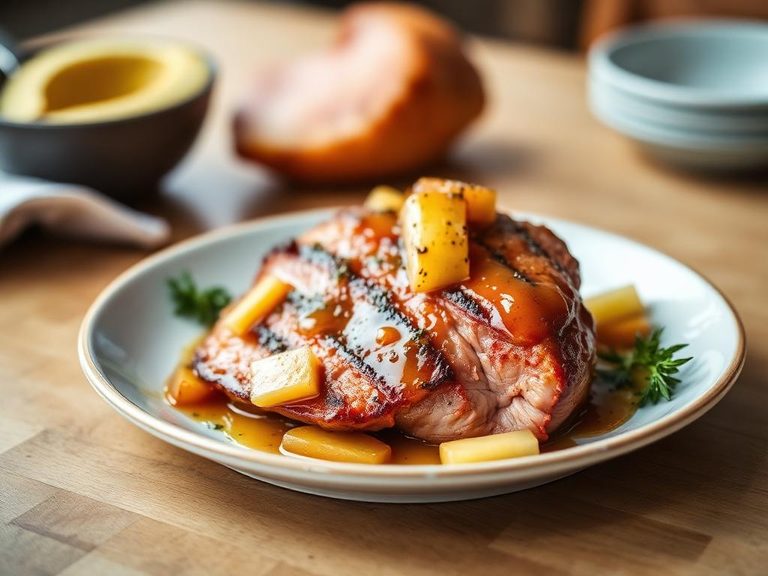
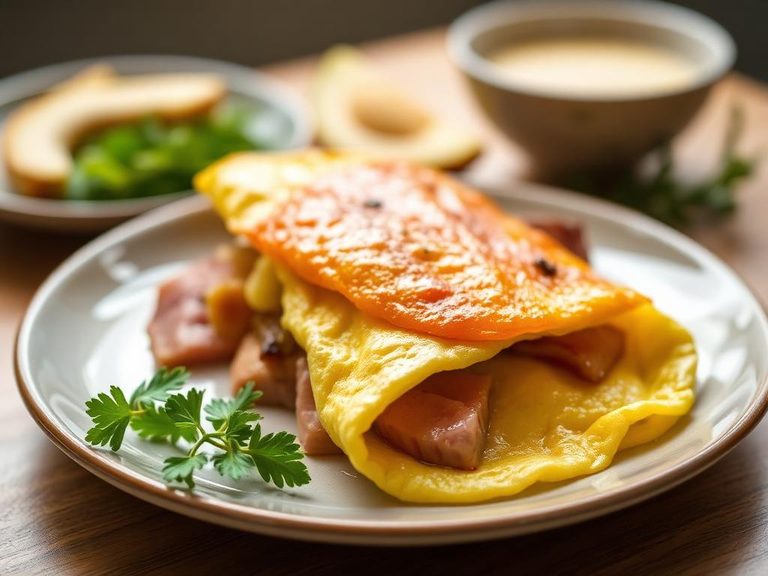
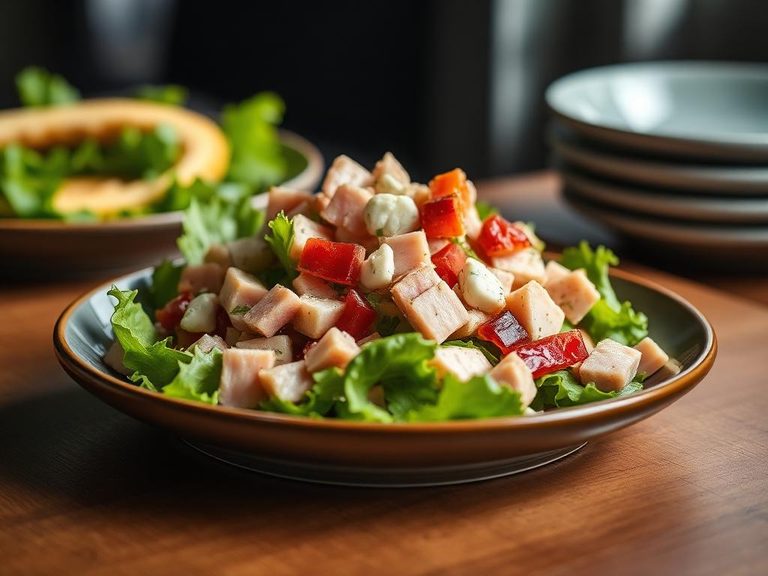


🌍 Where it's eaten
💡 Did you know?
The process of curing ham with salt and sugar dates back to ancient times as a preservation method, but the specific 'natural juices' designation in modern labeling often refers to the ham being cooked in its own moisture without added water or broth, which intensifies its flavor.
Full nutrition (USDA data · scales with serving)
| Water | 65.9 g |
| Energy | 150 kcal |
| Energy | 629 kj |
| Protein | 27.8 g |
| Total lipid (fat) | 4.4 g |
| Ash | 2.9 g |
| Carbohydrate, by difference | 0.00 g |
| Fiber, total dietary | 0.00 g |
| Total Sugars | 0.00 g |
| Sucrose | 0.00 g |
| Glucose | 0.00 g |
| Fructose | 0.00 g |
| Lactose | 0.00 g |
| Maltose | 0.00 g |
| Galactose | 0.00 g |
| Calcium, Ca | 12.0 mg |
| Iron, Fe | 1.2 mg |
| Magnesium, Mg | 23.0 mg |
| Phosphorus, P | 291 mg |
| Potassium, K | 358 mg |
| Sodium, Na | 835 mg |
| Zinc, Zn | 3.0 mg |
| Copper, Cu | 0.10 mg |
| Manganese, Mn | 0.02 mg |
| Selenium, Se | 51.0 ug |
| Vitamin C, total ascorbic acid | 0.00 mg |
| Thiamin | 0.31 mg |
| Riboflavin | 0.26 mg |
| Niacin | 9.0 mg |
| Pantothenic acid | 0.47 mg |
| Vitamin B-6 | 0.39 mg |
| Folate, total | 1.0 ug |
| Folic acid | 0.00 ug |
| Folate, food | 1.0 ug |
| Folate, DFE | 1.0 ug |
| Choline, total | 139 mg |
| Betaine | 1.8 mg |
| Vitamin B-12 | 0.60 ug |
| Vitamin B-12, added | 0.00 ug |
| Vitamin A, RAE | 13.0 ug |
| Retinol | 13.0 ug |
| Carotene, beta | 0.00 ug |
| Carotene, alpha | 0.00 ug |
| Cryptoxanthin, beta | 0.00 ug |
| Vitamin A, IU | 45.0 iu |
| Lycopene | 0.00 ug |
| Lutein + zeaxanthin | 0.00 ug |
| Vitamin E (alpha-tocopherol) | 0.23 mg |
| Vitamin E, added | 0.00 mg |
| Tocopherol, beta | 0.01 mg |
| Tocopherol, gamma | 0.03 mg |
| Tocopherol, delta | 0.00 mg |
| Tocotrienol, alpha | 0.05 mg |
| Tocotrienol, beta | 0.00 mg |
| Tocotrienol, gamma | 0.03 mg |
| Tocotrienol, delta | 0.00 mg |
| Vitamin K (phylloquinone) | 0.00 ug |
| Vitamin K (Dihydrophylloquinone) | 0.00 ug |
| Vitamin K (Menaquinone-4) | 5.5 ug |
| Alcohol, ethyl | 0.00 g |
| Caffeine | 0.00 mg |
| Theobromine | 0.00 mg |
Fat & fatty acid profile (per 100g)
| Fatty acids, total saturated | 1.1 g |
| SFA 4:0 | 0.00 g |
| SFA 6:0 | 0.00 g |
| SFA 8:0 | 0.00 g |
| SFA 10:0 | 0.00 g |
| SFA 12:0 | 0.00 g |
| SFA 14:0 | 0.04 g |
| SFA 15:0 | 0.00 g |
| SFA 16:0 | 0.71 g |
| SFA 17:0 | 0.01 g |
| SFA 18:0 | 0.33 g |
| SFA 20:0 | 0.00 g |
| SFA 22:0 | 0.01 g |
| Fatty acids, total monounsaturated | 1.4 g |
| MUFA 14:1 | 0.00 g |
| MUFA 15:1 | 0.00 g |
| MUFA 16:1 | 0.10 g |
| MUFA 17:1 | 0.00 g |
| MUFA 18:1 | 1.2 g |
| MUFA 18:1 c | 1.2 g |
| MUFA 20:1 | 0.02 g |
| MUFA 22:1 | 0.00 g |
| Fatty acids, total polyunsaturated | 0.58 g |
| PUFA 18:2 | 0.46 g |
| PUFA 18:2 n-6 c,c | 0.45 g |
| PUFA 18:3 | 0.01 g |
| PUFA 18:3 n-3 c,c,c (ALA) | 0.01 g |
| PUFA 18:3 n-6 c,c,c | 0.00 g |
| PUFA 18:4 | 0.00 g |
| PUFA 20:2 n-6 c,c | 0.01 g |
| PUFA 20:3 | 0.00 g |
| PUFA 20:4 | 0.09 g |
| PUFA 20:5 n-3 (EPA) | 0.00 g |
| PUFA 22:5 n-3 (DPA) | 0.00 g |
| PUFA 22:6 n-3 (DHA) | 0.00 g |
| Fatty acids, total trans | 0.02 g |
| Fatty acids, total trans-monoenoic | 0.01 g |
| TFA 18:1 t | 0.01 g |
| TFA 18:2 t,t | 0.01 g |
| Fatty acids, total trans-polyenoic | 0.01 g |
| Cholesterol | 80.0 mg |
Amino acid profile (per 100g)
| Tryptophan | 0.26 g |
| Threonine | 1.2 g |
| Isoleucine | 1.3 g |
| Leucine | 2.2 g |
| Lysine | 2.3 g |
| Methionine | 0.66 g |
| Cystine | 0.31 g |
| Phenylalanine | 1.1 g |
| Tyrosine | 0.90 g |
| Valine | 1.4 g |
| Arginine | 1.8 g |
| Histidine | 1.2 g |
| Alanine | 1.6 g |
| Aspartic acid | 2.4 g |
| Glutamic acid | 4.0 g |
| Glycine | 1.4 g |
| Proline | 1.2 g |
| Serine | 1.1 g |
| Hydroxyproline | 0.18 g |
FAQ
Is this ham pre-cooked?
Yes, cured ham is typically fully cooked during the curing and smoking process. Pan-broiling is primarily for heating it through and developing a flavorful crust.
Can I eat this ham if I'm on a low-sodium diet?
While it's low in fat and carbs, its sodium content is high. It's best to consume it in moderation and balance it with low-sodium foods throughout the day.
How do I get the best crust when pan-broiling?
Use a hot, dry skillet (cast iron is ideal) and cook the ham slices without moving them for 2-3 minutes per side until they develop a golden-brown, slightly crispy edge.
Nutrient density (calculated · NRF9.3)
Nutrient Rich Foods index: beneficial nutrients (protein, fiber, vitamins, minerals) minus saturated fat, added sugar & sodium, per 100 kcal.
NRF9.3 index — Fulgoni, Keast & Drewnowski, 2009. Computed from USDA nutrients.
Weight-loss friendliness (composite index)
Energy density 1.50 kcal/g · 74% calories from protein · 0.0 g fiber · 0.0 g sugar per 100 g.
Composite of energy density (Rolls et al., 1999), protein & fiber satiety, minus sugar. A calculated heuristic — ranks satiety-per-calorie, not a clinical measure.
Dietary load (calculated from USDA values)
Potential renal acid load. Positive = acid-forming, negative = alkaline-forming.
Sodium-to-potassium ratio: 2.33 (lower is better — aim for ≤ 1)
Sodium:potassium per WHO potassium guidance. Computed from USDA nutrients.