

Mushrooms, maitake, raw
Whole food · Vegetables and Vegetable Products

Photo: Wikipedia
Maitake, also known as the 'Hen of the Woods,' is a large, feathery mushroom with a ruffled, fan-like appearance and a deep, earthy, woodsy flavor. Its texture is pleasantly firm and slightly chewy when raw, becoming tender and meaty when cooked. Despite its substantial bite, it is remarkably low in calories, offering a rich source of fiber and B vitamins without significant fat.
Calorie split: 21% protein · 75% carbs · 5% fat
↓ Full nutrition💚 Why it's loved
People adore maitake for its intense, savory umami flavor that deepens beautifully when roasted or sautéed, adding a meaty, satisfying element to vegetarian dishes. Its unique, layered texture holds up well in various cooking methods, making it a versatile star in stir-fries, soups, and pasta.
⚠️ Watch-outs & how to enjoy it better
While generally well-tolerated, some individuals may experience mild digestive upset or gas due to the high fiber content. To counteract this, introduce it gradually into your diet and ensure adequate water intake. Those with mushroom allergies should avoid it entirely, and it's always wise to cook it thoroughly to break down any potential irritants.
Key benefits
- Excellent source of dietary fiber for digestive health
- Very low in calories and fat, suitable for weight management
- Provides B vitamins like niacin and riboflavin for energy metabolism
- Rich in antioxidants, including ergothioneine
- Contains beta-glucans, which may support immune function
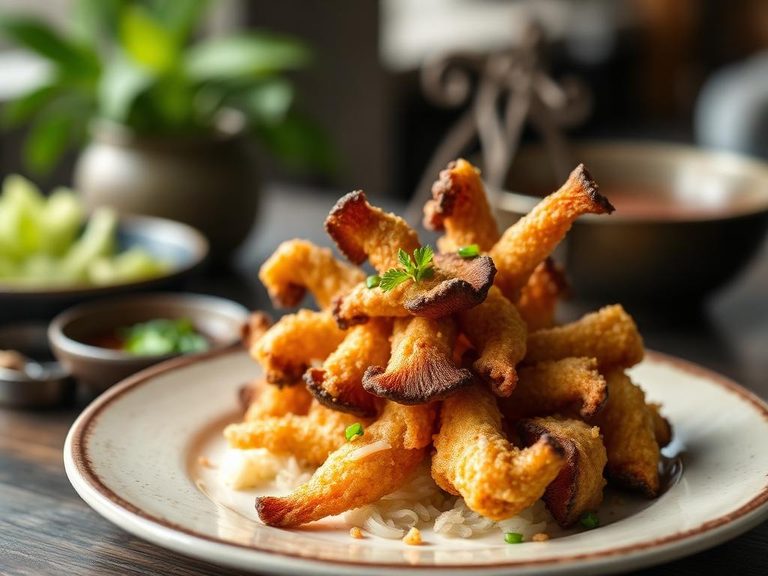
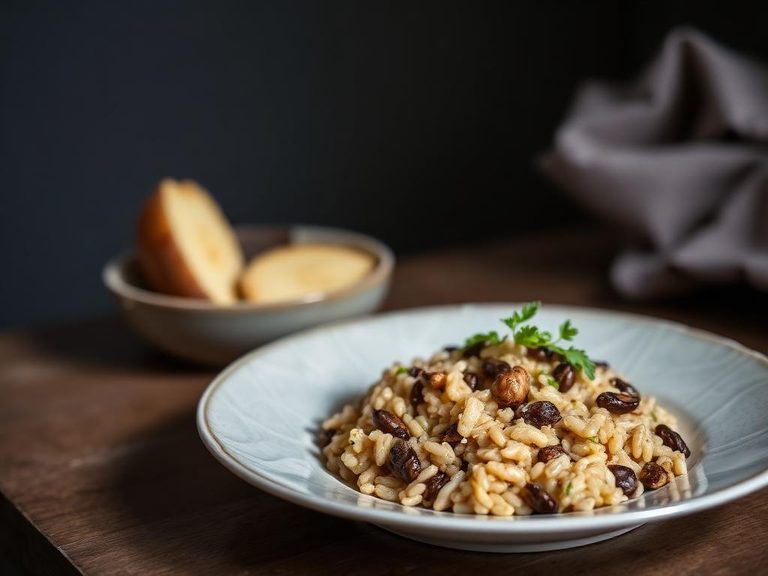
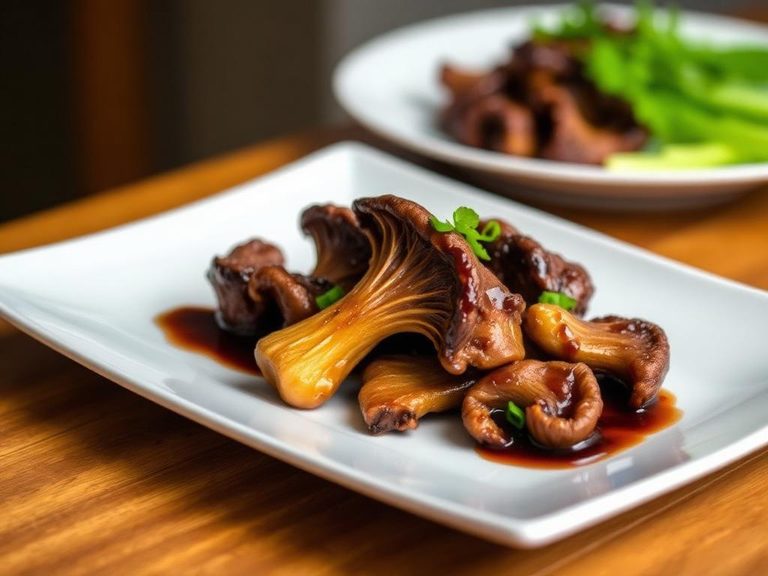
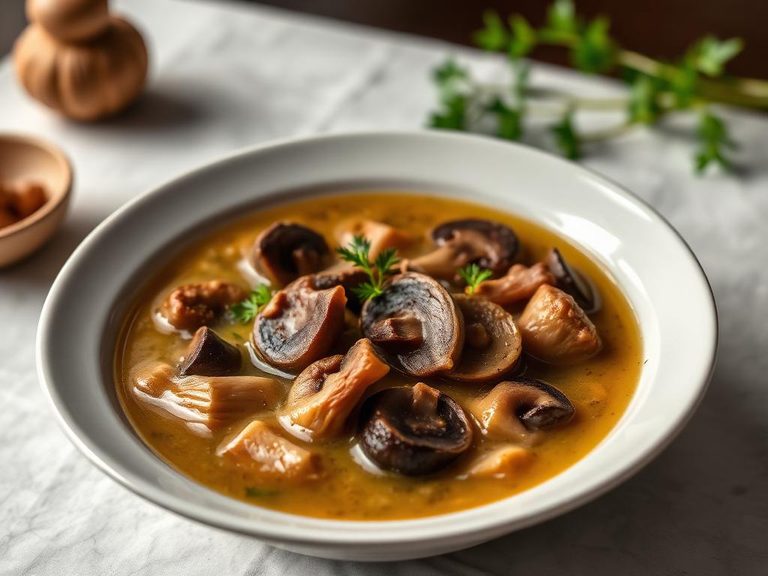
🍽️ Popular dishes
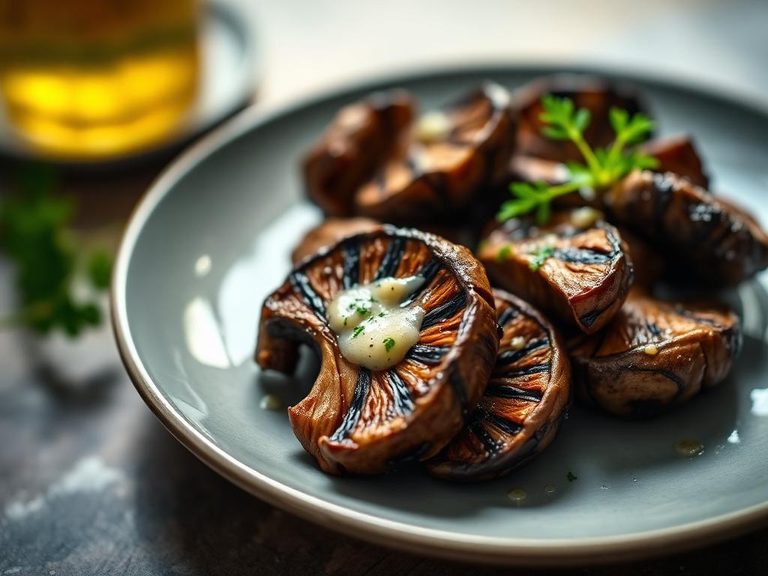
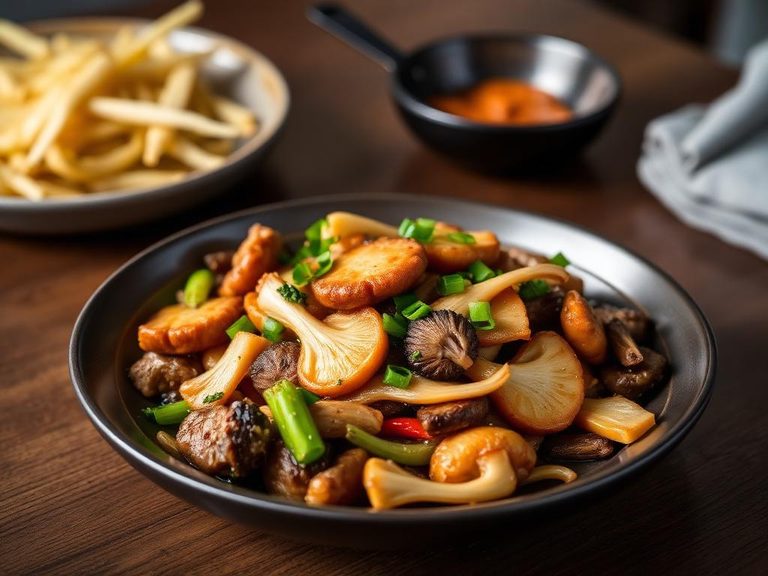
🌍 Where it's eaten
💡 Did you know?
The name 'maitake' means 'dancing mushroom' in Japanese, as people supposedly danced with joy upon finding it in the wild due to its rarity and value.
Full nutrition (USDA data · scales with serving)
| Water | 90.4 g |
| Energy | 31.0 kcal |
| Energy | 130 kj |
| Protein | 1.9 g |
| Total lipid (fat) | 0.19 g |
| Ash | 0.53 g |
| Carbohydrate, by difference | 7.0 g |
| Fiber, total dietary | 2.7 g |
| Total Sugars | 2.1 g |
| Sucrose | 0.00 g |
| Glucose | 1.7 g |
| Fructose | 0.00 g |
| Lactose | 0.33 g |
| Maltose | 0.00 g |
| Galactose | 0.00 g |
| Starch | 0.00 g |
| Calcium, Ca | 1.0 mg |
| Iron, Fe | 0.30 mg |
| Magnesium, Mg | 10.0 mg |
| Phosphorus, P | 74.0 mg |
| Potassium, K | 204 mg |
| Sodium, Na | 1.0 mg |
| Zinc, Zn | 0.75 mg |
| Copper, Cu | 0.25 mg |
| Manganese, Mn | 0.06 mg |
| Selenium, Se | 2.2 ug |
| Vitamin C, total ascorbic acid | 0.00 mg |
| Thiamin | 0.15 mg |
| Riboflavin | 0.24 mg |
| Niacin | 6.6 mg |
| Pantothenic acid | 0.27 mg |
| Vitamin B-6 | 0.06 mg |
| Folate, total | 21.0 ug |
| Folic acid | 0.00 ug |
| Folate, food | 21.0 ug |
| Folate, DFE | 21.0 ug |
| Choline, total | 51.1 mg |
| Vitamin B-12 | 0.00 ug |
| Vitamin B-12, added | 0.00 ug |
| Vitamin A, RAE | 0.00 ug |
| Retinol | 0.00 ug |
| Carotene, beta | 0.00 ug |
| Carotene, alpha | 0.00 ug |
| Cryptoxanthin, beta | 0.00 ug |
| Vitamin A, IU | 0.00 iu |
| Lycopene | 0.00 ug |
| Lutein + zeaxanthin | 0.00 ug |
| Vitamin E (alpha-tocopherol) | 0.01 mg |
| Vitamin E, added | 0.00 mg |
| Tocopherol, beta | 0.00 mg |
| Tocopherol, gamma | 0.00 mg |
| Tocopherol, delta | 0.00 mg |
| Tocotrienol, alpha | 0.00 mg |
| Tocotrienol, beta | 0.00 mg |
| Tocotrienol, gamma | 0.00 mg |
| Tocotrienol, delta | 0.00 mg |
| Vitamin D (D2 + D3), International Units | 1123 iu |
| Vitamin D (D2 + D3) | 28.1 ug |
| Vitamin D2 (ergocalciferol) | 28.1 ug |
| Vitamin D3 (cholecalciferol) | 0.00 ug |
| Vitamin K (phylloquinone) | 0.00 ug |
| Vitamin K (Dihydrophylloquinone) | 0.00 ug |
| Vitamin K (Menaquinone-4) | 0.00 ug |
| Alcohol, ethyl | 0.00 g |
| Caffeine | 0.00 mg |
| Theobromine | 0.00 mg |
Fat & fatty acid profile (per 100g)
| Fatty acids, total saturated | 0.03 g |
| SFA 4:0 | 0.00 g |
| SFA 6:0 | 0.00 g |
| SFA 8:0 | 0.00 g |
| SFA 10:0 | 0.00 g |
| SFA 12:0 | 0.00 g |
| SFA 13:0 | 0.00 g |
| SFA 14:0 | 0.00 g |
| SFA 15:0 | 0.00 g |
| SFA 16:0 | 0.03 g |
| SFA 17:0 | 0.00 g |
| SFA 18:0 | 0.00 g |
| SFA 20:0 | 0.00 g |
| SFA 22:0 | 0.00 g |
| SFA 24:0 | 0.00 g |
| Fatty acids, total monounsaturated | 0.03 g |
| MUFA 14:1 | 0.00 g |
| MUFA 15:1 | 0.00 g |
| MUFA 16:1 | 0.00 g |
| MUFA 17:1 | 0.00 g |
| MUFA 18:1 | 0.03 g |
| MUFA 20:1 | 0.00 g |
| MUFA 22:1 | 0.00 g |
| MUFA 24:1 c | 0.00 g |
| Fatty acids, total polyunsaturated | 0.09 g |
| PUFA 18:2 | 0.09 g |
| PUFA 18:3 | 0.00 g |
| PUFA 18:4 | 0.00 g |
| PUFA 20:2 n-6 c,c | 0.00 g |
| PUFA 20:3 | 0.00 g |
| PUFA 20:4 | 0.00 g |
| PUFA 20:5 n-3 (EPA) | 0.00 g |
| PUFA 21:5 | 0.00 g |
| PUFA 22:4 | 0.00 g |
| PUFA 22:5 n-3 (DPA) | 0.00 g |
| PUFA 22:6 n-3 (DHA) | 0.00 g |
| Fatty acids, total trans | 0.00 g |
| Cholesterol | 0.00 mg |
| Stigmasterol | 0.00 mg |
| Campesterol | 2.0 mg |
| Beta-sitosterol | 0.00 mg |
Amino acid profile (per 100g)
| Tryptophan | 0.04 g |
| Threonine | 0.10 g |
| Isoleucine | 0.06 g |
| Leucine | 0.08 g |
| Lysine | 0.09 g |
| Methionine | 0.01 g |
| Cystine | 0.03 g |
| Phenylalanine | 0.06 g |
| Tyrosine | 0.07 g |
| Valine | 0.10 g |
| Arginine | 0.10 g |
| Histidine | 0.04 g |
| Alanine | 0.12 g |
| Aspartic acid | 0.20 g |
| Glutamic acid | 0.26 g |
| Glycine | 0.09 g |
| Proline | 0.06 g |
| Serine | 0.10 g |
FAQ
What does maitake taste like?
Maitake has a rich, earthy, and woodsy flavor with a distinct umami quality. It's often described as having a slightly peppery or spicy note when raw, which mellows into a savory, meaty taste when cooked.
How should I store fresh maitake mushrooms?
Store fresh maitake in a paper bag in the refrigerator to absorb excess moisture. They typically last for about 5-7 days. Avoid plastic bags, which can make them slimy.
Can I eat maitake raw?
While maitake can be eaten raw, it is often tough and fibrous. Cooking it brings out its flavor and improves its texture, making it more palatable and easier to digest.
Nutrient density (calculated · NRF9.3)
Nutrient Rich Foods index: beneficial nutrients (protein, fiber, vitamins, minerals) minus saturated fat, added sugar & sodium, per 100 kcal.
NRF9.3 index — Fulgoni, Keast & Drewnowski, 2009. Computed from USDA nutrients.
Weight-loss friendliness (composite index)
Energy density 0.31 kcal/g · 25% calories from protein · 2.7 g fiber · 2.1 g sugar per 100 g.
Composite of energy density (Rolls et al., 1999), protein & fiber satiety, minus sugar. A calculated heuristic — ranks satiety-per-calorie, not a clinical measure.
Dietary load (calculated from USDA values)
Potential renal acid load. Positive = acid-forming, negative = alkaline-forming.
Sodium-to-potassium ratio: 0.00 (lower is better — aim for ≤ 1)
Sodium:potassium per WHO potassium guidance. Computed from USDA nutrients.