

Fast foods, potato, french fried in vegetable oil
Whole food · Fast Foods
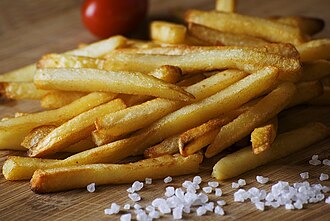
Photo: Wikipedia
These are potato strips, typically cut from russet or other starchy varieties, deep-fried in vegetable oil until they achieve a crisp, golden exterior and a soft, fluffy interior. The frying process creates a satisfying contrast in texture, with a savory, salty flavor profile that is often enhanced by seasonings. Nutritionally, they are energy-dense, primarily providing carbohydrates and fats, with a modest amount of dietary fiber from the potato.
Calorie split: 4% protein · 53% carbs · 42% fat
↓ Full nutrition💚 Why it's loved
People love them for the irresistible combination of a salty, crispy exterior and a warm, soft interior, a texture contrast that is deeply satisfying. They are a cultural staple, serving as a beloved side dish, snack, or vehicle for countless sauces and seasonings across the globe.
⚠️ Watch-outs & how to enjoy it better
Their high glycemic load can cause rapid blood-sugar spikes, and the deep-frying process adds significant calories and potentially inflammatory fats. To counteract this, pair them with a source of protein (like grilled chicken) or healthy fat (like avocado) to slow digestion, practice strict portion control, and opt for home-baked or air-fried versions when possible.
Key benefits
- Provides quick energy from carbohydrates
- Contains potassium from the potato
- Source of dietary fiber, especially with skin
- Highly palatable and satisfying comfort food
- Versatile base for many flavor pairings
🍽️ Popular dishes
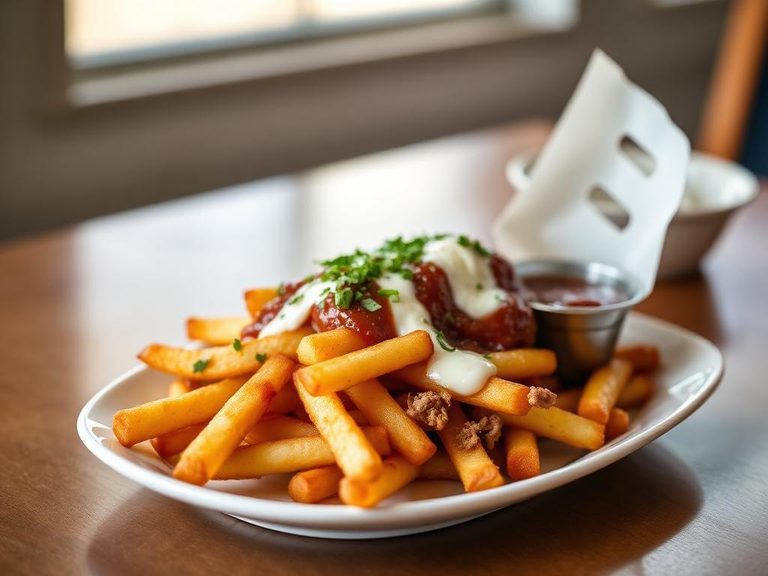
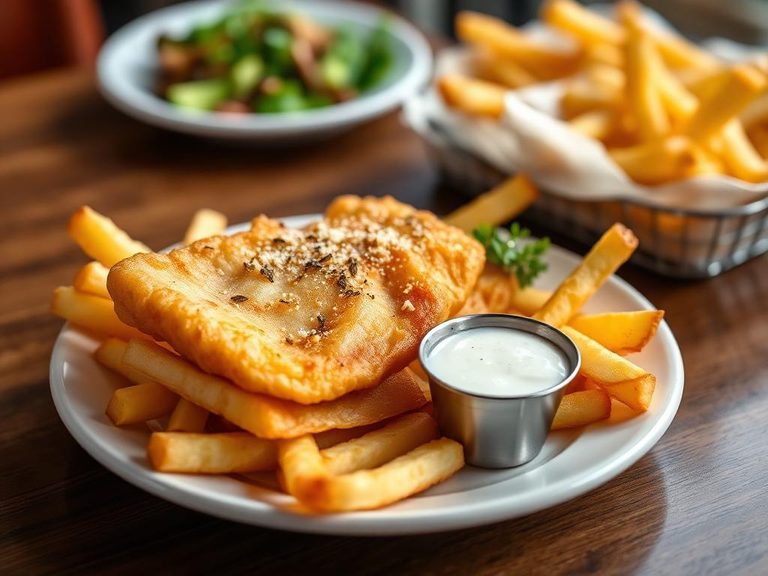
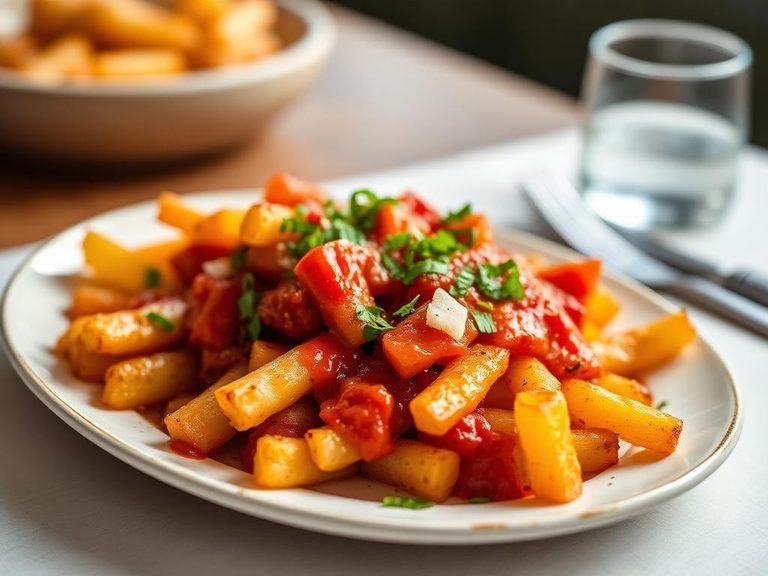
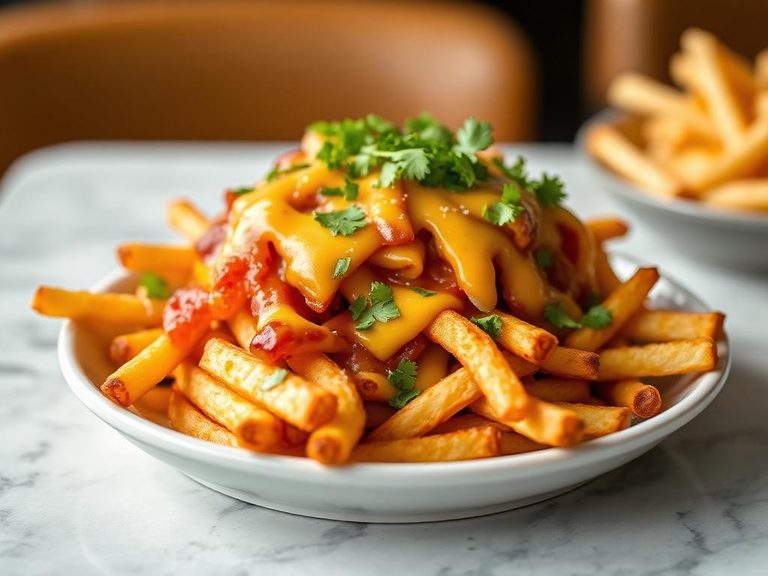
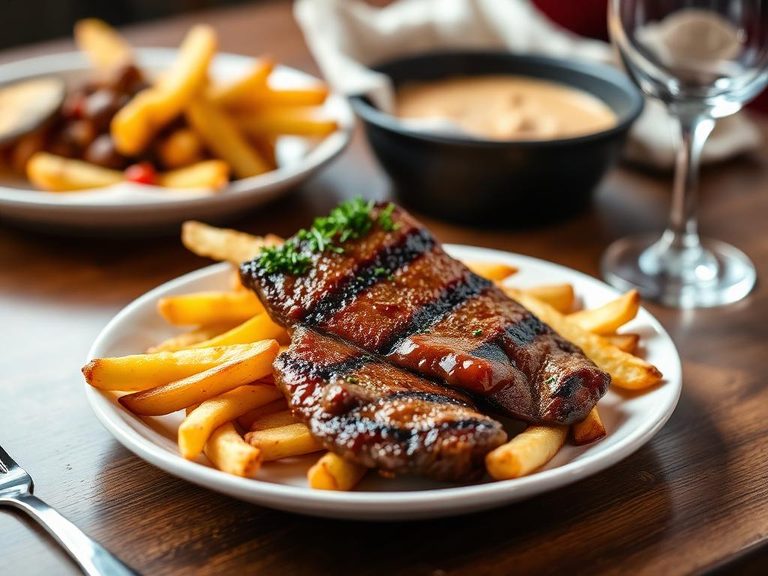
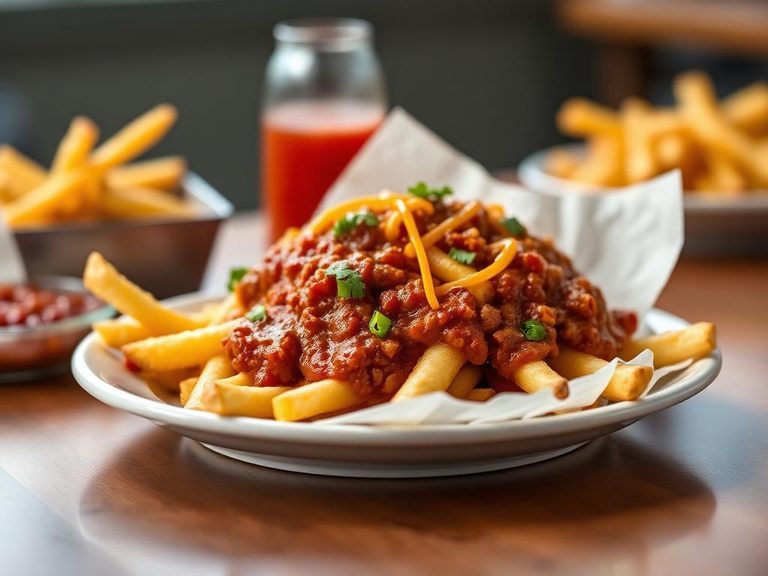
🌍 Where it's eaten
💡 Did you know?
The debate over whether the first 'french fry' was invented in France or Belgium is so intense that in 2011, the Belgian government even launched a diplomatic campaign to claim the invention.
Full nutrition (USDA data · scales with serving)
| Water | 38.5 g |
| Energy | 312 kcal |
| Energy | 1305 kj |
| Protein | 3.4 g |
| Total lipid (fat) | 14.7 g |
| Ash | 1.9 g |
| Carbohydrate, by difference | 41.4 g |
| Fiber, total dietary | 3.8 g |
| Total Sugars | 0.30 g |
| Calcium, Ca | 18.0 mg |
| Iron, Fe | 0.81 mg |
| Magnesium, Mg | 35.0 mg |
| Phosphorus, P | 125 mg |
| Potassium, K | 579 mg |
| Sodium, Na | 210 mg |
| Zinc, Zn | 0.50 mg |
| Copper, Cu | 0.12 mg |
| Manganese, Mn | 0.25 mg |
| Selenium, Se | 0.90 ug |
| Vitamin C, total ascorbic acid | 4.7 mg |
| Thiamin | 0.17 mg |
| Riboflavin | 0.04 mg |
| Niacin | 3.0 mg |
| Pantothenic acid | 0.58 mg |
| Vitamin B-6 | 0.37 mg |
| Folate, total | 30.0 ug |
| Folic acid | 0.00 ug |
| Folate, food | 30.0 ug |
| Folate, DFE | 30.0 ug |
| Choline, total | 36.8 mg |
| Betaine | 0.40 mg |
| Vitamin B-12 | 0.00 ug |
| Vitamin B-12, added | 0.00 ug |
| Vitamin A, RAE | 0.00 ug |
| Retinol | 0.00 ug |
| Carotene, beta | 0.00 ug |
| Carotene, alpha | 0.00 ug |
| Cryptoxanthin, beta | 0.00 ug |
| Vitamin A, IU | 0.00 iu |
| Lycopene | 0.00 ug |
| Lutein + zeaxanthin | 27.0 ug |
| Vitamin E (alpha-tocopherol) | 1.7 mg |
| Vitamin E, added | 0.00 mg |
| Tocopherol, beta | 0.05 mg |
| Tocopherol, gamma | 3.6 mg |
| Tocopherol, delta | 0.90 mg |
| Tocotrienol, alpha | 0.02 mg |
| Tocotrienol, beta | 0.09 mg |
| Tocotrienol, gamma | 0.03 mg |
| Tocotrienol, delta | 0.03 mg |
| Vitamin D (D2 + D3), International Units | 0.00 iu |
| Vitamin D (D2 + D3) | 0.00 ug |
| Vitamin K (phylloquinone) | 11.2 ug |
| Vitamin K (Dihydrophylloquinone) | 42.8 ug |
| Alcohol, ethyl | 0.00 g |
| Caffeine | 0.00 mg |
| Theobromine | 0.00 mg |
Fat & fatty acid profile (per 100g)
| Fatty acids, total saturated | 2.3 g |
| SFA 4:0 | 0.08 g |
| SFA 6:0 | 0.00 g |
| SFA 8:0 | 0.01 g |
| SFA 10:0 | 0.01 g |
| SFA 12:0 | 0.00 g |
| SFA 14:0 | 0.02 g |
| SFA 15:0 | 0.01 g |
| SFA 16:0 | 1.2 g |
| SFA 17:0 | 0.01 g |
| SFA 18:0 | 0.84 g |
| SFA 20:0 | 0.07 g |
| SFA 22:0 | 0.04 g |
| SFA 24:0 | 0.02 g |
| Fatty acids, total monounsaturated | 6.0 g |
| MUFA 14:1 | 0.00 g |
| MUFA 15:1 | 0.00 g |
| MUFA 16:1 | 0.03 g |
| MUFA 16:1 c | 0.03 g |
| MUFA 17:1 | 0.01 g |
| MUFA 18:1 | 5.8 g |
| MUFA 18:1 c | 5.8 g |
| MUFA 20:1 | 0.11 g |
| MUFA 22:1 | 0.00 g |
| MUFA 22:1 c | 0.00 g |
| MUFA 24:1 c | 0.00 g |
| Fatty acids, total polyunsaturated | 5.4 g |
| PUFA 18:2 | 4.9 g |
| PUFA 18:2 n-6 c,c | 4.9 g |
| PUFA 18:2 CLAs | 0.02 g |
| PUFA 18:3 | 0.44 g |
| PUFA 18:3 n-3 c,c,c (ALA) | 0.41 g |
| PUFA 18:3 n-6 c,c,c | 0.03 g |
| PUFA 18:4 | 0.00 g |
| PUFA 20:2 n-6 c,c | 0.01 g |
| PUFA 20:3 | 0.00 g |
| PUFA 20:3 n-3 | 0.00 g |
| PUFA 20:3 n-6 | 0.00 g |
| PUFA 20:4 | 0.00 g |
| PUFA 20:5 n-3 (EPA) | 0.00 g |
| PUFA 22:4 | 0.00 g |
| PUFA 22:5 n-3 (DPA) | 0.00 g |
| PUFA 22:6 n-3 (DHA) | 0.00 g |
| Fatty acids, total trans | 0.06 g |
| Fatty acids, total trans-monoenoic | 0.03 g |
| TFA 16:1 t | 0.00 g |
| TFA 18:1 t | 0.03 g |
| TFA 22:1 t | 0.00 g |
| TFA 18:2 t not further defined | 0.03 g |
| Fatty acids, total trans-polyenoic | 0.03 g |
| Cholesterol | 0.00 mg |
| Phytosterols | 0.00 mg |
Amino acid profile (per 100g)
Estimated from Fast foods, english muffin, with egg, cheese, and sausage — USDA does not publish this profile for Fast foods.
| Tryptophan | 0.16 g |
| Threonine | 0.52 g |
| Isoleucine | 0.54 g |
| Leucine | 0.98 g |
| Lysine | 0.75 g |
| Methionine | 0.29 g |
| Cystine | 0.20 g |
| Phenylalanine | 0.59 g |
| Tyrosine | 0.41 g |
| Valine | 0.65 g |
| Arginine | 0.65 g |
| Histidine | 0.33 g |
| Alanine | 0.60 g |
| Aspartic acid | 1.1 g |
| Glutamic acid | 2.5 g |
| Glycine | 0.54 g |
| Proline | 0.90 g |
| Serine | 0.70 g |
FAQ
Why do restaurant fries often taste better than homemade ones?
Restaurants often use a two-step frying process: first at a lower temperature to cook the interior, then at a higher temperature to crisp the exterior. They also use specific potato varieties (like Russet) and may add a small amount of sugar or vinegar to the blanching water to enhance color and texture.
Are sweet potato fries healthier?
Sweet potato fries offer more vitamin A and a slightly lower glycemic index, but when deep-fried in the same oil, their calorie and fat content is comparable to regular fries. The health benefit is marginal unless baked or air-fried.
What is the best oil for frying potatoes at home?
Oils with a high smoke point and neutral flavor are ideal. Peanut oil, canola oil, or sunflower oil are excellent choices. They allow for the high temperatures needed for crispiness without imparting an off-flavor.
Nutrient density (calculated · NRF9.3)
Nutrient Rich Foods index: beneficial nutrients (protein, fiber, vitamins, minerals) minus saturated fat, added sugar & sodium, per 100 kcal.
NRF9.3 index — Fulgoni, Keast & Drewnowski, 2009. Computed from USDA nutrients.
Weight-loss friendliness (composite index)
Energy density 3.12 kcal/g · 4% calories from protein · 3.8 g fiber · 0.3 g sugar per 100 g.
Composite of energy density (Rolls et al., 1999), protein & fiber satiety, minus sugar. A calculated heuristic — ranks satiety-per-calorie, not a clinical measure.
Dietary load (calculated from USDA values)
Potential renal acid load. Positive = acid-forming, negative = alkaline-forming.
Sodium-to-potassium ratio: 0.36 (lower is better — aim for ≤ 1)
Sodium:potassium per WHO potassium guidance. Computed from USDA nutrients.