

Chicken, broilers or fryers, thigh, meat and skin, raw
Whole food · Poultry Products

Photo: Wikipedia
A raw chicken thigh with skin is a rich, flavorful cut known for its deep, savory taste and tender, juicy texture when cooked. Nutritionally, it's a powerhouse of protein and healthy fats, with virtually no carbohydrates, making it a staple for high-protein, low-carb diets.
Calorie split: 31% protein · 0% carbs · 69% fat
↓ Full nutrition💚 Why it's loved
People adore chicken thighs for their forgiving nature in cooking—they stay moist and flavorful even with high-heat methods like grilling or roasting, unlike leaner breast meat. The skin crisps up beautifully, adding a satisfying texture and a depth of umami that makes them a universal comfort food.
⚠️ Watch-outs & how to enjoy it better
The skin and dark meat are higher in saturated fat and calories compared to skinless breast, which may be a concern for those monitoring fat intake or heart health. To counteract this, you can remove the skin before or after cooking to significantly reduce fat content, or balance the meal with a large portion of non-starchy vegetables and choose grilling or baking over frying.
Key benefits
- Excellent source of complete protein for muscle maintenance.
- Rich in iron and zinc, essential minerals for immune function.
- Contains B vitamins, especially niacin and B6, for energy metabolism.
- The skin provides flavorful fats that aid in absorbing fat-soluble vitamins.
🍽️ Popular dishes
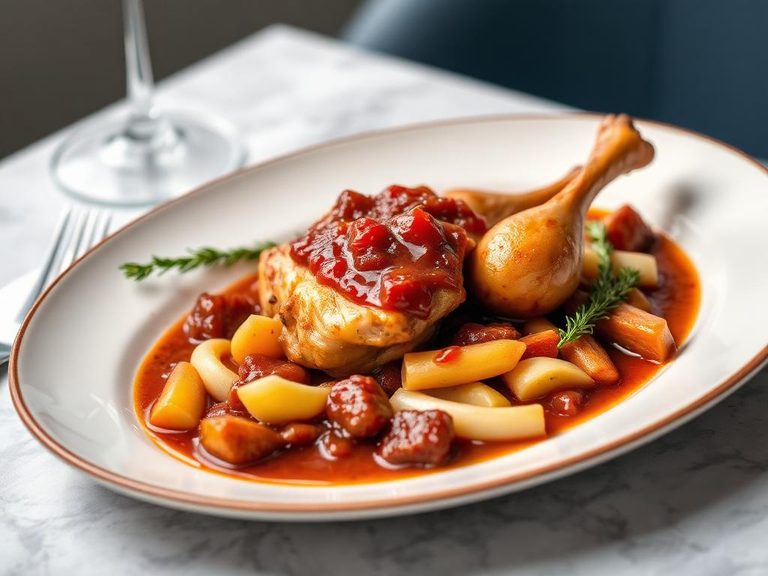
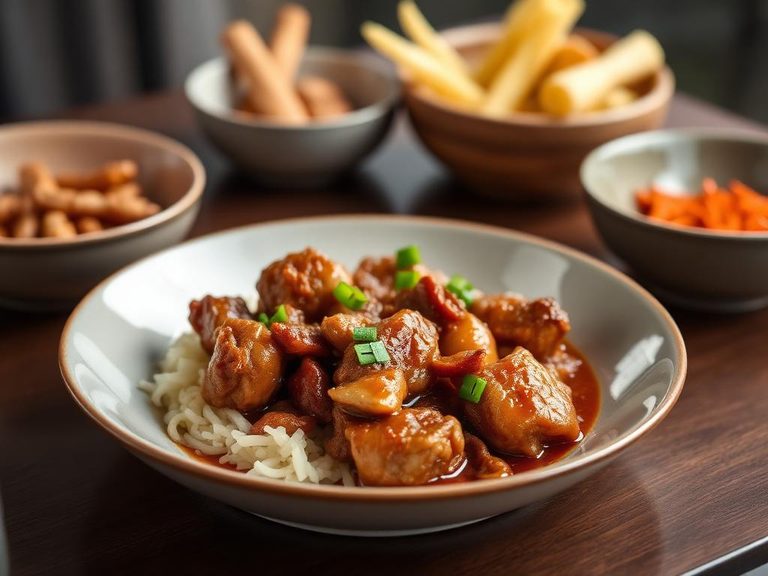

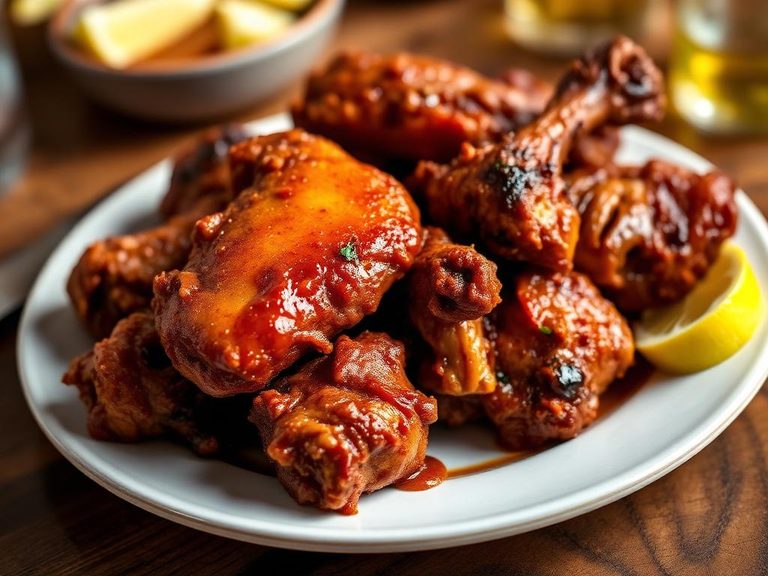
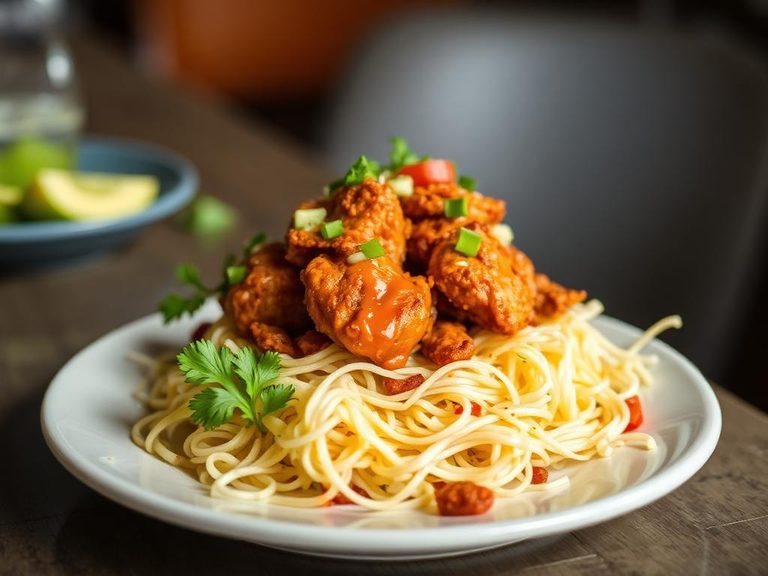

🌍 Where it's eaten
💡 Did you know?
Chicken thighs contain more myoglobin than breast meat, which is why they are darker and have a richer, more 'meaty' flavor.
Full nutrition (USDA data · scales with serving)
| Water | 66.5 g |
| Energy | 221 kcal |
| Energy | 926 kj |
| Protein | 16.5 g |
| Total lipid (fat) | 16.6 g |
| Ash | 0.81 g |
| Carbohydrate, by difference | 0.25 g |
| Fiber, total dietary | 0.00 g |
| Total Sugars | 0.00 g |
| Calcium, Ca | 7.0 mg |
| Iron, Fe | 0.68 mg |
| Magnesium, Mg | 18.0 mg |
| Phosphorus, P | 157 mg |
| Potassium, K | 204 mg |
| Sodium, Na | 81.0 mg |
| Zinc, Zn | 1.3 mg |
| Copper, Cu | 0.05 mg |
| Manganese, Mn | 0.01 mg |
| Selenium, Se | 18.9 ug |
| Vitamin C, total ascorbic acid | 0.00 mg |
| Thiamin | 0.07 mg |
| Riboflavin | 0.14 mg |
| Niacin | 4.6 mg |
| Pantothenic acid | 0.19 mg |
| Vitamin B-6 | 0.35 mg |
| Folate, total | 3.0 ug |
| Folic acid | 0.00 ug |
| Folate, food | 3.0 ug |
| Folate, DFE | 3.0 ug |
| Choline, total | 45.7 mg |
| Betaine | 9.8 mg |
| Vitamin B-12 | 0.62 ug |
| Vitamin B-12, added | 0.00 ug |
| Vitamin A, RAE | 23.0 ug |
| Retinol | 23.0 ug |
| Carotene, beta | 0.00 ug |
| Carotene, alpha | 0.00 ug |
| Cryptoxanthin, beta | 0.00 ug |
| Vitamin A, IU | 78.0 iu |
| Lycopene | 0.00 ug |
| Lutein + zeaxanthin | 108 ug |
| Vitamin E (alpha-tocopherol) | 0.21 mg |
| Vitamin E, added | 0.00 mg |
| Tocopherol, beta | 0.00 mg |
| Tocopherol, gamma | 0.09 mg |
| Tocopherol, delta | 0.00 mg |
| Tocotrienol, alpha | 0.02 mg |
| Tocotrienol, beta | 0.02 mg |
| Tocotrienol, gamma | 0.03 mg |
| Tocotrienol, delta | 0.00 mg |
| Vitamin D (D2 + D3), International Units | 3.0 iu |
| Vitamin D (D2 + D3) | 0.10 ug |
| Vitamin D3 (cholecalciferol) | 0.10 ug |
| Vitamin K (phylloquinone) | 2.1 ug |
| Alcohol, ethyl | 0.00 g |
| Caffeine | 0.00 mg |
| Theobromine | 0.00 mg |
Fat & fatty acid profile (per 100g)
| Fatty acids, total saturated | 4.5 g |
| SFA 4:0 | 0.00 g |
| SFA 6:0 | 0.00 g |
| SFA 8:0 | 0.00 g |
| SFA 10:0 | 0.00 g |
| SFA 12:0 | 0.01 g |
| SFA 14:0 | 0.09 g |
| SFA 15:0 | 0.01 g |
| SFA 16:0 | 3.5 g |
| SFA 17:0 | 0.02 g |
| SFA 18:0 | 0.85 g |
| SFA 20:0 | 0.01 g |
| SFA 22:0 | 0.01 g |
| SFA 24:0 | 0.00 g |
| Fatty acids, total monounsaturated | 6.9 g |
| MUFA 14:1 | 0.03 g |
| MUFA 15:1 | 0.00 g |
| MUFA 16:1 | 0.98 g |
| MUFA 16:1 c | 0.97 g |
| MUFA 17:1 | 0.01 g |
| MUFA 18:1 | 5.8 g |
| MUFA 18:1 c | 5.8 g |
| MUFA 20:1 | 0.08 g |
| MUFA 22:1 | 0.00 g |
| MUFA 22:1 c | 0.00 g |
| MUFA 24:1 c | 0.00 g |
| Fatty acids, total polyunsaturated | 3.5 g |
| PUFA 18:2 | 3.1 g |
| PUFA 18:2 n-6 c,c | 3.0 g |
| PUFA 18:2 CLAs | 0.02 g |
| PUFA 18:3 | 0.16 g |
| PUFA 18:3 n-3 c,c,c (ALA) | 0.14 g |
| PUFA 18:3 n-6 c,c,c | 0.02 g |
| PUFA 18:4 | 0.00 g |
| PUFA 20:2 n-6 c,c | 0.02 g |
| PUFA 20:3 | 0.04 g |
| PUFA 20:3 n-3 | 0.00 g |
| PUFA 20:3 n-6 | 0.03 g |
| PUFA 20:4 | 0.10 g |
| PUFA 20:5 n-3 (EPA) | 0.00 g |
| PUFA 22:4 | 0.02 g |
| PUFA 22:5 n-3 (DPA) | 0.01 g |
| PUFA 22:6 n-3 (DHA) | 0.01 g |
| Fatty acids, total trans | 0.09 g |
| Fatty acids, total trans-monoenoic | 0.06 g |
| TFA 16:1 t | 0.01 g |
| TFA 18:1 t | 0.05 g |
| TFA 22:1 t | 0.00 g |
| TFA 18:2 t not further defined | 0.03 g |
| Fatty acids, total trans-polyenoic | 0.03 g |
| Cholesterol | 98.0 mg |
Amino acid profile (per 100g)
| Tryptophan | 0.17 g |
| Threonine | 0.73 g |
| Isoleucine | 0.73 g |
| Leucine | 1.3 g |
| Lysine | 1.4 g |
| Methionine | 0.44 g |
| Cystine | 0.18 g |
| Phenylalanine | 0.63 g |
| Tyrosine | 0.58 g |
| Valine | 0.76 g |
| Arginine | 1.2 g |
| Histidine | 0.47 g |
| Alanine | 1.0 g |
| Aspartic acid | 1.6 g |
| Glutamic acid | 2.6 g |
| Glycine | 1.0 g |
| Proline | 0.77 g |
| Serine | 0.68 g |
FAQ
What's the difference between a chicken thigh and a drumstick?
A chicken thigh is the upper part of the leg, connecting to the body, and contains both the femur bone and a ball joint. A drumstick is the lower part, below the 'knee' joint, and is a single bone with meat attached.
Why are chicken thighs often cheaper than breasts?
Historically, dark meat was less popular in Western markets, leading to lower demand and price. Its higher fat content also made it less favored during low-fat diet trends, though its popularity has surged recently due to its flavor and versatility.
How can I tell when a chicken thigh is cooked through?
The safest method is using a meat thermometer inserted into the thickest part, avoiding bone. It should read 165°F (74°C). Visually, the juices should run clear, and the meat should pull away from the bone easily.
Nutrient density (calculated · NRF9.3)
Nutrient Rich Foods index: beneficial nutrients (protein, fiber, vitamins, minerals) minus saturated fat, added sugar & sodium, per 100 kcal.
NRF9.3 index — Fulgoni, Keast & Drewnowski, 2009. Computed from USDA nutrients.
Weight-loss friendliness (composite index)
Energy density 2.21 kcal/g · 30% calories from protein · 0.0 g fiber · 0.0 g sugar per 100 g.
Composite of energy density (Rolls et al., 1999), protein & fiber satiety, minus sugar. A calculated heuristic — ranks satiety-per-calorie, not a clinical measure.
Dietary load (calculated from USDA values)
Potential renal acid load. Positive = acid-forming, negative = alkaline-forming.
Sodium-to-potassium ratio: 0.40 (lower is better — aim for ≤ 1)
Sodium:potassium per WHO potassium guidance. Computed from USDA nutrients.