

Chicken, broilers or fryers, rotisserie, original seasoning, skin only, cooked
Whole food · Poultry Products

Photo: Wikipedia
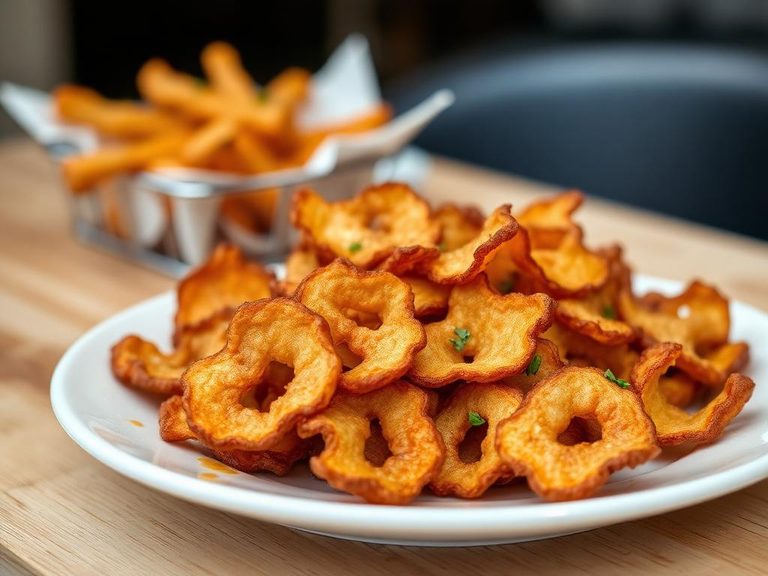
This is the crispy, golden-brown skin from a rotisserie chicken, seasoned with a classic blend of salt, pepper, and savory herbs. It offers an intensely rich, savory flavor and a satisfyingly crisp yet slightly chewy texture. Nutritionally, it is a concentrated source of fat and calories, with virtually no carbohydrates.
Calorie split: 17% protein · 0% carbs · 83% fat
↓ Full nutrition💚 Why it's loved
People love it for the irresistible combination of rendered fat, savory seasoning, and crispy texture that delivers a powerful umami punch. It's often considered the most flavorful part of the rotisserie chicken, enjoyed as a snack or a decadent garnish.
⚠️ Watch-outs & how to enjoy it better
It is very high in saturated fat and calories, which may concern those managing heart health or weight. The skin can also be high in sodium from the seasoning. To enjoy it mindfully, practice portion control, use it as a flavoring element (crumbled on salads) rather than a main component, and pair it with fiber-rich vegetables to balance the meal.
Key benefits
- Excellent source of dietary fat for satiety and energy.
- Provides a complete protein source from chicken.
- Contains collagen and gelatin, which may support skin and joint health.
- A flavorful way to add taste and texture to other dishes.
- Zero carbohydrates, making it suitable for ketogenic diets.
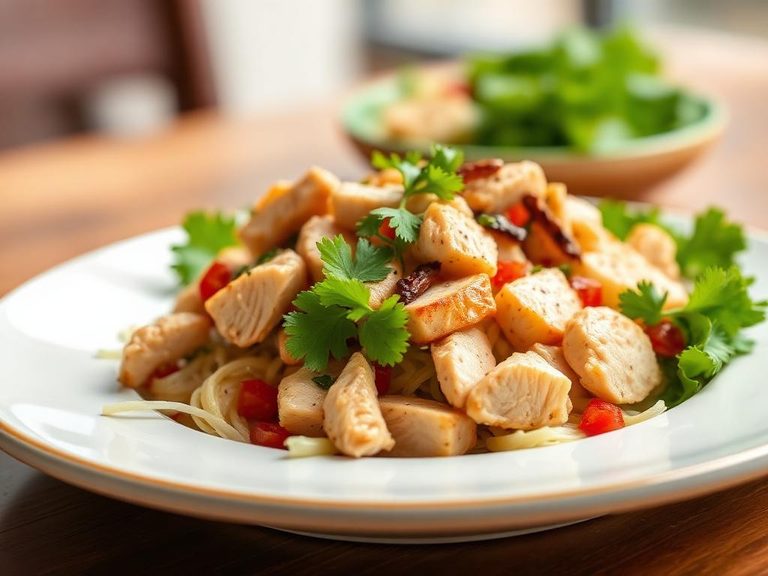
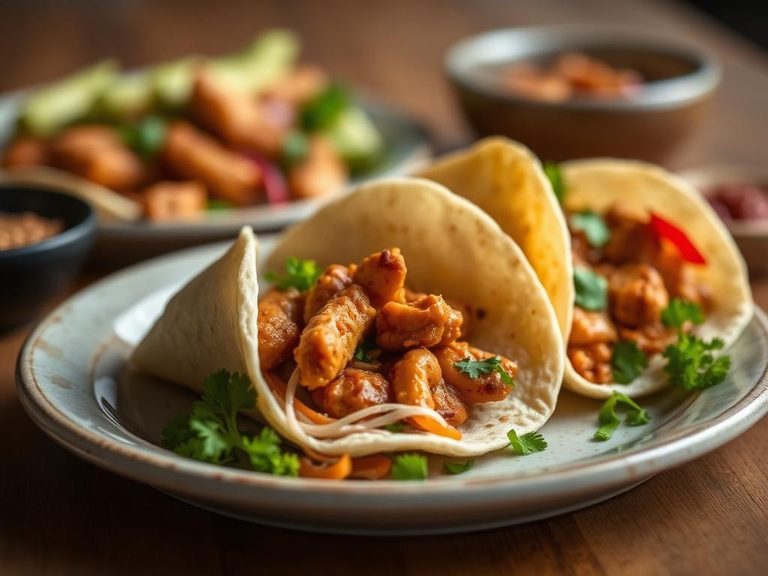
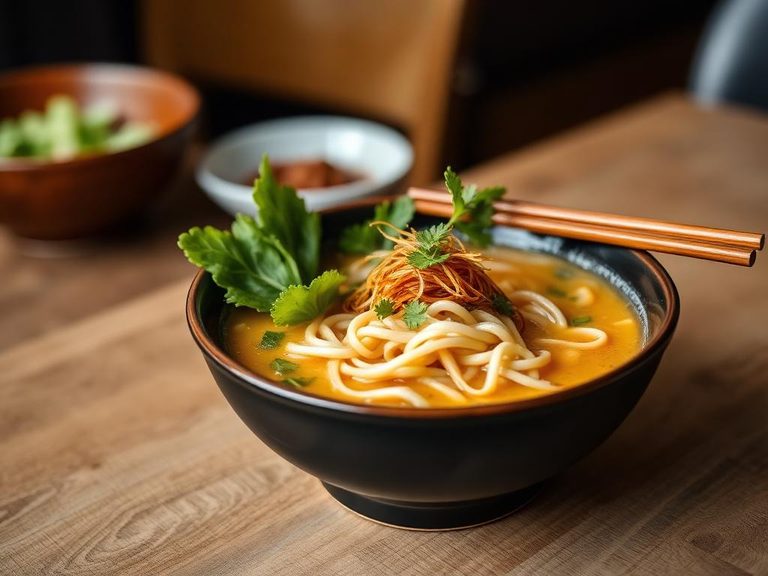
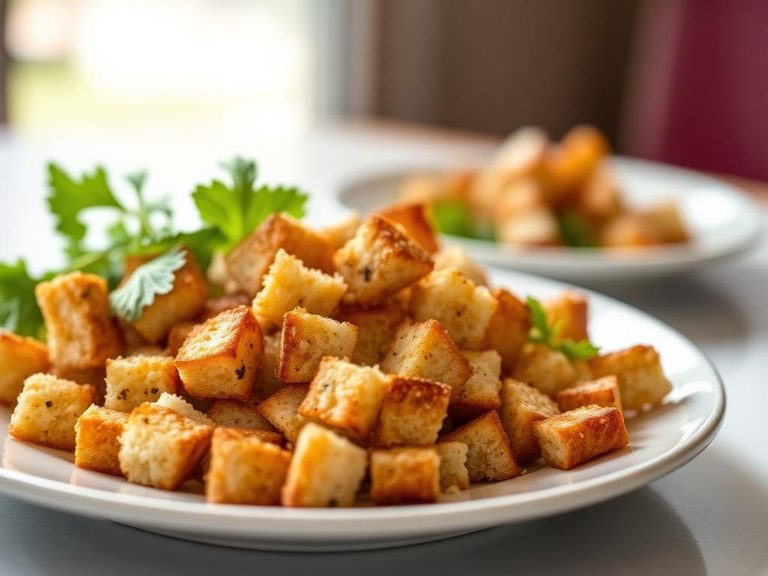
🍽️ Popular dishes
🌍 Where it's eaten
💡 Did you know?
The Maillard reaction, which creates the skin's deep brown color and complex flavor, requires temperatures above 285°F (140°C) and is accelerated by the skin's own proteins and sugars.
Full nutrition (USDA data · scales with serving)
| Water | 43.8 g |
| Energy | 406 kcal |
| Energy | 1698 kj |
| Protein | 17.7 g |
| Total lipid (fat) | 37.2 g |
| Ash | 1.7 g |
| Carbohydrate, by difference | 0.11 g |
| Fiber, total dietary | 0.00 g |
| Total Sugars | 0.11 g |
| Sucrose | 0.11 g |
| Glucose | 0.00 g |
| Fructose | 0.00 g |
| Lactose | 0.00 g |
| Maltose | 0.00 g |
| Galactose | 0.00 g |
| Starch | 0.00 g |
| Calcium, Ca | 25.0 mg |
| Iron, Fe | 0.98 mg |
| Magnesium, Mg | 26.0 mg |
| Phosphorus, P | 248 mg |
| Potassium, K | 245 mg |
| Sodium, Na | 381 mg |
| Zinc, Zn | 1.0 mg |
| Copper, Cu | 0.04 mg |
| Manganese, Mn | 0.03 mg |
| Selenium, Se | 18.5 ug |
| Vitamin C, total ascorbic acid | 0.00 mg |
| Thiamin | 0.04 mg |
| Riboflavin | 0.12 mg |
| Niacin | 5.7 mg |
| Pantothenic acid | 1.2 mg |
| Vitamin B-6 | 0.14 mg |
| Folate, total | 11.0 ug |
| Folic acid | 0.00 ug |
| Folate, food | 11.0 ug |
| Folate, DFE | 11.0 ug |
| Choline, total | 45.7 mg |
| Betaine | 7.0 mg |
| Vitamin B-12 | 0.59 ug |
| Vitamin B-12, added | 0.00 ug |
| Vitamin A, RAE | 56.0 ug |
| Retinol | 56.0 ug |
| Carotene, beta | 0.00 ug |
| Carotene, alpha | 0.00 ug |
| Cryptoxanthin, beta | 0.00 ug |
| Vitamin A, IU | 186 iu |
| Lycopene | 0.00 ug |
| Lutein + zeaxanthin | 0.00 ug |
| Vitamin E (alpha-tocopherol) | 0.36 mg |
| Vitamin E, added | 0.00 mg |
| Tocopherol, beta | 0.00 mg |
| Tocopherol, gamma | 0.20 mg |
| Tocopherol, delta | 0.01 mg |
| Tocotrienol, alpha | 0.07 mg |
| Tocotrienol, beta | 0.00 mg |
| Tocotrienol, gamma | 0.12 mg |
| Tocotrienol, delta | 0.00 mg |
| Vitamin K (phylloquinone) | 0.00 ug |
| Vitamin K (Dihydrophylloquinone) | 0.00 ug |
| Vitamin K (Menaquinone-4) | 20.9 ug |
| Alcohol, ethyl | 0.00 g |
| Caffeine | 0.00 mg |
| Theobromine | 0.00 mg |
Fat & fatty acid profile (per 100g)
| Fatty acids, total saturated | 10.0 g |
| SFA 4:0 | 0.00 g |
| SFA 6:0 | 0.00 g |
| SFA 8:0 | 0.00 g |
| SFA 10:0 | 0.00 g |
| SFA 12:0 | 0.00 g |
| SFA 14:0 | 0.20 g |
| SFA 15:0 | 0.05 g |
| SFA 16:0 | 8.0 g |
| SFA 17:0 | 0.01 g |
| SFA 18:0 | 1.7 g |
| SFA 20:0 | 0.00 g |
| SFA 22:0 | 0.00 g |
| SFA 24:0 | 0.00 g |
| Fatty acids, total monounsaturated | 16.8 g |
| MUFA 14:1 | 0.04 g |
| MUFA 15:1 | 0.00 g |
| MUFA 16:1 | 2.8 g |
| MUFA 17:1 | 0.00 g |
| MUFA 18:1 | 13.9 g |
| MUFA 18:1 c | 13.6 g |
| MUFA 20:1 | 0.10 g |
| MUFA 22:1 | 0.00 g |
| MUFA 22:1 c | 0.00 g |
| Fatty acids, total polyunsaturated | 5.4 g |
| PUFA 18:2 | 5.0 g |
| PUFA 18:2 n-6 c,c | 4.9 g |
| PUFA 18:3 | 0.29 g |
| PUFA 18:3 n-3 c,c,c (ALA) | 0.23 g |
| PUFA 18:3 n-6 c,c,c | 0.06 g |
| PUFA 18:4 | 0.00 g |
| PUFA 20:2 n-6 c,c | 0.04 g |
| PUFA 20:3 | 0.00 g |
| PUFA 20:4 | 0.06 g |
| PUFA 20:5 n-3 (EPA) | 0.00 g |
| PUFA 22:5 n-3 (DPA) | 0.00 g |
| PUFA 22:6 n-3 (DHA) | 0.00 g |
| Fatty acids, total trans | 0.46 g |
| Fatty acids, total trans-monoenoic | 0.32 g |
| TFA 18:1 t | 0.32 g |
| TFA 18:2 t,t | 0.14 g |
| Fatty acids, total trans-polyenoic | 0.14 g |
| Cholesterol | 141 mg |
Amino acid profile (per 100g)
| Tryptophan | 0.11 g |
| Threonine | 0.44 g |
| Isoleucine | 0.54 g |
| Leucine | 1.1 g |
| Lysine | 1.1 g |
| Methionine | 0.56 g |
| Cystine | 0.19 g |
| Phenylalanine | 0.39 g |
| Tyrosine | 0.36 g |
| Valine | 0.64 g |
| Arginine | 1.1 g |
| Histidine | 0.67 g |
| Alanine | 1.2 g |
| Aspartic acid | 1.4 g |
| Glutamic acid | 2.2 g |
| Glycine | 2.1 g |
| Proline | 1.7 g |
| Serine | 0.67 g |
| Hydroxyproline | 0.62 g |
FAQ
Is rotisserie chicken skin healthy?
It's a matter of context. It's a good source of protein and fat but is high in calories and saturated fat. It can be part of a balanced diet when eaten in moderation, especially if you're following a low-carb or ketogenic plan.
How can I make rotisserie chicken skin crispier at home?
After removing the skin, you can place it on a baking sheet and broil it for 2-3 minutes until it bubbles and crisps further. Alternatively, bake it in an oven at 400°F (200°C) for 5-7 minutes.
What's the best way to use leftover rotisserie chicken skin?
Chop it and use it as a crunchy topping for salads, soups, or baked potatoes. You can also blend it into a savory compound butter or render it down to make flavorful chicken fat for cooking.
Nutrient density (calculated · NRF9.3)
Nutrient Rich Foods index: beneficial nutrients (protein, fiber, vitamins, minerals) minus saturated fat, added sugar & sodium, per 100 kcal.
NRF9.3 index — Fulgoni, Keast & Drewnowski, 2009. Computed from USDA nutrients.
Weight-loss friendliness (composite index)
Energy density 4.06 kcal/g · 17% calories from protein · 0.0 g fiber · 0.1 g sugar per 100 g.
Composite of energy density (Rolls et al., 1999), protein & fiber satiety, minus sugar. A calculated heuristic — ranks satiety-per-calorie, not a clinical measure.
Dietary load (calculated from USDA values)
Potential renal acid load. Positive = acid-forming, negative = alkaline-forming.
Sodium-to-potassium ratio: 1.56 (lower is better — aim for ≤ 1)
Sodium:potassium per WHO potassium guidance. Computed from USDA nutrients.