

Onions, young green, tops only
Whole food · Vegetables and Vegetable Products

Photo: Wikipedia
Young green onion tops are the vibrant, hollow green stalks of immature onions, harvested before the bulb fully forms. They offer a crisp, succulent texture and a fresh, mildly pungent flavor that's less sharp than mature scallions, with a hint of sweet, grassy brightness. Nutritionally, they are a low-calorie powerhouse, providing a notable dose of fiber and natural sugars for a quick energy lift without heaviness.
Calorie split: 12% protein · 74% carbs · 14% fat
↓ Full nutrition💚 Why it's loved
People adore the bright, clean flavor that instantly elevates a dish without overwhelming it, making it a universal garnish and ingredient. Its versatility shines from raw in salads to quickly wilted in stir-fries, embodying the fresh, essential character of many global cuisines.
⚠️ Watch-outs & how to enjoy it better
The primary downside is the potential for causing digestive discomfort or heartburn in individuals with sensitive stomachs or acid reflux, due to their fermentable compounds. To counteract this, try pairing them with a small amount of healthy fat (like avocado or olive oil) or cooking them gently, which can mellow their sharpness and reduce irritants.
Key benefits
- Excellent source of vitamin K for bone health
- Rich in antioxidants like quercetin and anthocyanins
- Provides prebiotic fiber to support gut microbiome
- Low in calories and high in water content for hydration
- Contains sulfur compounds linked to immune support
🍽️ Popular dishes
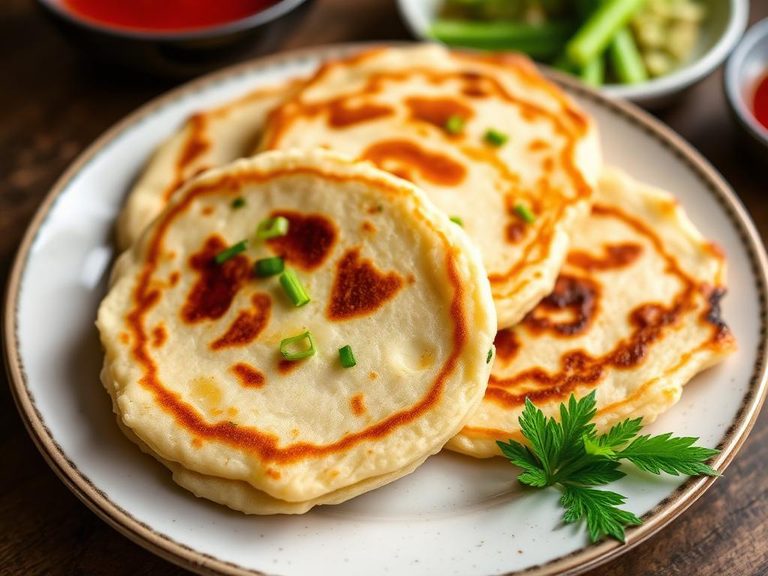
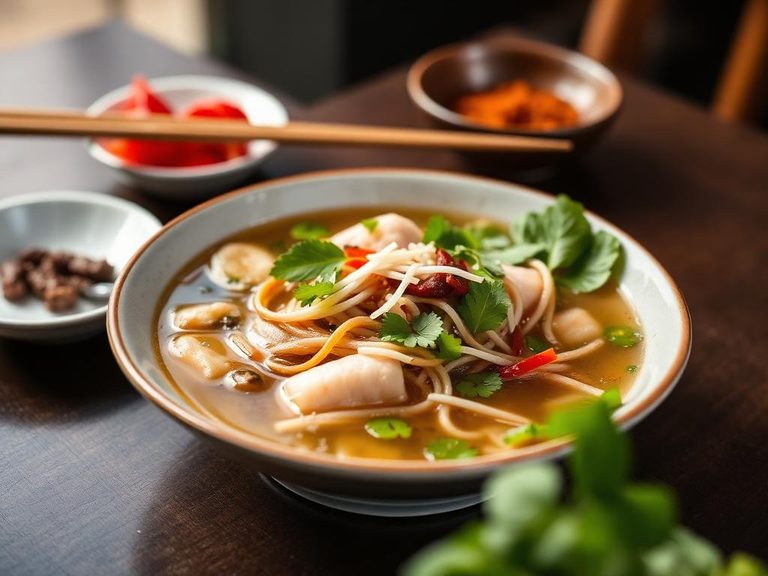
🌍 Where it's eaten
💡 Did you know?
The hollow, tubular structure of the green top is a perfect natural vessel, which is why it's often used as a fresh, edible straw for dipping sauces in some Asian cuisines.
Full nutrition (USDA data · scales with serving)
| Water | 92.3 g |
| Energy | 27.0 kcal |
| Energy | 112 kj |
| Protein | 0.97 g |
| Total lipid (fat) | 0.47 g |
| Ash | 0.51 g |
| Carbohydrate, by difference | 5.7 g |
| Fiber, total dietary | 1.8 g |
| Total Sugars | 3.9 g |
| Sucrose | 0.16 g |
| Glucose | 1.6 g |
| Fructose | 2.1 g |
| Lactose | 0.00 g |
| Maltose | 0.00 g |
| Galactose | 0.00 g |
| Starch | 0.00 g |
| Calcium, Ca | 52.0 mg |
| Iron, Fe | 0.51 mg |
| Magnesium, Mg | 16.0 mg |
| Phosphorus, P | 25.0 mg |
| Potassium, K | 159 mg |
| Sodium, Na | 15.0 mg |
| Zinc, Zn | 0.20 mg |
| Copper, Cu | 0.03 mg |
| Manganese, Mn | 0.15 mg |
| Selenium, Se | 0.50 ug |
| Vitamin C, total ascorbic acid | 13.4 mg |
| Thiamin | 0.03 mg |
| Riboflavin | 0.03 mg |
| Niacin | 0.33 mg |
| Pantothenic acid | 0.14 mg |
| Vitamin B-6 | 0.09 mg |
| Folate, total | 30.0 ug |
| Folic acid | 0.00 ug |
| Folate, food | 30.0 ug |
| Folate, DFE | 30.0 ug |
| Choline, total | 4.3 mg |
| Vitamin B-12 | 0.00 ug |
| Vitamin B-12, added | 0.00 ug |
| Vitamin A, RAE | 200 ug |
| Retinol | 0.00 ug |
| Carotene, beta | 2400 ug |
| Carotene, alpha | 0.00 ug |
| Cryptoxanthin, beta | 0.00 ug |
| Vitamin A, IU | 4000 iu |
| Lycopene | 0.00 ug |
| Lutein + zeaxanthin | 858 ug |
| Vitamin E (alpha-tocopherol) | 0.21 mg |
| Vitamin E, added | 0.00 mg |
| Vitamin D (D2 + D3), International Units | 0.00 iu |
| Vitamin D (D2 + D3) | 0.00 ug |
| Vitamin K (phylloquinone) | 156 ug |
| Alcohol, ethyl | 0.00 g |
| Caffeine | 0.00 mg |
| Theobromine | 0.00 mg |
Fat & fatty acid profile (per 100g)
| Fatty acids, total saturated | 0.17 g |
| SFA 4:0 | 0.00 g |
| SFA 6:0 | 0.00 g |
| SFA 8:0 | 0.00 g |
| SFA 10:0 | 0.02 g |
| SFA 12:0 | 0.01 g |
| SFA 14:0 | 0.01 g |
| SFA 15:0 | 0.00 g |
| SFA 16:0 | 0.09 g |
| SFA 17:0 | 0.00 g |
| SFA 18:0 | 0.02 g |
| SFA 20:0 | 0.00 g |
| SFA 22:0 | 0.00 g |
| SFA 24:0 | 0.00 g |
| Fatty acids, total monounsaturated | 0.04 g |
| MUFA 14:1 | 0.00 g |
| MUFA 15:1 | 0.00 g |
| MUFA 16:1 | 0.00 g |
| MUFA 16:1 c | 0.00 g |
| MUFA 17:1 | 0.00 g |
| MUFA 18:1 | 0.03 g |
| MUFA 18:1 c | 0.03 g |
| MUFA 20:1 | 0.00 g |
| MUFA 22:1 | 0.00 g |
| MUFA 22:1 c | 0.00 g |
| MUFA 24:1 c | 0.00 g |
| Fatty acids, total polyunsaturated | 0.12 g |
| PUFA 18:2 | 0.08 g |
| PUFA 18:2 n-6 c,c | 0.08 g |
| PUFA 18:2 CLAs | 0.00 g |
| PUFA 18:3 | 0.04 g |
| PUFA 18:3 n-3 c,c,c (ALA) | 0.04 g |
| PUFA 18:3 n-6 c,c,c | 0.00 g |
| PUFA 18:4 | 0.00 g |
| PUFA 20:2 n-6 c,c | 0.00 g |
| PUFA 20:3 | 0.00 g |
| PUFA 20:3 n-3 | 0.00 g |
| PUFA 20:3 n-6 | 0.00 g |
| PUFA 20:4 | 0.00 g |
| PUFA 20:5 n-3 (EPA) | 0.00 g |
| PUFA 22:4 | 0.00 g |
| PUFA 22:5 n-3 (DPA) | 0.00 g |
| PUFA 22:6 n-3 (DHA) | 0.00 g |
| Fatty acids, total trans | 0.00 g |
| Fatty acids, total trans-monoenoic | 0.00 g |
| TFA 16:1 t | 0.00 g |
| TFA 18:1 t | 0.00 g |
| TFA 22:1 t | 0.00 g |
| TFA 18:2 t not further defined | 0.00 g |
| Fatty acids, total trans-polyenoic | 0.00 g |
| Cholesterol | 0.00 mg |
Amino acid profile (per 100g)
Estimated from Onions, dehydrated flakes — USDA does not publish this profile for Onions.
| Tryptophan | 0.13 g |
| Threonine | 0.22 g |
| Isoleucine | 0.32 g |
| Leucine | 0.31 g |
| Lysine | 0.43 g |
| Methionine | 0.07 g |
| Cystine | 0.16 g |
| Phenylalanine | 0.23 g |
| Tyrosine | 0.22 g |
| Valine | 0.21 g |
| Arginine | 1.2 g |
| Histidine | 0.15 g |
| Alanine | 0.25 g |
| Aspartic acid | 0.49 g |
| Glutamic acid | 1.4 g |
| Glycine | 0.37 g |
| Proline | 0.28 g |
| Serine | 0.26 g |
FAQ
What's the difference between young green onion tops and mature scallions?
Young green tops are harvested earlier, resulting in a milder, sweeter flavor and a more tender, crisp texture. Mature scallions have a more pronounced onion bite and slightly tougher texture.
Can I eat the entire green stalk?
Yes, the entire hollow green stalk is edible and is the most commonly used part. The flavor is most concentrated in the green tops, while the white base has a stronger, more traditional onion flavor.
How should I store them to keep them fresh?
Store them unwashed in a plastic bag in the refrigerator's crisper drawer, where they can last for 1-2 weeks. Alternatively, you can stand them upright in a jar with an inch of water, covered loosely with a plastic bag.
Nutrient density (calculated · NRF9.3)
Nutrient Rich Foods index: beneficial nutrients (protein, fiber, vitamins, minerals) minus saturated fat, added sugar & sodium, per 100 kcal.
NRF9.3 index — Fulgoni, Keast & Drewnowski, 2009. Computed from USDA nutrients.
Weight-loss friendliness (composite index)
Energy density 0.27 kcal/g · 14% calories from protein · 1.8 g fiber · 3.9 g sugar per 100 g.
Composite of energy density (Rolls et al., 1999), protein & fiber satiety, minus sugar. A calculated heuristic — ranks satiety-per-calorie, not a clinical measure.
Dietary load (calculated from USDA values)
Potential renal acid load. Positive = acid-forming, negative = alkaline-forming.
Sodium-to-potassium ratio: 0.09 (lower is better — aim for ≤ 1)
Sodium:potassium per WHO potassium guidance. Computed from USDA nutrients.