

Nuts, almonds, dry roasted, with salt added
Whole food · Nut and Seed Products
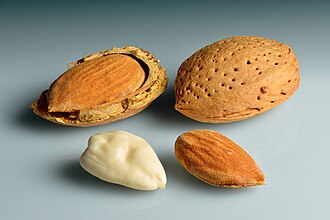
Photo: Wikipedia
These are whole almonds that have been roasted without oil and finished with a light dusting of salt, creating a deeply nutty, savory crunch. The dry-roasting process intensifies their natural flavor, making them more aromatic and brittle than raw almonds. With over 52 grams of fat and nearly 21 grams of protein per 100 grams, they are a calorie-dense, satiating powerhouse.
Calorie split: 13% protein · 13% carbs · 74% fat
↓ Full nutrition💚 Why it's loved
People love them for their satisfying crunch and the perfect balance of savory salt and rich, buttery nuttiness. They are a beloved, portable snack that works equally well on a hiking trail or in a gourmet trail mix.
⚠️ Watch-outs & how to enjoy it better
The added salt can be a concern for those monitoring sodium intake, and the high calorie density makes it easy to overconsume. To counteract this, practice strict portion control (e.g., pre-portion into small bags) and pair them with a low-sodium food like a piece of fruit. As a tree nut, they are a common allergen and must be avoided by those with allergies.
Key benefits
- Excellent source of plant-based protein for muscle maintenance
- Rich in monounsaturated fats that support heart health
- High fiber content aids in digestion and promotes satiety
- Provides a significant amount of Vitamin E, a powerful antioxidant
- Contains essential minerals like magnesium and manganese
🍽️ Popular dishes
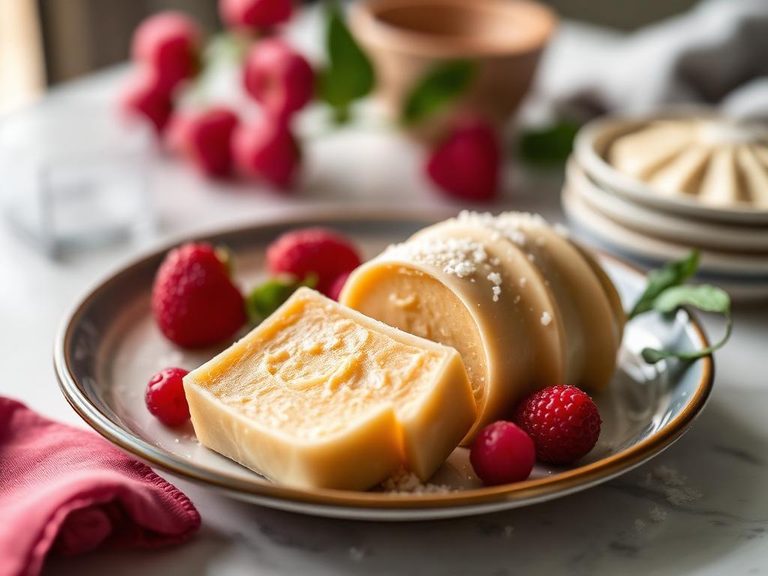
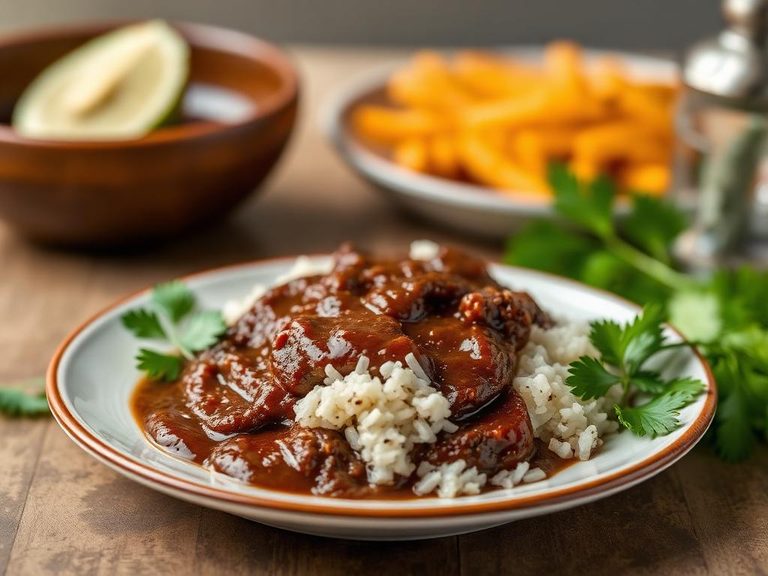
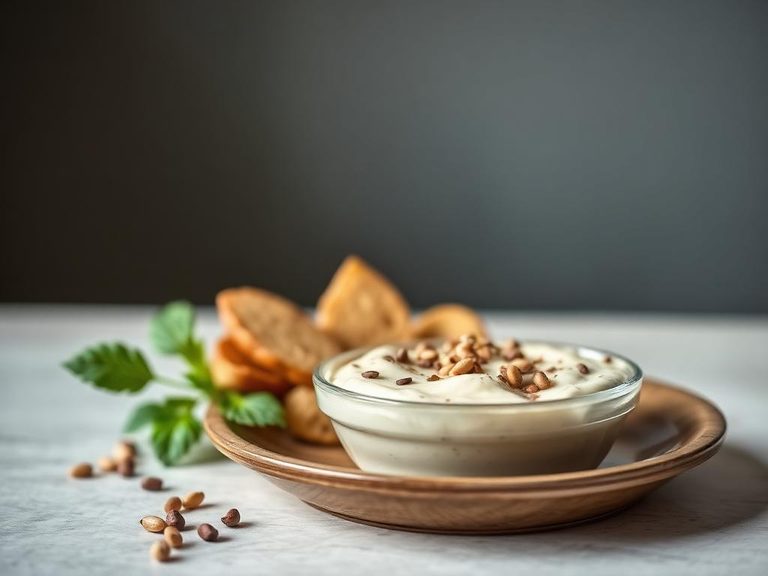
🌍 Where it's eaten
💡 Did you know?
Almonds are not technically nuts but the seeds of a fruit related to peaches and plums, and they are one of the few foods that can be stored for years without losing their nutritional value or flavor.
Full nutrition (USDA data · scales with serving)
| Water | 2.4 g |
| Energy | 598 kcal |
| Energy | 2502 kj |
| Protein | 21.0 g |
| Total lipid (fat) | 52.5 g |
| Ash | 3.1 g |
| Carbohydrate, by difference | 21.0 g |
| Fiber, total dietary | 10.9 g |
| Total Sugars | 4.9 g |
| Sucrose | 4.8 g |
| Glucose | 0.01 g |
| Fructose | 0.01 g |
| Lactose | 0.00 g |
| Maltose | 0.09 g |
| Galactose | 0.00 g |
| Starch | 0.73 g |
| Calcium, Ca | 268 mg |
| Iron, Fe | 3.7 mg |
| Magnesium, Mg | 279 mg |
| Phosphorus, P | 471 mg |
| Potassium, K | 713 mg |
| Sodium, Na | 234 mg |
| Zinc, Zn | 3.3 mg |
| Copper, Cu | 1.1 mg |
| Manganese, Mn | 2.2 mg |
| Selenium, Se | 2.0 ug |
| Vitamin C, total ascorbic acid | 0.00 mg |
| Thiamin | 0.08 mg |
| Riboflavin | 1.2 mg |
| Niacin | 3.6 mg |
| Pantothenic acid | 0.32 mg |
| Vitamin B-6 | 0.14 mg |
| Folate, total | 55.0 ug |
| Folic acid | 0.00 ug |
| Folate, food | 55.0 ug |
| Folate, DFE | 55.0 ug |
| Choline, total | 52.1 mg |
| Vitamin B-12 | 0.00 ug |
| Vitamin B-12, added | 0.00 ug |
| Vitamin A, RAE | 0.00 ug |
| Retinol | 0.00 ug |
| Carotene, beta | 1.0 ug |
| Carotene, alpha | 0.00 ug |
| Cryptoxanthin, beta | 0.00 ug |
| Vitamin A, IU | 1.0 iu |
| Lycopene | 0.00 ug |
| Lutein + zeaxanthin | 1.0 ug |
| Vitamin E (alpha-tocopherol) | 23.9 mg |
| Vitamin E, added | 0.00 mg |
| Tocopherol, beta | 0.32 mg |
| Tocopherol, gamma | 0.72 mg |
| Tocopherol, delta | 0.09 mg |
| Vitamin D (D2 + D3), International Units | 0.00 iu |
| Vitamin D (D2 + D3) | 0.00 ug |
| Vitamin K (phylloquinone) | 0.00 ug |
| Alcohol, ethyl | 0.00 g |
| Caffeine | 0.00 mg |
| Theobromine | 0.00 mg |
Fat & fatty acid profile (per 100g)
| Fatty acids, total saturated | 4.1 g |
| SFA 4:0 | 0.00 g |
| SFA 6:0 | 0.00 g |
| SFA 8:0 | 0.00 g |
| SFA 10:0 | 0.00 g |
| SFA 12:0 | 0.00 g |
| SFA 13:0 | 0.00 g |
| SFA 14:0 | 0.02 g |
| SFA 15:0 | 0.00 g |
| SFA 16:0 | 3.3 g |
| SFA 17:0 | 0.01 g |
| SFA 18:0 | 0.70 g |
| SFA 20:0 | 0.01 g |
| SFA 22:0 | 0.00 g |
| SFA 24:0 | 0.00 g |
| Fatty acids, total monounsaturated | 33.1 g |
| MUFA 14:1 | 0.00 g |
| MUFA 15:1 | 0.00 g |
| MUFA 16:1 | 0.26 g |
| MUFA 17:1 | 0.06 g |
| MUFA 18:1 | 32.8 g |
| MUFA 18:1 c | 32.7 g |
| MUFA 20:1 | 0.01 g |
| MUFA 22:1 | 0.00 g |
| MUFA 24:1 c | 0.00 g |
| Fatty acids, total polyunsaturated | 13.0 g |
| PUFA 18:2 | 12.9 g |
| PUFA 18:2 n-6 c,c | 12.9 g |
| PUFA 18:3 | 0.01 g |
| PUFA 18:3 n-3 c,c,c (ALA) | 0.01 g |
| PUFA 18:3 n-6 c,c,c | 0.00 g |
| PUFA 18:3i | 0.01 g |
| PUFA 18:4 | 0.00 g |
| PUFA 20:2 n-6 c,c | 0.00 g |
| PUFA 20:3 | 0.00 g |
| PUFA 20:4 | 0.00 g |
| PUFA 20:5 n-3 (EPA) | 0.00 g |
| PUFA 22:5 n-3 (DPA) | 0.00 g |
| PUFA 22:6 n-3 (DHA) | 0.00 g |
| Fatty acids, total trans | 0.01 g |
| TFA 18:1 t | 0.01 g |
| TFA 18:2 t not further defined | 0.00 g |
| Cholesterol | 0.00 mg |
| Stigmasterol | 4.0 mg |
| Campesterol | 4.0 mg |
| Beta-sitosterol | 122 mg |
Amino acid profile (per 100g)
| Tryptophan | 0.21 g |
| Threonine | 0.59 g |
| Isoleucine | 0.74 g |
| Leucine | 1.5 g |
| Lysine | 0.56 g |
| Methionine | 0.15 g |
| Cystine | 0.21 g |
| Phenylalanine | 1.1 g |
| Tyrosine | 0.45 g |
| Valine | 0.85 g |
| Arginine | 2.4 g |
| Histidine | 0.53 g |
| Alanine | 0.99 g |
| Aspartic acid | 2.6 g |
| Glutamic acid | 6.2 g |
| Glycine | 1.4 g |
| Proline | 0.96 g |
| Serine | 0.90 g |
| Hydroxyproline | 0.04 g |
FAQ
Are dry-roasted almonds healthier than oil-roasted ones?
Generally, yes. Dry-roasting uses no added oils, keeping the fat content to the almonds' natural levels, whereas oil-roasting adds extra calories and fat.
Why are almonds so calorie-dense?
They are packed with healthy monounsaturated fats, which are calorie-rich (9 calories per gram) but very satiating, helping you feel full longer.
Can I make dry-roasted almonds at home?
Absolutely. Spread raw almonds on a baking sheet and roast at 350°F (175°C) for 10-15 minutes, shaking the pan halfway through. Let them cool before adding a light sprinkle of salt.
Nutrient density (calculated · NRF9.3)
Nutrient Rich Foods index: beneficial nutrients (protein, fiber, vitamins, minerals) minus saturated fat, added sugar & sodium, per 100 kcal.
NRF9.3 index — Fulgoni, Keast & Drewnowski, 2009. Computed from USDA nutrients.
Weight-loss friendliness (composite index)
Energy density 5.98 kcal/g · 14% calories from protein · 10.9 g fiber · 4.9 g sugar per 100 g.
Composite of energy density (Rolls et al., 1999), protein & fiber satiety, minus sugar. A calculated heuristic — ranks satiety-per-calorie, not a clinical measure.
Dietary load (calculated from USDA values)
Potential renal acid load. Positive = acid-forming, negative = alkaline-forming.
Sodium-to-potassium ratio: 0.33 (lower is better — aim for ≤ 1)
Sodium:potassium per WHO potassium guidance. Computed from USDA nutrients.