

Marzipan
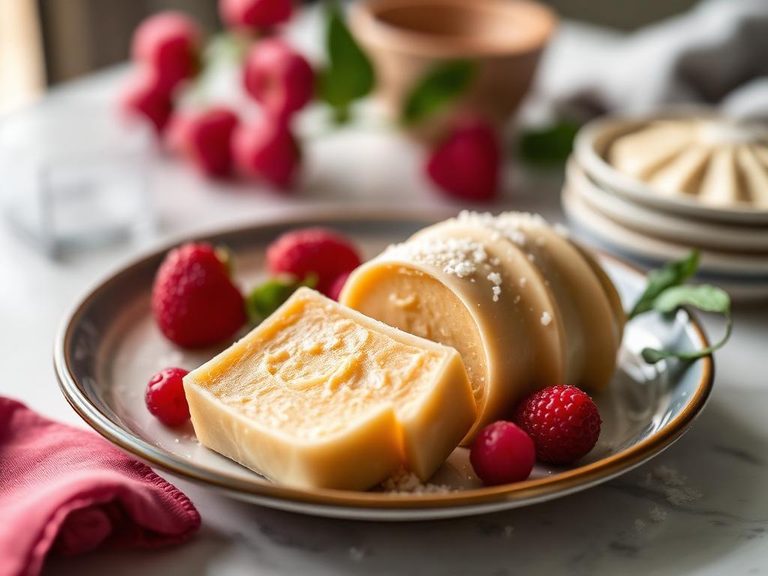
Marzipan is a smooth, pliable confection made primarily from ground almonds and sugar, often with a touch of almond extract or rosewater for flavor. Originating in the Middle East and popularized across Europe, particularly in Germany and Spain, it's famously molded into realistic fruits, animals, and other decorative shapes.
🍳 View the full Marzipan recipe →
🍽️ Nutrition at a glance
Marzipan is very high in carbohydrates and fat, with minimal protein, making it a calorie-dense treat. A typical 1-ounce (28g) serving provides around 110-130 calories, mostly from sugar and almond fats.
Nutrition breakdown
| Calories | 110 kcal |
| Protein | 2.5 g |
| Carbs | 18 g |
| Fat | 4.5 g |
| Fiber | 1 g |
| Sugar | 16 g |
| Sodium | 10 mg |
| Vitamin E | 2.5 mg |
| Magnesium | 30 mg |
| Phosphorus | 50 mg |
| Manganese | 0.3 mg |
| Copper | 0.2 mg |
| Riboflavin (B2) | 0.1 mg |
| Calcium | 25 mg |
| Iron | 0.5 mg |
Per 1 piece (approx. 30 g) · estimated, varies by recipe
💡 What's interesting
Culturally, marzipan is a centerpiece of holiday traditions, like the elaborate 'Marzipanbäume' (marzipan potatoes) given in Germany at Christmas. Nutritionally, while it's a sugary confection, the almond base does offer some beneficial monounsaturated fats and vitamin E compared to pure sugar candies.
🍽️ Related dishes


AI estimate may be inaccurate · Terms