Marzipan fruits
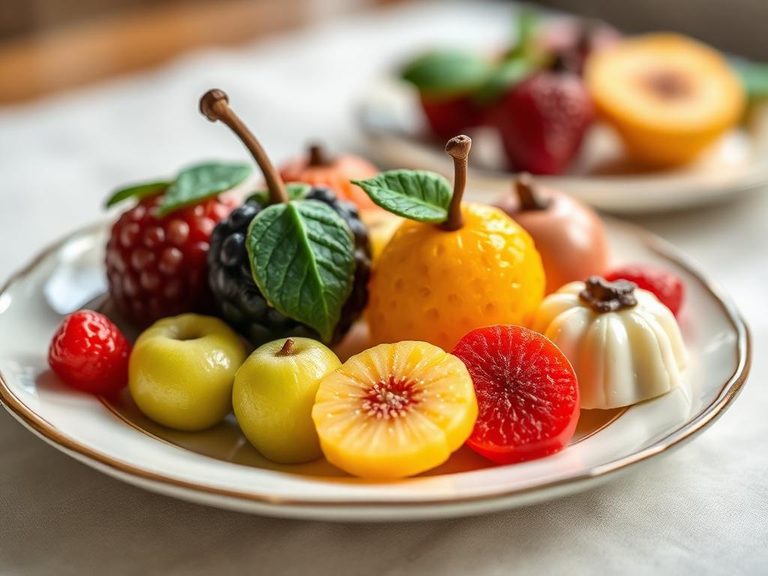
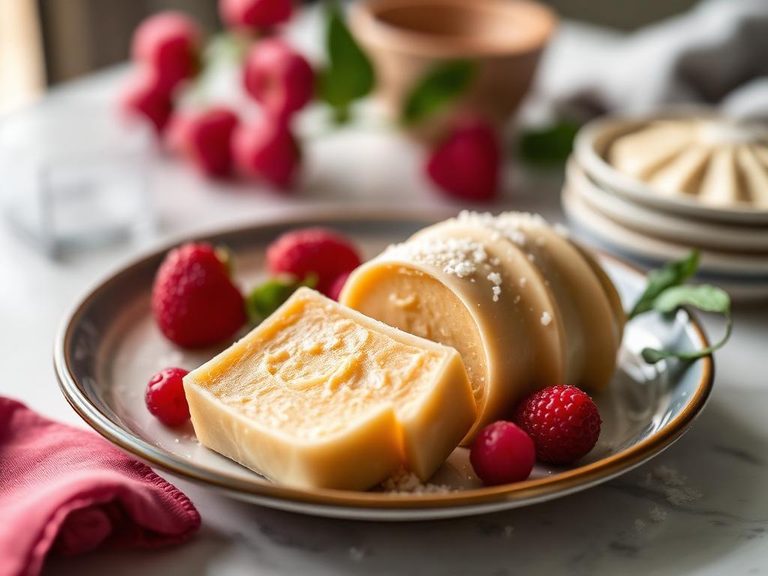
Marzipan fruits are decorative confections crafted from a pliable paste of almond meal and sugar, meticulously shaped and painted to resemble realistic miniature fruits. Originating in the confectionery traditions of the Middle East and Southern Europe, they are a hallmark of festive occasions, particularly in German and Mediterranean holiday baking. Their artistry lies in achieving lifelike details, from the blush on a peach to the texture of a strawberry.
🍽️ Nutrition at a glance
These are energy-dense sweets, primarily composed of carbohydrates from sugar and fats from almonds, with a modest amount of plant-based protein. A single, small decorative piece can contain roughly 50-80 calories, offering a quick energy burst but minimal essential nutrients beyond some vitamin E and magnesium from the almonds.
Nutrition breakdown
| Calories | 70 kcal |
| Protein | 1 g |
| Carbs | 10 g |
| Fat | 3 g |
| Fiber | 0.5 g |
| Sugar | 8 g |
| Sodium | 5 mg |
| Potassium | 40 mg |
| Magnesium | 15 mg |
| Phosphorus | 20 mg |
| Vitamin E | 1.5 mg |
| Iron | 0.3 mg |
| Zinc | 0.2 mg |
| Copper | 0.1 mg |
| Manganese | 0.1 mg |
Per 1 piece (approx. 20 g) · estimated, varies by recipe
💡 What's interesting
Culturally, marzipan fruits are a celebrated edible art form, with master confectioners in cities like Lübeck, Germany, and Toledo, Spain, competing to create the most exquisite, hyper-realistic pieces. Nutritionally, while they are a treat, the almond base provides a slightly better fatty acid profile and protein content compared to many pure sugar confections.