

Peach, raw
Common food
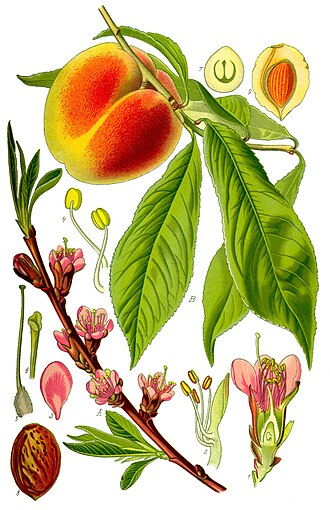
Photo: Wikipedia
A raw peach is a fuzzy-skinned stone fruit with juicy, fragrant flesh that ranges from creamy white to vibrant yellow. Its flavor is a delicate balance of sweet and tart, with a soft, melting texture when perfectly ripe. Nutritionally, it's a light, hydrating snack, providing a good dose of vitamin C and fiber for just 46 calories per 100g.
Calorie split: 8% protein · 87% carbs · 5% fat
↓ Full nutrition💚 Why it's loved
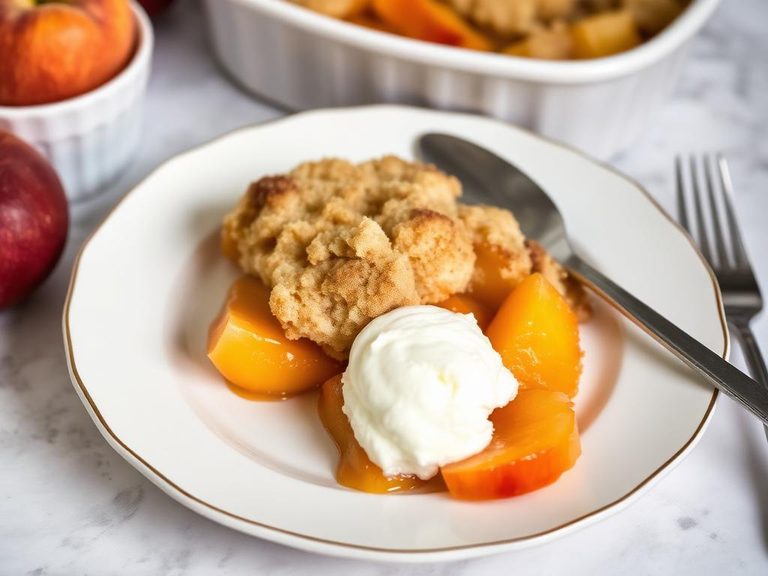
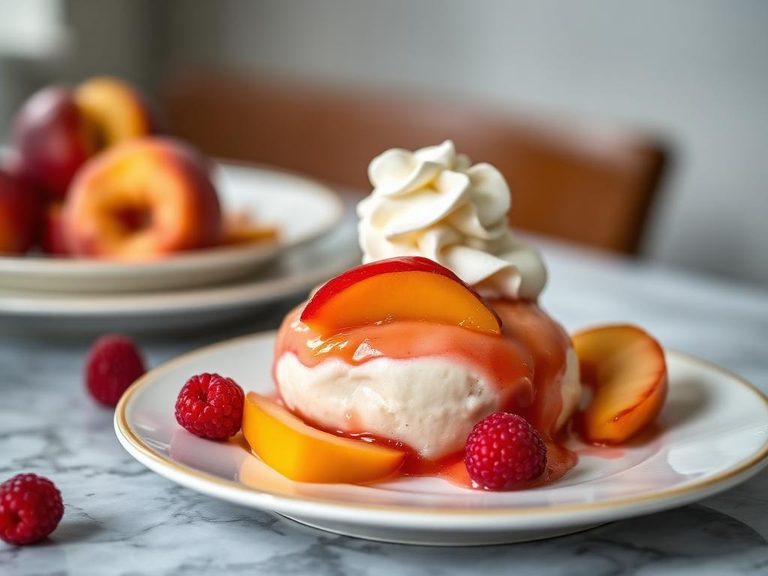
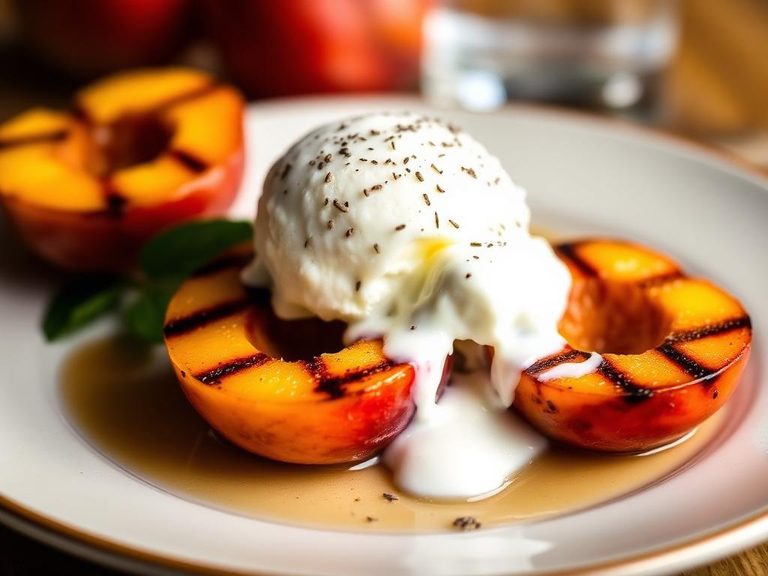
People adore peaches for their intoxicating summer aroma and the perfect harmony of sweetness and acidity. Their versatility is cherished, enjoyed fresh out of hand, grilled to caramelize their sugars, or preserved in jams and cobblers.
⚠️ Watch-outs & how to enjoy it better
The natural sugars can cause a blood-sucose spike if eaten alone in large quantities, especially for those managing diabetes. The fuzzy skin can also be an irritant for some. To counteract, pair a peach with a source of protein or fat (like Greek yogurt or nuts) to slow sugar absorption, and wash or peel the skin if it bothers you.
Key benefits
- Rich in immune-supporting vitamin C.
- Good source of dietary fiber for digestive health.
- Contains antioxidants like beta-carotene and lutein.
- Low in calories and high in water content for hydration.
- Provides potassium, which supports heart and muscle function.
🍽️ Popular dishes

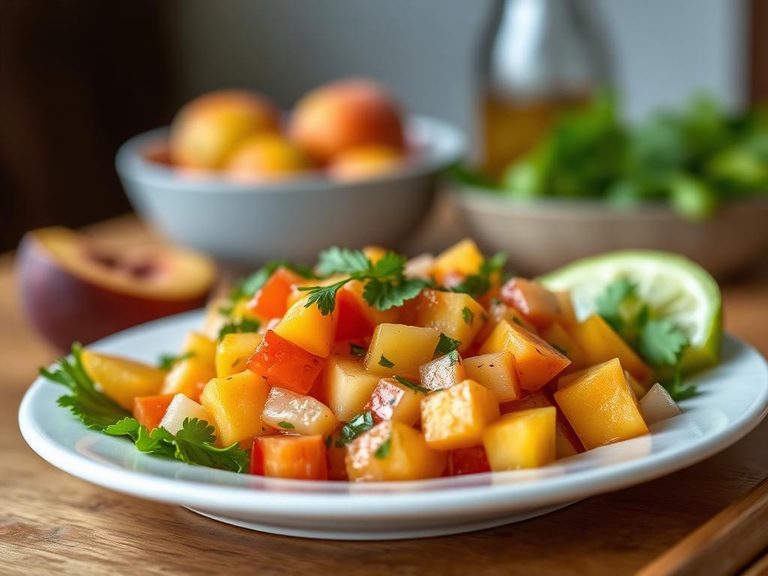

🌍 Where it's eaten
💡 Did you know?
The peach is believed to have originated in China over 8,000 years ago, where it was a symbol of longevity and immortality before spreading west along the Silk Road.
Full nutrition (USDA data · scales with serving)
| Water | 88.3 g |
| Energy | 46.0 kcal |
| Protein | 0.91 g |
| Total lipid (fat) | 0.27 g |
| Carbohydrate, by difference | 10.1 g |
| Fiber, total dietary | 1.5 g |
| Total Sugars | 8.4 g |
| Calcium, Ca | 4.0 mg |
| Iron, Fe | 0.34 mg |
| Magnesium, Mg | 8.0 mg |
| Phosphorus, P | 22.0 mg |
| Potassium, K | 122 mg |
| Sodium, Na | 13.0 mg |
| Zinc, Zn | 0.23 mg |
| Copper, Cu | 0.08 mg |
| Selenium, Se | 2.1 ug |
| Vitamin C, total ascorbic acid | 4.1 mg |
| Thiamin | 0.02 mg |
| Riboflavin | 0.03 mg |
| Niacin | 0.81 mg |
| Vitamin B-6 | 0.03 mg |
| Folate, total | 6.0 ug |
| Folic acid | 0.00 ug |
| Folate, food | 6.0 ug |
| Folate, DFE | 6.0 ug |
| Choline, total | 6.1 mg |
| Vitamin B-12 | 0.00 ug |
| Vitamin B-12, added | 0.00 ug |
| Vitamin A, RAE | 24.0 ug |
| Retinol | 0.00 ug |
| Carotene, beta | 224 ug |
| Carotene, alpha | 0.00 ug |
| Cryptoxanthin, beta | 117 ug |
| Lycopene | 0.00 ug |
| Lutein + zeaxanthin | 132 ug |
| Vitamin E (alpha-tocopherol) | 0.73 mg |
| Vitamin E, added | 0.00 mg |
| Vitamin D (D2 + D3) | 0.00 ug |
| Vitamin K (phylloquinone) | 3.0 ug |
| Alcohol, ethyl | 0.00 g |
| Caffeine | 0.00 mg |
| Theobromine | 0.00 mg |
Fat & fatty acid profile (per 100g)
| Fatty acids, total saturated | 0.02 g |
| SFA 4:0 | 0.00 g |
| SFA 6:0 | 0.00 g |
| SFA 8:0 | 0.00 g |
| SFA 10:0 | 0.00 g |
| SFA 12:0 | 0.00 g |
| SFA 14:0 | 0.00 g |
| SFA 16:0 | 0.02 g |
| SFA 18:0 | 0.00 g |
| Fatty acids, total monounsaturated | 0.07 g |
| MUFA 16:1 | 0.00 g |
| MUFA 18:1 | 0.07 g |
| MUFA 20:1 | 0.00 g |
| MUFA 22:1 | 0.00 g |
| Fatty acids, total polyunsaturated | 0.09 g |
| PUFA 18:2 | 0.08 g |
| PUFA 18:3 | 0.00 g |
| PUFA 18:4 | 0.00 g |
| PUFA 20:4 | 0.00 g |
| PUFA 20:5 n-3 (EPA) | 0.00 g |
| PUFA 22:5 n-3 (DPA) | 0.00 g |
| PUFA 22:6 n-3 (DHA) | 0.00 g |
| Cholesterol | 0.00 mg |
Amino acid profile (per 100g)
Estimated from Peaches, canned, heavy syrup, drained — USDA does not publish this profile for Peach.
| Tryptophan | 0.01 g |
| Threonine | 0.01 g |
| Isoleucine | 0.01 g |
| Leucine | 0.02 g |
| Lysine | 0.02 g |
| Methionine | 0.01 g |
| Cystine | 0.01 g |
| Phenylalanine | 0.01 g |
| Tyrosine | 0.01 g |
| Valine | 0.01 g |
| Arginine | 0.01 g |
| Histidine | 0.01 g |
| Alanine | 0.02 g |
| Aspartic acid | 0.24 g |
| Glutamic acid | 0.03 g |
| Glycine | 0.01 g |
| Proline | 0.01 g |
| Serine | 0.02 g |
FAQ
How do I pick a ripe peach?
Look for a creamy yellow background color (not green), a sweet fragrance at the stem, and a slight give when gently pressed. Avoid rock-hard or overly mushy fruit.
What's the best way to store peaches?
Ripen them at room temperature. Once ripe, store in the refrigerator for up to 5 days. To freeze, slice, toss with a little lemon juice, and spread on a baking sheet before transferring to a bag.
Can I eat the peach skin?
Yes, the skin is edible and nutritious. Simply wash it well. If you dislike the fuzzy texture, you can blanch the peach in boiling water for 30 seconds, then ice water to easily slip the skin off.
Nutrient density (calculated · NRF9.3)
Nutrient Rich Foods index: beneficial nutrients (protein, fiber, vitamins, minerals) minus saturated fat, added sugar & sodium, per 100 kcal.
NRF9.3 index — Fulgoni, Keast & Drewnowski, 2009. Computed from USDA nutrients.
Weight-loss friendliness (composite index)
Energy density 0.46 kcal/g · 8% calories from protein · 1.5 g fiber · 8.4 g sugar per 100 g.
Composite of energy density (Rolls et al., 1999), protein & fiber satiety, minus sugar. A calculated heuristic — ranks satiety-per-calorie, not a clinical measure.
Dietary load (calculated from USDA values)
Potential renal acid load. Positive = acid-forming, negative = alkaline-forming.
Sodium-to-potassium ratio: 0.11 (lower is better — aim for ≤ 1)
Sodium:potassium per WHO potassium guidance. Computed from USDA nutrients.