

Peaches, canned, light syrup pack, solids and liquids
Whole food · Fruits and Fruit Juices
Canned peaches in light syrup are tender, golden-hued slices swimming in a gently sweetened liquid, offering a consistent, soft texture year-round. Nutritionally, they are a low-fat, fiber-containing source of quick energy, primarily from their natural and added sugars.
Calorie split: 3% protein · 97% carbs · 0% fat
↓ Full nutrition💚 Why it's loved
People love them for their dependable, mellow sweetness and soft texture that requires no peeling or pit removal. They are a nostalgic staple in desserts and a quick, comforting snack straight from the can.
⚠️ Watch-outs & how to enjoy it better
The primary downside is the added sugar from the syrup, which can cause blood-sugar spikes, especially for those with diabetes or insulin resistance. To counteract this, drain the peaches well, pair them with a source of protein or fat like Greek yogurt or nuts, and practice portion control by sticking to a half-cup serving.
Key benefits
- Provides a convenient source of vitamin C and potassium.
- Contains soluble fiber, which can support digestive health.
- Offers a consistent, affordable fruit option regardless of season.
- Light syrup pack has less added sugar than heavy syrup varieties.
- Long shelf life reduces food waste.
🍽️ Popular dishes
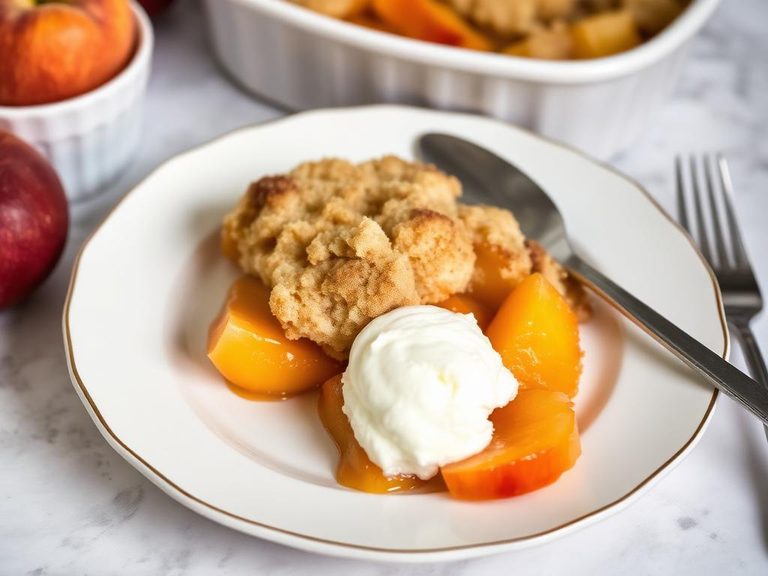
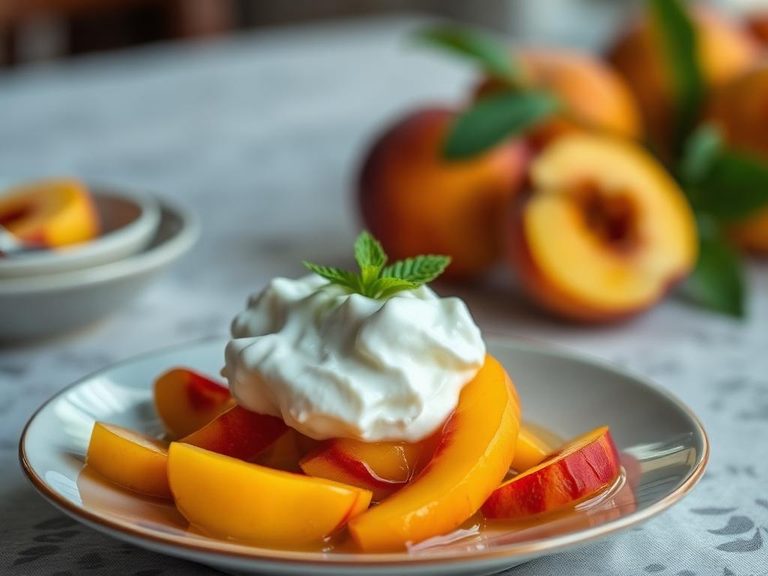
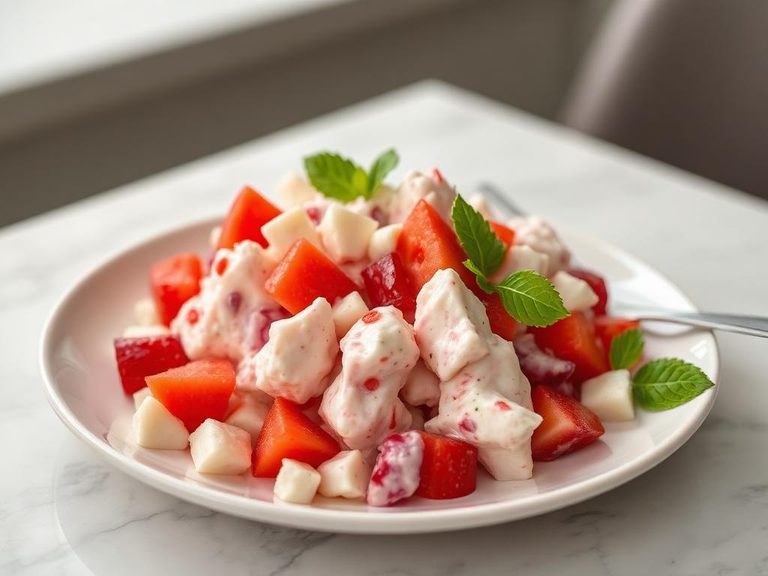
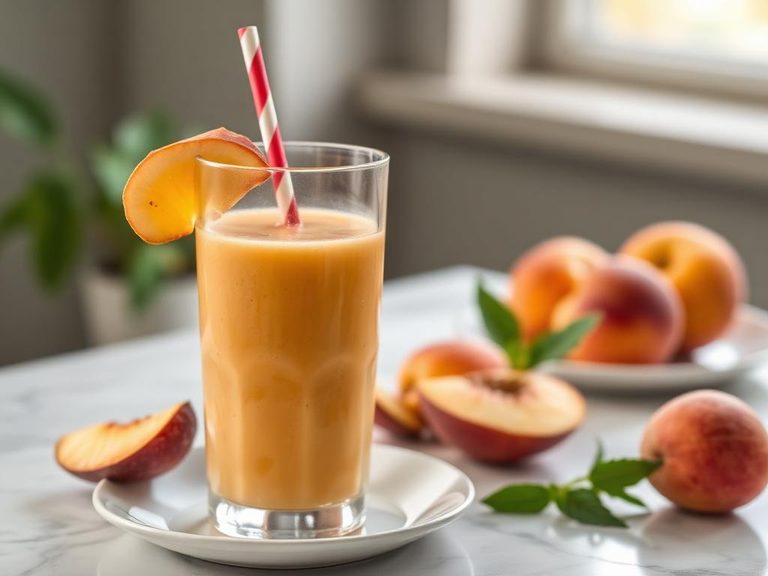
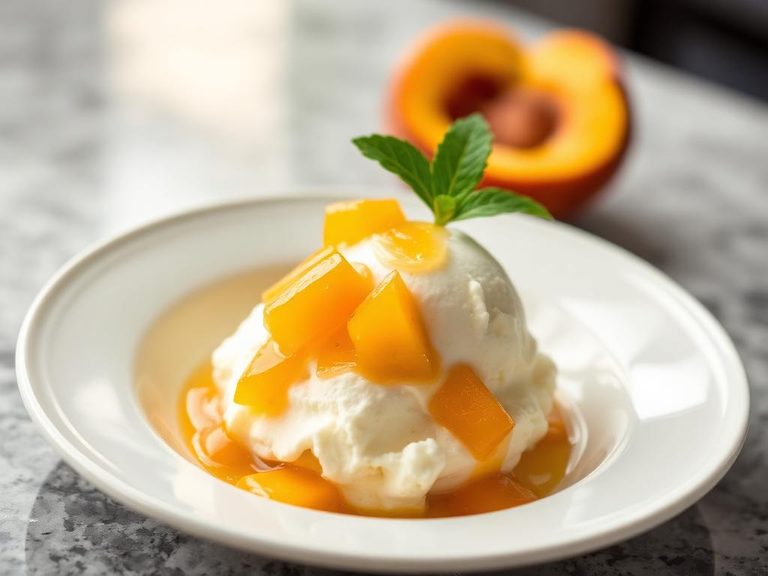
🌍 Where it's eaten
💡 Did you know?
The practice of canning peaches was pioneered in the 19th century, and during World War II, canned peaches were a staple in U.S. military rations, valued for their portability and long shelf life.
Full nutrition (USDA data · scales with serving)
| Water | 84.7 g |
| Energy | 54.0 kcal |
| Energy | 226 kj |
| Protein | 0.45 g |
| Total lipid (fat) | 0.03 g |
| Ash | 0.25 g |
| Carbohydrate, by difference | 14.6 g |
| Fiber, total dietary | 1.3 g |
| Total Sugars | 13.3 g |
| Calcium, Ca | 3.0 mg |
| Iron, Fe | 0.36 mg |
| Magnesium, Mg | 5.0 mg |
| Phosphorus, P | 11.0 mg |
| Potassium, K | 97.0 mg |
| Sodium, Na | 5.0 mg |
| Zinc, Zn | 0.09 mg |
| Copper, Cu | 0.05 mg |
| Manganese, Mn | 0.05 mg |
| Selenium, Se | 0.30 ug |
| Vitamin C, total ascorbic acid | 2.4 mg |
| Thiamin | 0.01 mg |
| Riboflavin | 0.03 mg |
| Niacin | 0.59 mg |
| Pantothenic acid | 0.05 mg |
| Vitamin B-6 | 0.02 mg |
| Folate, total | 3.0 ug |
| Folic acid | 0.00 ug |
| Folate, food | 3.0 ug |
| Folate, DFE | 3.0 ug |
| Choline, total | 4.1 mg |
| Vitamin B-12 | 0.00 ug |
| Vitamin B-12, added | 0.00 ug |
| Vitamin A, RAE | 18.0 ug |
| Retinol | 0.00 ug |
| Carotene, beta | 176 ug |
| Carotene, alpha | 1.0 ug |
| Cryptoxanthin, beta | 73.0 ug |
| Vitamin A, IU | 354 iu |
| Lycopene | 0.00 ug |
| Lutein + zeaxanthin | 61.0 ug |
| Vitamin E (alpha-tocopherol) | 0.49 mg |
| Vitamin E, added | 0.00 mg |
| Vitamin D (D2 + D3), International Units | 0.00 iu |
| Vitamin D (D2 + D3) | 0.00 ug |
| Vitamin K (phylloquinone) | 1.7 ug |
| Alcohol, ethyl | 0.00 g |
| Caffeine | 0.00 mg |
| Theobromine | 0.00 mg |
Fat & fatty acid profile (per 100g)
| Fatty acids, total saturated | 0.00 g |
| SFA 4:0 | 0.00 g |
| SFA 6:0 | 0.00 g |
| SFA 8:0 | 0.00 g |
| SFA 10:0 | 0.00 g |
| SFA 12:0 | 0.00 g |
| SFA 14:0 | 0.00 g |
| SFA 16:0 | 0.00 g |
| SFA 18:0 | 0.00 g |
| Fatty acids, total monounsaturated | 0.01 g |
| MUFA 16:1 | 0.00 g |
| MUFA 18:1 | 0.01 g |
| MUFA 20:1 | 0.00 g |
| MUFA 22:1 | 0.00 g |
| Fatty acids, total polyunsaturated | 0.01 g |
| PUFA 18:2 | 0.01 g |
| PUFA 18:3 | 0.00 g |
| PUFA 18:4 | 0.00 g |
| PUFA 20:4 | 0.00 g |
| PUFA 20:5 n-3 (EPA) | 0.00 g |
| PUFA 22:5 n-3 (DPA) | 0.00 g |
| PUFA 22:6 n-3 (DHA) | 0.00 g |
| Fatty acids, total trans | 0.00 g |
| Cholesterol | 0.00 mg |
Amino acid profile (per 100g)
| Tryptophan | 0.00 g |
| Threonine | 0.02 g |
| Isoleucine | 0.01 g |
| Leucine | 0.03 g |
| Lysine | 0.01 g |
| Methionine | 0.01 g |
| Cystine | 0.00 g |
| Phenylalanine | 0.01 g |
| Tyrosine | 0.01 g |
| Valine | 0.03 g |
| Arginine | 0.01 g |
| Histidine | 0.01 g |
| Alanine | 0.03 g |
| Aspartic acid | 0.07 g |
| Glutamic acid | 0.07 g |
| Glycine | 0.02 g |
| Proline | 0.02 g |
| Serine | 0.02 g |
FAQ
What's the difference between light syrup, heavy syrup, and juice pack?
Light syrup is a solution of water and sugar (typically about 14% sugar) that the peaches are canned in. Heavy syrup has a higher sugar concentration (about 20-24%), making it sweeter and higher in calories. Juice pack means the peaches are canned in fruit juice (like peach or apple juice) instead of a sugar-water solution, which can reduce added sugars.
Are canned peaches as nutritious as fresh?
Canning can reduce some heat-sensitive vitamins like vitamin C, but it also makes certain nutrients like lycopene (in tomatoes) more bioavailable. For peaches, canned versions retain most of their fiber, potassium, and vitamin A. The main nutritional difference is the added sugar in syrup packs versus the natural sugars in fresh fruit.
How should I store leftover canned peaches?
After opening, transfer any unused peaches and their liquid to a clean, airtight container and refrigerate. They will keep for 3-4 days. Freezing is not recommended as it will drastically alter the texture, making them mushy upon thawing.
Nutrient density (calculated · NRF9.3)
Nutrient Rich Foods index: beneficial nutrients (protein, fiber, vitamins, minerals) minus saturated fat, added sugar & sodium, per 100 kcal.
NRF9.3 index — Fulgoni, Keast & Drewnowski, 2009. Computed from USDA nutrients.
Weight-loss friendliness (composite index)
Energy density 0.54 kcal/g · 3% calories from protein · 1.3 g fiber · 13.3 g sugar per 100 g.
Composite of energy density (Rolls et al., 1999), protein & fiber satiety, minus sugar. A calculated heuristic — ranks satiety-per-calorie, not a clinical measure.
Dietary load (calculated from USDA values)
Potential renal acid load. Positive = acid-forming, negative = alkaline-forming.
Sodium-to-potassium ratio: 0.05 (lower is better — aim for ≤ 1)
Sodium:potassium per WHO potassium guidance. Computed from USDA nutrients.