

Peaches, yellow, raw
Whole food · Fruits and Fruit Juices
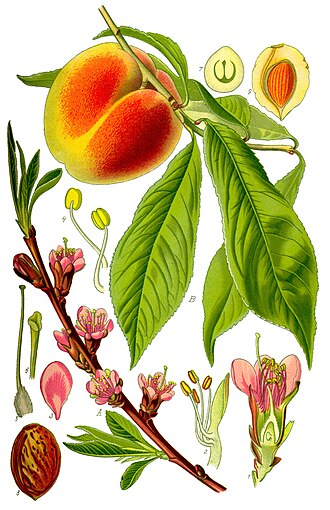
Photo: Wikipedia
A ripe yellow peach is a velvety, sun-kissed stone fruit with a sweet, floral aroma and juicy, tender flesh that yields to a slight tang near the pit. Nutritionally, it's a light, hydrating snack offering nearly 2 grams of fiber and a spectrum of vitamins per 100 grams for under 40 calories.
Calorie split: 8% protein · 87% carbs · 5% fat
↓ Full nutrition💚 Why it's loved
People cherish peaches for their perfect balance of honeyed sweetness and floral acidity, a flavor that screams summer. Their versatility shines from being eaten fresh out of hand to being baked into iconic cobblers or grilled to caramelize their sugars.
⚠️ Watch-outs & how to enjoy it better
The natural sugars, while healthy, can cause blood-sugar spikes if eaten in large quantities alone. Pairing a peach with a source of protein or healthy fat, like a handful of nuts or a dollop of Greek yogurt, can help moderate this effect. Also, the fuzzy skin can irritate sensitive mouths; peeling or gently rubbing the peach can help.
Key benefits
- Excellent source of vitamin C for immune support
- Provides dietary fiber for digestive health
- Contains antioxidants like beta-carotene
- Low in calories and naturally hydrating
- Offers potassium for heart and muscle function
🍽️ Popular dishes
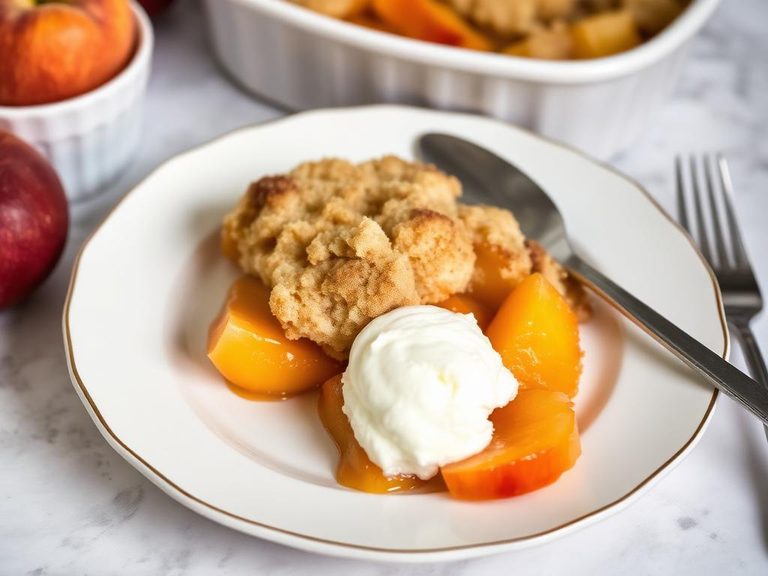

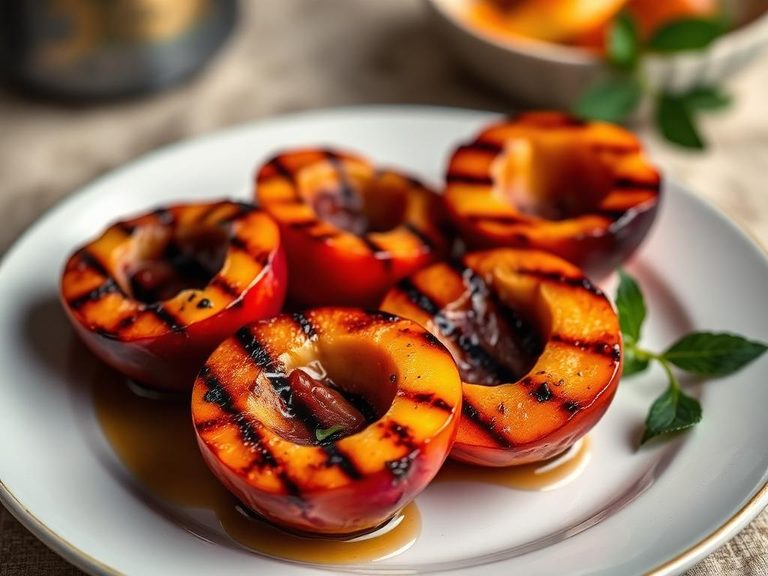
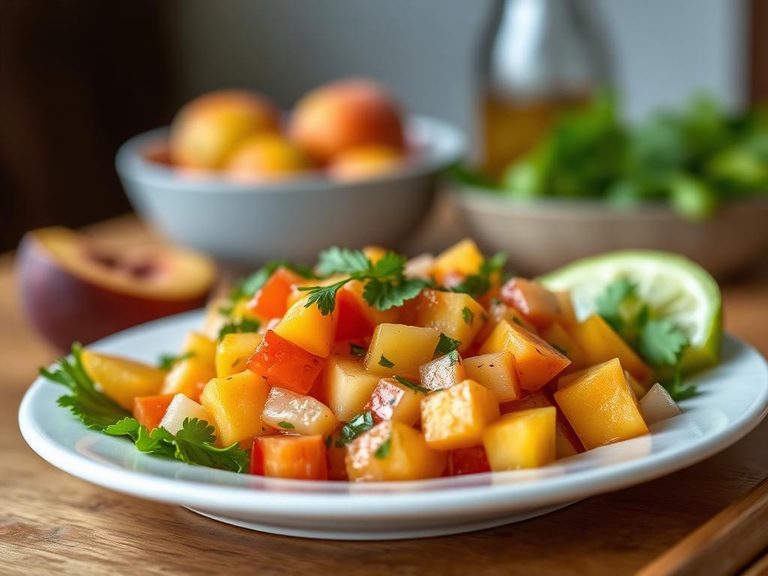
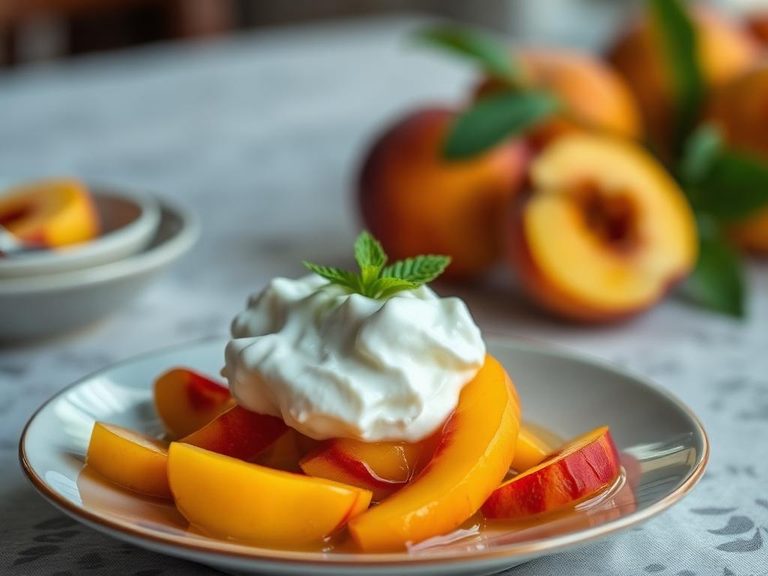
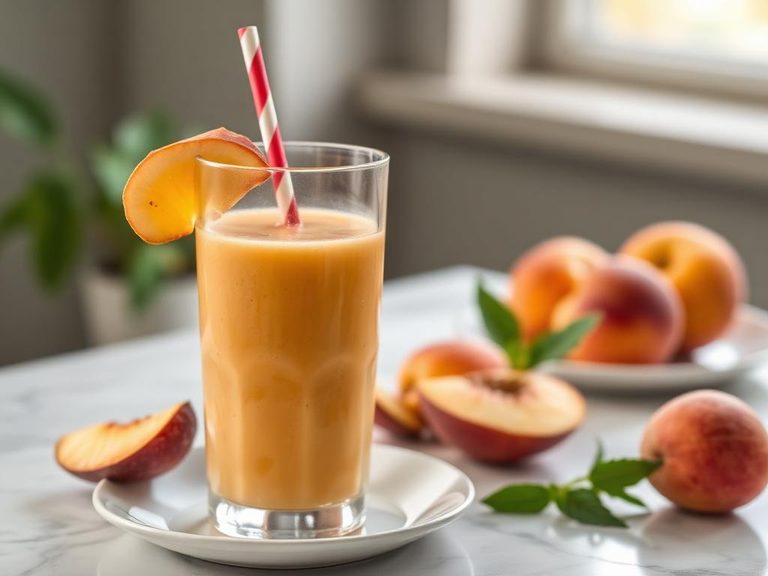
🌍 Where it's eaten
💡 Did you know?
Peaches are a member of the rose family (Rosaceae), making them a distant botanical cousin to roses, apples, and almonds.
Full nutrition (USDA data · scales with serving)
| Water | 88.9 g |
| Energy | 39.0 kcal |
| Energy | 165 kj |
| Protein | 0.91 g |
| Total lipid (fat) | 0.25 g |
| Ash | 0.43 g |
| Carbohydrate, by difference | 9.5 g |
| Fiber, total dietary | 1.5 g |
| Total Sugars | 8.4 g |
| Sucrose | 4.8 g |
| Glucose | 1.9 g |
| Fructose | 1.5 g |
| Lactose | 0.00 g |
| Maltose | 0.08 g |
| Galactose | 0.06 g |
| Starch | 0.00 g |
| Calcium, Ca | 6.0 mg |
| Iron, Fe | 0.25 mg |
| Magnesium, Mg | 9.0 mg |
| Phosphorus, P | 20.0 mg |
| Potassium, K | 190 mg |
| Sodium, Na | 0.00 mg |
| Zinc, Zn | 0.17 mg |
| Copper, Cu | 0.07 mg |
| Manganese, Mn | 0.06 mg |
| Selenium, Se | 0.10 ug |
| Fluoride, F | 4.0 ug |
| Vitamin C, total ascorbic acid | 6.6 mg |
| Thiamin | 0.02 mg |
| Riboflavin | 0.03 mg |
| Niacin | 0.81 mg |
| Pantothenic acid | 0.15 mg |
| Vitamin B-6 | 0.03 mg |
| Folate, total | 4.0 ug |
| Folic acid | 0.00 ug |
| Folate, food | 4.0 ug |
| Folate, DFE | 4.0 ug |
| Choline, total | 6.1 mg |
| Betaine | 0.30 mg |
| Vitamin B-12 | 0.00 ug |
| Vitamin B-12, added | 0.00 ug |
| Vitamin A, RAE | 16.0 ug |
| Retinol | 0.00 ug |
| Carotene, beta | 162 ug |
| Carotene, alpha | 0.00 ug |
| Cryptoxanthin, beta | 67.0 ug |
| Vitamin A, IU | 326 iu |
| Lycopene | 0.00 ug |
| Lutein + zeaxanthin | 91.0 ug |
| Vitamin E (alpha-tocopherol) | 0.73 mg |
| Vitamin E, added | 0.00 mg |
| Tocopherol, beta | 0.00 mg |
| Tocopherol, gamma | 0.02 mg |
| Tocopherol, delta | 0.00 mg |
| Tocotrienol, alpha | 0.03 mg |
| Tocotrienol, beta | 0.00 mg |
| Tocotrienol, gamma | 0.00 mg |
| Tocotrienol, delta | 0.00 mg |
| Vitamin D (D2 + D3), International Units | 0.00 iu |
| Vitamin D (D2 + D3) | 0.00 ug |
| Vitamin K (phylloquinone) | 2.6 ug |
| Vitamin K (Dihydrophylloquinone) | 0.00 ug |
| Alcohol, ethyl | 0.00 g |
| Caffeine | 0.00 mg |
| Theobromine | 0.00 mg |
Fat & fatty acid profile (per 100g)
| Fatty acids, total saturated | 0.02 g |
| SFA 4:0 | 0.00 g |
| SFA 6:0 | 0.00 g |
| SFA 8:0 | 0.00 g |
| SFA 10:0 | 0.00 g |
| SFA 12:0 | 0.00 g |
| SFA 14:0 | 0.00 g |
| SFA 16:0 | 0.02 g |
| SFA 18:0 | 0.00 g |
| Fatty acids, total monounsaturated | 0.07 g |
| MUFA 16:1 | 0.00 g |
| MUFA 18:1 | 0.07 g |
| MUFA 20:1 | 0.00 g |
| MUFA 22:1 | 0.00 g |
| Fatty acids, total polyunsaturated | 0.09 g |
| PUFA 18:2 | 0.08 g |
| PUFA 18:3 | 0.00 g |
| PUFA 18:4 | 0.00 g |
| PUFA 20:4 | 0.00 g |
| PUFA 20:5 n-3 (EPA) | 0.00 g |
| PUFA 22:5 n-3 (DPA) | 0.00 g |
| PUFA 22:6 n-3 (DHA) | 0.00 g |
| Fatty acids, total trans | 0.00 g |
| Cholesterol | 0.00 mg |
| Phytosterols | 10.0 mg |
Amino acid profile (per 100g)
| Tryptophan | 0.01 g |
| Threonine | 0.02 g |
| Isoleucine | 0.02 g |
| Leucine | 0.03 g |
| Lysine | 0.03 g |
| Methionine | 0.01 g |
| Cystine | 0.01 g |
| Phenylalanine | 0.02 g |
| Tyrosine | 0.01 g |
| Valine | 0.02 g |
| Arginine | 0.02 g |
| Histidine | 0.01 g |
| Alanine | 0.03 g |
| Aspartic acid | 0.42 g |
| Glutamic acid | 0.06 g |
| Glycine | 0.02 g |
| Proline | 0.02 g |
| Serine | 0.03 g |
FAQ
How do I ripen a peach faster?
Place the peach in a brown paper bag at room temperature, optionally with an apple or banana, which releases ethylene gas to speed up the process.
Should I eat the skin of a peach?
Yes, the skin is edible and contains a significant portion of the fruit's fiber and antioxidants. Simply wash it well to remove any fuzz.
What's the difference between a freestone and a clingstone peach?
In freestone peaches, the pit separates easily from the flesh, making them ideal for eating fresh. Clingstone peaches have flesh that clings to the pit and are often used for canning.
Nutrient density (calculated · NRF9.3)
Nutrient Rich Foods index: beneficial nutrients (protein, fiber, vitamins, minerals) minus saturated fat, added sugar & sodium, per 100 kcal.
NRF9.3 index — Fulgoni, Keast & Drewnowski, 2009. Computed from USDA nutrients.
Weight-loss friendliness (composite index)
Energy density 0.39 kcal/g · 9% calories from protein · 1.5 g fiber · 8.4 g sugar per 100 g.
Composite of energy density (Rolls et al., 1999), protein & fiber satiety, minus sugar. A calculated heuristic — ranks satiety-per-calorie, not a clinical measure.
Dietary load (calculated from USDA values)
Potential renal acid load. Positive = acid-forming, negative = alkaline-forming.
Sodium-to-potassium ratio: 0.00 (lower is better — aim for ≤ 1)
Sodium:potassium per WHO potassium guidance. Computed from USDA nutrients.