

Mushrooms, portabella, exposed to ultraviolet light, grilled
Whole food · Vegetables and Vegetable Products

Photo: Wikipedia
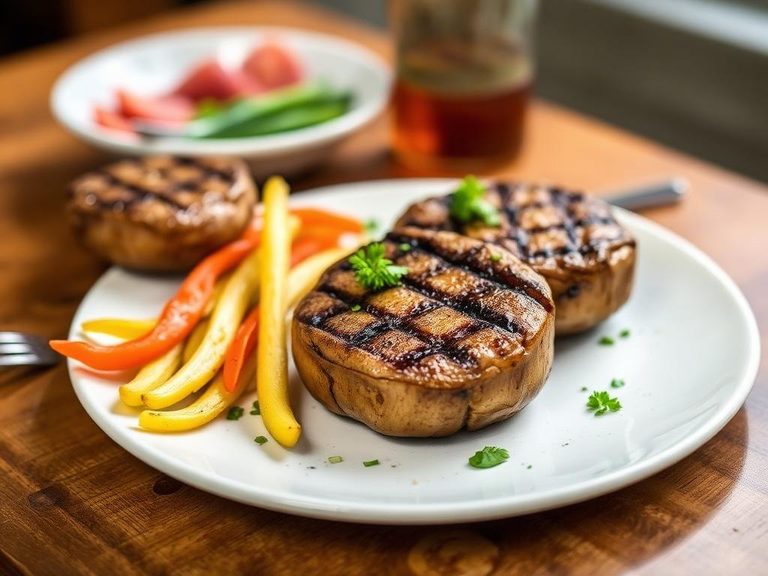
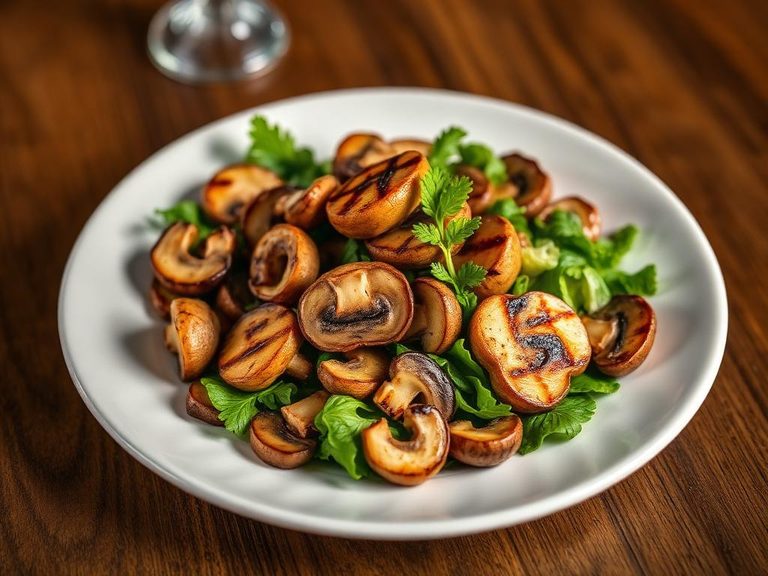
This is a large, meaty portabella mushroom cap that has been grilled to a smoky, tender finish after being exposed to ultraviolet light to boost its vitamin D content. Its texture is satisfyingly chewy and substantial, with a deep, earthy, umami-rich flavor that intensifies with cooking. Nutritionally, it's a low-calorie powerhouse, offering a notable protein and fiber boost for very few calories.
Calorie split: 36% protein · 49% carbs · 14% fat
↓ Full nutrition💚 Why it's loved
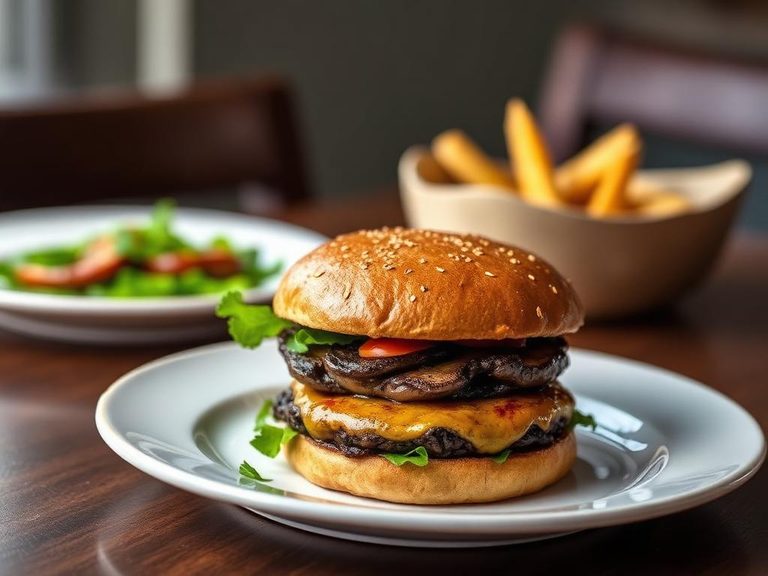
People love its incredibly versatile, meaty texture that makes it a satisfying centerpiece for vegetarian meals or a hearty addition to any dish. Its deep, savory flavor profile is a canvas for marinades and grilling, evoking a classic barbecue experience.
⚠️ Watch-outs & how to enjoy it better
The high fiber content can cause digestive discomfort for some, especially those with IBS or sensitive stomachs. To mitigate this, start with smaller portions and ensure thorough cooking, which helps break down fibers. Those on low-potassium diets should also be mindful, as mushrooms are a potassium-rich food.
Key benefits
- Excellent source of vitamin D when UV-exposed
- Very low in calories and fat
- Good source of dietary fiber
- Provides plant-based protein
- Contains antioxidants like selenium
🍽️ Popular dishes
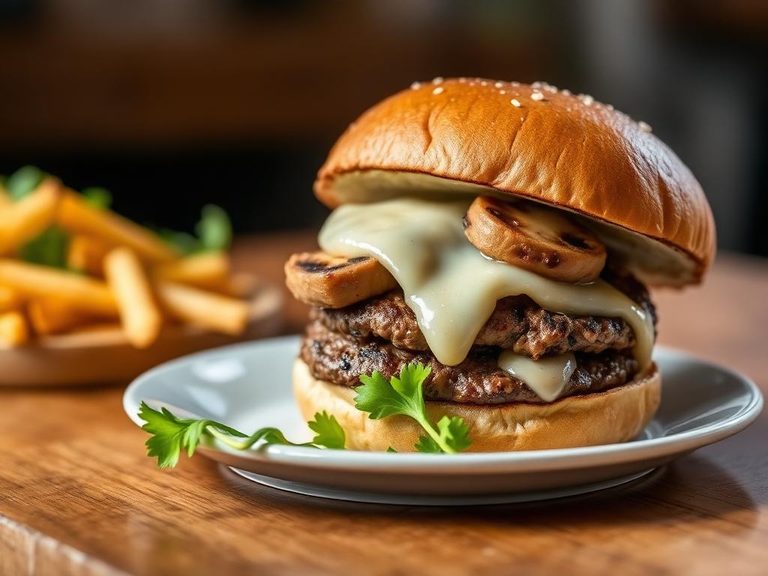
🌍 Where it's eaten
💡 Did you know?
A single grilled portabella mushroom cap can contain more potassium than a medium banana.
Full nutrition (USDA data · scales with serving)
| Water | 90.7 g |
| Energy | 29.0 kcal |
| Energy | 121 kj |
| Protein | 3.3 g |
| Total lipid (fat) | 0.58 g |
| Ash | 1.1 g |
| Carbohydrate, by difference | 4.4 g |
| Fiber, total dietary | 2.2 g |
| Total Sugars | 2.3 g |
| Sucrose | 0.00 g |
| Glucose | 2.3 g |
| Fructose | 0.00 g |
| Lactose | 0.00 g |
| Maltose | 0.00 g |
| Galactose | 0.00 g |
| Starch | 0.43 g |
| Calcium, Ca | 3.0 mg |
| Iron, Fe | 0.40 mg |
| Magnesium, Mg | 13.0 mg |
| Phosphorus, P | 135 mg |
| Potassium, K | 437 mg |
| Sodium, Na | 11.0 mg |
| Zinc, Zn | 0.65 mg |
| Copper, Cu | 0.39 mg |
| Manganese, Mn | 0.07 mg |
| Selenium, Se | 21.9 ug |
| Vitamin C, total ascorbic acid | 0.00 mg |
| Thiamin | 0.07 mg |
| Riboflavin | 0.40 mg |
| Niacin | 6.3 mg |
| Pantothenic acid | 1.3 mg |
| Vitamin B-6 | 0.12 mg |
| Folate, total | 19.0 ug |
| Folate, food | 19.0 ug |
| Choline, total | 32.8 mg |
| Betaine | 11.5 mg |
| Vitamin E (alpha-tocopherol) | 0.00 mg |
| Tocopherol, beta | 0.00 mg |
| Tocopherol, gamma | 0.00 mg |
| Tocopherol, delta | 0.00 mg |
| Tocotrienol, alpha | 0.03 mg |
| Tocotrienol, beta | 0.00 mg |
| Tocotrienol, gamma | 0.00 mg |
| Tocotrienol, delta | 0.00 mg |
| Vitamin D (D2 + D3), International Units | 524 iu |
| Vitamin D (D2 + D3) | 13.1 ug |
| Vitamin D2 (ergocalciferol) | 13.1 ug |
| Vitamin D3 (cholecalciferol) | 0.00 ug |
| Vitamin K (phylloquinone) | 0.00 ug |
| Vitamin K (Dihydrophylloquinone) | 7.0 ug |
| Vitamin K (Menaquinone-4) | 0.30 ug |
Fat & fatty acid profile (per 100g)
| Fatty acids, total saturated | 0.03 g |
| SFA 6:0 | 0.00 g |
| SFA 8:0 | 0.00 g |
| SFA 10:0 | 0.00 g |
| SFA 12:0 | 0.00 g |
| SFA 14:0 | 0.00 g |
| SFA 15:0 | 0.00 g |
| SFA 16:0 | 0.02 g |
| SFA 17:0 | 0.00 g |
| SFA 18:0 | 0.01 g |
| SFA 20:0 | 0.00 g |
| SFA 22:0 | 0.00 g |
| SFA 24:0 | 0.00 g |
| Fatty acids, total monounsaturated | 0.03 g |
| MUFA 14:1 | 0.00 g |
| MUFA 15:1 | 0.00 g |
| MUFA 16:1 | 0.00 g |
| MUFA 16:1 c | 0.00 g |
| MUFA 17:1 | 0.00 g |
| MUFA 18:1 | 0.01 g |
| MUFA 18:1 c | 0.01 g |
| MUFA 20:1 | 0.00 g |
| MUFA 22:1 | 0.00 g |
| MUFA 22:1 c | 0.00 g |
| MUFA 24:1 c | 0.00 g |
| Fatty acids, total polyunsaturated | 0.53 g |
| PUFA 18:2 | 0.26 g |
| PUFA 18:2 n-6 c,c | 0.26 g |
| PUFA 18:2 CLAs | 0.00 g |
| PUFA 18:3 | 0.00 g |
| PUFA 18:3 n-3 c,c,c (ALA) | 0.00 g |
| PUFA 18:3 n-6 c,c,c | 0.00 g |
| PUFA 18:4 | 0.00 g |
| PUFA 20:2 n-6 c,c | 0.00 g |
| PUFA 20:3 | 0.00 g |
| PUFA 20:3 n-3 | 0.00 g |
| PUFA 20:3 n-6 | 0.00 g |
| PUFA 20:4 | 0.00 g |
| PUFA 20:5 n-3 (EPA) | 0.00 g |
| PUFA 21:5 | 0.00 g |
| PUFA 22:4 | 0.00 g |
| PUFA 22:5 n-3 (DPA) | 0.00 g |
| PUFA 22:6 n-3 (DHA) | 0.00 g |
| Fatty acids, total trans | 0.00 g |
| Fatty acids, total trans-monoenoic | 0.00 g |
| TFA 16:1 t | 0.00 g |
| TFA 18:1 t | 0.00 g |
| TFA 22:1 t | 0.00 g |
| TFA 18:2 t not further defined | 0.00 g |
| Fatty acids, total trans-polyenoic | 0.00 g |
| Stigmasterol | 0.00 mg |
| Campesterol | 2.0 mg |
| Beta-sitosterol | 0.00 mg |
Amino acid profile (per 100g)
| Tryptophan | 0.05 g |
| Threonine | 0.13 g |
| Isoleucine | 0.11 g |
| Leucine | 0.17 g |
| Lysine | 0.16 g |
| Methionine | 0.04 g |
| Cystine | 0.01 g |
| Phenylalanine | 0.10 g |
| Tyrosine | 0.02 g |
| Valine | 0.10 g |
| Arginine | 0.11 g |
| Histidine | 0.08 g |
| Alanine | 0.22 g |
| Aspartic acid | 0.29 g |
| Glutamic acid | 0.42 g |
| Glycine | 0.13 g |
| Proline | 0.10 g |
| Serine | 0.12 g |
FAQ
How does UV light affect the mushroom?
Exposing mushrooms to ultraviolet (UV) light triggers a natural process that converts a compound in them (ergosterol) into vitamin D2, significantly boosting their vitamin D content, similar to how human skin produces vitamin D from sunlight.
Is grilled portabella a good meat substitute?
Yes, its dense, chewy texture and rich umami flavor make it one of the most popular plant-based alternatives for burgers, steaks, and fajitas, providing a satisfying, hearty bite.
How should I store and prepare it?
Store unwashed in a paper bag in the refrigerator for up to a week. Before grilling, gently wipe clean with a damp cloth, remove the stem, and scrape out the dark gills if desired to prevent a muddy color in your dish.
Nutrient density (calculated · NRF9.3)
Nutrient Rich Foods index: beneficial nutrients (protein, fiber, vitamins, minerals) minus saturated fat, added sugar & sodium, per 100 kcal.
NRF9.3 index — Fulgoni, Keast & Drewnowski, 2009. Computed from USDA nutrients.
Weight-loss friendliness (composite index)
Energy density 0.29 kcal/g · 45% calories from protein · 2.2 g fiber · 2.3 g sugar per 100 g.
Composite of energy density (Rolls et al., 1999), protein & fiber satiety, minus sugar. A calculated heuristic — ranks satiety-per-calorie, not a clinical measure.
Dietary load (calculated from USDA values)
Potential renal acid load. Positive = acid-forming, negative = alkaline-forming.
Sodium-to-potassium ratio: 0.03 (lower is better — aim for ≤ 1)
Sodium:potassium per WHO potassium guidance. Computed from USDA nutrients.