

Crackers, gluten-free, multi-seeded and multigrain
Whole food · Baked Products

Photo: Wikipedia
A hearty, crisp cracker made from a blend of gluten-free grains and seeds like sorghum, millet, and flax, offering a satisfying crunch and a nutty, earthy flavor. Its texture is robust and slightly coarse, studded with visible seeds that add a pleasant pop. Nutritionally, it's a standout for its high fiber and plant-based protein content, making it more filling than typical crackers.
Calorie split: 10% protein · 59% carbs · 31% fat
↓ Full nutrition💚 Why it's loved
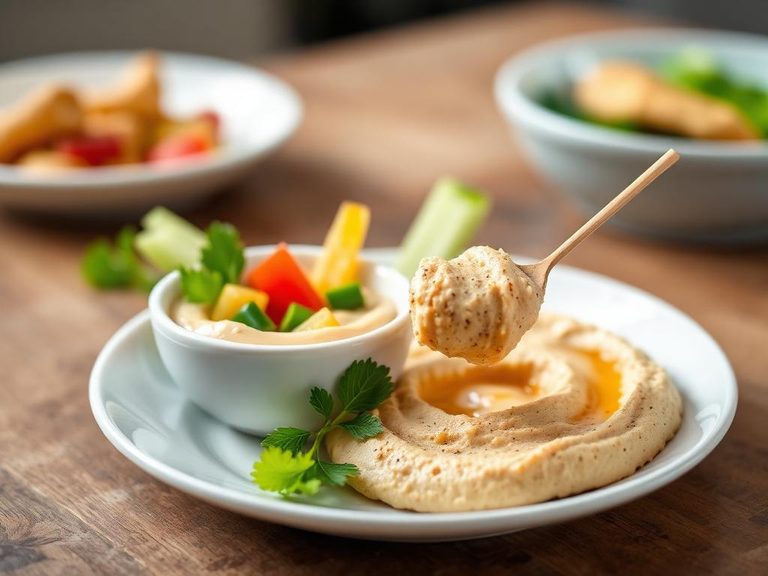
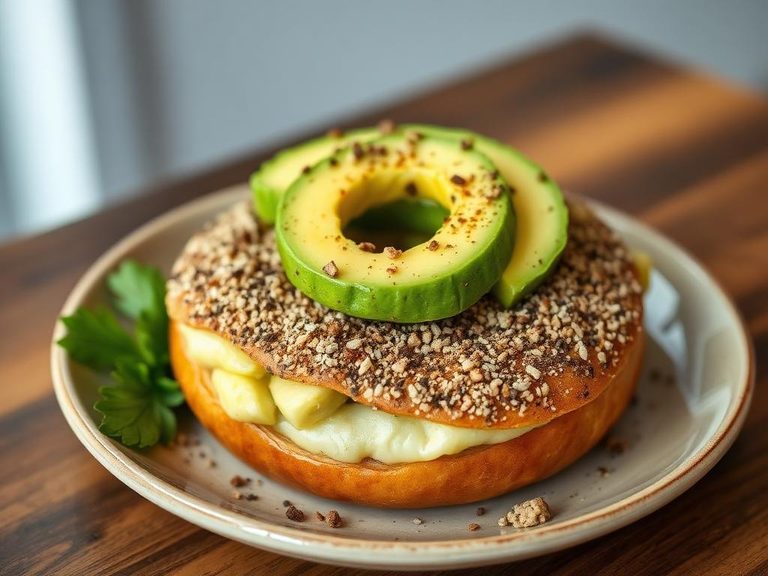
People love it for its deep, satisfying crunch and the complex, nutty flavor profile that comes from the seed and multigrain blend. It's a versatile base for both savory and sweet toppings, making it a staple for healthy snacking and elegant appetizers.
⚠️ Watch-outs & how to enjoy it better
The dense, high-fiber composition can be heavy for some, potentially causing digestive discomfort if eaten in large quantities without adequate hydration. To counteract this, start with a smaller portion and pair it with a hydrating food like cucumber or a dip with high water content. Also, check labels for added sodium, which can be high in savory crackers.
Key benefits
- High in dietary fiber (10.2g per 100g) for digestive health.
- Good source of plant-based protein (11.25g per 100g).
- Provides complex carbohydrates for sustained energy.
- Contains a variety of seeds for added micronutrients and healthy fats.
- Gluten-free, suitable for those with celiac disease or gluten sensitivity.
🍽️ Popular dishes


🌍 Where it's eaten
💡 Did you know?
Many gluten-free multigrain crackers use ancient grains like sorghum and millet, which were staple crops in parts of Africa and Asia for millennia before becoming trendy 'superfoods' in Western health food aisles.
Full nutrition (USDA data · scales with serving)
| Water | 3.6 g |
| Energy | 453 kcal |
| Energy | 1894 kj |
| Protein | 11.3 g |
| Total lipid (fat) | 15.8 g |
| Ash | 3.0 g |
| Carbohydrate, by difference | 66.3 g |
| Fiber, total dietary | 10.2 g |
| Total Sugars | 0.86 g |
| Sucrose | 0.86 g |
| Glucose | 0.00 g |
| Fructose | 0.00 g |
| Lactose | 0.00 g |
| Maltose | 0.00 g |
| Galactose | 0.00 g |
| Starch | 54.6 g |
| Calcium, Ca | 238 mg |
| Iron, Fe | 2.8 mg |
| Magnesium, Mg | 164 mg |
| Phosphorus, P | 374 mg |
| Potassium, K | 381 mg |
| Sodium, Na | 438 mg |
| Zinc, Zn | 2.6 mg |
| Copper, Cu | 0.55 mg |
| Manganese, Mn | 2.5 mg |
| Selenium, Se | 17.4 ug |
| Vitamin C, total ascorbic acid | 0.00 mg |
| Thiamin | 0.21 mg |
| Riboflavin | 0.17 mg |
| Niacin | 4.8 mg |
| Pantothenic acid | 0.84 mg |
| Vitamin B-6 | 0.37 mg |
| Folate, total | 35.0 ug |
| Folic acid | 0.00 ug |
| Folate, food | 35.0 ug |
| Folate, DFE | 35.0 ug |
| Choline, total | 27.1 mg |
| Vitamin B-12 | 0.00 ug |
| Vitamin B-12, added | 0.00 ug |
| Vitamin A, RAE | 0.00 ug |
| Retinol | 0.00 ug |
| Carotene, beta | 4.0 ug |
| Carotene, alpha | 0.00 ug |
| Cryptoxanthin, beta | 0.00 ug |
| Vitamin A, IU | 7.0 iu |
| Lycopene | 0.00 ug |
| Lutein + zeaxanthin | 174 ug |
| Vitamin E (alpha-tocopherol) | 1.5 mg |
| Vitamin E, added | 0.00 mg |
| Vitamin D (D2 + D3), International Units | 0.00 iu |
| Vitamin D (D2 + D3) | 0.00 ug |
| Vitamin K (phylloquinone) | 13.7 ug |
| Alcohol, ethyl | 0.00 g |
| Caffeine | 0.00 mg |
| Theobromine | 0.00 mg |
Fat & fatty acid profile (per 100g)
| Fatty acids, total saturated | 2.1 g |
| SFA 4:0 | 0.00 g |
| SFA 6:0 | 0.00 g |
| SFA 8:0 | 0.00 g |
| SFA 10:0 | 0.00 g |
| SFA 12:0 | 0.00 g |
| SFA 14:0 | 0.01 g |
| SFA 15:0 | 0.00 g |
| SFA 16:0 | 1.3 g |
| SFA 17:0 | 0.01 g |
| SFA 18:0 | 0.67 g |
| SFA 20:0 | 0.08 g |
| SFA 22:0 | 0.03 g |
| SFA 24:0 | 0.02 g |
| Fatty acids, total monounsaturated | 7.0 g |
| MUFA 14:1 | 0.00 g |
| MUFA 15:1 | 0.00 g |
| MUFA 16:1 | 0.02 g |
| MUFA 16:1 c | 0.02 g |
| MUFA 17:1 | 0.01 g |
| MUFA 18:1 | 6.9 g |
| MUFA 18:1 c | 6.9 g |
| MUFA 20:1 | 0.04 g |
| MUFA 22:1 | 0.01 g |
| MUFA 22:1 c | 0.01 g |
| MUFA 24:1 c | 0.01 g |
| Fatty acids, total polyunsaturated | 6.0 g |
| PUFA 18:2 | 5.0 g |
| PUFA 18:2 n-6 c,c | 5.0 g |
| PUFA 18:2 CLAs | 0.00 g |
| PUFA 18:3 | 0.93 g |
| PUFA 18:3 n-3 c,c,c (ALA) | 0.92 g |
| PUFA 18:3 n-6 c,c,c | 0.00 g |
| PUFA 18:3i | 0.00 g |
| PUFA 18:4 | 0.00 g |
| PUFA 20:2 n-6 c,c | 0.00 g |
| PUFA 20:3 | 0.00 g |
| PUFA 20:3 n-3 | 0.00 g |
| PUFA 20:3 n-6 | 0.00 g |
| PUFA 20:4 | 0.00 g |
| PUFA 20:5 n-3 (EPA) | 0.01 g |
| PUFA 22:4 | 0.00 g |
| PUFA 22:5 n-3 (DPA) | 0.00 g |
| PUFA 22:6 n-3 (DHA) | 0.00 g |
| Fatty acids, total trans | 0.02 g |
| Fatty acids, total trans-monoenoic | 0.01 g |
| TFA 16:1 t | 0.00 g |
| TFA 18:1 t | 0.01 g |
| TFA 22:1 t | 0.00 g |
| TFA 18:2 t not further defined | 0.01 g |
| Fatty acids, total trans-polyenoic | 0.01 g |
| Cholesterol | 0.00 mg |
Amino acid profile (per 100g)
Estimated from Crackers, cheese, sandwich-type with cheese filling — USDA does not publish this profile for Crackers.
| Tryptophan | 0.11 g |
| Threonine | 0.33 g |
| Isoleucine | 0.36 g |
| Leucine | 0.64 g |
| Lysine | 0.39 g |
| Methionine | 0.15 g |
| Cystine | 0.15 g |
| Phenylalanine | 0.35 g |
| Tyrosine | 0.25 g |
| Valine | 0.38 g |
| Arginine | 0.29 g |
| Histidine | 0.17 g |
| Alanine | 0.30 g |
| Aspartic acid | 0.52 g |
| Glutamic acid | 2.2 g |
| Glycine | 0.24 g |
| Proline | 0.77 g |
| Serine | 0.40 g |
FAQ
Are these crackers actually healthy?
Compared to refined flour crackers, yes. They offer more fiber, protein, and nutrients from whole grains and seeds. However, like any food, they should be enjoyed in moderation as part of a balanced diet, especially since calorie density is moderate (453 kcal per 100g).
Why are they so hard and crunchy?
The lack of gluten (which provides elasticity) and the high content of seeds and whole grains result in a denser, harder texture. This crunch is intentional and holds up well under wet toppings.
Can I eat these on a low-carb diet?
They are relatively high in carbohydrates (66.3g per 100g), so they are not ideal for strict low-carb or keto diets. The net carbs (total carbs minus fiber) are still significant at about 56g per 100g.
Nutrient density (calculated · NRF9.3)
Nutrient Rich Foods index: beneficial nutrients (protein, fiber, vitamins, minerals) minus saturated fat, added sugar & sodium, per 100 kcal.
NRF9.3 index — Fulgoni, Keast & Drewnowski, 2009. Computed from USDA nutrients.
Weight-loss friendliness (composite index)
Energy density 4.53 kcal/g · 10% calories from protein · 10.2 g fiber · 0.9 g sugar per 100 g.
Composite of energy density (Rolls et al., 1999), protein & fiber satiety, minus sugar. A calculated heuristic — ranks satiety-per-calorie, not a clinical measure.
Dietary load (calculated from USDA values)
Potential renal acid load. Positive = acid-forming, negative = alkaline-forming.
Sodium-to-potassium ratio: 1.15 (lower is better — aim for ≤ 1)
Sodium:potassium per WHO potassium guidance. Computed from USDA nutrients.