

Chili with beans, microwavable bowls
Whole food · Meals, Entrees, and Side Dishes

Photo: Wikipedia
This is a convenient, single-serving microwaveable bowl of hearty chili, pre-mixed with tender beans for a complete, savory meal. The texture is thick and stew-like, with a rich, tomato-based sauce and a mild to moderate spice level. For just 100 calories per 100g, it delivers a solid protein punch of 5.85g, making it a surprisingly nutrient-dense quick meal.
Calorie split: 23% protein · 44% carbs · 33% fat
↓ Full nutrition💚 Why it's loved
People love it for its comforting, savory flavor and the sheer convenience of having a hot, protein-packed meal ready in under two minutes. It's a nostalgic, versatile staple that can be eaten alone, over rice, or with a side of cornbread.
⚠️ Watch-outs & how to enjoy it better
Canned and microwavable chili can be very high in sodium, which is a concern for those monitoring blood pressure. To counteract this, pair it with a no-salt-added side like steamed vegetables or a fresh salad, and drink plenty of water. The beans contain oligosaccharides which can cause bloating in some; starting with a smaller portion or choosing varieties with added digestive enzymes can help.
Key benefits
- High in plant-based protein from beans
- Good source of dietary fiber for digestion
- Convenient, portion-controlled single serving
- Low in calories per 100g
- Shelf-stable and ready in minutes
🍽️ Popular dishes

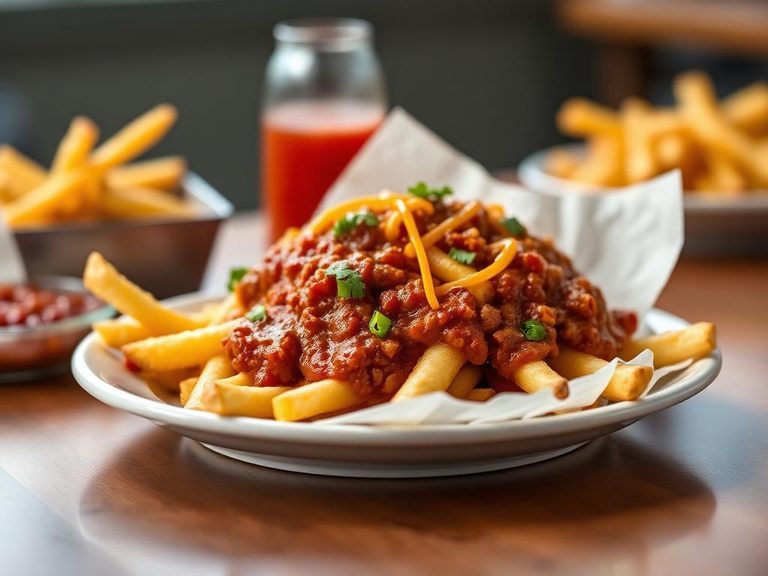
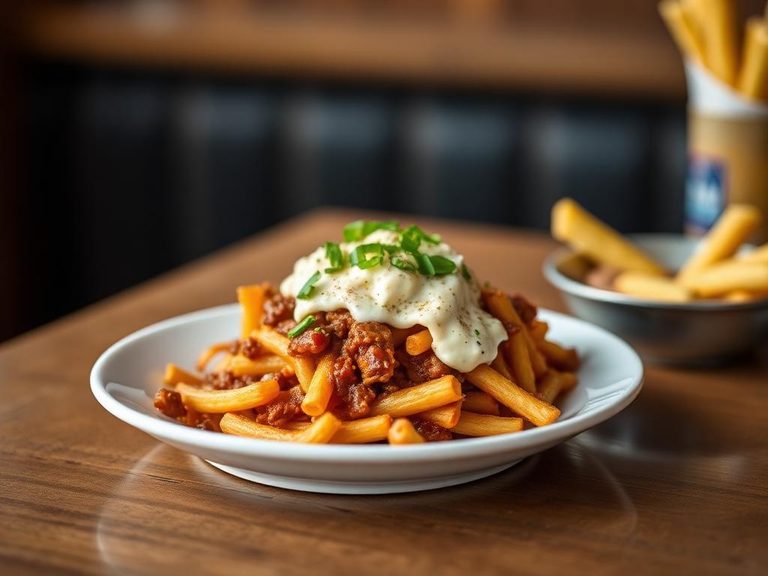
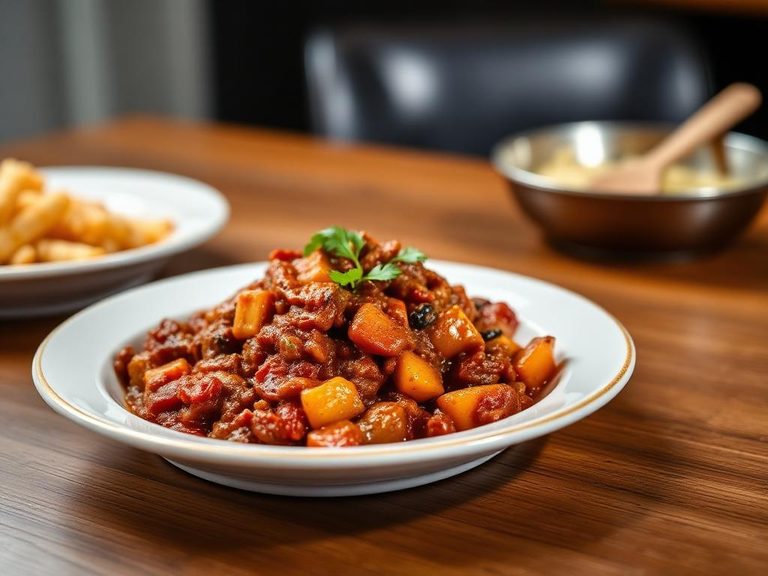
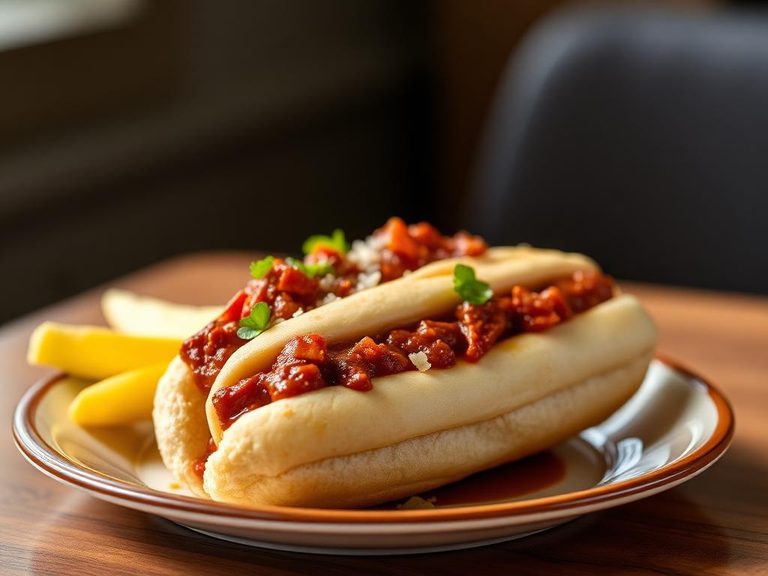
🌍 Where it's eaten
💡 Did you know?
The first known recipe for 'chili' was published in 1896 by a woman named Chili Queens of San Antonio, who sold it from open-air stalls in the city's plazas.
Full nutrition (USDA data · scales with serving)
| Water | 77.9 g |
| Energy | 100 kcal |
| Energy | 419 kj |
| Protein | 5.8 g |
| Total lipid (fat) | 3.7 g |
| Ash | 1.7 g |
| Carbohydrate, by difference | 10.9 g |
| Fiber, total dietary | 2.9 g |
| Total Sugars | 1.8 g |
| Sucrose | 0.76 g |
| Glucose | 0.45 g |
| Fructose | 0.63 g |
| Lactose | 0.00 g |
| Maltose | 0.00 g |
| Galactose | 0.00 g |
| Starch | 4.7 g |
| Calcium, Ca | 34.0 mg |
| Iron, Fe | 1.1 mg |
| Magnesium, Mg | 25.0 mg |
| Phosphorus, P | 80.0 mg |
| Potassium, K | 245 mg |
| Sodium, Na | 385 mg |
| Zinc, Zn | 0.95 mg |
| Copper, Cu | 0.08 mg |
| Manganese, Mn | 0.20 mg |
| Selenium, Se | 4.0 ug |
| Vitamin C, total ascorbic acid | 0.80 mg |
| Thiamin | 0.02 mg |
| Riboflavin | 0.03 mg |
| Niacin | 0.94 mg |
| Pantothenic acid | 0.30 mg |
| Vitamin B-6 | 0.11 mg |
| Folate, total | 24.0 ug |
| Folic acid | 0.00 ug |
| Folate, food | 24.0 ug |
| Folate, DFE | 24.0 ug |
| Choline, total | 29.8 mg |
| Vitamin B-12 | 0.32 ug |
| Vitamin B-12, added | 0.00 ug |
| Vitamin A, RAE | 23.0 ug |
| Retinol | 0.00 ug |
| Carotene, beta | 228 ug |
| Carotene, alpha | 14.0 ug |
| Cryptoxanthin, beta | 73.0 ug |
| Vitamin A, IU | 452 iu |
| Lycopene | 1523 ug |
| Lutein + zeaxanthin | 126 ug |
| Vitamin E (alpha-tocopherol) | 0.64 mg |
| Vitamin E, added | 0.00 mg |
| Tocopherol, beta | 0.15 mg |
| Tocopherol, gamma | 0.92 mg |
| Tocopherol, delta | 0.07 mg |
| Tocotrienol, alpha | 0.07 mg |
| Tocotrienol, beta | 0.00 mg |
| Tocotrienol, gamma | 0.02 mg |
| Tocotrienol, delta | 0.00 mg |
| Vitamin D (D2 + D3), International Units | 0.00 iu |
| Vitamin D (D2 + D3) | 0.00 ug |
| Vitamin K (phylloquinone) | 3.9 ug |
| Alcohol, ethyl | 0.00 g |
| Caffeine | 0.00 mg |
| Theobromine | 0.00 mg |
Fat & fatty acid profile (per 100g)
| Fatty acids, total saturated | 1.4 g |
| SFA 4:0 | 0.00 g |
| SFA 6:0 | 0.00 g |
| SFA 8:0 | 0.00 g |
| SFA 10:0 | 0.00 g |
| SFA 12:0 | 0.00 g |
| SFA 14:0 | 0.10 g |
| SFA 15:0 | 0.02 g |
| SFA 16:0 | 0.79 g |
| SFA 17:0 | 0.04 g |
| SFA 18:0 | 0.41 g |
| SFA 20:0 | 0.00 g |
| SFA 22:0 | 0.00 g |
| SFA 24:0 | 0.00 g |
| Fatty acids, total monounsaturated | 1.6 g |
| MUFA 14:1 | 0.03 g |
| MUFA 15:1 | 0.00 g |
| MUFA 16:1 | 0.12 g |
| MUFA 16:1 c | 0.11 g |
| MUFA 17:1 | 0.03 g |
| MUFA 18:1 | 1.4 g |
| MUFA 18:1 c | 1.2 g |
| MUFA 20:1 | 0.01 g |
| MUFA 22:1 | 0.00 g |
| MUFA 22:1 c | 0.00 g |
| MUFA 24:1 c | 0.00 g |
| Fatty acids, total polyunsaturated | 0.40 g |
| PUFA 18:2 | 0.29 g |
| PUFA 18:2 n-6 c,c | 0.25 g |
| PUFA 18:2 CLAs | 0.02 g |
| PUFA 18:3 | 0.09 g |
| PUFA 18:3 n-3 c,c,c (ALA) | 0.09 g |
| PUFA 18:3 n-6 c,c,c | 0.00 g |
| PUFA 18:4 | 0.00 g |
| PUFA 20:2 n-6 c,c | 0.00 g |
| PUFA 20:3 | 0.00 g |
| PUFA 20:3 n-3 | 0.00 g |
| PUFA 20:3 n-6 | 0.00 g |
| PUFA 20:4 | 0.01 g |
| PUFA 20:5 n-3 (EPA) | 0.00 g |
| PUFA 22:4 | 0.00 g |
| PUFA 22:5 n-3 (DPA) | 0.00 g |
| PUFA 22:6 n-3 (DHA) | 0.00 g |
| Fatty acids, total trans | 0.20 g |
| Fatty acids, total trans-monoenoic | 0.17 g |
| TFA 16:1 t | 0.01 g |
| TFA 18:1 t | 0.16 g |
| TFA 22:1 t | 0.00 g |
| TFA 18:2 t not further defined | 0.02 g |
| Fatty acids, total trans-polyenoic | 0.02 g |
| Cholesterol | 10.0 mg |
Amino acid profile (per 100g)
Estimated from Chili, no beans, canned entree — USDA does not publish this profile for Chili with beans.
| Threonine | 0.31 g |
| Isoleucine | 0.30 g |
| Leucine | 0.56 g |
| Lysine | 0.39 g |
| Methionine | 0.10 g |
| Phenylalanine | 0.28 g |
| Tyrosine | 0.19 g |
| Valine | 0.38 g |
| Arginine | 0.41 g |
| Histidine | 0.17 g |
| Alanine | 0.52 g |
| Aspartic acid | 0.64 g |
| Glutamic acid | 1.2 g |
| Glycine | 0.63 g |
| Proline | 0.46 g |
| Serine | 0.33 g |
FAQ
Is this a complete meal?
For a light meal or substantial snack, yes. It provides protein and fiber. For a more filling meal, consider pairing it with a grain like rice or quinoa and a vegetable side.
Can I eat this cold?
While it's designed to be heated, it is safe to eat cold. However, the flavors and texture are generally much better when warmed through.
Are the beans in this chili?
Yes, the product name explicitly states 'with beans,' which are a primary ingredient providing the protein and fiber.
Nutrient density (calculated · NRF9.3)
Nutrient Rich Foods index: beneficial nutrients (protein, fiber, vitamins, minerals) minus saturated fat, added sugar & sodium, per 100 kcal.
NRF9.3 index — Fulgoni, Keast & Drewnowski, 2009. Computed from USDA nutrients.
Weight-loss friendliness (composite index)
Energy density 1.00 kcal/g · 23% calories from protein · 2.9 g fiber · 1.8 g sugar per 100 g.
Composite of energy density (Rolls et al., 1999), protein & fiber satiety, minus sugar. A calculated heuristic — ranks satiety-per-calorie, not a clinical measure.
Dietary load (calculated from USDA values)
Potential renal acid load. Positive = acid-forming, negative = alkaline-forming.
Sodium-to-potassium ratio: 1.57 (lower is better — aim for ≤ 1)
Sodium:potassium per WHO potassium guidance. Computed from USDA nutrients.