

Chicken, skin (drumsticks and thighs), raw
Whole food · Poultry Products
This is the raw, unpeeled skin from chicken drumsticks and thighs, a rich, gelatinous layer of fat and connective tissue. When cooked, it transforms into a deeply savory, crispy, or silky component that carries much of the poultry's flavor. Nutritionally, it is an extremely dense source of fat, providing over 44 grams per 100g with minimal protein or carbohydrates.
Calorie split: 9% protein · 1% carbs · 91% fat
↓ Full nutrition💚 Why it's loved
People love it for its unparalleled ability to deliver rich, savory flavor and a satisfying crispy texture when rendered, forming the delicious crust on roasted or fried chicken. It's a versatile flavor base, prized in many cultures for making everything from confit to soup stocks.
⚠️ Watch-outs & how to enjoy it better
Its extremely high fat content makes it very calorie-dense, which can be a concern for those managing weight or cardiovascular health. To enjoy it healthily, practice strict portion control, use it as a flavor enhancer rather than the main protein, and always pair it with fiber-rich vegetables or lean proteins to balance the meal.
Key benefits
- Excellent source of dietary fat for energy and satiety.
- Provides fat-soluble vitamins like A, D, E, and K.
- Rich in collagen, which supports skin and joint health.
- Adds profound flavor and moisture to dishes.
- A traditional ingredient for rendering flavorful cooking fat (schmaltz).
🍽️ Popular dishes
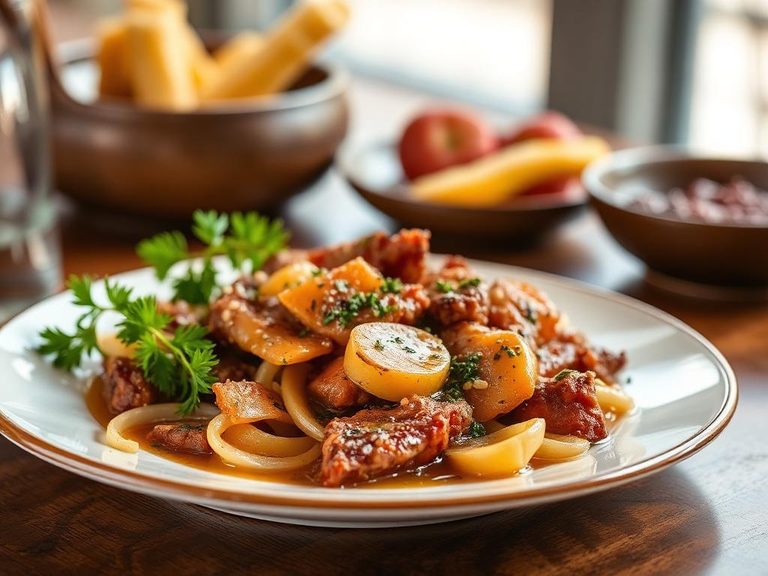
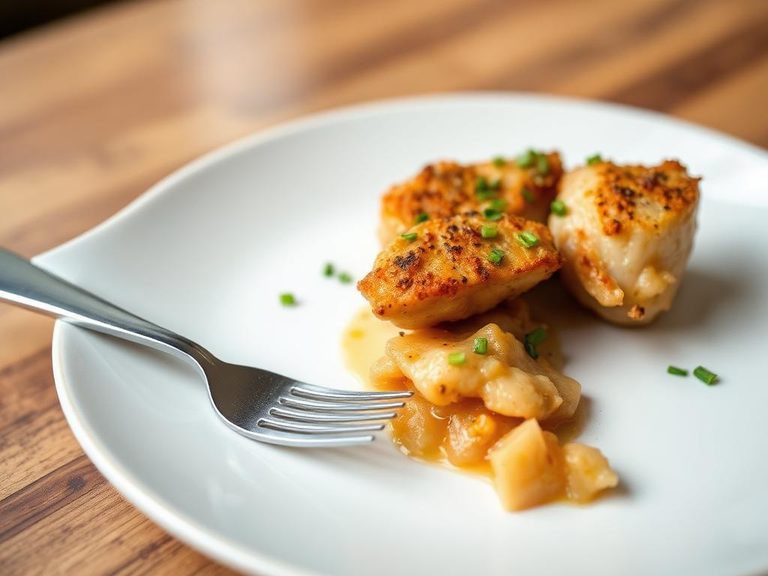
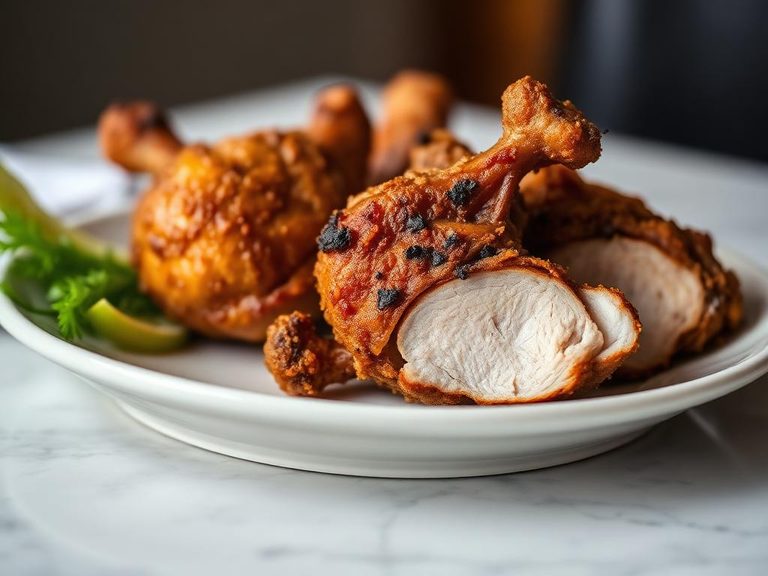

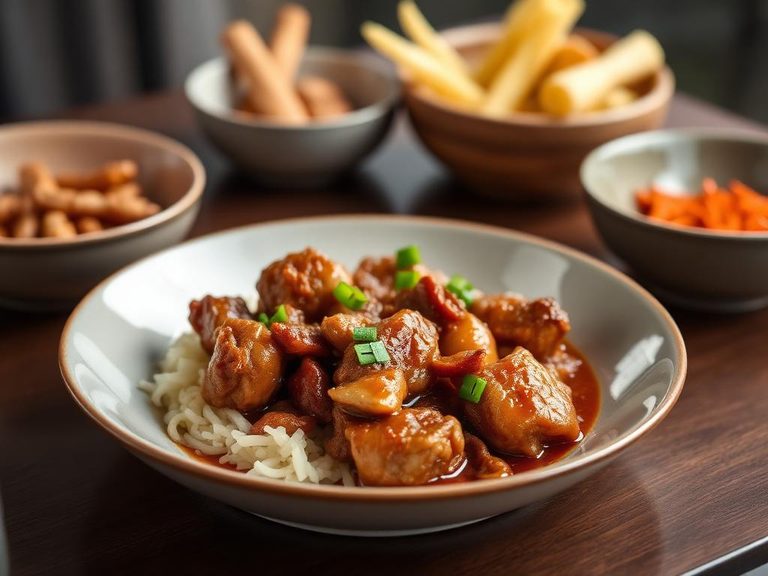
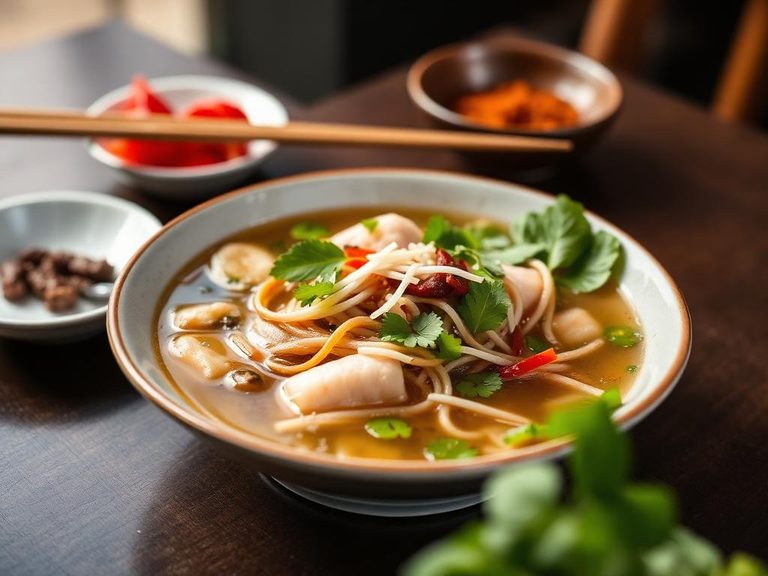
🌍 Where it's eaten
💡 Did you know?
In traditional Jewish cuisine, rendered chicken skin fat (schmaltz) was a primary cooking fat and flavoring agent for centuries, especially in Ashkenazi cooking.
Full nutrition (USDA data · scales with serving)
| Water | 44.9 g |
| Energy | 440 kcal |
| Energy | 1839 kj |
| Protein | 9.6 g |
| Total lipid (fat) | 44.2 g |
| Ash | 0.49 g |
| Carbohydrate, by difference | 0.79 g |
| Fiber, total dietary | 0.00 g |
| Total Sugars | 0.00 g |
| Calcium, Ca | 6.0 mg |
| Iron, Fe | 0.37 mg |
| Magnesium, Mg | 8.0 mg |
| Phosphorus, P | 95.0 mg |
| Potassium, K | 119 mg |
| Sodium, Na | 51.0 mg |
| Zinc, Zn | 0.65 mg |
| Copper, Cu | 0.04 mg |
| Manganese, Mn | 0.01 mg |
| Selenium, Se | 10.1 ug |
| Vitamin C, total ascorbic acid | 0.00 mg |
| Thiamin | 0.04 mg |
| Riboflavin | 0.03 mg |
| Niacin | 2.6 mg |
| Pantothenic acid | 0.61 mg |
| Vitamin B-6 | 0.12 mg |
| Folate, total | 2.0 ug |
| Folic acid | 0.00 ug |
| Folate, food | 2.0 ug |
| Folate, DFE | 2.0 ug |
| Choline, total | 28.3 mg |
| Betaine | 8.3 mg |
| Vitamin B-12 | 0.65 ug |
| Vitamin B-12, added | 0.00 ug |
| Vitamin A, RAE | 59.0 ug |
| Retinol | 59.0 ug |
| Carotene, beta | 0.00 ug |
| Carotene, alpha | 0.00 ug |
| Cryptoxanthin, beta | 1.0 ug |
| Vitamin A, IU | 196 iu |
| Lycopene | 0.00 ug |
| Lutein + zeaxanthin | 103 ug |
| Vitamin E (alpha-tocopherol) | 0.27 mg |
| Vitamin E, added | 0.00 mg |
| Tocopherol, beta | 0.00 mg |
| Tocopherol, gamma | 0.13 mg |
| Tocopherol, delta | 0.00 mg |
| Tocotrienol, alpha | 0.04 mg |
| Tocotrienol, beta | 0.00 mg |
| Tocotrienol, gamma | 0.04 mg |
| Tocotrienol, delta | 0.00 mg |
| Vitamin D (D2 + D3), International Units | 6.0 iu |
| Vitamin D (D2 + D3) | 0.20 ug |
| Vitamin D3 (cholecalciferol) | 0.20 ug |
| Vitamin K (phylloquinone) | 0.40 ug |
| Alcohol, ethyl | 0.00 g |
| Caffeine | 0.00 mg |
| Theobromine | 0.00 mg |
Fat & fatty acid profile (per 100g)
| Fatty acids, total saturated | 12.1 g |
| SFA 4:0 | 0.00 g |
| SFA 6:0 | 0.00 g |
| SFA 8:0 | 0.00 g |
| SFA 10:0 | 0.01 g |
| SFA 12:0 | 0.02 g |
| SFA 14:0 | 0.25 g |
| SFA 15:0 | 0.03 g |
| SFA 16:0 | 9.5 g |
| SFA 17:0 | 0.05 g |
| SFA 18:0 | 2.2 g |
| SFA 20:0 | 0.03 g |
| SFA 22:0 | 0.03 g |
| SFA 24:0 | 0.00 g |
| Fatty acids, total monounsaturated | 19.0 g |
| MUFA 14:1 | 0.09 g |
| MUFA 15:1 | 0.00 g |
| MUFA 16:1 | 2.7 g |
| MUFA 16:1 c | 2.7 g |
| MUFA 17:1 | 0.04 g |
| MUFA 18:1 | 15.9 g |
| MUFA 18:1 c | 15.8 g |
| MUFA 20:1 | 0.21 g |
| MUFA 22:1 | 0.01 g |
| MUFA 22:1 c | 0.01 g |
| MUFA 24:1 c | 0.00 g |
| Fatty acids, total polyunsaturated | 9.1 g |
| PUFA 18:2 | 8.3 g |
| PUFA 18:2 n-6 c,c | 8.2 g |
| PUFA 18:2 CLAs | 0.06 g |
| PUFA 18:3 | 0.44 g |
| PUFA 18:3 n-3 c,c,c (ALA) | 0.40 g |
| PUFA 18:3 n-6 c,c,c | 0.04 g |
| PUFA 18:4 | 0.01 g |
| PUFA 20:2 n-6 c,c | 0.05 g |
| PUFA 20:3 | 0.07 g |
| PUFA 20:3 n-3 | 0.00 g |
| PUFA 20:3 n-6 | 0.07 g |
| PUFA 20:4 | 0.13 g |
| PUFA 20:5 n-3 (EPA) | 0.01 g |
| PUFA 22:4 | 0.03 g |
| PUFA 22:5 n-3 (DPA) | 0.01 g |
| PUFA 22:6 n-3 (DHA) | 0.01 g |
| Fatty acids, total trans | 0.23 g |
| Fatty acids, total trans-monoenoic | 0.16 g |
| TFA 16:1 t | 0.02 g |
| TFA 18:1 t | 0.14 g |
| TFA 22:1 t | 0.00 g |
| TFA 18:2 t not further defined | 0.07 g |
| Fatty acids, total trans-polyenoic | 0.07 g |
| Cholesterol | 105 mg |
Amino acid profile (per 100g)
| Tryptophan | 0.05 g |
| Threonine | 0.30 g |
| Isoleucine | 0.27 g |
| Leucine | 0.53 g |
| Lysine | 0.55 g |
| Methionine | 0.16 g |
| Cystine | 0.08 g |
| Phenylalanine | 0.29 g |
| Tyrosine | 0.23 g |
| Valine | 0.34 g |
| Arginine | 0.68 g |
| Histidine | 0.20 g |
| Alanine | 0.66 g |
| Aspartic acid | 0.71 g |
| Glutamic acid | 1.1 g |
| Glycine | 1.2 g |
| Proline | 0.73 g |
| Serine | 0.35 g |
FAQ
How is chicken skin different from other animal fats?
Chicken skin fat is primarily composed of monounsaturated fats (like oleic acid, also found in olive oil) and polyunsaturated fats, making it softer at room temperature than the more saturated fats from beef or pork.
Can I eat raw chicken skin?
No. Raw chicken skin, like all raw poultry, must be thoroughly cooked to a safe internal temperature to eliminate harmful bacteria like Salmonella and Campylobacter.
What's the best way to get crispy chicken skin?
Pat the skin completely dry with paper towels, season generously, and cook it starting in a cold oven or pan to slowly render the fat. High, dry heat at the end or deep-frying creates the crispiest texture.
Nutrient density (calculated · NRF9.3)
Nutrient Rich Foods index: beneficial nutrients (protein, fiber, vitamins, minerals) minus saturated fat, added sugar & sodium, per 100 kcal.
NRF9.3 index — Fulgoni, Keast & Drewnowski, 2009. Computed from USDA nutrients.
Weight-loss friendliness (composite index)
Energy density 4.40 kcal/g · 9% calories from protein · 0.0 g fiber · 0.0 g sugar per 100 g.
Composite of energy density (Rolls et al., 1999), protein & fiber satiety, minus sugar. A calculated heuristic — ranks satiety-per-calorie, not a clinical measure.
Dietary load (calculated from USDA values)
Potential renal acid load. Positive = acid-forming, negative = alkaline-forming.
Sodium-to-potassium ratio: 0.43 (lower is better — aim for ≤ 1)
Sodium:potassium per WHO potassium guidance. Computed from USDA nutrients.