Ravioli, meat-filled, with tomato sauce or meat sauce, canned
Whole food · Meals, Entrees, and Side Dishes

Photo: Wikipedia
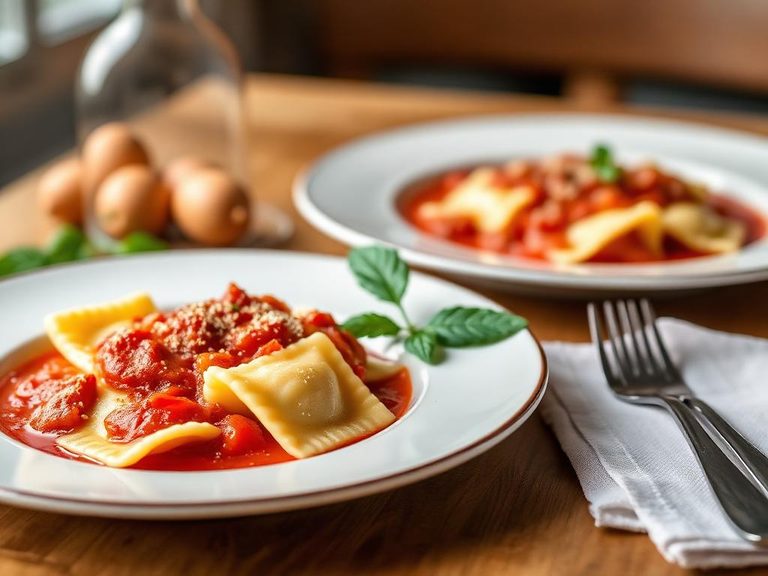
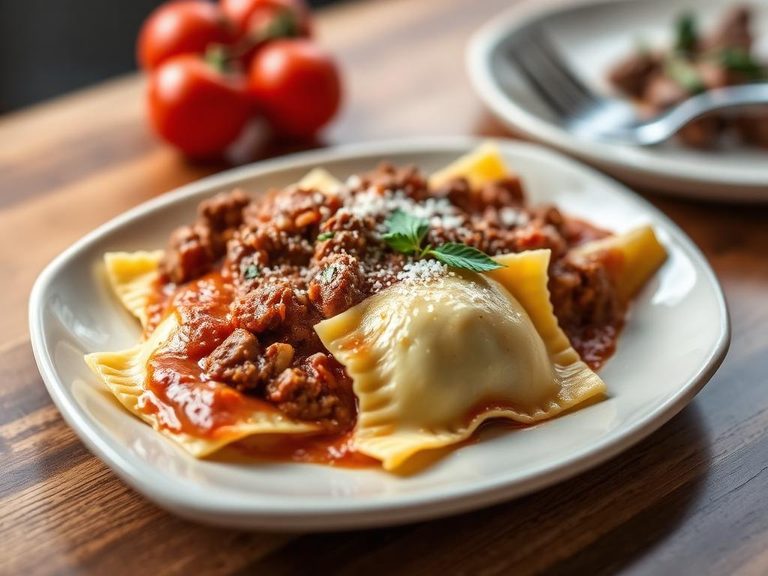
This is a shelf-stable, ready-to-eat version of the classic Italian comfort food, featuring small pasta pockets filled with seasoned ground meat, typically beef or pork. The texture is softer than fresh ravioli, with a tender pasta shell and a dense, savory filling. Nutritionally, it's a moderate source of protein and carbohydrates, but notably low in fat for a meat-filled pasta.
💚 Why it's loved
People love it for its ultimate convenience and nostalgic, savory flavor—a comforting, hearty meal that can be ready in minutes. It's a versatile pantry staple that can be eaten straight from the can or easily doctored up.
⚠️ Watch-outs & how to enjoy it better
The primary downside is typically high sodium content from the canning process, which can be a concern for those monitoring salt intake. The soft texture may also lack the appeal of fresh pasta for some. To counteract, rinse the ravioli lightly before heating to reduce surface sodium, and pair with a fresh, low-sodium vegetable side to add fiber and balance the meal.
Key benefits
- Provides a quick, shelf-stable source of protein and carbohydrates.
- Low in fat compared to many other prepared pasta dishes.
- Convenient no-cook or quick-heat meal option.
- Offers a consistent, familiar flavor profile.
🍽️ Popular dishes
🌍 Where it's eaten
💡 Did you know?
The word 'ravioli' may derive from the Italian 'riavvolgere,' meaning 'to wrap,' but some food historians link its conceptual origins to similar filled pasta dishes described in 14th-century Italian manuscripts.
Full nutrition (scales with serving)
| Water | 79.1 g |
| Energy | 97.0 kcal |
| Energy | 405 kj |
| Protein | 3.2 g |
| Total lipid (fat) | 3.4 g |
| Ash | 0.97 g |
| Carbohydrate, by difference | 13.3 g |
| Fiber, total dietary | 1.5 g |
| Total Sugars | 2.0 g |
| Sucrose | 0.00 g |
| Glucose | 1.0 g |
| Fructose | 0.97 g |
| Lactose | 0.00 g |
| Maltose | 0.00 g |
| Galactose | 0.00 g |
| Starch | 8.8 g |
| Calcium, Ca | 12.0 mg |
| Iron, Fe | 1.1 mg |
| Magnesium, Mg | 12.0 mg |
| Phosphorus, P | 40.0 mg |
| Potassium, K | 178 mg |
| Sodium, Na | 283 mg |
| Zinc, Zn | 0.39 mg |
| Copper, Cu | 0.05 mg |
| Manganese, Mn | 0.14 mg |
| Selenium, Se | 9.6 ug |
| Vitamin C, total ascorbic acid | 0.00 mg |
| Thiamin | 0.06 mg |
| Riboflavin | 0.06 mg |
| Niacin | 1.2 mg |
| Vitamin B-6 | 0.06 mg |
| Folate, total | 21.0 ug |
| Folic acid | 10.0 ug |
| Folate, food | 11.0 ug |
| Folate, DFE | 28.0 ug |
| Choline, total | 12.5 mg |
| Vitamin B-12 | 0.15 ug |
| Vitamin B-12, added | 0.00 ug |
| Vitamin A, RAE | 14.0 ug |
| Retinol | 4.0 ug |
| Carotene, beta | 121 ug |
| Carotene, alpha | 1.0 ug |
| Cryptoxanthin, beta | 0.00 ug |
| Vitamin A, IU | 217 iu |
| Lycopene | 3335 ug |
| Lutein + zeaxanthin | 65.0 ug |
| Vitamin E (alpha-tocopherol) | 0.50 mg |
| Vitamin E, added | 0.00 mg |
| Tocopherol, beta | 0.03 mg |
| Tocopherol, gamma | 0.06 mg |
| Tocopherol, delta | 0.00 mg |
| Tocotrienol, alpha | 0.01 mg |
| Tocotrienol, beta | 0.09 mg |
| Tocotrienol, gamma | 0.00 mg |
| Tocotrienol, delta | 0.00 mg |
| Vitamin D (D2 + D3), International Units | 0.00 iu |
| Vitamin D (D2 + D3) | 0.00 ug |
| Vitamin K (phylloquinone) | 0.80 ug |
| Vitamin K (Menaquinone-4) | 0.20 ug |
| Alcohol, ethyl | 0.00 g |
| Caffeine | 0.00 mg |
| Theobromine | 0.00 mg |
Fat & fatty acid profile (per 100g)
| Fatty acids, total saturated | 1.5 g |
| SFA 4:0 | 0.00 g |
| SFA 6:0 | 0.00 g |
| SFA 8:0 | 0.00 g |
| SFA 10:0 | 0.00 g |
| SFA 12:0 | 0.00 g |
| SFA 14:0 | 0.10 g |
| SFA 15:0 | 0.02 g |
| SFA 16:0 | 0.82 g |
| SFA 17:0 | 0.04 g |
| SFA 18:0 | 0.46 g |
| SFA 20:0 | 0.00 g |
| SFA 22:0 | 0.00 g |
| SFA 24:0 | 0.00 g |
| Fatty acids, total monounsaturated | 1.6 g |
| MUFA 14:1 | 0.03 g |
| MUFA 15:1 | 0.00 g |
| MUFA 16:1 | 0.12 g |
| MUFA 16:1 c | 0.10 g |
| MUFA 17:1 | 0.03 g |
| MUFA 18:1 | 1.4 g |
| MUFA 18:1 c | 1.3 g |
| MUFA 20:1 | 0.01 g |
| MUFA 22:1 | 0.00 g |
| MUFA 22:1 c | 0.00 g |
| MUFA 24:1 c | 0.00 g |
| Fatty acids, total polyunsaturated | 0.24 g |
| PUFA 18:2 | 0.21 g |
| PUFA 18:2 n-6 c,c | 0.17 g |
| PUFA 18:2 CLAs | 0.02 g |
| PUFA 18:3 | 0.01 g |
| PUFA 18:3 n-3 c,c,c (ALA) | 0.01 g |
| PUFA 18:3 n-6 c,c,c | 0.00 g |
| PUFA 18:4 | 0.00 g |
| PUFA 20:2 n-6 c,c | 0.00 g |
| PUFA 20:3 | 0.00 g |
| PUFA 20:3 n-3 | 0.00 g |
| PUFA 20:3 n-6 | 0.00 g |
| PUFA 20:4 | 0.00 g |
| PUFA 20:5 n-3 (EPA) | 0.00 g |
| PUFA 22:4 | 0.00 g |
| PUFA 22:5 n-3 (DPA) | 0.00 g |
| PUFA 22:6 n-3 (DHA) | 0.00 g |
| Fatty acids, total trans | 0.19 g |
| Fatty acids, total trans-monoenoic | 0.17 g |
| TFA 16:1 t | 0.01 g |
| TFA 18:1 t | 0.16 g |
| TFA 22:1 t | 0.00 g |
| TFA 18:2 t not further defined | 0.02 g |
| Fatty acids, total trans-polyenoic | 0.02 g |
| Cholesterol | 5.0 mg |
Amino acid profile (per 100g)
| Tryptophan | 0.03 g |
| Threonine | 0.11 g |
| Isoleucine | 0.13 g |
| Leucine | 0.22 g |
| Lysine | 0.15 g |
| Methionine | 0.05 g |
| Cystine | 0.05 g |
| Phenylalanine | 0.15 g |
| Tyrosine | 0.10 g |
| Valine | 0.17 g |
| Arginine | 0.17 g |
| Histidine | 0.08 g |
| Alanine | 0.16 g |
| Aspartic acid | 0.28 g |
| Glutamic acid | 0.94 g |
| Glycine | 0.18 g |
| Proline | 0.26 g |
| Serine | 0.15 g |
| Hydroxyproline | 0.01 g |
FAQ
Is canned ravioli fully cooked?
Yes, canned ravioli is fully cooked and pasteurized during the canning process. It is safe to eat cold, but is typically heated before serving.
How does the nutrition compare to fresh ravioli?
Canned ravioli is generally lower in fat and calories but significantly higher in sodium than fresh, homemade, or refrigerated ravioli. The protein and carb content can be similar.
Can I improve the taste of canned ravioli?
Absolutely. Heating it with a pinch of garlic powder, dried oregano, or a sprinkle of Parmesan cheese can greatly enhance the flavor. Serving it over a bed of fresh spinach or with a side salad also adds freshness.