

Snacks, plantain chips, salted
Whole food · Snacks

Photo: Wikipedia
These are thinly sliced, deep-fried rounds of green plantain, seasoned with salt to create a golden, crunchy, and savory snack. The texture is a satisfyingly hard crunch, offering a starchy, slightly sweet, and earthy flavor profile distinct from potato chips. Nutritionally, they are a high-energy food, providing a significant calorie and carbohydrate boost from their fried preparation.
Calorie split: 2% protein · 48% carbs · 50% fat
↓ Full nutrition💚 Why it's loved
People love them for their uniquely robust crunch and savory, slightly sweet flavor that stands apart from potato chips. They are a beloved staple in many cultures, serving as a go-to snack, side dish, or appetizer.
⚠️ Watch-outs & how to enjoy it better
The deep-frying process makes them high in calories, fat, and sodium, which can contribute to blood-sugar spikes and increased blood pressure if consumed in excess. To counteract this, practice strict portion control, pair them with a protein or healthy fat (like guacamole or a handful of nuts) to slow digestion, and choose brands with lower sodium content.
Key benefits
- Good source of dietary fiber from whole plantain.
- Provides resistant starch, which can support gut health.
- Contains potassium, an essential electrolyte.
- Offers a quick energy source from complex carbohydrates.
- Naturally gluten-free.
🍽️ Popular dishes
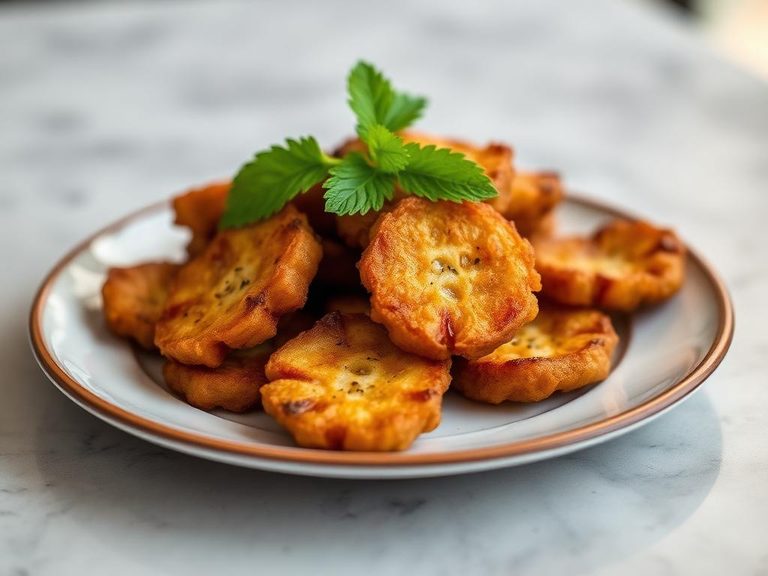
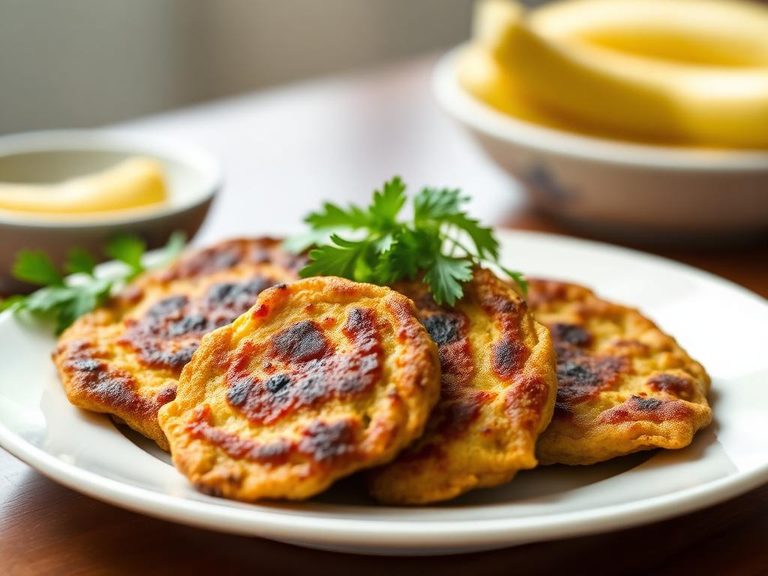
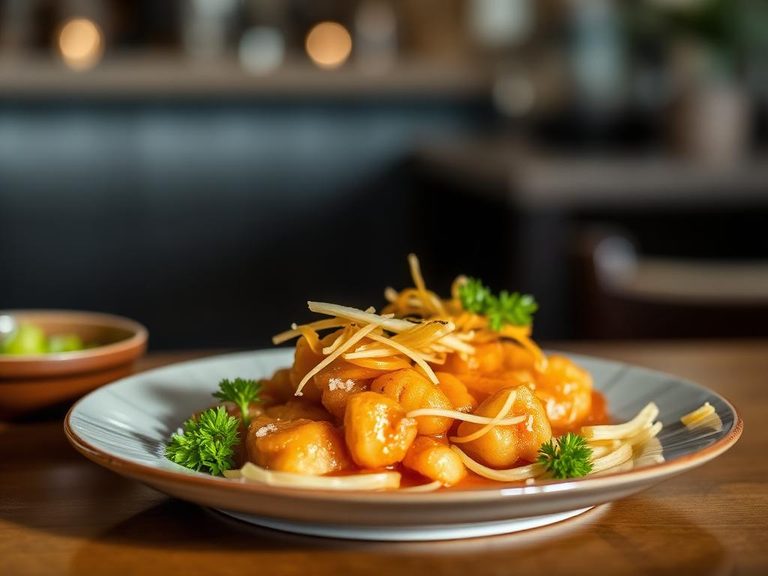
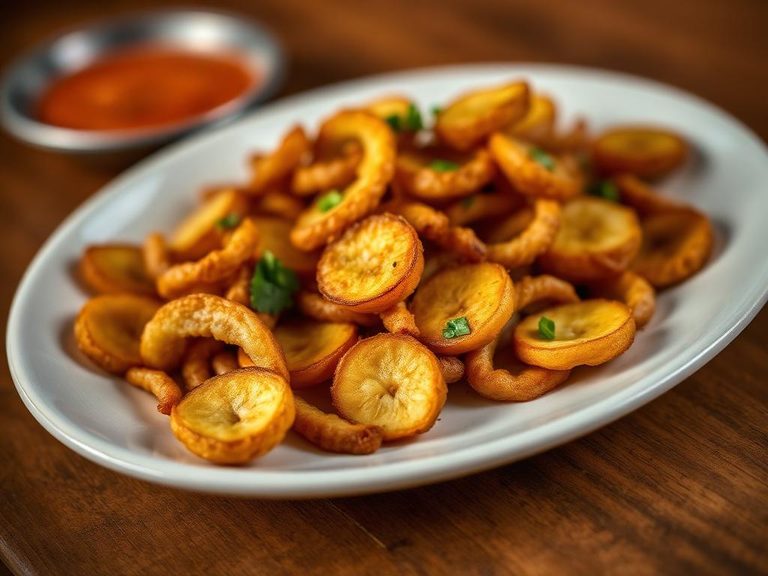
🌍 Where it's eaten
💡 Did you know?
The plantains used for chips are typically harvested while still green and starchy, not when ripe and sweet, which gives them the firm texture needed for a crisp fry.
Full nutrition (USDA data · scales with serving)
| Water | 2.1 g |
| Energy | 531 kcal |
| Energy | 2221 kj |
| Protein | 2.3 g |
| Total lipid (fat) | 29.6 g |
| Ash | 2.2 g |
| Carbohydrate, by difference | 63.8 g |
| Fiber, total dietary | 3.5 g |
| Total Sugars | 0.92 g |
| Sucrose | 0.92 g |
| Starch | 50.8 g |
| Calcium, Ca | 9.0 mg |
| Iron, Fe | 0.97 mg |
| Magnesium, Mg | 71.0 mg |
| Phosphorus, P | 78.0 mg |
| Potassium, K | 786 mg |
| Sodium, Na | 202 mg |
| Zinc, Zn | 0.37 mg |
| Copper, Cu | 0.20 mg |
| Manganese, Mn | 0.28 mg |
| Selenium, Se | 0.40 ug |
| Vitamin C, total ascorbic acid | 32.1 mg |
| Thiamin | 0.07 mg |
| Riboflavin | 0.04 mg |
| Niacin | 0.80 mg |
| Pantothenic acid | 1.1 mg |
| Vitamin B-6 | 0.46 mg |
| Folate, total | 35.0 ug |
| Folic acid | 0.00 ug |
| Folate, food | 35.0 ug |
| Folate, DFE | 35.0 ug |
| Choline, total | 0.00 mg |
| Vitamin B-12 | 0.00 ug |
| Vitamin B-12, added | 0.00 ug |
| Vitamin A, RAE | 69.0 ug |
| Retinol | 0.00 ug |
| Carotene, beta | 611 ug |
| Carotene, alpha | 441 ug |
| Cryptoxanthin, beta | 0.00 ug |
| Vitamin A, IU | 1386 iu |
| Lycopene | 36.0 ug |
| Lutein + zeaxanthin | 16.0 ug |
| Vitamin E (alpha-tocopherol) | 5.0 mg |
| Vitamin E, added | 0.00 mg |
| Tocopherol, beta | 0.02 mg |
| Tocopherol, gamma | 1.8 mg |
| Tocopherol, delta | 0.03 mg |
| Tocotrienol, alpha | 0.14 mg |
| Tocotrienol, beta | 0.00 mg |
| Tocotrienol, gamma | 0.19 mg |
| Tocotrienol, delta | 0.13 mg |
| Vitamin D (D2 + D3), International Units | 0.00 iu |
| Vitamin D (D2 + D3) | 0.00 ug |
| Vitamin K (phylloquinone) | 28.6 ug |
| Vitamin K (Dihydrophylloquinone) | 0.00 ug |
| Vitamin K (Menaquinone-4) | 0.00 ug |
| Alcohol, ethyl | 0.00 g |
| Caffeine | 0.00 mg |
| Theobromine | 0.00 mg |
Fat & fatty acid profile (per 100g)
| Fatty acids, total saturated | 8.3 g |
| SFA 4:0 | 0.01 g |
| SFA 6:0 | 0.00 g |
| SFA 8:0 | 0.02 g |
| SFA 10:0 | 0.04 g |
| SFA 12:0 | 0.03 g |
| SFA 14:0 | 0.21 g |
| SFA 15:0 | 0.01 g |
| SFA 16:0 | 7.1 g |
| SFA 17:0 | 0.02 g |
| SFA 18:0 | 0.78 g |
| SFA 20:0 | 0.08 g |
| SFA 22:0 | 0.03 g |
| SFA 24:0 | 0.03 g |
| Fatty acids, total monounsaturated | 5.6 g |
| MUFA 14:1 | 0.00 g |
| MUFA 15:1 | 0.00 g |
| MUFA 16:1 | 0.12 g |
| MUFA 16:1 c | 0.12 g |
| MUFA 17:1 | 0.00 g |
| MUFA 18:1 | 5.5 g |
| MUFA 18:1 c | 5.4 g |
| MUFA 20:1 | 0.03 g |
| MUFA 22:1 | 0.00 g |
| MUFA 22:1 c | 0.00 g |
| MUFA 24:1 c | 0.01 g |
| Fatty acids, total polyunsaturated | 11.7 g |
| PUFA 18:2 | 11.6 g |
| PUFA 18:2 n-6 c,c | 11.5 g |
| PUFA 18:2 CLAs | 0.03 g |
| PUFA 18:3 | 0.08 g |
| PUFA 18:3 n-3 c,c,c (ALA) | 0.08 g |
| PUFA 18:3 n-6 c,c,c | 0.00 g |
| PUFA 18:4 | 0.00 g |
| PUFA 20:2 n-6 c,c | 0.01 g |
| PUFA 20:3 | 0.00 g |
| PUFA 20:3 n-3 | 0.00 g |
| PUFA 20:3 n-6 | 0.00 g |
| PUFA 20:4 | 0.00 g |
| PUFA 20:5 n-3 (EPA) | 0.03 g |
| PUFA 22:4 | 0.01 g |
| PUFA 22:5 n-3 (DPA) | 0.00 g |
| PUFA 22:6 n-3 (DHA) | 0.00 g |
| Fatty acids, total trans | 0.18 g |
| Fatty acids, total trans-monoenoic | 0.07 g |
| TFA 16:1 t | 0.00 g |
| TFA 18:1 t | 0.07 g |
| TFA 22:1 t | 0.00 g |
| TFA 18:2 t not further defined | 0.11 g |
| Fatty acids, total trans-polyenoic | 0.11 g |
| Cholesterol | 0.00 mg |
Amino acid profile (per 100g)
Estimated from Snacks, corn-based, extruded, chips, plain — USDA does not publish this profile for Snacks.
| Tryptophan | 0.05 g |
| Threonine | 0.25 g |
| Isoleucine | 0.23 g |
| Leucine | 0.80 g |
| Lysine | 0.18 g |
| Methionine | 0.14 g |
| Cystine | 0.12 g |
| Phenylalanine | 0.32 g |
| Tyrosine | 0.27 g |
| Valine | 0.33 g |
| Arginine | 0.33 g |
| Histidine | 0.20 g |
| Alanine | 0.49 g |
| Aspartic acid | 0.46 g |
| Glutamic acid | 1.2 g |
| Glycine | 0.27 g |
| Proline | 0.57 g |
| Serine | 0.31 g |
FAQ
Are plantain chips healthier than potato chips?
Not necessarily. While plantains offer more fiber and some micronutrients like potassium, both are deep-fried snacks high in fat, calories, and sodium. The overall nutritional profile is similar, so moderation is key for both.
Why are my homemade plantain chips not crispy?
The most common reasons are using plantains that are too ripe (yellow) or not frying at a high enough temperature. Use firm, green plantains and ensure your oil is hot (around 350°F/175°C) before adding the slices.
Can I eat plantain chips on a low-carb diet?
Plantain chips are very high in carbohydrates (over 60g per 100g), making them unsuitable for strict low-carb or ketogenic diets. They are best considered a starchy treat.
Nutrient density (calculated · NRF9.3)
Nutrient Rich Foods index: beneficial nutrients (protein, fiber, vitamins, minerals) minus saturated fat, added sugar & sodium, per 100 kcal.
NRF9.3 index — Fulgoni, Keast & Drewnowski, 2009. Computed from USDA nutrients.
Weight-loss friendliness (composite index)
Energy density 5.31 kcal/g · 2% calories from protein · 3.5 g fiber · 0.9 g sugar per 100 g.
Composite of energy density (Rolls et al., 1999), protein & fiber satiety, minus sugar. A calculated heuristic — ranks satiety-per-calorie, not a clinical measure.
Dietary load (calculated from USDA values)
Potential renal acid load. Positive = acid-forming, negative = alkaline-forming.
Sodium-to-potassium ratio: 0.26 (lower is better — aim for ≤ 1)
Sodium:potassium per WHO potassium guidance. Computed from USDA nutrients.