

Tajadas
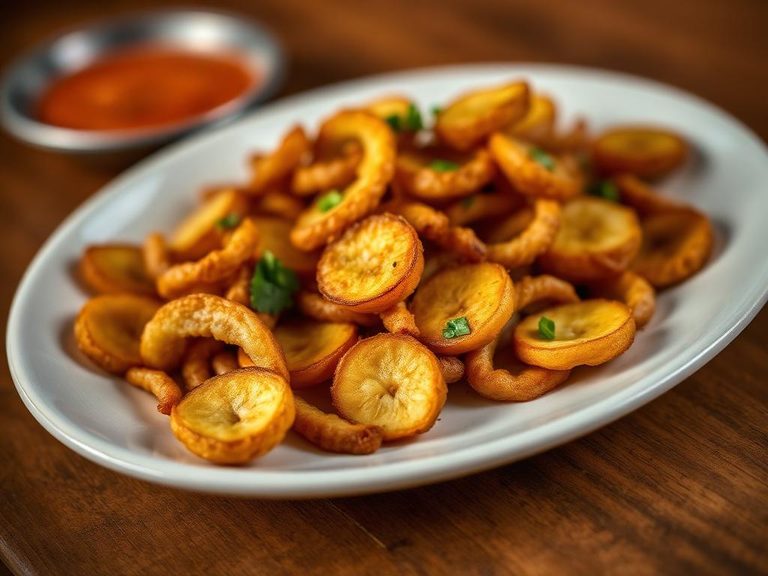
Tajadas are a beloved staple side dish across Central America, consisting of ripe plantains sliced into long, thin strips and deep-fried until golden brown. The primary ingredients are simply ripe plantains and oil, sometimes seasoned with a pinch of salt. They are a ubiquitous accompaniment to meals in countries like Honduras, Nicaragua, and Guatemala.
🍳 View the full Tajadas recipe →
🍽️ Nutrition at a glance
As a fried food, tajadas are high in carbohydrates and fat, providing a good source of energy, potassium, and vitamins A and C from the plantains. A typical serving of about 100 grams contains roughly 250-300 calories.
Nutrition breakdown
| Calories | 430 kcal |
| Protein | 1.5 g |
| Carbs | 65 g |
| Fat | 20 g |
| Fiber | 5 g |
| Sugar | 30 g |
| Sodium | 10 mg |
| Potassium | 600 mg |
| Vitamin C | 15 mg |
| Vitamin A | 1100 IU |
| Vitamin B6 | 0.3 mg |
| Magnesium | 55 mg |
| Manganese | 0.7 mg |
| Phosphorus | 45 mg |
| Iron | 0.8 mg |
Per 1 cup (150 g) · estimated, varies by recipe
💡 What's interesting
Tajadas are a cornerstone of the 'comida corriente' (daily meal) in Central America, often serving as the starchy base that balances savory meats and beans. Nutritionally, while frying adds calories, the plantain itself offers resistant starch when less ripe, which can benefit gut health.
AI estimate may be inaccurate · Terms